 Bellingham Siding
 Windows in Edgemoor Work Harder Than Windows Inland
Edgemoor sits close enough to Bellingham Bay that its homes take a different kind of weather than houses just a few miles east. Salt-laden air off the water accelerates corrosion on window hardware, screens, and unprotected metal components. Wind-driven rain off the bay pushes water sideways into window assemblies in a way that gentler inland rain never tests. And the tree cover and shade that make Edgemoor's lots so pleasant also keep things damp longer, which means more months of the year where moss, algae, and mildew have a foothold on sills, trim, and anything that stays wet.
None of this is exotic — it's just what Whatcom County waterfront exposure does to a house over twenty or thirty years. Windows that were fine when they were new start showing it first: fogged glass, sticky sashes, drafts you can feel with your hand on a windy day, and frames that have started to soften at the corners. Energy-efficient replacement windows solve the comfort and utility-bill problem, but only if they're chosen and installed with this specific exposure in mind.
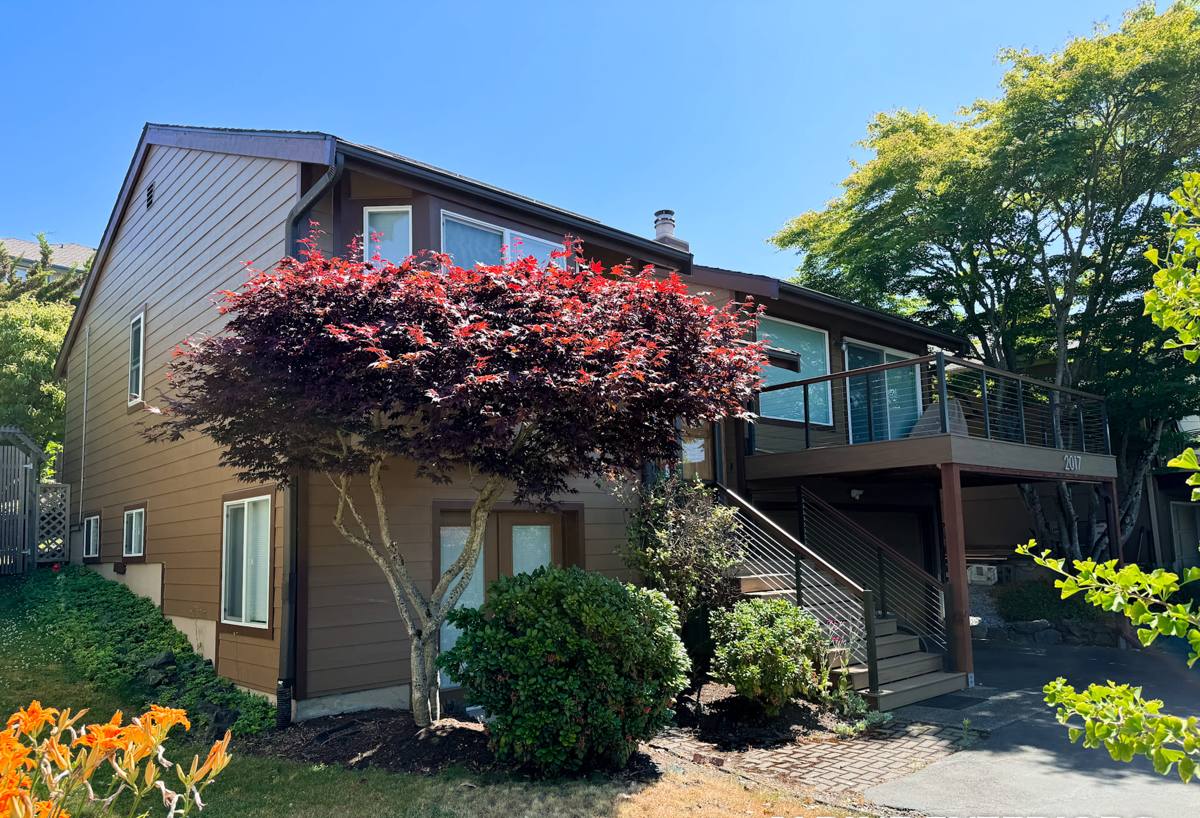
What "Energy-Efficient" Actually Means for a Bay-Adjacent Home
Energy efficiency in a window comes down to a handful of measurable things, and they matter differently depending on where your house sits. For Edgemoor specifically:
- U-factor — how well the window resists heat transfer. Lower is better for our winters, when the goal is keeping furnace heat inside.
- Solar heat gain coefficient (SHGC) — how much solar heat passes through the glass. Bellingham's cloud cover means this matters less here than in sunnier climates, but south- and west-facing windows still benefit from a moderate SHGC.
- Air leakage rating — how much air moves through the assembly itself, separate from the glass. This is often the bigger issue on older Edgemoor homes, where the frame and installation — not the glass — are letting conditioned air out.
- Condensation resistance — how well the window handles the humidity swings that come with a marine climate. Poor condensation resistance shows up as fogged or dripping glass on cold mornings, which over time feeds the mildew and wood rot problems we see on older single-pane and early double-pane units.
A window can carry a great efficiency label and still underperform in this neighborhood if it's not detailed correctly against wind-driven rain and salt exposure. That's the part that separates a good install from a bad one.
The Real Failure Point: Installation, Not Just Glass
Most of the energy loss and water problems we find in Edgemoor homes trace back to the installation, not the window unit itself. A few specific things go wrong more often here than in drier, more sheltered parts of Whatcom County:
Flashing and Water Management
Wind-driven rain doesn't just hit a window head-on — it gets pushed up and under trim, into gaps around the nailing flange, and behind poorly lapped house wrap. If the flashing sequence isn't done correctly — sill pan first, then side flashing, then head flashing lapped over the top — water finds its way into the wall cavity. That's how you get soft framing and stained drywall years later, long after the window itself looks fine from outside.
Sealant and Gap Sealing
Salt air breaks down cheap or aging sealants faster than it does inland. A window that was properly sealed can still fail early if the sealant used wasn't rated for marine exposure, or if the gap between the window frame and rough opening wasn't insulated and air-sealed correctly on all four sides.
Hardware and Frame Material
Locks, hinges, and cranks on lower-grade windows corrode faster this close to the bay. Aluminum-clad and vinyl frames handle salt air better than raw wood or unprotected metal, and fiberglass holds up well too — but the trade-off is cost, appearance, and how the frame ages over a few decades. We'll walk through those trade-offs honestly rather than push one product line.
Signs an Edgemoor Home Needs Window Attention
| What You Notice | Likely Cause | Urgency |
|---|---|---|
| Drafts near the frame on windy days | Failed weatherstripping or poor original installation | Moderate — fixable, but wastes energy every month it's ignored |
| Fogging between panes | Failed seal on double or triple-pane glass | Low urgency, but glass unit needs replacing — it won't clear on its own |
| Soft or discolored trim/sill | Water intrusion behind flashing | High — indicates moisture already in the wall assembly |
| Sticking sashes or hard-to-turn locks | Corrosion or frame swelling from moisture | Moderate — comfort and security issue |
| Green or black growth on sill or lower frame | Prolonged dampness, common under tree cover | Low to moderate — cosmetic now, but worth monitoring |
| Noticeably colder room near the window in winter | Poor U-factor or air leakage around frame | Moderate — direct energy cost |
Our Process for an Edgemoor Window Project
1. On-Site Assessment
We look at each window's condition individually — glass, frame, flashing, and the wall around it — rather than assuming every window on the house needs the same fix. Some Edgemoor homes only need a handful of windows replaced on the exposed, weather-facing sides while the sheltered sides are still performing fine.
2. Product Selection Based on Exposure
Windows on the bay-facing or wind-exposed sides of the house get discussed differently than windows tucked under eaves or tree cover. We'll talk through frame material, glass package, and hardware options against your budget and how much of the salt-air and rain exposure that particular window actually sees.
3. Removal and Opening Prep
Old flashing, damaged sheathing, and any hidden water damage get addressed before a new window goes in — installing a new window over a compromised opening just hides the problem for a few more years.
4. Correct Flashing and Sealing Sequence
Sill pan, back-dam, side flashing, head flashing, and marine-grade sealant applied in the right order. This is the step that determines whether the window performs for ten years or thirty.
5. Interior and Exterior Finish
Trim, caulking, and insulation around the frame get finished to match the house and to close off any remaining air path.
6. Final Walkthrough
We check operation, seal quality, and answer questions about maintenance specific to your home's exposure.
Maintenance That Matters More in a Marine Climate
Even a well-installed, high-quality window needs a bit more attention this close to Bellingham Bay than the same window would inland. A short seasonal routine goes a long way:
- Rinse salt residue off frames and hardware a few times a year, especially after storms with onshore wind
- Clear moss and debris from sills and tracks before it holds moisture against the frame
- Check exterior caulking annually for cracking or separation, particularly on south and west exposures
- Lubricate locks and cranks if they start to feel stiff — often the first sign of corrosion starting
- Watch for any soft spots in wood trim or sills each fall before the wet season sets in
Why It Matters to Hire a Crew That Already Works This Neighborhood
Window installation looks similar everywhere on paper, but the details that make it hold up — flashing sequence, sealant choice, hardware material — are exposure-specific decisions. A crew that mostly works drier, more sheltered parts of Whatcom County may not default to the marine-grade details an Edgemoor home actually needs unless asked. We work this area regularly enough that those decisions are our starting point, not an afterthought.
That local familiarity also means a straighter conversation about cost. Not every window on a bay-exposed home needs the top-tier package — but the ones that face direct wind-driven rain usually shouldn't get the budget option either. We'll tell you plainly which is which.
Cost Factors Worth Understanding Before You Decide
| Factor | Why It Changes the Price |
|---|---|
| Frame material | Vinyl is the most budget-friendly; fiberglass and aluminum-clad wood cost more but handle salt air and moisture differently |
| Glass package | Double vs. triple-pane, and low-E coatings, affect both cost and U-factor performance |
| Extent of opening repair | Hidden water or rot damage found during removal adds labor and material beyond the window unit itself |
| Number of exposed vs. sheltered windows | Bay-facing windows may warrant a higher-grade product than sheltered ones on the same house |
| Custom sizing | Older Edgemoor homes sometimes have non-standard openings that require custom-built units instead of stock sizes |
We'll never quote based on a generic per-window rate without actually looking at your openings — the honest range depends too much on the specifics above to give a meaningful number over the phone.
If your windows are drafty, fogged, or just due for an honest look, we're glad to come out and give you a straightforward, no-pressure estimate — use the form below to get started.