 Bellingham Siding
 Fairhaven's Marine Climate Is Tougher on Siding Than People Expect
Fairhaven sits right against Bellingham Bay, and that waterfront position changes what a siding job actually has to survive. Salt-laden air moves off the water and settles on exterior surfaces year-round, slowly working on fasteners, trim, and any siding material that isn't built to shrug it off. Add Whatcom County's long wet season — driving rain that comes in sideways off the water, months of overcast humidity, and shaded, tree-covered lots that never fully dry out — and you get a climate that punishes anything less than a correctly detailed, moisture-managed exterior. Moss and algae aren't occasional problems here; on Fairhaven's shadier streets, they're a season that runs from fall through spring.
None of this is unique to one house. It's the baseline every exterior on this side of Bellingham deals with, and it's why the siding material and the installation details matter more here than they would in a drier, more sheltered part of the county.
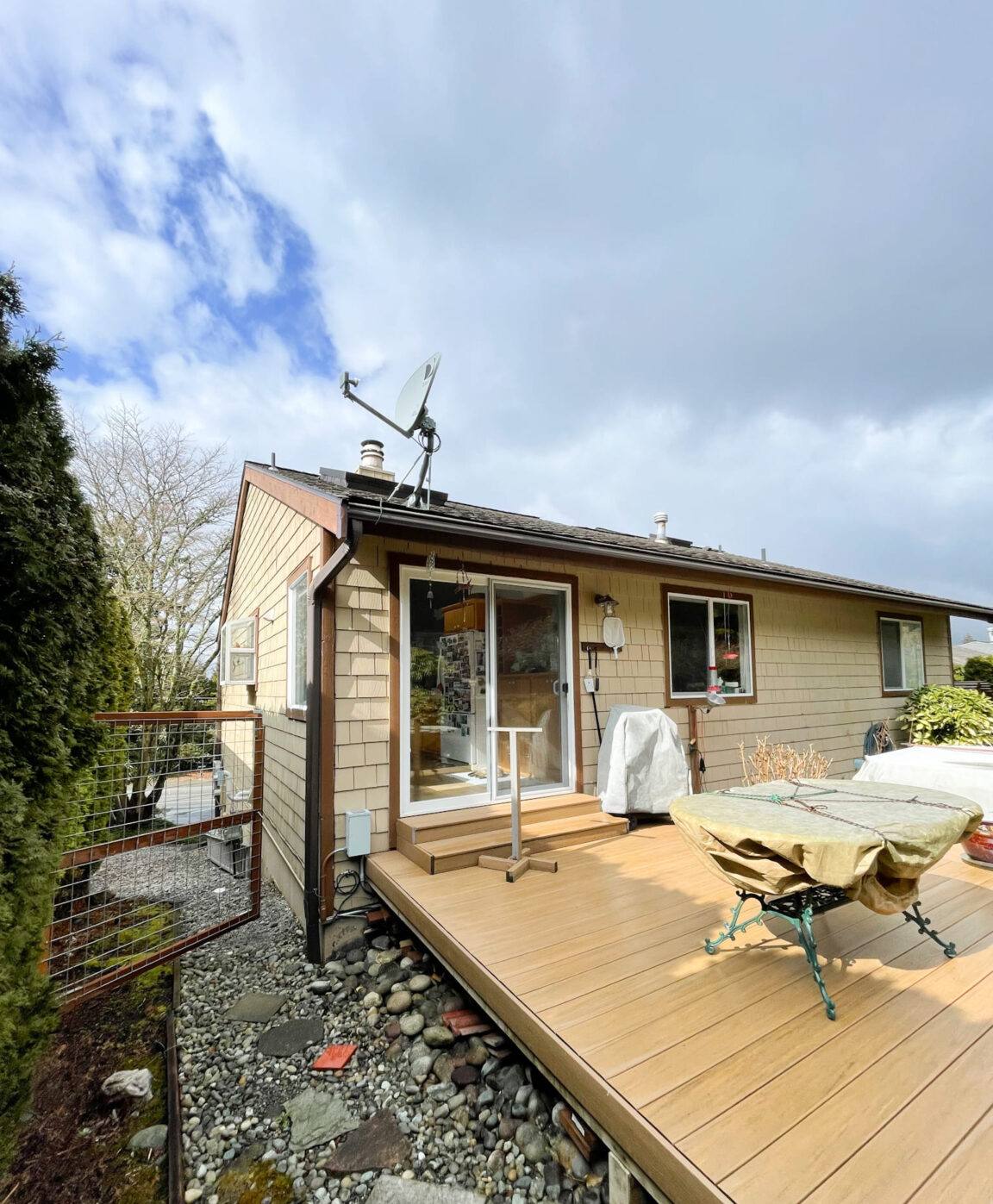
Why Fiber Cement Is the Right Call for This Neighborhood
We install James Hardie fiber cement siding exclusively, and Fairhaven is a good example of why that standard exists. Fiber cement is a mix of cement, sand, and cellulose fiber — it doesn't rot, it doesn't feed insects, and it doesn't swell and shrink with every wet-dry cycle the way wood-based products do. That matters directly for the conditions above.
Moisture Behavior
Wood, wood composite, and even some engineered wood products absorb moisture at cut edges and panel joints. In a climate that stays damp for months at a stretch, that absorbed moisture doesn't get a real chance to dry out before the next rain arrives. Fiber cement is dimensionally stable and far less prone to that slow moisture uptake, which is the root cause of a lot of siding failure on the coast.
Salt Air and Corrosion
Salt air doesn't just affect metal fasteners and flashing — it accelerates the breakdown of coatings and finishes on lower-grade siding materials. James Hardie's factory-applied ColorPlus finish is baked on and warrantied against fading and flaking, which holds up better under salt exposure than field-applied paint on wood or composite siding that has to be recoated on a maintenance cycle.
Moss and Algae
Fiber cement itself won't feed mold or fungus the way wood-based siding can, and a properly finished, well-ventilated installation dries out faster after Whatcom County's long wet stretches. That doesn't make a house moss-proof — moss grows on roofs, decks, and siding alike in this climate — but it removes the material itself as a food source and gives moss and algae less to hold onto over the years.
The James Hardie Product Line We Use Here
James Hardie engineers its siding by climate zone rather than selling one formulation everywhere. Homes in Fairhaven and the rest of Whatcom County fall in the HZ5 zone, built for regions with heavy moisture and freeze-thaw cycling — not the HZ10 formulation made for hot, humid climates further south. That distinction matters, and it's part of why we don't substitute in a generic or off-region product just because it happens to be on the shelf.
Most Fairhaven projects use a combination of the following:
- HardiePlank® lap siding — the standard horizontal siding for most homes, available in several exposure widths and textures.
- HardieShingle® siding — a common match for the craftsman and bungalow-style homes found throughout Fairhaven's older residential streets.
- HardieTrim® boards — for corners, window and door casing, and fascia, so the whole exterior is a matched, non-combustible system rather than fiber cement siding paired with wood trim that will age at a different rate.
All of it is available with the factory ColorPlus finish where color-matched trim and siding is wanted, backed by James Hardie's transferable limited warranty.
What Correct Installation Actually Involves
Fiber cement siding is only as good as the installation behind it. Most siding failures we get called out to look at aren't a material problem — they're a water-management problem: the wrong flashing detail, missing clearances, or fasteners driven wrong. In a climate as wet as this one, those mistakes show up faster than they would somewhere drier, sometimes within a single winter.
Water-Resistive Barrier and Flashing
Every project starts with a continuous water-resistive barrier behind the siding, with flashing integrated at every penetration — windows, doors, hose bibs, light fixtures, and any point where a deck or roof meets the wall. The barrier and the siding are two separate lines of defense; if the barrier is torn, missing, or poorly lapped, driving rain off the bay will eventually find it.
Clearances That Actually Get Followed
James Hardie specifies minimum clearances — siding to grade, siding to roofing, siding to decks and patios — for a reason: those gaps let water drain and air circulate instead of wicking straight into the bottom edge of the siding. On a lot with limited grading options or a low deck, this is exactly the kind of detail that gets skipped by a crew in a hurry, and it's exactly the kind of detail that causes rot and moss buildup at the base of a wall within a few years.
Fastening and Joint Treatment
Fasteners have to be driven to the manufacturer's specification — not overdriven, not underdriven, and using corrosion-resistant fasteners appropriate for a marine-influenced climate. Butt joints and seams get treated and, where visible, caulked and painted per spec rather than left as an open path for water to travel behind the siding.
Ventilation Behind the Cladding
A drainage plane or rainscreen gap behind the siding gives any moisture that does get past the outer layer somewhere to go, and it speeds up drying between the region's frequent rain events. On homes with dense shade or limited sun exposure, this detail is often the difference between siding that dries out and siding that stays damp long enough to grow moss.
Our Process for a Fairhaven Fiber Cement Project
- On-site inspection. We look at the existing siding, sheathing, and any signs of moisture damage, moss buildup, or past repair work before quoting anything.
- Written estimate and product plan. We spec out the HardiePlank, HardieShingle, or trim combination that fits the home, along with a color plan if ColorPlus finish is being used.
- Removal and sheathing check. Old siding comes off and the sheathing underneath gets inspected — this is often where hidden rot from a previous poorly-flashed installation turns up, and it gets addressed before anything new goes on.
- Water-resistive barrier and flashing install. Continuous barrier, properly lapped, with flashing at every penetration and transition point.
- Siding installation to spec. Correct clearances, correct fastening, correct joint treatment — installed by a crew trained specifically on James Hardie's written requirements.
- Final walkthrough. We go over the finished job with the homeowner, point out anything worth watching for, and register the manufacturer's warranty.
Signs a Fairhaven Home May Need New Siding
Because of the salt air and long wet season, siding problems here tend to show up first at the bottom edges, around windows, and in shaded spots that don't dry out between storms. It's worth checking for:
- Soft or spongy spots when you press on the siding, especially near the ground
- Paint that's bubbling, peeling, or chalking faster than it should
- Persistent moss or dark streaking that comes back within a season of cleaning
- Visible gaps or separation at trim, corners, or window casings
- Warping, cupping, or panels that no longer sit flat against the wall
- A musty smell or visible staining on interior walls that share an exterior wall
Any one of these on its own is worth a look. Several at once usually means water has been getting behind the siding for a while, and the sheathing underneath should be checked before deciding on a repair versus a full replacement.
What Affects the Cost of a Fairhaven Siding Project
Every home is different, and we won't quote a number without seeing the house in person, but these are the factors that move the price up or down on most Fairhaven projects:
| Factor | Why It Matters |
|---|---|
| Home size and story count | More square footage and second-story or steep-lot access both add material and labor time. |
| Existing siding removal | Tear-off of old wood, vinyl, or damaged siding adds a labor step before installation can start. |
| Sheathing repair | Rot or moisture damage found underneath old siding has to be repaired before new siding goes on — common on older Fairhaven homes. |
| Siding profile and texture | HardiePlank lap siding, HardieShingle, and trim-heavy craftsman detailing carry different material and labor costs. |
| ColorPlus vs. field paint | Factory-finished ColorPlus siding costs more upfront but skips field-painting labor and holds color longer in salt air. |
| Trim and detail work | Older Fairhaven homes with more window casing, corner boards, and fascia detail take more trim labor than a simple box-shaped home. |
Repair vs. Full Replacement
Not every siding problem in Fairhaven means a full tear-off. If moisture damage is limited to one wall or one section — often the side that takes the most weather off the bay — a targeted repair with matched HardiePlank can make sense. If damage shows up in multiple spots, or the original installation was missing basic flashing and clearances, patching one area usually just delays the same failure showing up somewhere else. We'll tell you honestly which situation you're in before recommending either option.
Why Hiring a Crew That Already Works in Fairhaven Matters
A crew that's worked this specific stretch of Bellingham knows what to expect before they open up a wall. They've seen how salt air ages fasteners and trim on this side of the bay, how moss builds up on the shaded, tree-covered lots common in the neighborhood, and how the older housing stock here was originally built and detailed. That familiarity shows up in fewer surprises during tear-off, more accurate estimates, and flashing details that are already dialed in for this exact climate rather than adapted on the fly from a drier region.
It also means the crew is used to working around the practical realities of an established neighborhood — narrower lots, mature landscaping close to the house, and homes where matching existing trim lines and reveal details actually matters to how the finished exterior looks next to the neighbors on either side.
Maintenance After Installation
Correctly installed James Hardie siding is low-maintenance, not no-maintenance, especially in a climate like this one. A simple annual routine keeps it performing the way it's designed to perform:
- Rinse the siding down once or twice a year to clear salt residue and organic buildup, especially on shaded elevations
- Keep gutters clear so overflow isn't running down the wall face
- Trim back vegetation that's holding moisture against the siding
- Check caulking at trim and joints periodically and touch it up before gaps open up
- Watch the base of the walls each fall for early moss growth and clear it before it spreads
If your Fairhaven home's siding is showing its age, or you're planning ahead for a replacement, we're happy to take a look and walk through what a correctly installed James Hardie system would look like on your house. There's no pressure and no cost to get an honest estimate — just fill out the form below.