 Bellingham Siding
 Fairhaven's Climate Is Hard on Siding
Fairhaven sits close to the water, and that proximity comes with a trade-off. The same salt air that gives the neighborhood its character also accelerates corrosion on fasteners, trim, and any siding material that isn't built to shed moisture well. Add in the driving rain that comes off Bellingham Bay during fall and winter storms, and you've got wind-driven water finding its way into every gap, seam, and nail hole that isn't sealed correctly.
Then there's the moss. Whatcom County's long, wet stretch from October through April keeps north-facing walls and shaded siding damp for months at a time. Moss and algae don't just look bad — they hold moisture against the siding surface, which is exactly the condition that causes rot, paint failure, and swelling in materials that aren't moisture-stable.
None of this means Fairhaven homes are doomed to constant siding problems. It means repairs have to be done with the local climate in mind, not treated like a generic patch job. A repair that ignores how water actually moves on a Fairhaven-area wall will fail again within a few seasons.
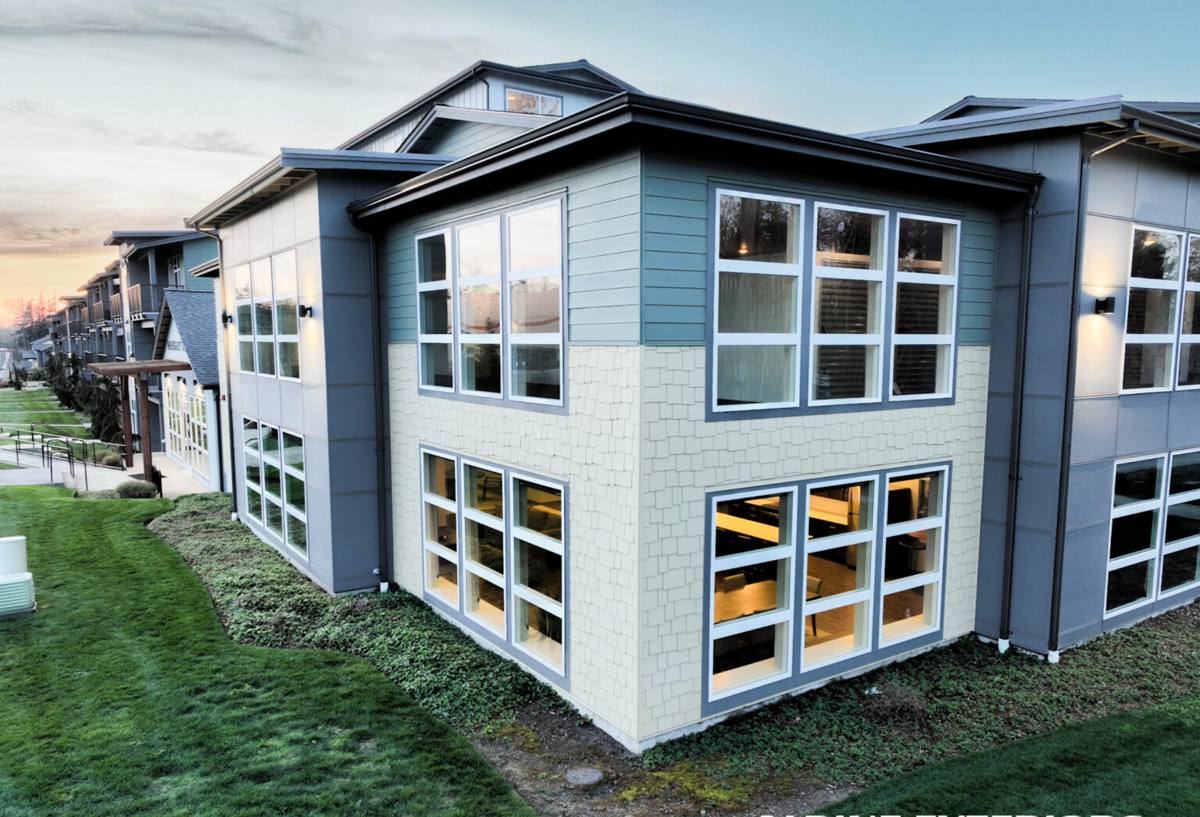
Signs Your Fairhaven Home Needs Siding Repair
Some siding problems are obvious. Others hide behind trim or show up as symptoms somewhere else in the house before you ever see damaged boards. Here's what we look for and what homeowners should watch for between inspections:
- Soft or spongy spots when you press on the siding, especially near the bottom courses and around windows
- Visible cracking, splitting, or buckling in individual boards or panels
- Persistent moss, algae, or dark streaking that keeps coming back after cleaning
- Peeling or bubbling paint, which often signals moisture trapped behind the surface rather than a simple paint problem
- Gaps opening up at seams, corners, or where siding meets trim, windows, or doors
- Rust streaks below nail heads or fasteners
- Interior clues — a musty smell, discoloration on interior drywall, or a slightly damp feel near an exterior wall
- Visible daylight or drafts through gaps you can feel from inside on a windy day
Any one of these on its own might be minor. Several together, especially on a wall that takes direct weather off the water, usually means moisture has already gotten past the surface and into the wall assembly.
What Correct Siding Repair Actually Involves
Finding the Real Problem, Not Just the Symptom
A damaged board is a symptom. The cause is usually something behind it — a failed seal, a flashing detail that was never installed correctly, or a moisture barrier that's torn or missing. Cutting out a bad section and nailing up a new piece without addressing what let water in the first place just buys you a shorter countdown to the next repair. Every repair we do starts with figuring out why that spot failed, not just what it looks like now.
Matching Materials Correctly
If the existing siding is fiber cement, a repair needs to match thickness, profile, and exposure so the new section sits flush and sheds water the way the surrounding siding does. Patching with the wrong material, or the wrong profile, creates a new seam that's more likely to leak than the original wall was. If the existing siding is a product we don't install — vinyl, LP SmartSide, cedar, or similar — we'll say so plainly and explain the options rather than force a mismatched patch that won't hold up the same way.
Rebuilding the Moisture Barrier
Behind every properly repaired section, the weather-resistive barrier and flashing need to be intact and correctly lapped — meaning each layer overlaps the one below it so water runs down and out, not in. This is the step that gets skipped on rushed repairs and is also the one that determines whether the fix lasts five years or fifteen.
Repair or Replace?
Not every problem area means the whole house needs new siding, but a full replacement is sometimes the more honest recommendation. Here's how we think about the decision:
| Situation | Repair Usually Makes Sense | Replacement Is Usually Smarter |
|---|---|---|
| Extent of damage | Isolated to one or two wall sections | Damage shows up on multiple walls or elevations |
| Underlying moisture barrier | Intact except at the repair area | Torn, missing, or outdated across large sections |
| Age of existing siding | Siding is mid-life and otherwise sound | Siding is near or past its expected service life |
| Material match | Existing product is one we can properly match | Existing product can't be matched or isn't one we install |
| Recurrence | First time this area has had a problem | Same area has been repaired before and failed again |
We'll always tell you honestly which category your home falls into. A patch on a house with a failing moisture barrier everywhere else just delays a bigger job — and costs you twice.
Cost Factors for Siding Repair
We don't quote pricing without seeing the actual condition of your walls, but these are the variables that move the number up or down on most Fairhaven-area repair jobs:
| Factor | Why It Matters |
|---|---|
| Size and number of damaged sections | More cuts and more replacement material means more labor and material cost |
| Accessibility | Second-story walls, tight side yards, or areas near landscaping take longer to access safely |
| Condition of the barrier behind the siding | If flashing or the weather-resistive barrier needs rebuilding, that adds time beyond just the visible siding |
| Color and finish matching | Factory-finished siding needs a matching color run; field-painted repairs add a painting step |
| Trim and detail work | Repairs around windows, corners, and joints involve more precision than flat wall sections |
Our Process for Fairhaven Siding Repair
1. On-Site Inspection
We look at the damaged area and the surrounding wall, check for signs the problem extends further than what's visible, and probe for soft spots or moisture that isn't obvious from the outside.
2. Honest Recommendation
You get a plain explanation of what caused the damage, whether a repair is sufficient or replacement makes more sense, and what it will take to fix it correctly — including the moisture barrier and flashing, not just the visible boards.
3. The Repair Itself
We remove only what needs to come out, rebuild the moisture barrier and flashing to correct standards, and install matching material so the repaired section performs the same as the rest of the wall — not just looks similar from the curb.
4. Cleanup and Walkthrough
We clear debris and fasteners from the work area and walk the repair with you before we consider the job done.
Why We Only Work With James Hardie
We install James Hardie fiber cement exclusively, and that standard applies to repair work too. Hardie's ColorPlus factory finish and HZ product lines are engineered for exactly the conditions Fairhaven deals with — moisture, salt-influenced air, and long damp stretches without much drying time. It's non-combustible, holds paint and color far longer than field-applied finishes typically do, and comes with a strong transferable warranty when installed to spec.
That's also why we're upfront when a home has a different siding product on it. We won't force a Hardie patch onto vinyl or LP SmartSide just to say yes to a repair — the materials don't match, and a mismatched patch is more likely to fail than help. In those cases we'll tell you honestly what your options are, including whether a full transition to Hardie makes more sense than chasing repairs on a product we don't install.
Why Local Experience in Fairhaven Matters
A crew that regularly works this part of Bellingham already knows which walls take the worst of the weather off the water, how long moss actually takes to become a real problem versus a cosmetic one, and what moisture damage looks like at each stage before it becomes structural. That experience shows up in faster, more accurate diagnosis and in repairs that account for what the wall will face next winter, not just what it looks like today.
It also means less guesswork for you. You're not explaining Whatcom County's weather patterns to someone who's never worked a job west of the mountains — we already know what driving rain off the bay does to a wall that isn't sealed correctly.
If you're seeing damage, moss buildup, or soft spots on your Fairhaven home's siding, we're glad to take a look and give you a straight answer — no pressure, no upsell, just what we actually find. Reach out for a free estimate using the form below.