 Bellingham Siding
 Roof Repair Built for Ferndale's Weather, Not a Generic Climate
Ferndale sits close enough to the Salish Sea that salt-laden air reaches roofs here in a way it doesn't for homes twenty miles inland. Add Whatcom County's long wet season, driving rain that comes in sideways off open fields and waterfront exposure, and a moss season that can run eight or nine months out of the year, and you get roofs that age differently than the manufacturer's warranty paperwork assumes. A roof repair here isn't just "patch the leak." It's understanding why that spot failed first, and what's likely to fail next if the underlying cause isn't addressed.
We do most of our work as a siding contractor, but siding and roofing meet at every eave, valley, and wall-to-roof transition on a house. A huge share of the "roof leaks" we get called out for in Ferndale actually start at flashing, fascia, or a soffit — areas where roofing and siding trades overlap. That's part of why we handle roof repair as part of the exterior envelope, not as an isolated trade.
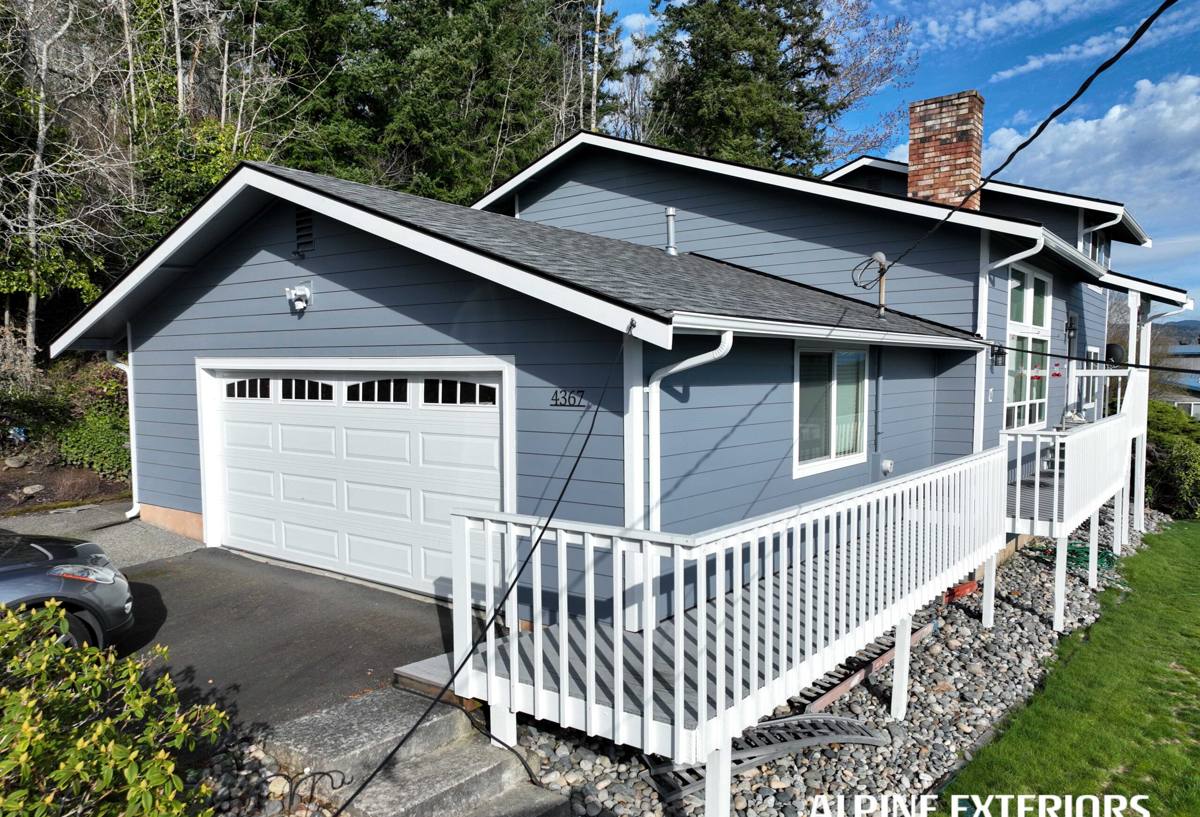
Why Coastal Whatcom County Homes Wear Out Roofs Differently
Salt Air and Metal Fatigue
Salt in the air accelerates corrosion on exposed metal — flashing, nail heads, gutter hangers, ridge vents, and any fasteners that aren't fully sealed or hot-dip galvanized. On a roof five or ten miles from open water, that corrosion shows up years before it would on the same roof built the same way further inland. Left alone, a corroded flashing seam is one of the most common sources of a slow, hard-to-trace leak.
Driving Rain and Wind-Driven Water
Ferndale gets rain that doesn't fall straight down. Wind off open farmland and the coast pushes water sideways and upward under shingle laps and around vents, in ways vertical-rain assumptions in some installation guides don't account for. Roofs installed correctly for a drier or calmer climate can still leak here if underlayment, flashing laps, and fastening patterns weren't adjusted for wind-driven rain.
Moss, Algae, and Trapped Moisture
Long stretches of shade, humidity, and mild temperatures make Whatcom County near-ideal moss habitat. Moss doesn't just look bad — it holds water against the roofing material, lifts shingle edges as it grows, and works its way under laps and around fasteners. On older roofs, moss growth is often the single biggest accelerant of granule loss and premature wear.
Signs a Ferndale Roof Needs Repair Now
Most roof problems give warning signs well before a full leak shows up inside the house. Catching them early is almost always cheaper than waiting.
- Granules collecting in gutters or at downspout outlets, especially after a heavy rain
- Dark streaking or thick moss mats on north-facing or shaded slopes
- Curling, cupping, or lifted shingle edges, particularly on the roof's windward side
- Rust staining or visible corrosion around flashing, vents, or metal valleys
- Soft or discolored spots on interior ceilings near exterior walls or chimneys
- Daylight visible through the attic at roof boards, ridge, or soffit vents
- Sagging or spongy-feeling areas when walked on carefully by a professional
- Gutters pulling away from the fascia, which often points to rot behind them
What a Correct Roof Repair Actually Involves
A repair done right starts with figuring out the actual water path, not just covering the spot where a stain appeared inside. Water often travels along rafters or sheathing before it shows up on a ceiling, so the visible damage and the real source can be several feet apart.
Diagnosis Before Anything Gets Touched
We look at the roof from the attic side when access allows, checking for staining patterns, wet insulation, and daylight gaps, then confirm from the exterior — flashing condition, shingle lap direction, fastener corrosion, and moss buildup at the suspected origin point. Guessing at a leak source and re-roofing over it without diagnosis is one of the most common ways a "repair" fails again within a season.
Addressing the Cause, Not Just the Symptom
If moss lifted the shingles, the repair needs to remove the moss, treat the area to slow regrowth, and re-seat or replace the affected shingles — not just caulk over the gap. If corroded flashing let water in, the flashing gets replaced with material suited to coastal exposure, not just resealed. A repair that doesn't fix the underlying cause is a temporary delay, not a fix.
Matching Materials and Fastening for Local Conditions
Replacement shingles, flashing, and fasteners should hold up to the same salt air and wind-driven rain that damaged the original section. That can mean stainless or coated fasteners instead of standard galvanized, or wider flashing laps than a basic repair might use elsewhere.
Our Repair Process, Start to Finish
- Initial call and scheduling — a short conversation about what you're seeing, when it started, and any recent storms or maintenance history.
- On-site inspection — exterior and, where possible, interior/attic assessment to trace the actual water path.
- Honest findings — we tell you what we found, what's causing it, and what repair options exist, including when a small repair is genuinely enough.
- Written scope and estimate — specific work, materials, and a price range before anything starts.
- Repair work — moss and debris removal, damaged material replacement, flashing and fastener correction as needed.
- Cleanup and walkthrough — debris cleared, work areas reviewed with you before we consider the job done.
We don't upsell a full roof replacement when a targeted repair will hold. If a roof is genuinely past the point where repair makes sense, we'll say so plainly and explain why — but that's a conversation, not a default sales pitch.
Roof Repair vs. Roof Replacement: How to Think About It
| Factor | Leans Toward Repair | Leans Toward Replacement |
|---|---|---|
| Age of roofing material | Under roughly 12-15 years | Near or past typical service life for the material |
| Extent of damage | Isolated to one section, flashing, or vent | Widespread granule loss, curling, or multiple leak points |
| Moss/algae history | First significant growth, caught early | Years of untreated moss with lifted shingles across slopes |
| Decking condition | Sheathing solid, no soft spots | Soft, rotted, or delaminated sheathing found during inspection |
| Underlying cause | A single identifiable fix (flashing, fasteners) | Systemic issue like poor original ventilation or underlayment |
None of these factors decide things alone — a roof can be relatively young but still need replacement if it was installed without accounting for coastal wind and moisture. That's why the inspection matters more than the roof's age on paper.
Rough Cost Ranges to Expect
Costs vary with roof pitch, access, material, and how much of the structure underneath needs work — anyone quoting a firm number before inspecting the roof is guessing. As a general sense: a straightforward flashing or small shingle-section repair is typically the least expensive category of work; repairs involving sheathing replacement, extensive moss remediation, or multiple problem areas cost more; and a roof with damage spread across several slopes or with compromised decking starts approaching what a partial or full replacement would run. We'll always give you the actual number for your roof, not a generic figure.
Ongoing Maintenance vs. One-Time Repair
In a moss climate like Whatcom County's, a repair that isn't followed by any maintenance often needs another repair within a few years. A few practical habits extend the life of a repaired roof significantly:
- Keep gutters and downspouts clear so water isn't backing up under the roof edge
- Have moss treated before it forms thick mats, not after shingles are already lifted
- Trim back overhanging branches that keep sections of roof shaded and damp
- Schedule a walk-through inspection after major windstorms, especially on older roofs
- Check attic ventilation periodically — poor airflow speeds up moisture damage from the inside
We're happy to point out these items during a repair visit even when they're not part of the immediate job — a five-minute observation now can prevent a call-back next winter.
Why a Crew That Already Works Ferndale Makes a Difference
A roofer who mostly works dry-climate jobs or unincorporated areas further from the water can still do competent general roofing — but they may not default to coastal-grade fasteners, they may not recognize early moss patterns specific to shaded Whatcom County lots, and they may not know which flashing details tend to fail first on homes exposed to wind off open fields near town. None of that is a knock on general skill; it's just the difference between doing roofing anywhere and doing roofing where salt air and moss season are the norm rather than the exception.
We also see the connection between roofing failures and siding failures constantly, because we work both. A leaking roof edge often shows up first as staining or rot at the top of a siding run, and a repair that only addresses the roof side while ignoring saturated trim or sheathing below it doesn't actually solve the problem. Handling both trades means fewer blind spots at the transitions where most real damage starts.
What to Ask Before You Hire Anyone for Roof Repair
- Will you inspect from the attic side, not just the exterior, before diagnosing the cause?
- What specifically caused the damage, and how does the repair address that cause?
- Are the replacement fasteners and flashing rated for coastal/salt-air exposure?
- What's included in the written estimate, and is it a firm price or a rough guess?
- Do you carry current liability insurance and, if required, local licensing?
- Will you tell me honestly if repair isn't the right call, even if that means less work for you?
A contractor who answers these plainly, without dodging or padding the scope, is usually a safer bet than one offering the lowest number sight unseen.
If you're seeing moss buildup, granules in the gutters, a stain on a ceiling, or just want a second opinion on a roof that's starting to show its age, we're glad to take a look. The estimate is free, there's no pressure to book anything on the spot, and you'll get a straight answer about what your roof actually needs.