 Bellingham Siding
 Why Sudden Valley Puts Extra Demand on Siding
Sudden Valley sits in a heavily wooded, lakeside setting east of Bellingham, and that setting is exactly what makes siding choice matter more here than in a lot of Whatcom County neighborhoods. Tree canopy over many lots means siding stays shaded and damp longer after a storm than it would on an open lot. Add in the marine, moisture-heavy climate that defines this whole corner of Washington — driving rain off the water, salt-tinged air moving inland, and a moss season that can run most of the year in shaded spots — and you get a set of conditions that will find every weakness in a siding product or an installation shortcut.
We've worked on homes throughout the Sudden Valley area long enough to see the pattern: the siding failures we get called out to inspect are rarely about the material being "bad." They're almost always about the wrong product for the conditions, or a correct product installed without the moisture management details that this climate requires. That's the gap we focus on closing.
What This Climate Actually Does to Siding
It helps to be specific about the mechanisms at work, because they point directly to what a correct siding job needs to do.
- Prolonged dampness under tree cover — shaded siding dries slower after rain, keeping the surface wet longer and giving moss, algae, and mildew more time to establish.
- Driving, wind-blown rain — storms off the Sound push rain sideways into wall assemblies, testing lap coverage, caulking, and flashing details rather than just the face of the siding.
- Salt-influenced moisture — coastal-adjacent air carries fine salt content that accelerates corrosion on exposed fasteners and metal trim if they aren't rated and installed correctly.
- Freeze-thaw swings — Whatcom County gets enough cold snaps each winter that trapped moisture behind siding can freeze, expand, and work joints and fasteners loose over several seasons.
- Moss and organic growth — moss doesn't just look bad; its root structure holds moisture against the siding surface and, on porous or improperly sealed materials, can contribute to long-term breakdown.
None of these are exotic problems. They're the everyday reality of siding in this part of Washington, and they're the reason we don't treat "siding replacement" as a one-size-fits-all product decision.
Why We Only Install James Hardie Fiber Cement
We install James Hardie fiber cement siding exclusively — we don't install vinyl, LP SmartSide, Cemplank, Allura, or primed wood products, even though each has its place in the broader market. That's a deliberate standard, not a sales pitch, and it comes down to how each material handles the specific stresses Sudden Valley homes face.
Fiber cement is non-combustible, dimensionally stable in wet-dry cycling, and doesn't feed moss and mildew the way some organic-based sidings can. James Hardie's ColorPlus factory finish is baked on under controlled conditions rather than applied on site, which gives it more consistent adhesion and fade resistance than field-painted alternatives — a real advantage in a climate that keeps siding damp for extended stretches. Hardie also engineers specific product lines (its HZ5 line, for the Pacific Northwest's wetter zones) around exactly this kind of exposure, and backs installations with a transferable warranty when installed to their published specifications.
None of this means other products are worthless — it means that after years of doing exterior work in this region, we decided we'd rather stand behind one system we can install to spec every time than offer a menu of products with different failure modes and different maintenance burdens for homeowners to manage.
How Fiber Cement Compares on the Factors That Matter Here
| Factor | Vinyl Siding | Wood / Primed Spruce | James Hardie Fiber Cement |
|---|---|---|---|
| Moisture & moss resistance | Won't rot, but seams and J-channels trap moisture | Absorbs moisture; needs vigilant repainting to resist rot and moss | Dimensionally stable; factory finish resists moisture and organic growth |
| Wind-driven rain performance | Depends heavily on correct lap and fastening | Prone to cupping and joint failure over time | Rigid planks hold lap lines and seal points when installed to spec |
| Fire resistance | Melts/deforms under heat | Combustible | Non-combustible |
| Finish longevity | Can fade or become brittle in UV | Field paint fails first under sun and damp cycling | Factory ColorPlus finish holds color longer than field-applied paint |
| Long-term maintenance | Low, but limited repair options if damaged | Highest — regular repainting and moss treatment | Moderate — periodic washing, minimal repainting |
What a Correct Fiber Cement Installation Involves
The siding board itself is only part of the job. Most of the failures we're called to diagnose trace back to what's happening behind the panel, not the panel itself.
Drainage Plane and Rain Screen Detailing
Behind every board, there needs to be a properly lapped weather-resistive barrier and, ideally, a drainage gap that lets any moisture that gets past the siding face drain and dry rather than sit against the sheathing. In a shaded, damp environment like much of Sudden Valley, skipping or shortcutting this detail is one of the fastest routes to hidden rot.
Flashing and Penetrations
Windows, doors, vents, and any other wall penetration need correctly sequenced flashing so water is directed out and down, never behind the siding. Driving rain finds every gap here first.
Fastening and Clearances
Hardie specifies fastener type, spacing, and minimum clearances from decks, roofs, and grade for a reason — those clearances keep the bottom edge of the siding from sitting in standing moisture or splash-back. Corrosion-resistant fasteners matter more here given the salt-influenced air moving through the region.
Caulking and Joint Treatment
Butt joints and trim transitions need the right sealant, applied correctly, not just as a cosmetic finish step. A missed or under-applied joint is a direct path for wind-driven rain.
Paint and Touch-Up Discipline
Field-cut edges need to be sealed and touched up per Hardie's specifications before the piece goes up, not after. This is a step that's easy to skip under time pressure and is one of the more common shortcuts we find when re-siding a home that was done elsewhere.
Choosing the Right Hardie Line and Color for a Sudden Valley Home
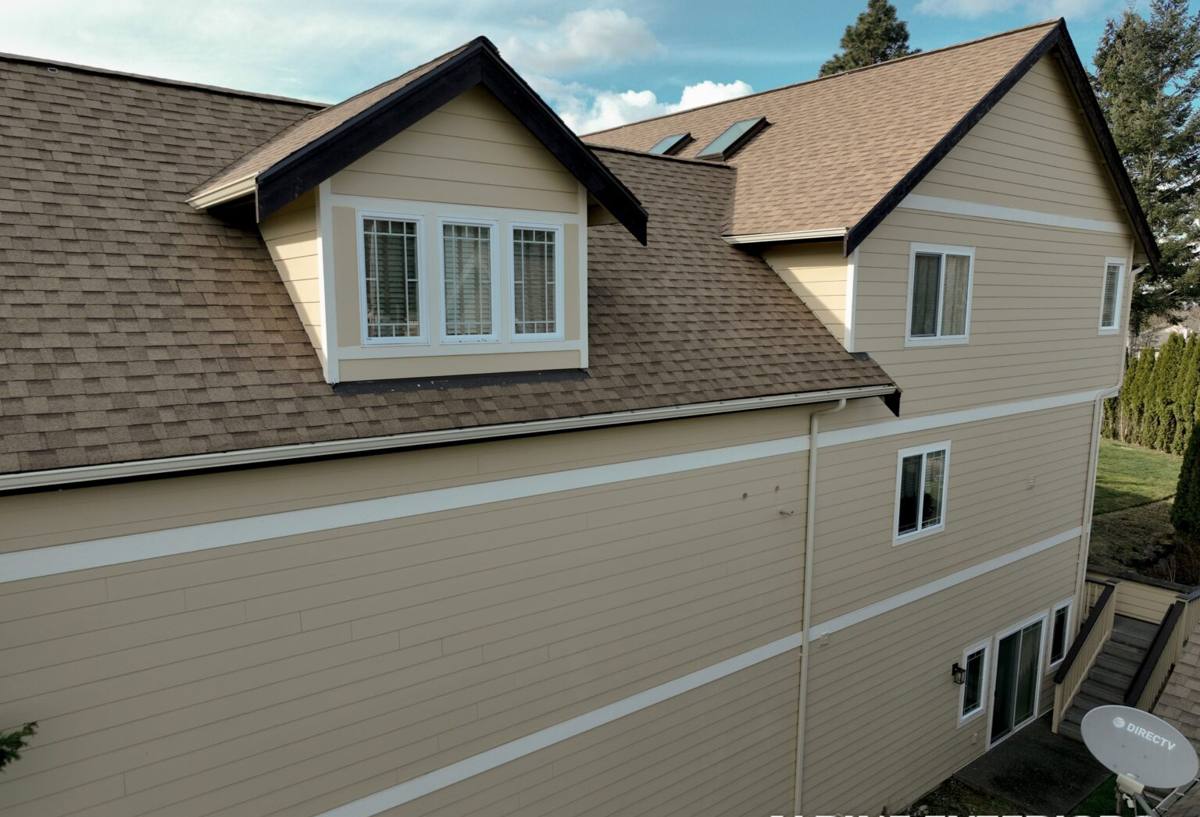
Not every Hardie product is interchangeable for every home. HardiePlank lap siding is the most common choice for traditional home styles and gives the classic horizontal-lap look with strong wind and moisture performance. HardiePanel works well for accent areas, gables, or more modern facades. Trim and soffit products round out the system so the whole exterior is handled by materials engineered to work together, rather than mixing brands at the joints where failures tend to start.
On color, ColorPlus finishes hold up better under UV and damp cycling than most field-applied paints, which matters on a home that spends a lot of the year in tree shade and morning dew. We'll walk through which lines and colors make sense for your home's exposure, sun access, and surrounding tree cover during the estimate — it's a different conversation for a lot-facing lake versus a lot buried in fir canopy.
Our Process, From Estimate to Finished Siding
- On-site walkthrough — we look at your home's actual exposure: shade patterns, water flow off the roof, existing moisture damage, and where past shortcuts may have been taken.
- Scope and product selection — we recommend the Hardie line and details (rain screen, trim, flashing plan) suited to your home, not a generic package.
- Written estimate — clear line items, no surprise change orders for things we should have caught during the walkthrough.
- Tear-off and sheathing inspection — we don't cover up hidden rot or moisture damage; you'll know before we close the wall back up.
- Weather barrier and flashing installation — the unglamorous part that determines whether the job lasts.
- Siding installation to Hardie spec — correct fasteners, clearances, and lap details throughout.
- Final walkthrough — caulking, touch-up, and cleanup reviewed with you before we call it done.
Living With Fiber Cement in a Moss-Prone, Shaded Environment
Even the right product needs some basic upkeep, especially with the tree cover common around Sudden Valley. The good news is that correctly installed Hardie siding needs far less attention than wood, and handles the moss and moisture better than vinyl's trapped seams.
- Rinse siding (garden hose pressure, not a pressure washer aimed directly at seams) once or twice a year, more often on heavily shaded walls.
- Keep gutters clear so water isn't sheeting down the siding face during storms.
- Trim back branches and shrubs that keep a wall surface shaded and damp longer than necessary.
- Check caulking at trim joints and penetrations annually — sealant is the first thing to age out, well before the siding itself.
- Address any moss on a wall promptly rather than letting it establish; on a properly installed factory finish it wipes off far more easily than on bare or field-painted wood.
Cost Factors for a Sudden Valley Siding Project
| Factor | Why It Affects Cost |
|---|---|
| Home access and lot terrain | Wooded, sloped, or lake-adjacent lots can limit staging and equipment access, affecting labor time |
| Existing sheathing condition | Hidden moisture damage found at tear-off may need repair before new siding goes on |
| Product line and trim complexity | HardiePlank vs. panel systems, plus trim and soffit scope, change material and labor totals |
| Number of stories and roofline complexity | Multi-story homes and complex rooflines add flashing and staging work |
| Color and finish selection | ColorPlus factory finishes vs. field-painted options affect material cost |
We give a firm, itemized number after the on-site walkthrough — broad ranges without seeing your home's exposure and condition aren't useful to you, and we'd rather not guess.
Why Local Experience in Sudden Valley Matters
A crew that already understands the practical realities of working in this neighborhood — narrower or shared access roads, tree-covered lots that limit staging space, and the specific moisture patterns that come with lake proximity and heavy canopy — plans the job better from day one. It also means fewer surprises: we've already seen how this climate ages siding that was installed without the right details, which is exactly the kind of failure we're building against on your home.
If you're weighing a siding replacement or repair for a Sudden Valley home, we're happy to come take a look and give you a straight answer — no pressure, no upsell to a product we don't stand behind. Reach out for a free estimate, and we'll walk your property, talk through what your home actually needs, and give you a clear, written plan.