 Bellingham Siding
 Why Happy Valley Homes Wear Out Siding Faster Than You'd Expect
Happy Valley sits close enough to Bellingham Bay that salt-laden air is a constant, low-grade stress on anything nailed to the outside of a house. Add the driving, sideways rain that comes through Whatcom County off the Sound, plus the shade and moisture retention that comes with the neighborhood's mature tree canopy, and you get a climate that's genuinely tough on exterior siding. It's not one dramatic event that takes a house's siding down — it's years of small chemical and moisture cycles working on seams, fasteners, and paint film.
Homes in this part of Bellingham also skew toward a mix of older housing stock and newer infill, often on sloped lots with limited eave overhang. Less overhang means more direct wall exposure to rain. Combine that with shaded, tree-covered yards that stay damp longer after a storm, and you have the two biggest drivers of premature siding failure: sustained moisture contact and a long moss season that keeps organic growth active on north- and west-facing walls for much of the year.
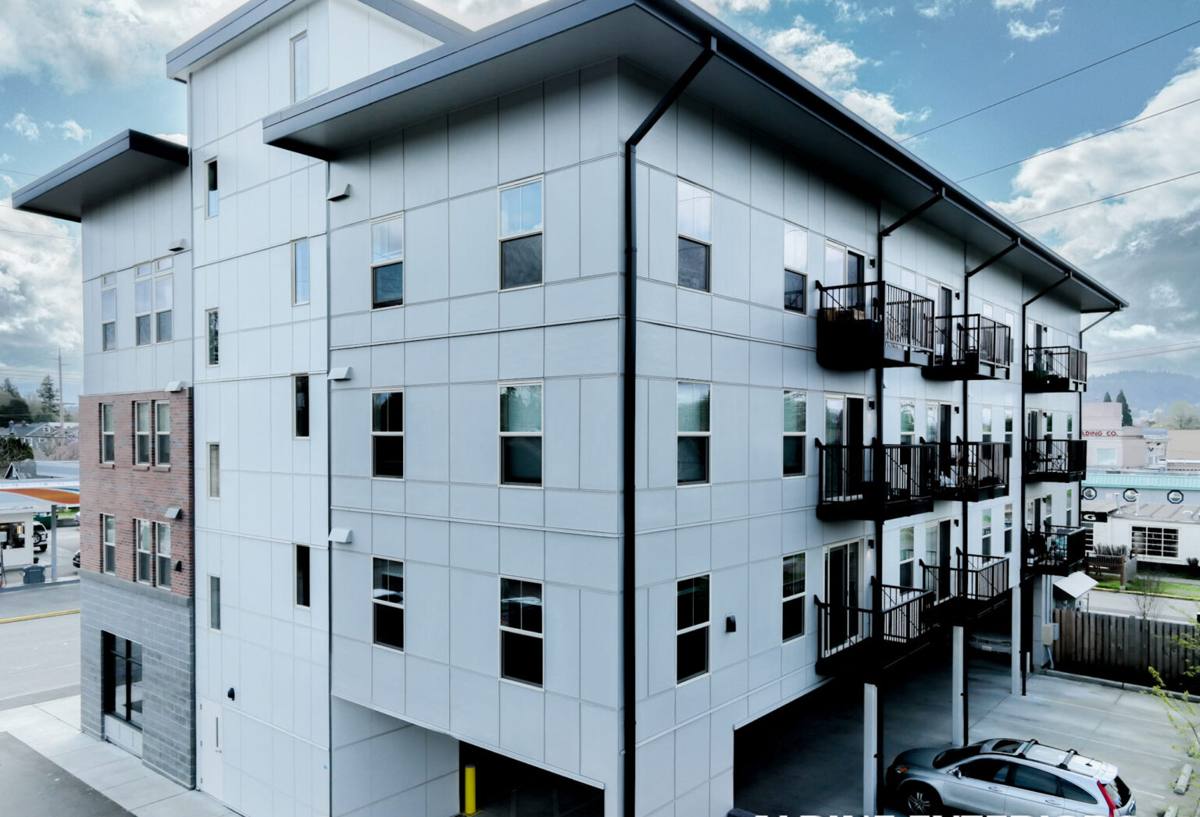
What "Salt Air, Rain, and Moss" Actually Do to Siding
Salt Air
Airborne salt is corrosive to metal fasteners, flashing, and trim, and it accelerates the breakdown of lower-grade paint films. Over years, that shows up as rust bleed at nail heads, chalking or fading on the sun-exposed side of the house, and premature caulk failure at joints.
Driving Rain
Wind-driven rain doesn't just wet the surface of a wall — it pushes water sideways and upward, testing every lap, seam, and penetration in the siding system. A siding job that looks fine on a calm day can still be letting water behind the cladding during a real Whatcom County storm if the water-resistive barrier, flashing, and laps weren't detailed correctly.
The Long Moss Season
Shaded, damp walls in tree-heavy neighborhoods like Happy Valley grow moss and algae for a large part of the year, not just in the darkest winter months. Organic growth holds moisture against the siding surface, which is exactly the condition that causes wood-based and lower-density fiber cement products to swell, delaminate, or rot at the edges over time.
Signs a Happy Valley Home Needs Siding Replacement Now
- Soft or spongy spots when you press on the siding, especially near the bottom courses and around windows
- Paint that's peeling, bubbling, or chalking heavily despite being repainted within the last several years
- Visible gaps, cupping, or warping at panel edges and seams
- Persistent moss or algae staining that comes right back after cleaning
- Rust streaking below nail heads or metal trim
- Rising interior heating bills with no other explanation — often a sign the wall assembly behind the siding is no longer doing its job
- Visible rot, staining, or a musty smell near the base of exterior walls or around window and door trim
Any one of these can be a cosmetic issue. Several of them together, especially on a home more than 15-20 years old, usually mean the siding and the moisture barrier behind it are past the point where patching makes sense.
What a Correct Siding Replacement Actually Involves
Replacing siding well is mostly about what happens before the new panels ever go up. The visible product is only one part of a system that has to work together to keep water out.
- Full tear-off and inspection. Old siding comes off so the sheathing underneath can be checked for rot, soft spots, or prior water damage — problems that are invisible from the outside and get sealed in if you skip this step.
- Sheathing repair. Any damaged sheathing gets cut out and replaced before anything else happens. Installing new siding over compromised sheathing just hides the problem for a few more years.
- Water-resistive barrier. A new weather barrier goes over the sheathing, lapped correctly from the bottom up so water sheds outward rather than working its way behind the barrier.
- Flashing at every penetration. Windows, doors, hose bibs, vents, and any other wall penetration get properly flashed and integrated with the weather barrier — this is where most real-world leaks start.
- Correct fastening and lap spacing. James Hardie panels have specific fastener, spacing, and clearance requirements. Following the manufacturer's installation instructions is what keeps the product warranty valid and the assembly performing as designed.
- Factory-finished panels. ColorPlus finished Hardie siding arrives with its color baked on at the factory, which avoids the field-painting inconsistencies and premature fading that come with job-site painted products.
Why We Install Only James Hardie Fiber Cement
We standardized on James Hardie siding and don't install vinyl, LP SmartSide, primed wood, cedar, or other fiber cement brands. That's a deliberate call, not a sales preference. Hardie's fiber cement is non-combustible, engineered specifically for wet Pacific Northwest climates through its HZ5 product line, and backed by a strong, transferable warranty when installed to spec. Given what salt air, driving rain, and a long moss season do to a wall assembly in a neighborhood like Happy Valley, we'd rather stand behind one product system we trust completely than offer several and hope the cheaper ones hold up.
That doesn't mean other products are worthless — vinyl and engineered wood both have a place in the market. It means that for the conditions we see on Bellingham homes, we've concluded Hardie gives homeowners the best combination of moisture resistance, finish durability, and long-term cost of ownership, and we'd rather be honest about that than install something we don't fully believe in.
Siding Options Compared for Happy Valley's Climate
| Material | Moisture/Moss Resistance | Salt Air Durability | Maintenance |
|---|---|---|---|
| James Hardie Fiber Cement | High — dimensionally stable, resists swelling | Strong; factory finish resists chalking and fade | Occasional wash; no repainting needed for years |
| Vinyl | Moderate — doesn't rot but can warp with heat/cold cycling | Can become brittle and discolor over time in coastal air | Low, but limited repair options if damaged or faded |
| Cedar / Primed Wood | Low to moderate — vulnerable to rot and moss without diligent upkeep | Salt accelerates finish breakdown | High — regular painting/staining and moisture monitoring |
| LP SmartSide / Engineered Wood | Moderate — engineered strand product, but edges are moisture-sensitive if cut or damaged | Moderate; finish maintenance affects long-term performance | Moderate — edge sealing and finish upkeep matter |
Our Process for a Happy Valley Siding Replacement
Happy Valley's sloped lots, mature landscaping, and tighter urban setbacks compared to rural Whatcom County properties mean a job here needs more planning than a straightforward flat-lot install. We account for tree cover and drainage patterns when we assess a home, because a wall that stays shaded and damp longer needs the same careful flashing and barrier work whether it's the front of the house or the back.
- On-site assessment. We walk the property, check drainage and grading around the foundation, and look at how sun and shade actually hit each wall before we scope the job.
- Written scope and product selection. You get a clear plan for which Hardie product line, plank exposure, and ColorPlus color fits the home, along with a written cost estimate before work starts.
- Site protection. Landscaping, walkways, and neighboring structures get protected for the duration of tear-off and install, which matters more on tighter Bellingham city lots than it does out in the county.
- Daily cleanup. Job sites get cleared of debris and fasteners each day, not just at the end of the project.
- Final walkthrough. We go over the finished work with you before calling the job done, including a look at flashing details and trim.
What to Ask Before You Hire a Siding Contractor
- Are you a certified installer for the specific product you're proposing?
- Will you tear off the old siding and inspect the sheathing, or install over the existing wall?
- What's your plan for flashing windows, doors, and other wall penetrations?
- Is the manufacturer's warranty on the material transferable, and does your workmanship warranty cover it separately?
- Can you explain, in plain terms, why you recommend one siding product over another for this specific home?
- How do you handle unexpected sheathing damage found during tear-off?
A contractor who can answer these clearly and specifically, without dodging the sheathing and flashing questions, is worth far more than one offering the lowest bid.
Why Local Experience in Happy Valley Matters
A crew that already works in and around Bellingham understands how Whatcom County's rain patterns, tree cover, and coastal air actually behave on a wall — not just what a manual says in the abstract. That translates into practical decisions on site: where extra flashing attention pays off, which walls need closer moisture inspection during tear-off, and how to sequence a job around the wetter stretches of the local weather. It also means familiarity with the City of Bellingham's permitting process, which keeps your project moving instead of stalled on paperwork.
Siding is a long-term investment in the house — done right, it should be one of the last exterior projects you have to think about for a couple of decades. If your Happy Valley home is showing signs of wear, we're happy to take a look and put together a free, no-pressure estimate using the form below.