 Bellingham Siding
 Why Sehome Roofs Wear Out Differently Than You'd Expect
Sehome sits close enough to Bellingham Bay to catch salt-laden air off the water, and high enough on its hillside terrain to sit under heavy tree canopy in a lot of yards. That combination is harder on a roof than either factor alone. Salt air accelerates corrosion on exposed metal fasteners, flashing, and vent caps. Overhanging trees keep sections of the roof shaded and damp long after a storm has passed, which is exactly the environment moss and algae need to take hold. Add in Whatcom County's long stretch of driving rain from fall through spring, and you've got a roof that's rarely given a real chance to dry out.
None of that means Sehome roofs fail faster across the board — a lot of the neighborhood's housing stock is solid. It means the failure points are different from what you'd see on a roof in a drier, more exposed part of the county, and a repair that doesn't account for that ends up being a repeat call within a year or two.
The Roof Repair Calls We See Most in This Neighborhood
Older homes near Western Washington University
Sehome has a mix of older craftsman-style and mid-century homes, many of them within walking distance of WWU. On these roofs, the recurring issues are aging underlayment, flashing that was installed to an older standard, and roof valleys that collect needles and debris from mature trees. When these homes have been re-roofed over the years without updating the flashing details, you often get slow leaks at chimneys, dormers, and wall intersections long before the field of the roof itself is a problem.
Newer construction and additions
Newer builds and additions in and around Sehome tend to have fewer flashing issues but can develop problems where a roof line changes pitch, where a new addition ties into an older roof, or at skylights and vents that weren't sealed with enough attention to the wet climate here. We also see nail pops and shingle lifting on roofs that were installed quickly during a busy building season.
What a Correct Roof Repair Actually Involves
A roof repair that holds up in Bellingham's climate is more than swapping out a few shingles. It starts with figuring out where water is actually getting in, which is not always where the stain shows up inside — water travels along rafters and sheathing before it drips somewhere visible.
Diagnosis before demo
We look at the whole roof plane involved, not just the spot that's leaking: flashing condition, underlayment where it's exposed, nail patterns, and how the roof drains through valleys and gutters. A repair based on a guess almost always misses something, and on a moss-prone roof, the real cause is often upstream of the visible damage.
Flashing and underlayment come first
Most of the roof leaks we're called out for in this area trace back to flashing — around chimneys, skylights, dormers, and where a roof meets a wall — rather than the shingles themselves. Repairing shingles without correcting the flashing underneath them is a short-term fix. We replace underlayment in the repaired section with materials rated for sustained wet exposure, not just the minimum required.
Matching materials honestly
We'll match the existing shingle color and profile as closely as the market allows, but we tell customers upfront that a patched section on a roof that's ten or more years old will rarely be invisible — sun and moss exposure fade roofing unevenly over time. If blending matters a lot to you, that's a legitimate reason to talk about a larger repair or a full replacement instead of a small patch.
Moss and Debris: Bellingham's Slow-Motion Roof Problem
Whatcom County's moss season is long — realistically it's active anywhere from early fall through late spring whenever the roof stays damp and shaded. Moss doesn't just look bad; it holds moisture against the shingle surface, lifts shingle edges as it grows, and works its way into nail holes and laps. On tree-covered lots, needle and leaf debris in valleys and behind chimneys does something similar by damming water so it sits instead of draining.
A repair on a moss-affected roof isn't complete if it stops at replacing the damaged shingles. We clear the surrounding area, check for granule loss and soft spots the moss was hiding, and talk through realistic moss control options — zinc or copper strips, periodic treatment, or trimming back branches where that's practical — so the same repair isn't needed again in two years.
Repair or Replace? How We Help You Decide
Not every roof problem in Sehome needs a full replacement, and not every leak should be patched forever. We walk through this honestly rather than defaulting to whichever job is bigger.
| Factor | Usually points to repair | Usually points to replacement |
|---|---|---|
| Age of roofing | Under 15 years, isolated damage | Nearing or past manufacturer lifespan |
| Leak location | Single flashing point or isolated valley | Multiple leaks in different areas |
| Shingle condition | Localized wear, rest of roof intact | Widespread granule loss, curling, or brittleness |
| Decking/sheathing | Solid, no soft spots found | Soft, spongy, or visibly rotted in inspection |
| Moss/algae extent | Surface-level, recently developed | Long-term growth with underlying granule damage |
Cost is part of this conversation too, and it's fair to expect a wide range depending on scope — a straightforward flashing or shingle repair is a modest expense, while decking replacement or multiple problem areas moves the job toward what you'd budget for a partial re-roof. We'll always tell you which side of that line your roof is actually on.
How We Handle a Roof Repair Call in Sehome
- Inspection: We get on the roof (or use a ladder and camera where pitch or access doesn't allow it safely) and check the problem area plus the surrounding roof plane.
- Diagnosis and estimate: You get a plain explanation of what's failing, why, and what it will take to fix it correctly — including if we think repair isn't the right long-term call.
- Scheduling around weather: Roof repairs need a dry work window. We watch the forecast and schedule accordingly rather than rushing a repair into a wet day, which is how repairs fail early.
- The repair itself: Removal of damaged materials, correction of the underlying cause (flashing, underlayment, ventilation), and reinstallation with materials suited to this climate.
- Cleanup and check: Debris and old material hauled off, gutters checked since they're usually part of the same water path, and a final look to confirm the fix addresses the actual source.
Where Roof Problems Turn Into Siding Problems
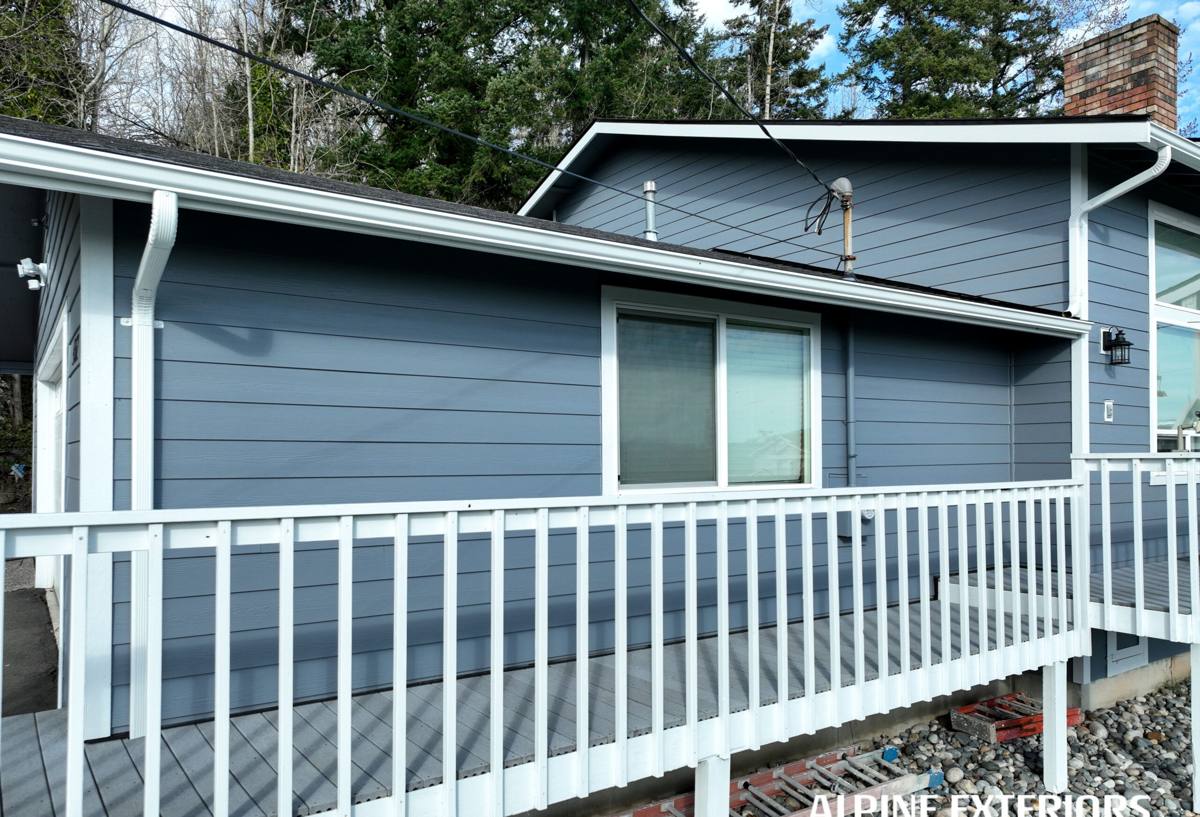
We work on siding and roofs together for a reason: the two systems meet at the roofline, and a lot of what looks like a siding problem actually starts at a bad flashing detail or an overflowing gutter above it. Water that isn't shed properly off the roof edge runs down behind fascia boards, saturates the top course of siding, and eventually shows up as staining, soft trim, or paint failure well below the actual leak. If you're seeing water damage on siding or trim near the roofline, it's worth having both looked at together rather than treating them as separate issues — fixing the siding without correcting the roof drainage just means the damage comes back.
Why It Matters to Hire a Crew That Already Works in Sehome
Sehome's hillside lots, mature tree cover, and mix of home ages mean access and staging aren't always straightforward — steep driveways, limited street parking near campus, and roof pitches that vary a lot from one block to the next. A crew that's already worked in the neighborhood knows to plan for that instead of showing up and improvising. Familiarity with how homes here were built and re-roofed over the years also means fewer surprises once we're actually up on the roof, and a more accurate estimate before work starts.
Signs You Shouldn't Wait On
- Water stains on ceilings or upper walls, especially after a heavy rain
- Visible moss buildup, particularly in shaded valleys or the north side of the roof
- Shingles that are curling, cracking, or missing granules
- Daylight visible through the roof deck from inside the attic
- Rust streaks or corrosion around metal flashing and vent caps
- Sagging in the roofline or soft spots you can feel when walking the attic floor
- Water damage or staining on siding, fascia, or trim near the roof edge
If you're seeing any of these on a home in Sehome, it's worth getting a second set of eyes on it before the next storm season. We offer free, no-pressure estimates — fill out the form below and we'll take a look and give you an honest read on what your roof actually needs.