 Bellingham Siding
 Roof Repair Built for Birch Bay's Conditions
Birch Bay sits right on the water, and that changes what a roof has to deal with compared to a home a few miles inland in Bellingham or elsewhere in Whatcom County. Salt-laden air off the bay, driving rain that comes in sideways during winter storms, and a moss season that runs longer than most homeowners expect all put extra wear on a roof system. A repair that would hold up fine on a sheltered inland lot can fail early out here if it isn't done with the local exposure in mind.
This page covers what roof repair actually looks like for Birch Bay homes specifically — the failure points we see most often, what materials and details hold up, and how we approach a repair so it lasts rather than becomes a repeat visit.
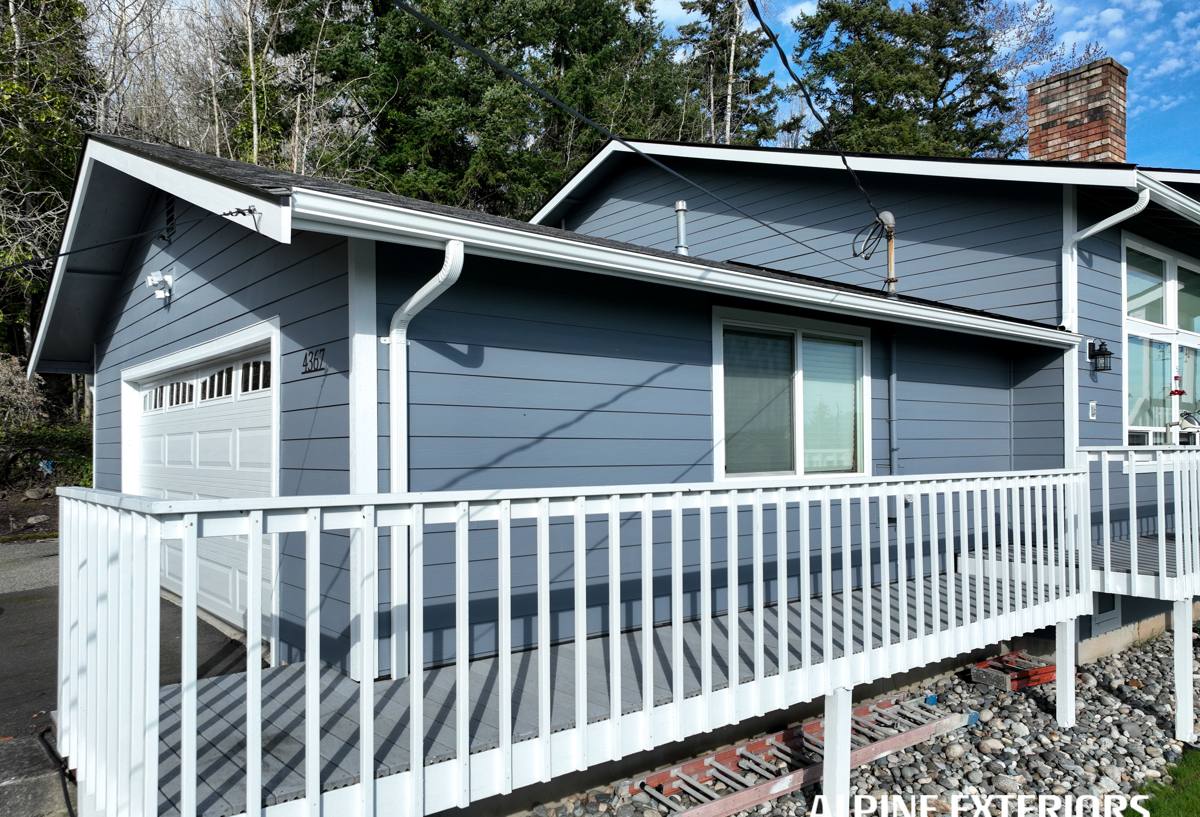
What Makes Birch Bay Roofs Different
Salt Air and Metal Fatigue
Airborne salt accelerates corrosion on anything metal — flashing, fasteners, gutter hangers, even the metal components inside some vents. On a lot of coastal homes, the roof deck and shingles look fine while the fasteners and flashing underneath are quietly failing years ahead of schedule. A repair that just patches the visible shingle damage without checking the metal underneath is a short-term fix.
Wind-Driven Rain
Storms coming off the water don't just drop rain straight down — wind pushes it sideways and up under laps, flashing edges, and ridge caps that would stay dry in a calmer setting. This is why leaks in Birch Bay often show up at transitions (roof-to-wall, chimney, skylights, low-slope sections) rather than in the open field of the roof itself.
Moss Season
Whatcom County's wet, mild winters give moss a long runway, and Birch Bay's shaded and moisture-holding spots are no exception. Moss doesn't just look bad — it holds water against the roofing material, lifts shingle edges, and works its way into joints and fastener holes, turning a minor weak spot into an active leak over a season or two.
Common Roof Problems We Find in Birch Bay
- Moss-lifted shingles along the north-facing slopes and shaded roof sections where moss has taken hold and pried up shingle tabs
- Corroded or loosened flashing around chimneys, skylights, and roof-to-wall transitions, often from years of salt exposure on the fasteners
- Worn or cracked ridge caps from constant wind loading along the ridge line
- Granule loss and shingle brittleness on older asphalt roofs that have taken more UV and weather cycling than the same product would see inland
- Clogged or sagging gutters from moss and debris, which back water up under the roof edge during heavy rain
- Soft or rotted decking at points where a slow leak has been running unnoticed under intact-looking shingles
What a Correct Roof Repair Actually Involves
A roof repair that's done right isn't just swapping out damaged shingles. It starts with figuring out why that section failed in the first place — otherwise you're patching a symptom and the same spot leaks again in a year or two.
Diagnosis Before Patching
We check the decking underneath any damaged area, not just the surface. If the plywood has gone soft from a slow leak, patching over it without addressing the deck just hides the problem. We also trace water stains back to their actual entry point, which is often several feet from where the stain shows up inside.
Matching Materials, Not Just Color
Shingle repairs should match the existing roof's material weight and profile, not just the color. A mismatch in thickness or profile creates a new weak point where water can pool or wind can catch an edge.
Flashing Done Properly
Flashing is where most Birch Bay leaks originate, so repair work here gets particular attention — correct laps, proper sealant use (not sealant as a substitute for correct flashing geometry), and metal that's rated to handle salt exposure rather than standard-grade material that will corrode again in a few years.
Moss and Ventilation Check
If moss caused or contributed to the damage, we address the moss itself — not just the shingles it damaged — and take a look at attic ventilation, since poor ventilation keeps the roof deck cooler and damper, which moss and algae both like.
Repair or Replace? How We Help You Decide
Not every roof problem in Birch Bay needs a full replacement, and we won't push one when a targeted repair will genuinely hold. The honest answer depends on a few factors:
| Factor | Repair Usually Makes Sense | Replacement Usually Makes Sense |
|---|---|---|
| Roof age | Under roughly 12-15 years, in otherwise good condition | Nearing or past the material's expected service life |
| Extent of damage | Isolated to one or two areas | Spread across multiple slopes or the whole roof |
| Decking condition | Solid, dry decking under the damaged section | Widespread soft spots or rot found during inspection |
| Leak history | First or isolated leak event | Repeated leaks in different spots over recent years |
| Granule loss / brittleness | Localized to the repair area | Uniform across the roof, shingles cracking when lifted |
We'll tell you plainly which side of this table your roof falls on, including when a repair is the right call even if a replacement would be more profitable for us. A roof that only needs a repair doesn't need to be sold a full tear-off.
Materials and Fasteners That Hold Up Near the Water
What goes into a Birch Bay repair matters as much as the workmanship. Standard-grade hardware that's fine inland can corrode fast this close to salt air.
| Component | Standard-Grade Option | Better Choice Near the Bay |
|---|---|---|
| Fasteners | Electro-galvanized nails | Hot-dip galvanized or stainless steel nails |
| Flashing metal | Uncoated or lightly coated steel | Aluminum or heavier-gauge coated flashing rated for coastal exposure |
| Gutter hardware | Basic zinc-plated hangers | Corrosion-resistant hangers matched to the gutter material |
| Vent and pipe boots | Standard rubber boots | UV- and weather-resistant boots with a longer expected service life |
The "better choice" column costs a little more up front. On a Birch Bay roof, that difference in materials is usually the difference between a repair that lasts and one that needs to be redone in a few years.
Our Roof Repair Process
- Inspection — we get on the roof (weather permitting) and check both the surface and, where accessible, the attic side for staining, soft decking, and ventilation issues.
- Honest diagnosis — we explain what's actually wrong, what caused it, and whether a repair or a larger scope makes sense, in plain terms.
- Written estimate — a clear scope of work and price before anything starts, no surprise add-ons once we're on the roof.
- The repair itself — matched materials, correct flashing details, and coastal-rated fasteners and hardware where they matter.
- Cleanup and walk-through — debris cleared, gutters checked, and a rundown of what was done and what to watch going forward.
Signs Your Birch Bay Roof Needs Attention
- Moss growth on any slope, especially north-facing or shaded sections
- Granules collecting in gutters or at downspout outlets
- Shingle edges curling, cracking, or lifting
- Water stains on interior ceilings, especially near chimneys, skylights, or exterior walls
- Visible rust or corrosion on flashing, vent boots, or gutter hardware
- Daylight visible through the roof deck from inside the attic
- A roof that's due for its first close inspection in 3+ years, since it's cheaper to catch problems early than after a leak
Why a Local Bellingham Crew Matters for Birch Bay Homes
A crew that regularly works Birch Bay knows what to look for before the ladder even goes up — which roof orientations tend to hold moss longest, which fastener grades actually last this close to the water, and how the wind off the bay tends to find weak points at flashing and transitions. That's the kind of judgment that only comes from working the area repeatedly, not from a general repair job done the same way regardless of where the house sits.
It also means straightforward scheduling and follow-up. If a repair needs a second look after a hard winter storm, or you want a quick check before the next moss season, you're dealing with a crew that already knows your roof and your property rather than starting from scratch.
If you're seeing moss, a stain on the ceiling, or just want an honest opinion on a roof's condition before it becomes a bigger problem, we're happy to take a look. Reach out for a free, no-pressure estimate using the form below.