 Bellingham Siding
 Why Sehome Roofs Take a Different Kind of Beating
Sehome sits close enough to Bellingham Bay that salt-laden air is a real factor in how fast roofing materials age, even a few miles inland. Add in the driving, sideways rain that comes off Pacific storms through the fall and winter, and a tree canopy that keeps large sections of many roofs shaded and damp long after the sun comes back out, and you've got three separate stresses working on the same roof at the same time. None of them is dramatic on its own. Together, over a few winters, they're what turns a roof that "should have lasted 25 years" into one that's leaking at 15.
A roof replacement done right for this part of Whatcom County isn't just about picking a shingle color. It's about installing every layer — deck, underlayment, flashing, ventilation, and the finish material — with those three stresses specifically in mind. That's the difference between a roof that looks fine for a few years and one that actually performs through a full Bellingham wet season, year after year.
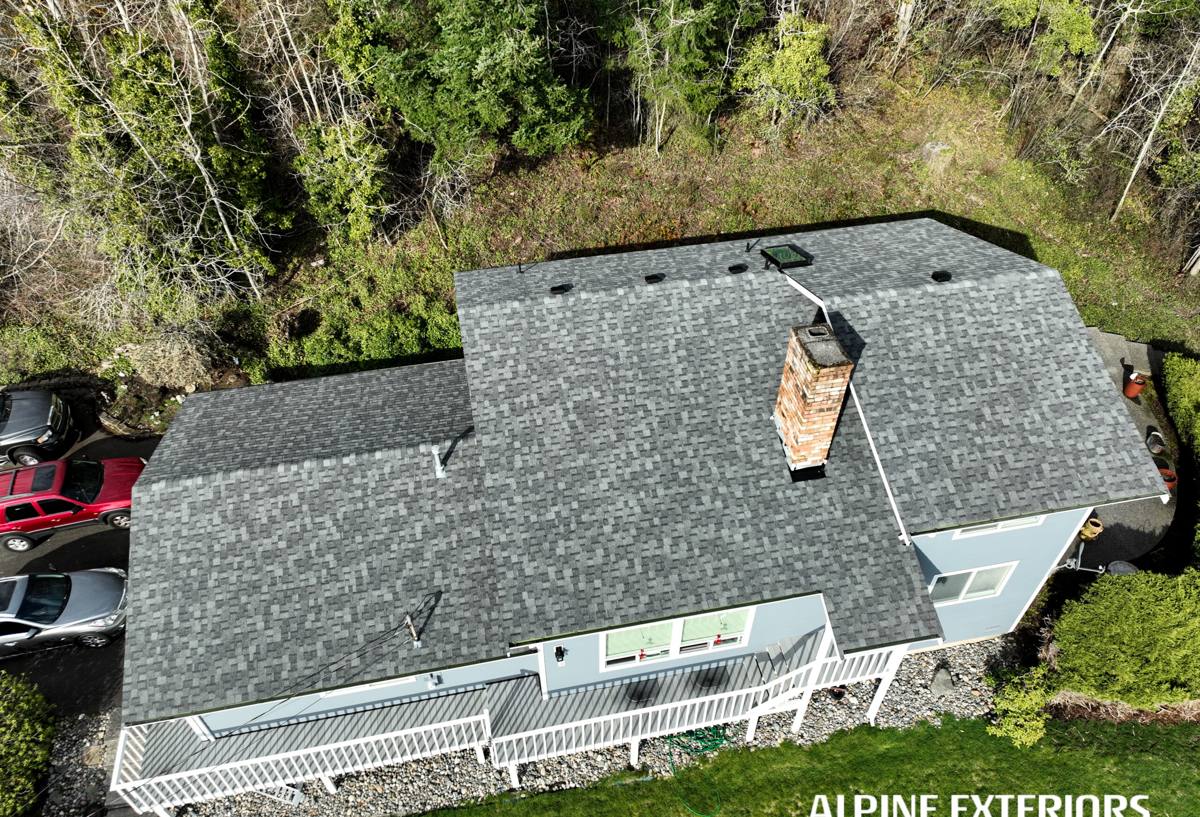
What a Correct Roof Replacement Actually Involves
A lot of what determines whether a new roof holds up happens before a single shingle goes down. The parts of the job that are easy to shortcut are exactly the parts that matter most in a climate this wet.
Full Tear-Off and Deck Inspection
We don't install new roofing over old. A full tear-off lets us see the actual plywood or plank decking underneath, which is the only way to find soft spots, delaminated sheathing, or rot around old penetrations before they're covered up for another 20 years. In a climate with this much sustained moisture, hidden deck damage is one of the most common reasons a "new roof" fails early.
Underlayment and Ice-and-Water Shield
Standard felt underlayment is fine in a dry climate. Here, we use synthetic underlayment as the general water-resistive layer and add self-adhered ice-and-water membrane at eaves, valleys, and around every penetration — chimneys, vents, skylights — because those are the spots where driving rain gets pushed uphill under the shingles instead of running off.
Flashing Done as Metal, Not Caulk
Many older Sehome homes have chimneys, dormers, or skylights that were re-roofed at some point with flashing patched in caulk rather than properly stepped and counter-flashed. Caulk fails; metal flashing installed correctly doesn't need to be relied on to seal anything on its own. This is one of the most common leak points we find on tear-offs in this neighborhood.
Balanced Attic Ventilation
Intake at the soffits and exhaust at the ridge need to be sized to work together. Get this wrong in a damp climate and you trap moisture in the attic, which shortens the life of the decking from underneath — the one place a roof warranty never covers.
Choosing a Roofing Material That Makes Sense for This Neighborhood
There's no single "best" roofing material — there's the material that makes sense for a given roof's pitch, shade exposure, and the homeowner's budget and maintenance appetite. Here's how the main options actually compare for a house in a shaded, damp, salt-air-adjacent neighborhood like Sehome.
| Material | Typical Lifespan | Moss/Algae Resistance | Maintenance Load | Relative Upfront Cost |
|---|---|---|---|---|
| Architectural asphalt shingle (algae-resistant) | 25–30 years | Good, with periodic gutter and debris upkeep | Low to moderate | $ |
| Standing-seam metal | 40–50+ years | Very good — sheds moss and debris more readily | Low | $$$ |
| Cedar shake | 20–30 years with diligent upkeep | Requires active moss/algae management | High | $$–$$$ |
Composition Shingles
For most homes in this neighborhood, an architectural asphalt shingle with algae-resistant granules is the practical choice — good performance for the money, wide range of colors, and a straightforward tear-off and re-cover down the road.
Standing-Seam Metal
Metal costs more up front but sheds moss and standing moisture better than any other option, which matters most on heavily shaded roof planes. Homeowners planning to stay long-term often find the lifetime cost math works in metal's favor.
Cedar Shake — Why We're Selective With It
Cedar shake can look great on the right style of home, but it's the one material where our standard is to have an honest conversation first. Wood holds moisture longer than composition or metal, which in a climate with this much shade and rain means more frequent moss and algae management to keep it performing as designed. We'll still install it when a homeowner wants that look and understands the maintenance commitment — we just won't sell it as low-maintenance, because in this climate it isn't.
Moss and Algae: Building Prevention In, Not Bolting It On Later
Whatcom County's moss season runs long — cool, damp conditions favor moss growth for most of the fall, winter, and spring. The goal on a new roof is to make moss and algae harder to get a foothold on in the first place, rather than treating it after the fact.
- Zinc or copper strips installed near the ridge, which release trace metal ions with every rain that inhibit moss and algae growth down-slope
- Algae-resistant shingle granules on any composition roof, standard on most product lines today
- Gutters and downspouts sized generously enough for driving Pacific storm rain, not just a light drizzle
- Trimming back overhanging branches where it's practical, so more of the roof gets sun and airflow between storms
Where Roofing Meets Siding: Why the Overlap Matters
Because we work on siding and roofing together, we pay particular attention to the spots where the two systems meet — and that's exactly where a lot of leaks actually start. Kickout flashing at roof-to-wall intersections, drip edge that tucks properly behind siding rather than in front of it, and fascia and trim boards that have been quietly absorbing moisture for years are all things a roof-only crew can miss because they're not thinking about the wall assembly at all. On a replacement, we check and correct these transition points as part of the job, not as an upsell afterward.
Permits and Local Code Considerations
Roof replacements in Bellingham and unincorporated Whatcom County generally require a building permit, and the work needs to meet current wind and snow load requirements for the area — western Whatcom County isn't a heavy snow-load region most winters, but code accounts for the occasional wet, heavy snowfall along with our routine wind-driven rain. We handle the permit process as part of the job so homeowners aren't left tracking down inspections themselves.
Our Roof Replacement Process
- Inspection and honest assessment — we look at the deck, flashing, ventilation, and any interior signs of past leaks before recommending full replacement versus repair
- Material selection — walking through the real trade-offs above based on your roof's shade exposure and your maintenance preferences
- Scheduling around the weather — timing tear-off for the driest realistic window, with contingency plans for sudden rain
- Tear-off and deck repair — removing old roofing, replacing any damaged sheathing, disposing of debris
- Dry-in — underlayment and ice-and-water shield installed the same day the deck is exposed, so the house is never left open to weather overnight
- Flashing and ventilation — all the detail work at penetrations, valleys, and eaves
- Finish material installation — shingles, metal, or shake installed to manufacturer specification
- Cleanup and magnet sweep — full site cleanup including a nail sweep of the yard and driveway
- Final walkthrough — reviewing the finished roof and warranty paperwork together before we call the job done
Why Hire a Crew That Already Works in Sehome
A roofing crew that regularly works this neighborhood already knows the practical stuff that saves time and money: which streets and driveways make staging equipment and dumpsters straightforward versus tight, how shaded roof planes in this part of Bellingham tend to hold moss compared to open, sunnier lots elsewhere, and which local suppliers can turn around materials fast when a schedule needs to shift around weather. That local familiarity also matters when storm damage hits — a crew already working in the area can typically get a tarp on a damaged roof faster than one dispatching from farther away, which matters when driving rain is in the forecast.
Keeping a New Roof Healthy Through Bellingham's Wet Season
A correctly installed roof still benefits from a little routine attention, especially in a climate that stays damp for so much of the year.
- Clean gutters and downspouts at least twice a year, more often under heavy tree cover
- Check zinc or copper moss-prevention strips periodically and reapply if performance fades
- Trim back branches that have grown back over the roofline
- Walk the attic once a year to confirm ventilation isn't blocked by insulation or storage
- Have flashing and penetrations inspected annually, especially after a hard winter
- Address any granule loss, lifted shingles, or small leaks promptly rather than waiting for the next dry season
If your Sehome roof is showing its age, or you just want a straight answer about what shape it's really in, we're happy to take a look. Fill out the form below for a free, no-pressure estimate.