 Bellingham Siding
 Siding Built for Columbia's Weather, Not Just Its Curb Appeal
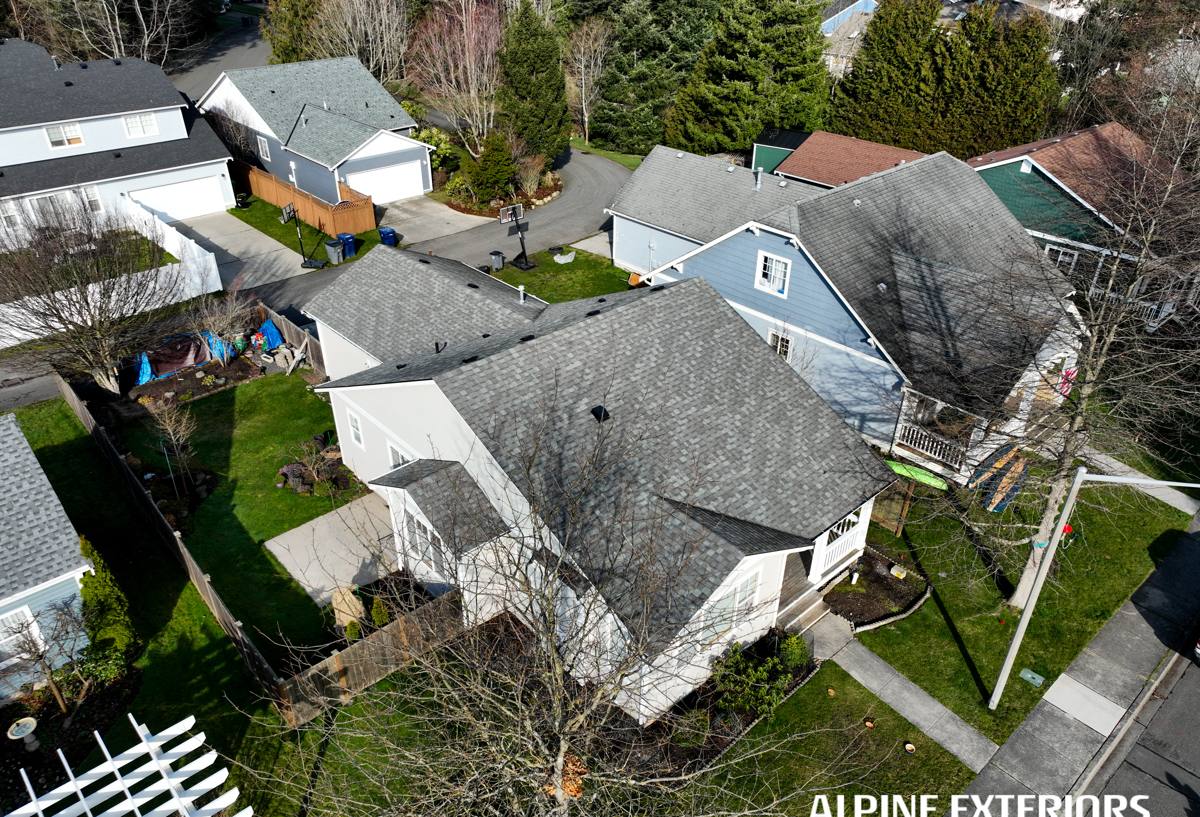
Columbia sits close enough to Bellingham Bay that homes here deal with a combination most inland neighborhoods don't: salt-laden air off the water, wind-driven rain that hits siding sideways instead of straight down, and a moss season that can stretch from October through May. Any siding product survives a sunny day. What separates a good exterior from a problem one is how it holds up through eight months of the kind of weather Whatcom County actually delivers. That's the lens we use on every Columbia project, and it's why we install James Hardie fiber cement exclusively rather than carrying a menu of products with different tolerances for moisture and salt exposure.
This page covers what James Hardie siding specifically brings to a Columbia home, what a correct installation looks like in this climate, and how our process works from first look to final walk-through.
What Salt Air and Driving Rain Actually Do to Siding
It helps to understand the failure modes before talking about the fix. Two separate stresses are at work on a Columbia exterior:
Salt Air
Proximity to the bay means airborne salt settles on exterior surfaces even on days without direct spray. Over years, salt exposure accelerates corrosion of exposed metal fasteners and trim, and it degrades paint films faster than the same coating would wear inland. Siding materials that rely on a thin factory or field-applied coat for weather resistance lose that protection sooner near the water.
Driving Rain
Bellingham's storms frequently come with enough wind to push rain sideways into wall assemblies, not just straight down over them. That means water reaches lap joints, butt seams, and trim intersections that a purely vertical rain would rarely touch. A siding system's water-shedding detailing — how laps overlap, how seams are sealed, how trim is flashed — matters more here than in a calmer climate.
The Moss Season
Extended damp, low-light stretches from fall through spring create ideal conditions for moss and algae growth on north-facing and shaded walls. Materials that hold surface moisture, or that have organic content in their composition, are more hospitable to growth than dense, factory-sealed fiber cement. Moss that's allowed to sit against siding retains moisture against the surface, which compounds any underlying weather-resistance weakness.
None of these three conditions is exotic for this part of Washington. They're just the baseline, and they're the reason a siding choice that performs fine in a drier climate can underperform in Columbia specifically.
Why James Hardie Fits This Climate
James Hardie fiber cement is engineered from cement, sand, and cellulose fibers — an inorganic composition that doesn't feed mold or absorb water the way wood-based products can. A few specifics matter for a Columbia install:
- Non-combustible core: fiber cement doesn't provide fuel the way wood-based sidings do, which matters for insurance underwriting as much as fire safety.
- ColorPlus factory finish: the color coat is baked on in a controlled factory environment rather than field-sprayed, giving a more consistent, better-adhered finish that resists fading and chipping — important where salt air is working against any coating year-round.
- HZ5 and HZ10 product engineering: James Hardie manufactures climate-specific formulations. The HZ line used in the Pacific Northwest is engineered for the moisture exposure our region sees, as opposed to a generic national product.
- Dense, moisture-resistant substrate: the material doesn't swell, rot, or delaminate the way engineered wood products can when repeatedly wetted, which is directly relevant to eight months of rain contact per year.
- Won't feed pests: carpenter ants and woodpeckers target wood and wood-composite siding; fiber cement gives them nothing to work with.
These aren't marketing points we picked up secondhand — they're the specific reasons our company standardized on one product line instead of installing whatever a homeowner asks for. We'd rather turn down a job than install something we know will underperform in this climate.
What We Won't Install, and Why It Matters Here
We don't install vinyl, LP SmartSide, primed spruce, cedar, or other fiber cement brands like Cemplank or Allura. Every one of those products has legitimate uses somewhere. The problem for Columbia specifically is that each carries a trade-off that this climate tends to expose:
- Vinyl expands and contracts significantly with temperature swings and can crack or warp under prolonged wind exposure; its seams and butt joints aren't designed for driving rain the way a properly installed fiber cement lap is.
- Engineered wood products (LP SmartSide and similar) use a wood-strand substrate that performs well when detailing and maintenance are kept up, but any breach in the factory coating exposes wood fiber to moisture — a real risk given how much rain contact this area sees.
- Primed spruce and cedar are natural wood products that require ongoing paint and sealant maintenance to keep water out; skipped maintenance in a wet climate shows up faster as rot, cupping, or paint failure than it would somewhere drier.
- Other fiber cement brands may be dimensionally similar to James Hardie but don't carry the same factory finish system, warranty structure, or regional product engineering we've standardized our crews and details around.
We're not saying these products can't be installed correctly elsewhere. We're saying that for a coastal Whatcom County exterior, the margin for error with these materials is thinner than we're willing to build our reputation on.
Product Comparison for a Columbia Exterior
| Factor | James Hardie Fiber Cement | Vinyl | Engineered Wood / Cedar |
|---|---|---|---|
| Moisture resistance | High — inorganic, dense substrate | Moderate — seams vulnerable to wind-driven rain | Moderate to low — depends on coating integrity |
| Salt air durability | High — factory ColorPlus finish | Moderate — UV and salt fade coatings over time | Low to moderate — finish wears, exposing substrate |
| Moss/algae resistance | High — non-organic surface | Moderate | Low — organic content is hospitable to growth |
| Fire rating | Non-combustible | Combustible | Combustible |
| Maintenance | Low — occasional wash, repaint on long cycle | Low but limited repair options | Higher — regular paint/seal cycle |
| Typical lifespan when installed to spec | Multiple decades | 15-25 years | 10-20 years, maintenance-dependent |
What a Correct James Hardie Installation Involves
The product only performs as well as the install. A few details we treat as non-negotiable on every Columbia job:
Water Management Behind the Siding
James Hardie panels are a rain-screen component, not a standalone waterproofing layer. Correct installation starts with a properly lapped weather-resistant barrier, correctly integrated flashing at every window, door, and roof intersection, and adequate drainage space where the assembly calls for it. Given how much wind-driven rain reaches this area's walls, skipping or shortcutting this layer is where most long-term siding failures actually originate — not in the siding material itself.
Fastening and Clearances
James Hardie specifies fastener type, spacing, and minimum ground and roof clearances for a reason: get these wrong and you create entry points for moisture or contact conditions that trap it. We follow manufacturer installation specs exactly, because doing so is also what keeps the product's warranty intact.
Caulking and Joint Treatment
Butt joints and trim intersections are where a lot of installs go wrong. We follow James Hardie's documented joint treatment methods rather than relying on caulk alone to do the job long-term — caulk is a component of a correct joint, not a substitute for correct detailing.
Painted Field Cuts
Any cut edge exposes the material's core. Every field cut gets sealed per manufacturer specification before installation, which matters more in a climate where that cut edge will see sustained moisture exposure rather than occasional rain.
Our Process on a Columbia Project
- On-site assessment: we look at your home's specific exposure — how much of it faces prevailing wind and rain, where shade creates moss risk, and the condition of the existing wall assembly underneath the current siding.
- Sheathing and moisture barrier check: once old siding is removed, we inspect the sheathing for hidden rot or moisture damage before anything new goes up. This step gets skipped by crews trying to move fast; we don't skip it.
- Weather barrier and flashing installation: this is the layer that actually keeps water out long-term, done to manufacturer and code specification.
- James Hardie panel installation: installed to manufacturer spec for fastening, clearances, and joint treatment, using the HZ product line appropriate to this climate zone.
- Trim, caulking, and detail work: the finish details that determine how the house actually sheds water at corners, windows, and transitions.
- Final walk-through: we go over the finished work with you before calling the job done.
Why Hiring a Crew That Already Works Columbia Matters
A crew that installs across a wide range of climates has to relearn local conditions on every job. A crew that regularly works Columbia and the surrounding Bellingham area already knows which walls take the worst of the wind-driven rain, how moss behaves on shaded north exposures near the water, and what the salt air does to fasteners and trim over time. That local pattern recognition shows up in small decisions — where to add extra flashing attention, which trim details to prioritize — that don't show up on a spec sheet but do show up in how the house performs five and ten years out.
It also means warranty support that doesn't require explaining your climate to someone unfamiliar with it. If a question comes up two years after installation, you're dealing with a crew that already understands the conditions your home is up against.
What This Typically Involves, Cost-Wise
Every Columbia home is different — square footage, existing wall condition, trim complexity, and access all move the number. In broad terms, a full James Hardie siding replacement is a mid-to-upper range exterior investment compared to vinyl or engineered wood, reflecting both material cost and the labor required to install it correctly. We don't quote firm numbers without seeing the home, but we're upfront that Hardie is not the cheapest option on the market — it's the option we believe holds up longest against this specific climate, which is the trade-off worth having a real conversation about.
Signs Your Current Siding Is Already Losing the Fight
- Visible moss or algae growth that returns shortly after cleaning
- Soft spots, bubbling, or peeling paint, especially on shaded or water-facing walls
- Warping, cupping, or separation at seams and butt joints
- Rust streaking from fasteners or trim hardware
- Rising energy bills that suggest water or air infiltration behind the wall
- Visible gaps at trim, window, or corner details
Any of these on a Columbia home is worth a look before it turns into sheathing damage.
If you're weighing a siding replacement in Columbia and want a straight answer about what your home actually needs, we're glad to take a look. Reach out for a free, no-pressure estimate — the form below gets you started.