 Bellingham Siding
 What Whatcom County Weather Does to a Lynden Roof
Lynden sits in a part of Whatcom County that gets a steady diet of Pacific weather: wind-driven rain that comes in sideways more often than straight down, long stretches of overcast humidity, and a moss season that can run most of the year in shaded areas. None of that is exotic weather, but it's relentless, and roofs here take a different kind of beating than roofs in drier parts of the country.
The bigger issue usually isn't a single storm — it's cumulative exposure. Driving rain finds its way under shingle tabs and around flashing that's slightly loose instead of just running off. Moisture that would evaporate quickly in a dry climate lingers on north-facing slopes and under tree cover, which is exactly where moss and algae take hold. Add in the salt-tinged marine air that moves through this part of Whatcom County, and exposed metal fasteners, flashing, and vents corrode faster than they would inland. A repair that ignores any of this tends to fail again within a season or two.
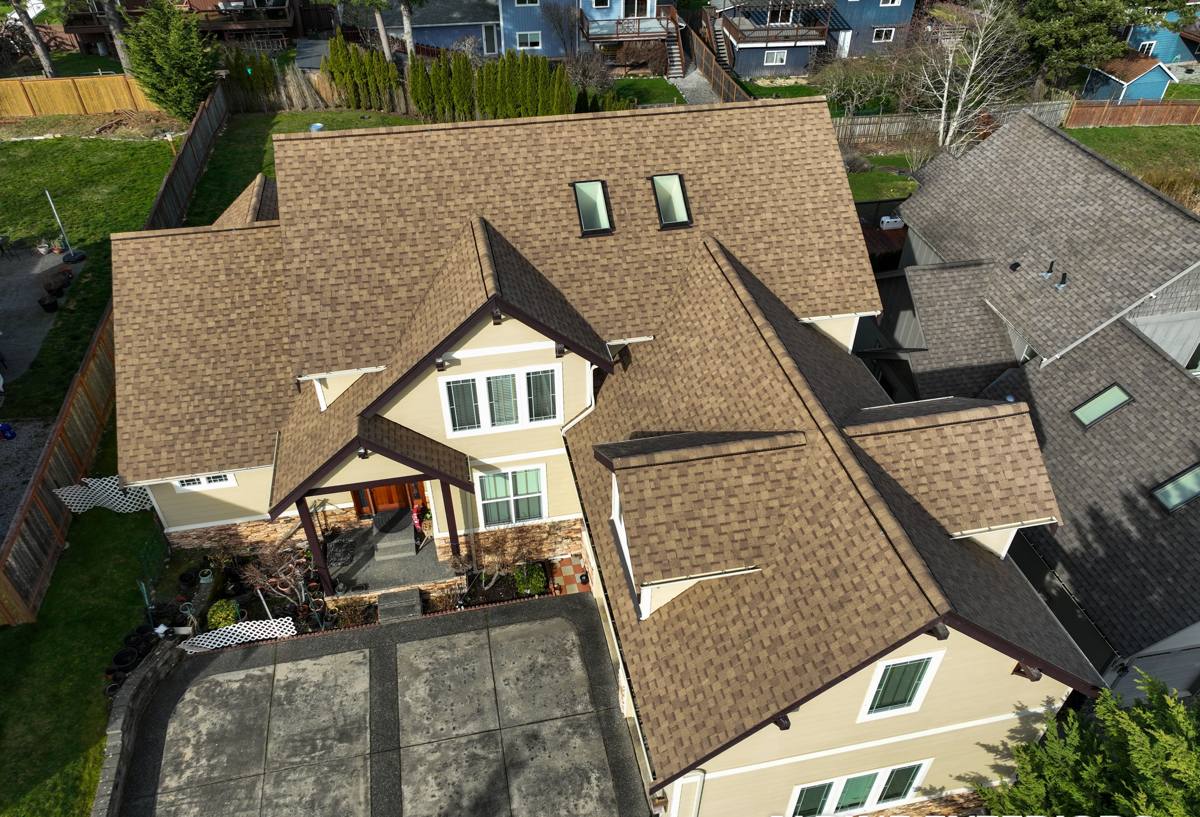
Signs a Lynden Roof Needs Repair
What you'll notice inside the house
Interior signs are often the first clue something's wrong, and they usually show up well after the actual roof problem started.
- Water stains or discoloration on ceilings, especially near chimneys, skylights, or where roof planes meet
- A musty smell in the attic or top-floor closets
- Visible daylight through the roof deck when you look up into the attic
- Soft or sagging spots in ceiling drywall after a heavy rain
What you'll notice from the ground
A lot of roof problems are visible without ever getting on a ladder, if you know what to look for.
- Shingles that are curling, cracked, or missing granules (the roof looks patchy or uneven in color)
- Thick moss growth, especially along ridge lines and shaded slopes
- Rusted or lifted flashing around chimneys, vents, and skylights
- Sagging rooflines or valleys that hold standing debris after rain
- Gutters filling with granules, which usually means the shingles underneath are wearing thin
What a Proper Roof Repair Actually Involves
A repair that just seals the spot you can see is a temporary fix, not a real one. Water rarely enters where it shows up on the ceiling — it travels along the underlayment or decking before finding a gap to drip through. A correct repair means finding where the water is actually getting in, not just where it's landing.
Matching materials correctly
Shingle color and profile change between manufacturing runs, so a patch using the wrong batch or brand can stand out for years. More importantly, mixing incompatible products — different granule types, different underlayment weights — can create small gaps where water collects instead of shedding. We match materials as closely as possible and explain upfront when an exact match isn't realistic.
Flashing and valleys
Most roof leaks in this climate trace back to flashing, not the shingles themselves — around chimneys, skylights, dormers, and valleys where two roof planes meet. Flashing that's just caulked instead of properly integrated under the shingle courses will fail again, usually within a year or two, because caulk shrinks and cracks under UV exposure and temperature swings. A correct repair reworks the flashing so water sheds over it, not through a bead of sealant.
Ventilation and the moisture underneath
In a humid climate, a roof that isn't ventilating properly traps moisture in the attic, which rots decking from underneath and shortens the life of the shingles from below even while they look fine from above. Part of a real repair is checking that soffit and ridge ventilation are actually working, not just present.
Roofing Materials Common Around Lynden
What a repair should look like depends a lot on what's already on the roof. Here's how the common options in this area compare when it comes to repair work specifically:
| Material | Typical lifespan | Moss/moisture behavior | Repair considerations |
|---|---|---|---|
| Asphalt composition shingle | 20-30 years | Moderate moss risk, especially on shaded slopes | Most common and easiest to source matching material; granule loss signals age |
| Metal roofing (standing seam or panel) | 40-50+ years | Sheds moisture well, resists moss but can trap debris at seams | Repairs require matching panel profile and finish; fastener corrosion is the main issue in marine air |
| Cedar shake/shingle | 25-30 years with upkeep | Prone to moss and rot without regular treatment | Requires periodic maintenance; individual shakes can often be replaced rather than a full section |
| Composite/synthetic shingle | 30-40 years | Generally moss-resistant | Fewer local suppliers for exact matches; repairs should stay with the same product line |
Moss and the Long Wet Season
Moss isn't just cosmetic. It holds moisture against the roof surface long after the rest of the roof has dried, and its root structure works into shingle granules and seams over time. Left alone through a few wet seasons, moss growth can lift shingle edges enough to let water underneath.
Pressure washing is one of the worst things you can do to a shingle roof — it strips granules and shortens the roof's life faster than the moss would have on its own. The right approach is gentle removal, treatment to slow regrowth, and in some cases zinc or copper strips near the ridge, which release trace amounts of metal ions that discourage moss as rain washes over them. None of this is a one-time fix; it's ongoing maintenance that matters more here than in drier climates.
How We Approach a Roof Repair in Lynden
- Inspection. We get on the roof (not just the ground) to look at flashing, valleys, penetrations, and the general condition of the shingles or panels — not just the spot where the leak showed up.
- Diagnosis. We trace the actual water path where possible, since the leak's source is often several feet from where it appears inside.
- Written estimate. You get a clear explanation of what's wrong, what we're proposing to fix, and why — before any work starts.
- The repair itself. Matching materials, correcting flashing rather than just resealing it, and checking ventilation while we're up there.
- Cleanup and walk-through. We clear debris, check gutters near the repair area, and explain what we did in plain terms.
Why a Local Bellingham-Area Crew Matters
Roof repair is one of those trades where "local" isn't just a marketing word — it affects the actual outcome. A crew that already works in and around Bellingham and Whatcom County knows how the rain patterns move through the area, which affects when repairs can be scheduled and cured properly. We're not guessing at how a repair will hold up in this climate; we see the results on other roofs in the area year after year.
It also matters for accountability. If a repair needs a follow-up visit, or if a question comes up six months later, you're calling a crew that's still local and still reachable — not a company that worked the region for a season after a storm and moved on. For Lynden homeowners, that ongoing relationship is often worth more than a slightly lower bid from someone passing through.
What Affects the Cost of a Roof Repair
Roof repair pricing varies more than people expect, because the visible damage doesn't always match the extent of the underlying problem. Here are the main factors that move the number:
| Factor | Why it matters |
|---|---|
| Size and location of the repair area | A small flashing fix costs far less than a section spanning a valley or multiple roof planes |
| Material availability | Exact shingle or panel matches for older roofs can require sourcing time, especially discontinued colors |
| Roof pitch and access | Steep or high roofs take longer and require more safety setup |
| Extent of hidden decking damage | Rot found once shingles come off can turn a simple patch into a deck replacement |
| Number and complexity of penetrations | Chimneys, skylights, and multiple vents each add flashing work |
Most straightforward repairs — a section of flashing, a handful of damaged shingles — land in a modest, predictable range. Repairs that involve deck replacement or extensive flashing rework cost more, but we'll always tell you which situation you're in before we start, not after.
Repair or Replace? Making the Right Call
Not every roof problem needs a full replacement, and we won't tell you it does just to sell a bigger job. The honest questions to ask are: how old is the roof relative to its expected lifespan, how many repairs has it already had, and is the damage localized or spread across multiple areas? A 10-year-old roof with one damaged section is almost always a repair. A 25-year-old roof with granule loss across every slope and a history of leaks is usually past the point where more patches make sense.
If you're also planning siding work on the same home, it's worth having both assessed together — flashing where the roof meets the siding is a common trouble spot, and coordinating the two jobs can save you from paying for access setup twice.
If you're dealing with a leak, visible moss buildup, or just want an honest read on where your roof actually stands, we're happy to take a look. The estimate is free, there's no pressure attached to it, and you'll get a straight answer about whether you need a repair, a bigger fix, or nothing at all right now — just fill out the form below.