 Bellingham Siding
 Why Lynden Roofs Take a Different Kind of Beating
Lynden sits inland in the Nooksack Valley, but it lives under the same wet Pacific Northwest weather pattern as the rest of Whatcom County. That means long stretches of low-intensity rain from fall through spring, humid marine air pushing in off Bellingham Bay and the Salish Sea, and short, cool summers that never really dry a roof out the way a hotter inland climate would. That combination is harder on roofing systems than most homeowners realize. Shingles stay damp longer after every rain, moss and algae get a long growing season with almost no heat to check them, and the freeze-thaw cycles of a typical Whatcom County winter work their way into any spot where water has found a path under the roofing material.
Even this far from the water, the marine air still carries some salt and moisture that settles on metal flashing, nail heads, and gutters over time, adding a slow corrosion factor a lot of people don't think about until it shows up as rust streaks or fasteners that have given out early. A roof that would comfortably reach 25 or 30 years in a drier climate can fall well short of that here if it wasn't detailed for this weather in the first place. Correct installation matters more in Lynden than it does in most parts of the country, not less.
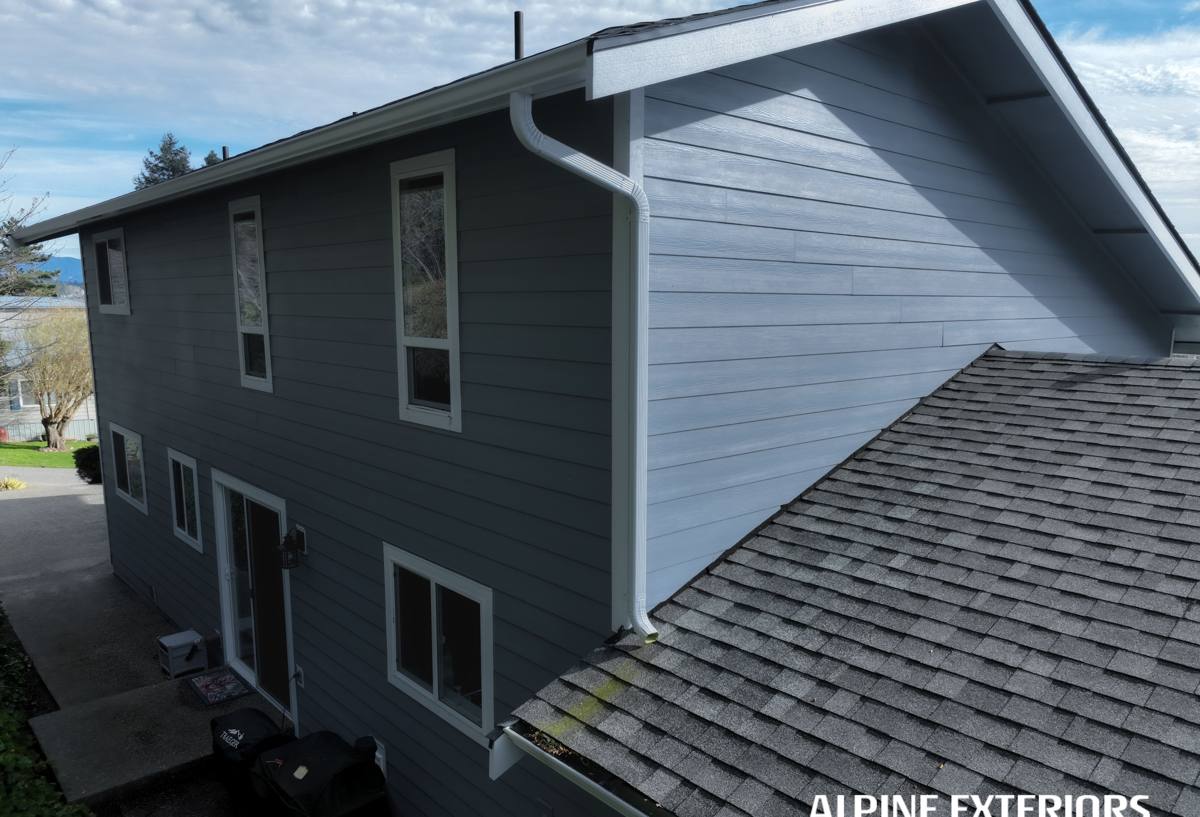
Signs a Lynden Roof Needs Replacement, Not Just Repair
Not every roof problem calls for a full replacement, but there's a point where patching stops being cost-effective and starts being a way to delay the inevitable. Some of the clearest signs it's time to talk replacement rather than repair:
- Granule loss showing up as bald patches on shingles, or granules collecting in gutters and downspouts
- Shingles that are cupping, curling, or cracking, especially on south- and west-facing slopes that see the most sun and wind exposure
- Moss established at the shingle tabs themselves, not just along the ridge — a sign it's had more than one season to take hold
- Decking that feels soft or spongy underfoot, or a roofline that visibly sags when viewed from the ground
- Daylight visible through the roof boards in the attic, or water stains on ceilings and rafters
- Flashing around chimneys, vents, and valleys that's rusted, lifted, or has been patched with visible caulk over the years
- A roof that's already 20-plus years old and shows one or more of the issues above
If a roof is only showing isolated damage — a few cracked shingles from a storm, a flashing leak at one penetration — repair is usually the right call. Once the wear is spread across the whole roof, replacement is almost always the more honest recommendation, even if it's the less convenient one to hear.
What a Correct Roof Replacement Actually Involves
Tear-Off and Deck Inspection
A proper replacement starts with a full tear-off down to the wood deck, not a layover on top of the old roofing. That's the only way to actually see the condition of the sheathing underneath. In this climate, it's common to find soft or rotted decking around old skylights, plumbing vents, and chimney bases, where water has been getting past aging flashing for years without showing up as an obvious indoor leak. Any damaged sheathing gets replaced before anything new goes down — covering it up just moves the problem underneath a brand-new roof.
Underlayment and Ice-and-Water Protection
Synthetic underlayment forms the primary water-resistant layer between the deck and the shingles, and it holds up far better than old felt paper under repeated wet-dry cycles. Self-adhering ice-and-water shield goes down at the eaves, valleys, and around every penetration — the spots where water is most likely to back up or find a seam. Given how long moisture sits on a roof surface here compared to drier regions, these details aren't optional upgrades; they're what keeps a roof watertight for its full service life.
Flashing and Penetrations
Most roof leaks don't start in the open field of shingles — they start at flashing. New flashing gets installed at every roof-to-wall transition, chimney, skylight curb, and vent pipe during a replacement. Reusing old flashing to save time is a shortcut that shows up as a leak within a few years, and it's one of the more common corners cut on lower-bid roofing jobs.
Ventilation
Balanced intake and exhaust ventilation — soffit vents pulling air in, ridge vents letting it out — keeps attic moisture from building up. Without it, warm, humid air condenses on the underside of the roof deck, which speeds up rot from the inside and contributes to moss and algae growth on the shingles from underneath as well as above. Ventilation is an easy detail to overlook because it's not visible once the job is done, but in a climate this wet, it's one of the details that determines whether a roof makes it to 25 years or fails at 15.
Material Options for Lynden's Climate
There's no single "right" roofing material for every house, but some options hold up better than others against Whatcom County's rain, moss, and moisture. Here's how the common choices compare on the factors that actually matter for a Lynden roof:
| Material | Typical Lifespan | Moss / Moisture Resistance | Upfront Cost | Maintenance Needs |
|---|---|---|---|---|
| 3-tab asphalt shingles | 15–20 years | Fair — more prone to curling under repeated wet cycles | Lowest | More frequent inspection and moss treatment |
| Architectural (dimensional) asphalt shingles | 25–30 years | Good, especially with algae-resistant granules | Moderate | Periodic moss treatment and gutter cleaning |
| Synthetic / composite shingles | 30–40 years (manufacturer dependent) | Good | Higher | Low |
| Standing seam metal | 40–50+ years | Excellent — sheds water fast, little surface for moss to grip | Highest | Minimal; occasional fastener and seam check |
Cedar shake still shows up on older homes in the area, and we'll install it if that's the look a homeowner wants. Our professional standard is to be upfront that it holds moisture against the wood itself and needs consistent, ongoing upkeep to resist moss and rot in a climate this wet — it's a higher-maintenance choice here than composition shingles or metal, not a bad product, just one that asks more of the homeowner over time.
Moss, Algae, and Long-Term Roof Health
Moss doesn't just look bad — it holds moisture against the shingle surface, works its way under tabs as it grows, and shortens the life of whatever it's growing on. In Whatcom County's long, cool, damp season, moss has more time to establish than it would almost anywhere else in the country. A few habits make a real difference over the life of a roof:
- Keep overhanging branches trimmed back so shaded, damp areas of the roof get some sun and airflow
- Keep gutters and valleys clear so water isn't sitting against the shingle edges
- Address moss while it's still light growth — once it's established at the shingle tabs, removal gets more disruptive to the roofing itself
- Use soft washing or manual removal rather than high-pressure power washing, which strips protective granules along with the moss
- Consider zinc or copper strips near the ridge on a new roof, which release trace minerals with rainfall that help slow moss regrowth over time
How We Approach a Roof Replacement in Lynden
Inspection and Honest Estimate
We start on the roof, not just from photos or satellite views — walking the surface, checking the deck where accessible, and looking at flashing, ventilation, and any interior signs of moisture. The estimate reflects what we actually find, not a generic price built off square footage alone.
Material Selection
We walk through the trade-offs above in plain terms — cost, lifespan, and how each option handles this specific climate — and let the homeowner land on what fits their budget and their plans for the house.
Tear-Off, Prep, and Installation
Full tear-off to the deck, sheathing repair where needed, new underlayment and ice-and-water protection, new flashing at every penetration, and ventilation checked and corrected if it's undersized. Materials go down to manufacturer specification, not shortcuts, because that's what keeps the warranty valid if something ever needs to be claimed.
Cleanup and Walkthrough
Job site cleanup includes a magnetic sweep for stray nails and hauling old roofing material off site. Before we call it done, we walk the finished roof and the paperwork with the homeowner together.
Permits, Warranties, and What Drives Cost
Most full roof replacements require a building permit through the applicable local jurisdiction, and that's not paperwork worth skipping — an unpermitted roof can complicate insurance claims and home sales down the road. Two separate warranties matter on any roofing job: the manufacturer's warranty on the materials themselves, and the workmanship warranty from the contractor covering installation. A roof can fail from bad installation even with premium materials, so both matter and it's worth getting the terms of each in writing.
Cost on a real project depends on roof size, pitch, how many layers need to be torn off, accessibility, and material choice — the table above gives a sense of relative cost between materials, but the only number that means anything for a specific house comes from an on-site look.
| Cost Factor | Why It Matters |
|---|---|
| Roof size and pitch | More surface area and steeper slopes mean more material, labor time, and safety setup |
| Layers to remove | Tearing off multiple old layers adds labor and disposal cost versus a single-layer tear-off |
| Deck condition | Rotted sheathing found during tear-off adds material and labor not visible in an initial estimate |
| Material choice | Asphalt, synthetic, and metal carry different material and installation costs, as shown above |
| Accessibility | Steep or hard-to-reach roofs, or homes with limited staging area, add time and equipment needs |
Why a Crew That Already Works in Lynden Makes a Difference
Roofing crews that work Whatcom County regularly know how the local permitting process runs, what building departments typically want to see documented, and how the area's rainy season affects scheduling and material handling. That familiarity translates into fewer surprises mid-project — knowing to stage materials so they're not sitting exposed to rain, timing tear-off so a home isn't left open to weather overnight, and having existing supplier relationships that keep material lead times reasonable rather than guesswork. It also means a crew has actually seen how roofs in this specific climate age over time, which shapes the ventilation, flashing, and moss-prevention recommendations they make from the start rather than after a problem shows up.
If your roof in Lynden is showing its age or you just want an honest read on whether it's a repair or a replacement, we're glad to come take a look. The estimate is free, there's no pressure attached to it, and you'll get a straight answer either way — use the form below to get started.