 Bellingham Siding
 Why Lynden Windows Wear Out Faster Than the Manuals Say
Window manufacturers write their warranties and service-life estimates around average American weather. Lynden doesn't get average weather. Sitting out on the Whatcom County flats between the Nooksack River and the Canadian border, homes here take on a steady diet of driving rain off Pacific storm systems, damp marine air pushing in from the Salish Sea, and a moss season that can run from October clear through April. That combination is hard on window assemblies in ways that don't show up right away.
Wind-driven rain doesn't just hit a window head-on — it gets pushed sideways and upward under eaves and into any gap in the flashing or trim. On older wood-frame windows, especially the single-pane or early double-pane units common in Lynden's farmhouses and older in-town homes, that moisture works into the sill and jamb over years, not months. By the time you see paint bubbling or a soft spot in the sill, the rot underneath is usually further along than it looks.
Moss and algae add a second problem. They hold moisture against wood trim and vinyl cladding long after a storm passes, which slows drying and speeds decay. On homes with mature trees or north-facing exposures — common on the older lots around Lynden — that moss creep around window frames is one of the clearest early signs that the window and its surrounding trim need attention.
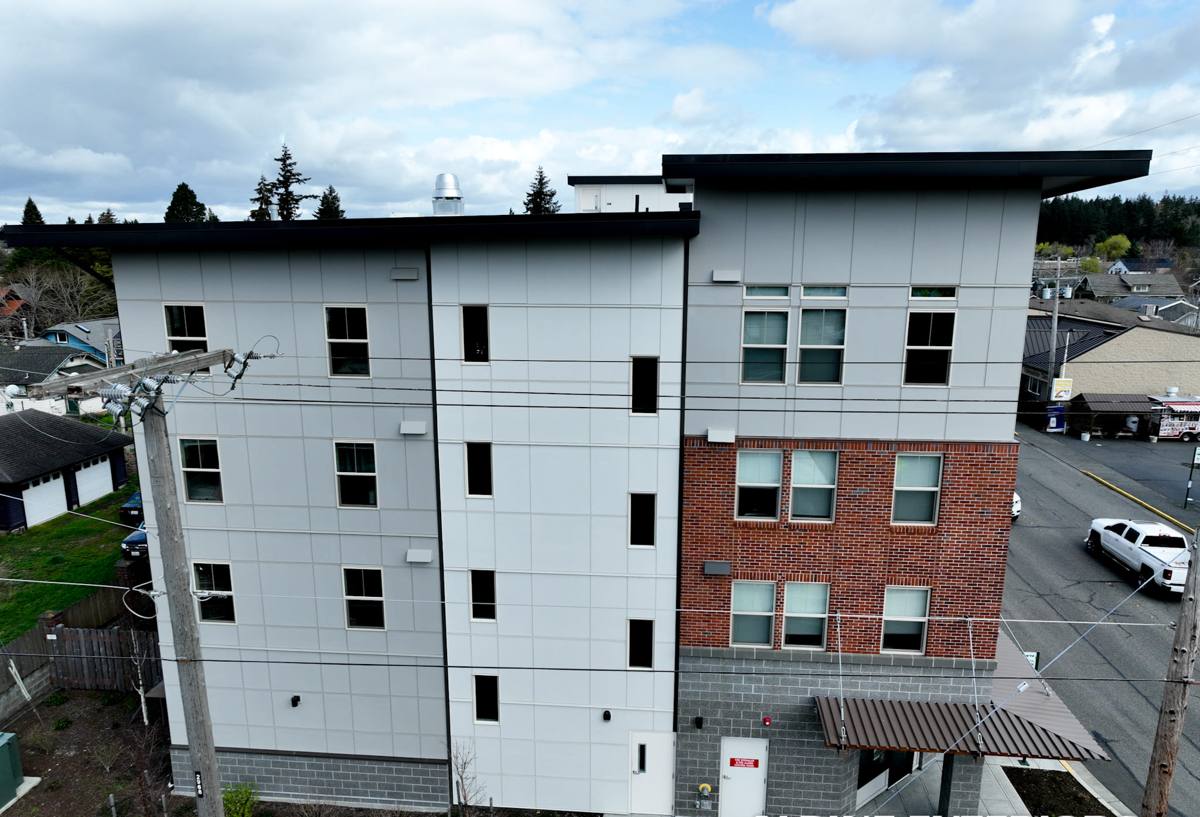
Signs Your Lynden Home's Windows Need Replacing
Not every window problem means a full replacement, but these are the signs we take seriously when we're out looking at a house in this area:
- Visible gaps, soft wood, or paint failure at the sill or bottom corners of the frame
- Moss or dark staining building up on the trim around the window, not just on the siding
- Condensation forming between the panes (a sign the seal has failed on a double-pane unit)
- Drafts you can feel with a hand near the frame on a windy day
- Windows that are hard to open, close, or lock — often a sign the frame has shifted or swollen
- Rising heating bills without a clear other cause, especially in a home with original 20-30 year old windows
- Visible fogging, cracking, or warping of the frame material itself
Any one of these on its own might just need a repair. Two or three together, especially on a window that's original to the house, usually means replacement is the more honest recommendation — patching a failing frame just delays the same repair a few years while water keeps getting into the wall.
What a Correct Window Replacement Job Actually Involves
Window replacement looks simple from the outside — old window out, new window in — but the parts that actually determine whether it lasts happen where you can't see them once the job is done.
Flashing and Water Management
In a climate that gets sustained, wind-driven rain, flashing is not optional trim work — it's the difference between a window that sheds water and one that slowly feeds it into your wall framing. A correct install includes a sloped sill pan so any water that does get past the sash drains back outside instead of pooling on the sill, plus properly lapped house wrap and flashing tape integrated with the existing weather barrier, not just caulked over it.
Insulation and Air Sealing
The gap between the new window frame and the rough opening needs to be filled with a material that stays flexible and doesn't compress or degrade over time — not stuffed with fiberglass batting and forgotten. Poor sealing here is one of the most common causes of drafts and energy loss even when the window itself is a good product.
Fastening and Support
Windows need to be shimmed plumb, level, and square before they're fastened, and fastened at the manufacturer's specified points — not wherever is convenient. A window installed slightly out of square will bind, won't seal properly against its own weatherstripping, and will wear out its hardware faster.
None of this shows up in a sales brochure, but it's the actual work that determines whether a window performs for twenty years or starts leaking again in three.
Choosing the Right Window for Whatcom County Weather
Frame material matters more here than in drier parts of the country, because the frame is what's absorbing the constant cycle of wet and dry through the fall, winter, and spring.
| Frame Material | Moisture Behavior | Maintenance | Typical Fit for Lynden Homes |
|---|---|---|---|
| Vinyl | Doesn't absorb water or rot; seams are the main point to watch | Low — occasional cleaning | Good all-around choice for most homes; budget-friendly |
| Fiberglass | Very stable in wet/dry cycling; minimal expansion or contraction | Low | Strong option for homes with heavy rain exposure or larger openings |
| Wood (unclad) | Handsome but absorbs moisture without diligent upkeep | High — repainting/sealing on a regular schedule | Best reserved for covered porches or homes committed to upkeep |
| Wood-clad (aluminum or fiberglass exterior) | Exterior sheds water well; interior keeps a wood look | Moderate | Popular for farmhouse-style homes wanting a traditional look with better weather resistance |
We don't push one material on every job. A lot of it comes down to the home's style, budget, and how exposed the walls are to prevailing weather — a south or west-facing wall on an open lot near Lynden takes a lot more direct rain than a sheltered north wall under an overhang.
Full-Frame Replacement vs. Insert (Pocket) Replacement
This is one of the first decisions on almost every job, and it's worth understanding before we ever give you a number.
| Factor | Full-Frame Replacement | Insert (Pocket) Replacement |
|---|---|---|
| What it involves | Removes old window down to the rough opening, including old frame | New window fits inside the existing frame, which stays in place |
| Best used when | Existing frame shows rot, water damage, or is out of square | Existing frame is sound, dry, and square |
| Access to flashing/sheathing | Full access to inspect and correct water damage or flashing issues | Limited — hidden damage can be missed |
| Labor and cost | More labor, generally higher cost | Faster, generally lower cost |
| Long-term risk in this climate | Lower — problems are addressed at the source | Higher if the old frame has any hidden moisture issues |
Given how much moisture Whatcom County homes see over their lifespan, we're cautious about recommending insert replacement on any window where we can't confirm the existing frame and sill are still sound. On a home with visible moss staining or any history of leaks, we'd rather open the wall up and see what we're dealing with than cover a problem back up.
Our Window Replacement Process
The process is the same whether it's one window or a whole house, just scaled up:
- On-site assessment. We look at each window from both sides, check the sill and surrounding trim for soft spots or moisture, and note the frame material, size, and condition.
- Recommendation and quote. We'll tell you honestly whether a window needs full-frame replacement or can be done as an insert, walk through material options, and give you a written estimate — no pressure, no upsell for its own sake.
- Scheduling around the weather. Window openings can't sit exposed in a downpour. We plan install days around forecasts and, on multi-window jobs, sequence the work so no opening is left unprotected longer than necessary.
- Removal and inspection. Old windows come out carefully so we can inspect the rough opening, sheathing, and existing flashing before anything new goes in.
- Installation. New sill pan, flashing integration, shimming, insulation, and fastening — done to manufacturer spec, not shortcuts.
- Interior and exterior finish. Trim, caulking, and touch-up so the window looks finished inside and out, not just functional.
- Final walkthrough. We check operation, seals, and finish with you before we call the job done.
Permits and Energy Codes in Whatcom County
Window replacement in Washington falls under state energy code requirements for U-factor (how much heat the window loses) and, on bedroom windows, egress size requirements if you're changing the opening size. Whether a given job needs a permit depends on the scope — straightforward like-for-like replacement is often exempt, but changing window size, adding an opening, or working on a home with other pending permit history can trigger requirements. We handle that determination and any permit paperwork with the local jurisdiction as part of the job, so it's not something you have to sort out yourself.
Why It Matters That We Already Work in Lynden
A lot of window crews will drive out to Lynden for a one-off job and never come back. That has real downsides. A contractor who regularly works this area knows how the older farmhouses out here were typically built, what kind of rot pattern to expect on a 1970s-era aluminum single-pane, and how differently a newer in-town build behaves compared to a place on an open lot catching the full force of a west wind off the flats.
It also means we're not guessing at local permitting steps or trying to figure out weather windows on the fly — we've scheduled around Whatcom County's wet season before, and we know not to leave an opening exposed overnight when the forecast turns. That local familiarity doesn't show up as a line item on a quote, but it's a real part of why the job goes smoothly.
Get a Free Estimate for Your Lynden Home
If your windows are drafty, fogged, hard to operate, or showing moss and staining at the sill, it's worth having someone look before another wet season adds to the damage. We'll give you a straight assessment of what's going on, what your real options are, and a written estimate — no pressure, no obligation. Use the form below to request your free estimate.