 Bellingham Siding
 Metal Roofing in Lynden: Built for What This Climate Actually Does to a Roof
Lynden sits inland from Bellingham Bay but still gets the full package of Whatcom County weather: long wet winters, driving rain that comes in sideways off Pacific storms, salt-laden air that drifts further inland than most homeowners expect, and a moss season that can run eight months out of the year on a shaded roof. Metal roofing handles all of that better than most alternatives, but only when it's specified and installed correctly for this exact environment. A metal roof that was detailed for a dry climate, or installed by a crew that doesn't normally work this far northwest, will show problems here that it never would somewhere else.
We install metal roofing on homes throughout Lynden and the surrounding farmland and residential areas, and the lessons we've learned are specific to this ground: how water moves on a low-slope agricultural-style roof in a rainstorm, how fast moss colonizes a north-facing slope under fir trees, and which fastener and flashing choices actually hold up after a decade of freeze-thaw cycles and wet-dry cycles back to back.
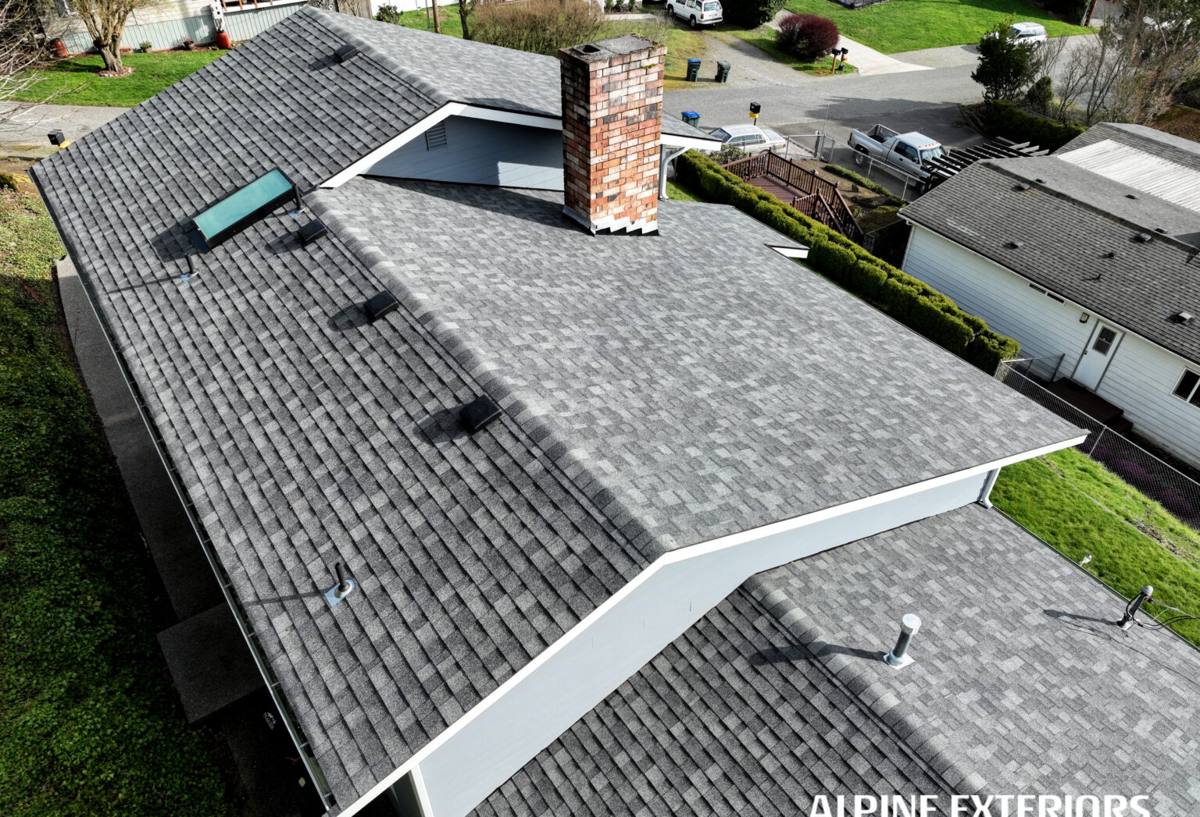
Why Local Climate Conditions Change the Job
Driving Rain and Wind-Driven Water
Whatcom County storms don't always drop rain straight down. Wind off the Strait and the Fraser Valley pushes rain sideways, which means water gets forced up under laps, around penetrations, and into any seam that wasn't detailed with that in mind. Standard installation practices from drier regions assume gravity does most of the work. Here, we treat every seam, ridge cap, and penetration as if wind will try to push water backward into it, because on enough days of the year, it will.
Salt Air Reaches Further Than People Think
Lynden isn't oceanfront, but airborne salt from Bellingham Bay and the Strait of Georgia travels on wind currents further inland than most homeowners assume, especially on exposed rooflines with no windbreak. Salt exposure accelerates corrosion at fastener heads, cut edges, and any spot where a protective coating has been scratched or compromised during installation. This is one of the biggest reasons panel choice and finish quality matter more here than in a landlocked climate.
Moss Season Is Nearly Year-Round
Between the moisture, the mild temperatures, and the tree cover common on Lynden lots, moss and algae growth is close to a year-round concern rather than a seasonal one. Metal roofing resists moss far better than asphalt or wood shakes because there's no organic mat for spores to root into, but panel profile, slope, and shading still affect how much moss pressure a given roof faces, and that should factor into the design conversation, not just the material choice.
What a Correct Metal Roof Installation Involves Here
Metal roofing is a system, not just a set of panels. Every component below has to be right for the roof to perform the way metal roofing is supposed to perform in this climate.
- Underlayment: A high-temperature, self-adhering synthetic underlayment at eaves, valleys, and penetrations, not just felt paper, to guard against wind-driven water intrusion.
- Ventilation: Proper ridge and soffit ventilation to prevent condensation from forming on the underside of the panels, which is a common cause of hidden deck rot in humid coastal climates.
- Fastener selection: Corrosion-resistant fasteners matched to the panel material, with correct torque so gaskets seal without crushing.
- Panel material and finish: A coating system rated for coastal/marine exposure, since standard mill finishes degrade faster under salt air.
- Flashing details: Custom-formed flashing at valleys, chimneys, skylights, and wall transitions rather than one-size-fits-all trim pieces.
- Panel seams: Standing seam or mechanically locked seams in high-exposure areas, rather than exposed-fastener panels, where driving rain and wind uplift are a bigger factor.
- Slope-appropriate profile: Matching panel profile and seam type to the actual roof slope, since low-slope sections need different detailing than steep gables.
Common Mistakes We See on Prior Installations
When we're called out to inspect or repair a metal roof someone else installed, the same handful of issues show up repeatedly: fasteners over-driven or under-driven, mismatched metals causing galvanic corrosion where dissimilar materials touch, missing or undersized ice-and-water protection at valleys, and exposed-fastener panels used on roof sections that see heavy wind-driven rain. Each of these is a callback waiting to happen, and each one is avoidable with the right process up front.
Panel Options and How We Help You Choose
There's no single "best" metal roofing panel for every Lynden home. The right choice depends on your roof's slope, exposure to wind and salt air, budget, and the look you want. Here's how the common options compare for this climate:
| Panel Type | Best For | Climate Trade-Offs |
|---|---|---|
| Standing seam (concealed fastener) | Most Lynden homes, especially exposed or wind-facing roofs | Best resistance to wind-driven rain and long-term weathertightness; higher upfront cost |
| Exposed-fastener panels (screw-down) | Outbuildings, shops, low-budget projects, sheltered roof sections | More affordable, but fastener gaskets wear out over time and need periodic inspection in wet climates |
| Stone-coated steel | Homeowners wanting a shingle or shake look with metal durability | Good moss and impact resistance; more seams and fasteners to maintain than standing seam |
| Corrugated/agricultural panel | Barns, shops, rural outbuildings common around Lynden | Economical and durable for utility structures; not typically used on primary residences |
Our Process for a Lynden Metal Roof Project
- On-site assessment: We walk the roof and attic, check slope, ventilation, decking condition, and existing moss or moisture damage.
- System design: We match panel type, underlayment, and flashing details to your roof's specific exposure to wind, rain, and salt air.
- Written estimate: Clear scope, materials, and cost factors laid out before any work starts, with no vague allowances.
- Tear-off and deck inspection: We remove the old roofing and repair any rotted or weakened decking before a single new panel goes down.
- Underlayment and flashing install: Full underlayment coverage with reinforced protection at vulnerable areas, then custom-formed flashing.
- Panel installation: Panels installed to manufacturer spec with correct fastening and seaming for the panel type and slope.
- Final walkthrough: We review the finished roof with you, including care and maintenance expectations for our climate.
Cost Factors for Metal Roofing in Lynden
Metal roofing costs more upfront than asphalt shingles, but the comparison isn't apples to apples once you factor in lifespan and maintenance in a wet, moss-prone climate. The real cost drivers on a Lynden project tend to be:
| Factor | Why It Matters Here |
|---|---|
| Panel type and finish | Coastal-grade coatings and standing seam systems cost more but resist salt corrosion and wind-driven rain far longer |
| Roof complexity | Valleys, dormers, and multiple roof planes increase flashing work, which is where leaks most often originate |
| Deck condition | Hidden rot from years of moisture exposure sometimes isn't visible until tear-off, and repairs add cost |
| Slope and pitch | Low-slope sections need upgraded underlayment and seam type to manage wind-driven water |
| Access and site conditions | Tree cover, steep lots, and rural access common around Lynden can affect labor and equipment needs |
We'll never quote a number without seeing the roof. Broadly, metal roofing on a typical home runs well above asphalt shingles but below premium products like slate, and most homeowners see that cost offset over time through fewer repairs and a much longer service life in this climate.
Maintenance: What a Metal Roof Actually Needs in This Climate
- Clear debris and overhanging branches that trap moisture and feed moss growth.
- Rinse off accumulated grime and salt residue periodically, especially on roofs with more open exposure.
- Inspect fastener heads and sealant points every year or two, particularly on exposed-fastener systems.
- Check flashing at valleys and penetrations after major windstorms.
- Address any scratched or exposed panel coating promptly to prevent localized corrosion from taking hold.
None of this is heavy labor, and it's far less maintenance than an asphalt or wood roof needs in the same conditions. But "low maintenance" isn't "no maintenance," especially with the salt air and moss pressure Lynden roofs deal with.
Why Hire a Crew That Already Works in Lynden
Metal roofing manufacturers publish general installation specs, but those specs don't account for the specific combination of wind, rain, and salt exposure a Whatcom County roof deals with. A crew that installs metal roofs in drier or more sheltered parts of the state may follow the letter of the spec and still end up with a roof that underperforms here. We work in this climate every week. We know which slopes on which lot orientations tend to hold moss, which panel profiles handle wind-driven rain best on exposed Lynden properties, and which flashing details actually need to be upgraded beyond manufacturer minimums for this environment. That local pattern recognition is the difference between a roof that looks right on installation day and one that's still performing correctly in year fifteen.
If you're weighing metal roofing for a home in Lynden, we're happy to walk the roof, talk through honest options for your budget and exposure, and give you a straightforward estimate. There's no pressure and no obligation — just fill out the form below to get started.