 Bellingham Siding
 Asphalt Shingle Roofing Built for Puget's Weather
Puget sits close enough to the water that homes here take a different kind of beating than roofs just a few miles inland. Salt-laden air off the bay accelerates corrosion on exposed metal fasteners and flashing. Driving rain, pushed sideways by wind off the water, finds every weak seam in an underlayment or flashing detail. And Whatcom County's long, wet moss season means organic growth is working on your shingles for most of the year, not just a few weeks in spring. An asphalt shingle roof that's installed correctly for this environment can handle all of that. One that's installed to a generic spec, without those conditions in mind, tends to show problems early — granule loss, lifted edges, moss colonies, and slow leaks that show up as stains on an interior ceiling long before anyone sees a shingle actually fail.
This page is specifically about asphalt shingle roofing for homes in Puget. We're not going to give you a generic roofing overview — we want to walk through what actually matters for a roof in this part of Bellingham, what a correct installation looks like, and how we approach the job from tear-off to final inspection.
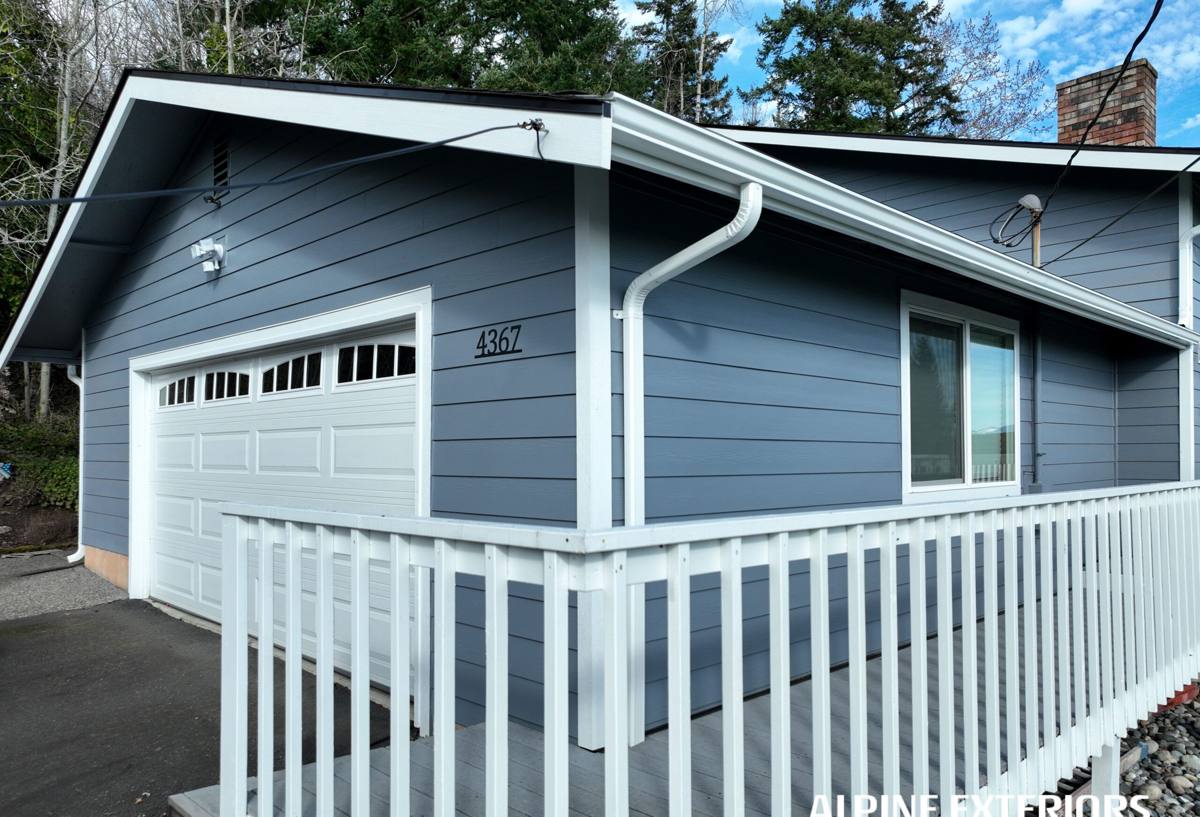
What Puget's Climate Actually Does to a Roof
Salt Air and Corrosion
Homes closer to the water deal with airborne salt that settles on every exterior surface, including the roof. Over years, that accelerates rust on unprotected steel fasteners, cheap flashing, and low-grade roof vents. It's not dramatic — you won't see it happen — but it shows up as premature rust streaks, loosened nail heads, and flashing that fails years before it should. The fix isn't complicated: use corrosion-resistant fasteners and flashing material rated for coastal exposure, and don't cut corners on the metal components just because they're a small part of the total material cost.
Driving Rain and Wind-Driven Water
Bellingham doesn't get the sideways rain that some exposed coastal towns get, but Puget still sees enough wind-driven moisture that water doesn't always run straight down a roof plane the way it does in a dry climate. It can push up under shingle edges, work sideways at valleys, and find gaps at penetrations — pipe boots, chimneys, skylights. A roof built for wind-driven rain needs proper underlayment coverage, correctly lapped and sealed flashing at every penetration and valley, and shingle nailing patterns that hold tight in wind rather than just meeting minimum code.
Moss and Prolonged Moisture
Whatcom County's wet season runs long, and shaded or north-facing roof slopes in Puget can stay damp for weeks at a stretch. That's exactly the environment moss thrives in. Moss isn't just cosmetic — as it grows, it holds moisture against the shingle surface, lifts shingle edges as it spreads, and works its way toward fasteners and seams. A roof with poor ventilation or shingles installed too tight to the tree line will grow moss faster than one with good airflow and some daylight exposure.
What a Correct Asphalt Shingle Roof Includes
A roof that's going to hold up in Puget's climate isn't about buying a fancier shingle — it's about getting every layer of the system right, not just the top layer anyone can see.
- Deck inspection and repair — any soft, rotted, or delaminated sheathing gets replaced before anything else goes down. Shingles installed over a bad deck fail regardless of quality.
- Ice-and-water shield at vulnerable areas — eaves, valleys, and penetrations get a self-adhering waterproof membrane, not just standard felt.
- Synthetic underlayment across the full roof — a water-resistant barrier under the shingles that holds up to the wet exposure common during a multi-day tear-off and install.
- Corrosion-resistant flashing and fasteners — especially important this close to the water, at chimneys, walls, valleys, and any roof-to-wall transition.
- Proper ventilation — balanced intake and exhaust venting so the attic and roof deck can dry out between wet spells, which also slows moss growth.
- Correct nailing pattern — following the shingle manufacturer's wind-rated nailing spec, not the fastest pattern.
- Starter strip and ridge cap done to spec — the details most likely to be rushed, and the first places a corner-cut roof fails.
Shingle Options and How They Perform Locally
Most Puget homes are well served by a quality architectural (laminate) asphalt shingle. Three-tab shingles are a lower-cost option but tend to show wind and moss damage sooner, and most manufacturers have scaled back their three-tab lines in favor of architectural products. Below is a general comparison to help frame the decision — exact pricing depends on roof size, pitch, tear-off scope, and access.
| Factor | 3-Tab Shingle | Architectural Shingle | Impact-Rated / Algae-Resistant Upgrade |
|---|---|---|---|
| Typical lifespan | 15–20 years | 25–30+ years | 25–30+ years, often with stronger warranty |
| Wind resistance | Lower | Higher, better suited to Puget's exposure | Highest rated |
| Moss/algae resistance | Standard | Standard, can add algae-resistant granules | Built-in algae resistance |
| Upfront cost | Lowest | Moderate | Higher |
| Best fit for Puget | Budget-limited, short-hold properties | Most homes — the standard recommendation | Homes with heavy shade, moss history, or high wind exposure |
We'll walk you through which grade makes sense for your specific roof rather than defaulting to the most expensive option. A shaded, moss-prone roof plane benefits more from an algae-resistant upgrade than a sun-exposed one does, for example.
Our Process on a Puget Roofing Job
1. On-Site Assessment
We look at the existing roof from the ground and, where safe, up close — condition of the current shingles, any soft spots in the decking visible from the attic side, ventilation setup, valley and flashing condition, and how much moss or organic growth is present. This tells us the real scope, not just a guess based on square footage.
2. Written Estimate
You get a clear, itemized estimate — materials, scope of tear-off, any deck repair allowance, and timeline. No pressure to sign on the spot, and no vague lump-sum number that hides what you're actually paying for.
3. Tear-Off and Deck Inspection
Old roofing comes off down to the deck, and we inspect every section of sheathing before anything new goes down. Any rot or damage gets flagged and repaired — this is the point where hidden problems from years of moisture exposure actually get found and fixed, not covered over.
4. Underlayment and Flashing
Ice-and-water membrane at eaves and valleys, synthetic underlayment across the field, and new flashing at every wall, chimney, and penetration. This layer matters more than the shingle brand for how the roof performs in wind-driven rain.
5. Shingle Installation
Shingles go down to manufacturer spec — proper starter course, correct exposure, and a nailing pattern that meets the wind rating for the product. This is also where we make sure ridge and hip caps are done correctly, since that's a common place for shortcuts on lower-quality installs.
6. Final Walkthrough
We inspect the completed roof with you, cover any warranty paperwork, and make sure you know what routine maintenance — like keeping gutters clear and checking for moss buildup — will keep the roof performing over its full lifespan.
Maintenance That Actually Matters in Puget
A well-installed roof still needs some basic upkeep in this climate. None of this is complicated, but skipping it shortens the life of even a well-built roof.
- Keep gutters and downspouts clear so water isn't backing up under the eave line during heavy rain.
- Have moss growth addressed early — light growth is a simple treatment, heavy growth can mean lifted shingles and trapped moisture.
- Trim back overhanging branches where possible to reduce shade and debris buildup on north-facing slopes.
- After major windstorms, a quick visual check (from the ground, or have us take a look) for lifted or missing shingles catches small problems before they become leaks.
- Don't ignore ceiling stains or attic moisture — they're almost always a roof issue caught early, before real damage sets in.
Why Hire a Crew That Already Works in Puget
Roofing crews who mostly work drier inland climates sometimes bring installation habits that don't hold up here — underlayment coverage sized for a drier climate, standard fasteners instead of corrosion-resistant ones, or ventilation setups that don't account for how long a Puget roof plane stays damp in the winter. A crew that regularly works Bellingham and Whatcom County roofs already knows which details matter most for this specific combination of salt air, wind-driven rain, and extended moss season — and builds every roof to that standard by default, not as an upsell.
Local experience also means we know what a roof in this area is actually up against year-round, not just what a spec sheet says a shingle is rated for in ideal conditions.
Get an Honest Look at Your Roof
If your roof is showing granule loss, moss buildup, lifted shingles, or you're just not sure how much life is left in it, we're glad to come take a look. The estimate is free, there's no pressure, and you'll get a straight answer about what your roof actually needs — use the form below to get started.