 Bellingham Siding
 New Roof Installation for Puget-Area Homes
Homes in the Puget area of Bellingham sit close enough to the water that the roof over your head is doing more work than most homeowners realize. Salt-laden air, wind-driven rain off the Sound, and a moss season that can run eight months or longer all put steady pressure on a roof system. When it's time to replace yours, the goal isn't just a new roof — it's a roof system matched to what this specific stretch of Whatcom County throws at it.
We install new roofs in this neighborhood regularly, which means we already know which details matter here and which ones are just upsells. This page covers what a correct installation looks like for a Puget-area home, what it costs to get right, and how our process works from first call to final walkthrough.
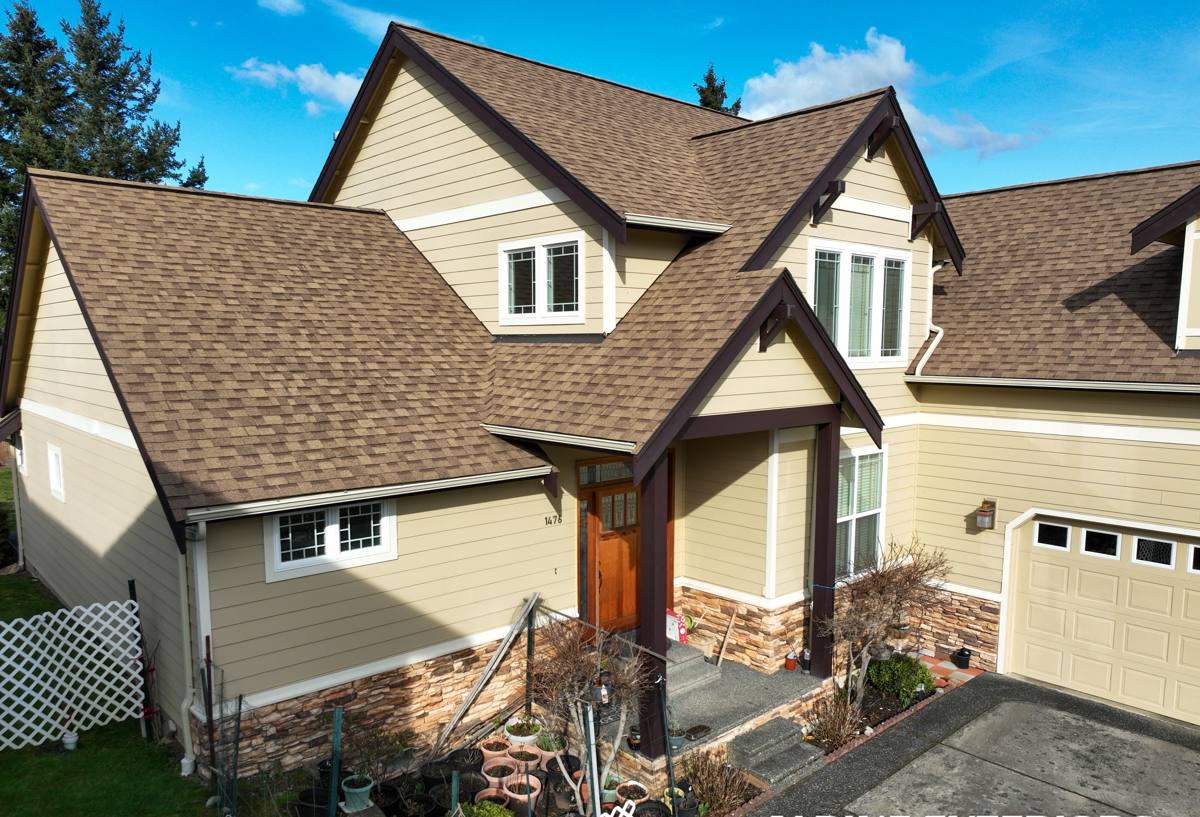
What Puget's Climate Does to a Roof
Salt Air and Metal Fatigue
Proximity to Bellingham Bay means airborne salt settles on every exterior surface, roofs included. Over years, salt exposure accelerates corrosion on unprotected metal — flashing, fasteners, vent caps, and gutter hardware are the parts that fail first. It's not dramatic, it's gradual: a roof that would hold up for 25 years inland can start showing corrosion-related leaks well before that if the metal components weren't spec'd for a marine environment.
Driving Rain and Wind-Driven Water
Bellingham doesn't just get a lot of rain — a good share of it arrives sideways off the water during winter storms. That matters because wind-driven rain finds its way into gaps that a straight-down rain never would: under shingle tabs, around poorly lapped flashing, through nail holes that weren't properly sealed. A roof built for average Pacific Northwest rain isn't automatically built for the wind-driven variety Puget gets off the Sound.
Extended Moss Season
Cool, damp, and shaded conditions here let moss establish itself on roofs almost year-round, not just in the wettest months. Moss isn't just cosmetic — it holds moisture against roofing material, lifts shingle edges as it grows, and works its way into seams over time. A roof installed without moss-resistant measures will need moss treatment or removal within a few years, sometimes sooner on north-facing slopes or under tree cover.
What a Correct Installation Includes Here
A new roof isn't just shingles nailed to plywood. For a Puget-area home, the components below are what separate a roof that holds up from one that starts causing problems in year three or four.
- Ice-and-water shield at vulnerable zones — eaves, valleys, and roof-to-wall transitions get a self-adhering waterproof membrane, not just felt, because these are exactly where wind-driven rain pushes hardest.
- Corrosion-resistant metal throughout — flashing, drip edge, and fasteners specified for coastal exposure, not the standard-grade hardware that's fine 20 miles inland.
- Proper attic and roof ventilation — balanced intake and exhaust venting keeps moisture from condensing inside the roof assembly, which matters more in a climate this humid.
- Underlayment rated for extended wet exposure — synthetic underlayment that won't degrade during the stretch of days between tear-off and final weatherproofing, which happens more often here than in drier regions.
- Moss-resistant shingle options where appropriate — algae/moss-resistant shingle lines (typically copper- or zinc-infused granules) for homes with shaded or north-facing roof planes.
- Sealed and lapped flashing at every penetration — chimneys, skylights, and vents get flashing that's actually integrated into the underlayment layers, not just caulked on top.
Choosing the Right Roofing Material
Most Puget-area homes land on asphalt composition shingles, standing seam metal, or occasionally a synthetic/composite product for a specific look. Here's how the common options stack up for this climate specifically.
| Material | Moss Resistance | Salt Air Durability | Typical Lifespan Here |
|---|---|---|---|
| Standard asphalt shingle | Fair — needs periodic treatment | Good with proper flashing | 18–25 years |
| Algae/moss-resistant asphalt shingle | Good — built-in resistance | Good with proper flashing | 20–28 years |
| Standing seam metal | Very good — sheds moss easily | Excellent if coated/finished for coastal use | 40–50+ years |
| Synthetic/composite shingle | Good | Good | 30–40 years |
We'll walk through this table in person, against your actual roof, budget, and how much tree cover or shade your home gets — those factors matter more than the brochure numbers.
A Note on Product Selection
We don't install every product on the market, and that's a deliberate call, not an accident. Some lower-tier shingle lines and off-brand metal systems have moisture-handling behavior or installation tolerances that don't hold up well in a marine climate — not because the manufacturer is dishonest, but because the product wasn't engineered with conditions like Puget's in mind. We stick to manufacturers whose warranty structure and material specs are built for coastal Pacific Northwest exposure, because that's what keeps a callback from turning into a full re-do.
Our Installation Process
1. On-Site Assessment
We inspect the existing roof, decking condition, ventilation setup, and any problem areas — moss buildup, soft spots, flashing failures — before quoting anything. This tells us whether decking replacement is needed and which upgrades actually make sense for your home.
2. Tear-Off and Deck Inspection
Full tear-off to bare decking so we can check for rot or water damage that's invisible from above. Any compromised sheathing gets replaced before anything new goes down — covering over bad decking just moves the problem underground.
3. Underlayment and Waterproofing
Ice-and-water shield at eaves, valleys, and penetrations, synthetic underlayment across the field. This is the layer that actually keeps water out if wind ever drives it under the surface material.
4. Material Installation
Shingles, metal panels, or synthetic material installed to manufacturer spec, with attention to nailing pattern, exposure, and fastener corrosion resistance — details that determine wind rating and long-term performance.
5. Flashing, Vents, and Trim
All flashing lapped and sealed correctly, ventilation components installed for balanced airflow, and edge trim finished for a clean, weathertight perimeter.
6. Cleanup and Final Walkthrough
Full site cleanup including magnetic sweep for stray nails, then a walkthrough so you can see the finished roof and ask questions before we consider the job done.
Cost Factors for Puget-Area Roofs
Every roof is different, but the line items below are what actually move the price on a job in this area. We'll give you a firm number after the on-site assessment rather than a phone estimate, because the details below can't be judged from a photo.
- Roof size and pitch — steeper pitches take longer and require more safety setup.
- Decking condition — rot or soft spots found at tear-off add material and labor.
- Layers of existing roofing — multiple old layers mean more tear-off work.
- Material choice — standard asphalt vs. moss-resistant shingle vs. metal carries a real cost spread.
- Ventilation upgrades — adding or correcting intake/exhaust venting if the current setup is inadequate.
- Access and site conditions — steep lots, limited driveway access, or heavy tree cover near Puget's wooded streets can add setup time.
As a broad range, most full asphalt shingle replacements on a typical single-family home run in the mid five figures, with metal roofing running higher; your assessment will narrow that down based on your actual roof.
Why a Crew That Already Works Puget Matters
A roofing crew that's worked this neighborhood knows which streets sit in enough shade to warrant moss-resistant shingles, which lots catch the worst of the wind off the water, and how local permitting and inspection typically go in Bellingham and Whatcom County. That local knowledge shows up in small decisions during installation — extra attention to a north-facing valley, a flashing detail at a chimney that's seen corrosion before — that a crew unfamiliar with the area might not think to flag.
It also matters after the job is done. A local crew is easy to reach if a question comes up during the next storm season, and stands behind workmanship on a roof they can actually drive by and check on.
Signs Your Puget Home May Need a New Roof
- Shingles that are cupping, curling, or losing granules in noticeable patches
- Heavy, persistent moss growth that returns quickly after cleaning
- Daylight visible through the attic decking or staining on attic sheathing
- Flashing around chimneys or vents that's visibly rusted or lifting
- A roof approaching or past 20–25 years old, especially with no known upgrades to ventilation or underlayment
- Interior ceiling stains that appear or worsen during storms with wind off the Sound
If you're seeing one or more of these, it's worth getting an honest assessment rather than waiting for a leak to force the timeline.
If your Puget-area roof is due for replacement, we're happy to come take a look and give you a straightforward, no-pressure estimate — just fill out the form below and we'll get in touch.