 Bellingham Siding
 Windows in Puget Take a Different Kind of Beating
Puget sits close enough to the water that salt air is a daily fact of life, not an occasional nuisance. Combine that with Whatcom County's driving winter rain and a moss season that can run half the year, and you've got a climate that's genuinely hard on window assemblies — not just the glass, but the frames, the flashing, the sealants, and the wood or trim around them. A window that would last twenty years in a dry inland climate can start showing real problems in half that time here if it wasn't installed with this environment in mind.
This page is specifically about window installation for homes in and around the Puget area of Bellingham. It's not a generic "why replace your windows" pitch. It's what actually matters for houses in this part of Whatcom County, what a correct installation looks like here, and how we approach the job.
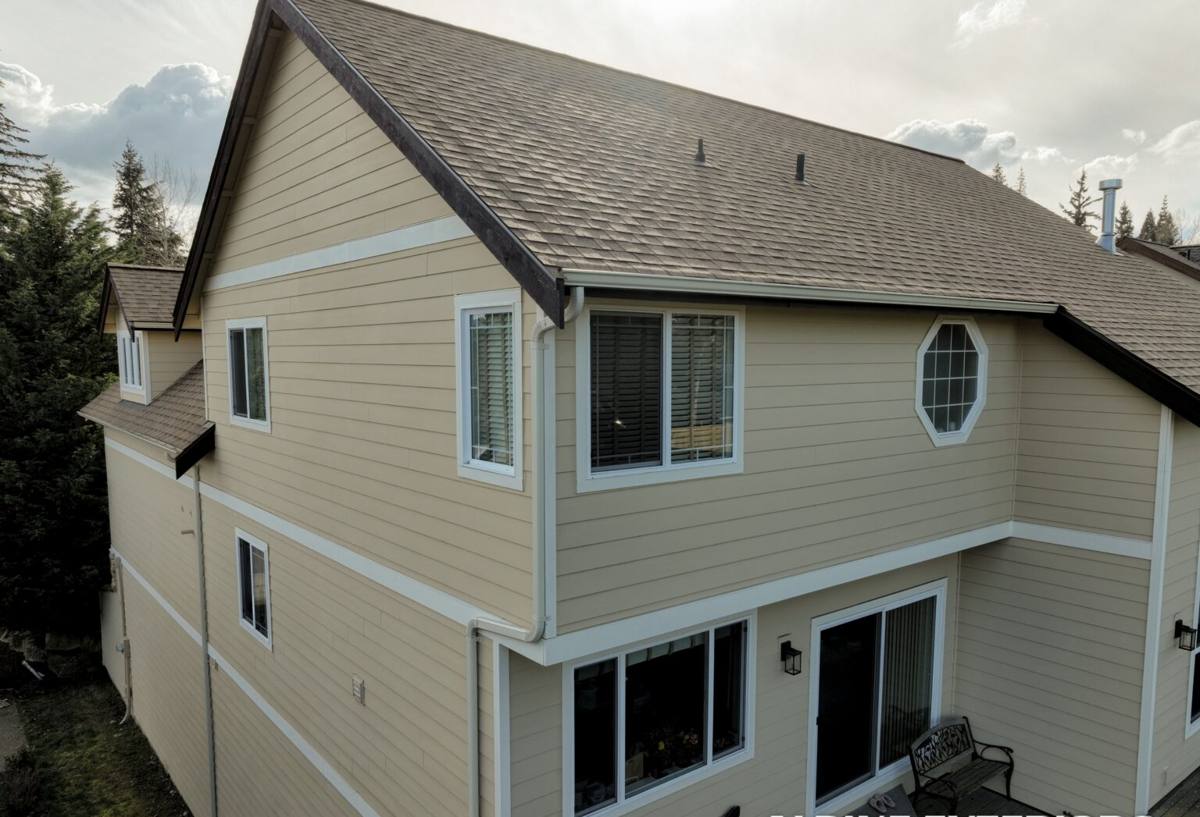
What Bellingham's Climate Actually Does to a Window
Understanding the failure points helps explain why installation quality matters more here than in most parts of the country.
Salt Air and Hardware
Salt-laden air accelerates corrosion on window hardware — hinges, locks, balances, and screws — especially anything with exposed steel or lower-grade aluminum. Over years, that shows up as stiff or failing locks, streaking on the frame, and hardware that seizes up right when you need to open a window for ventilation.
Driving Rain and Water Intrusion
Wind-driven rain off the Sound doesn't just hit windows straight on — it gets pushed sideways and upward under trim and behind siding. If the flashing and sill pan weren't done correctly at install, water finds its way behind the window frame. You usually don't see it right away. You see it two or three years later as soft trim, a stained interior sill, or a musty smell in the wall cavity.
Moss, Algae, and Constant Dampness
A long moss season means extended stretches where wood trim, sills, and even vinyl cladding stay damp far longer than they would in a drier climate. That constant moisture is what turns a small caulking gap into a rot problem, and it's what lets algae and moss get a foothold on horizontal surfaces like sills and drip caps.
Condensation
Cooler, humid air means more condensation risk on older, single-pane or poorly sealed double-pane windows. Persistent condensation between panes is a sign the seal has failed — at that point the insulating gas is gone and the window is doing little more than a piece of glass.
What a Correct Window Installation Involves Here
Setting a new window into an existing rough opening is not just "remove old window, drop in new window, caulk the edges." In a climate like this, the water management details are what separate an install that lasts from one that fails quietly behind the wall.
Flashing and Water Management
Every window opening needs a sloped sill pan so any water that does get past the exterior seal drains back out instead of pooling against the framing. Head flashing needs to shed water over the top of the window, not just sit flat against the wall. This is the single most common shortcut we see on older or poorly done installs in wet coastal climates — and it's the one that costs homeowners the most in hidden rot repair down the line.
Sealants and Weatherstripping
Not all sealants hold up to constant damp-dry cycling. We use products rated for exterior, low-temperature, high-moisture use, and we don't rely on caulk alone to do a flashing detail's job. Weatherstripping and window balances also need to be matched to the window type so the unit seals tightly without becoming hard to operate.
Fit, Shimming, and Insulation
A window that's shimmed unevenly will rack over time, which stresses the seals and glass unit and can crack corners of vinyl frames. Gaps around the frame need to be insulated — but not overpacked with expanding foam, which can bow the frame inward and cause the sash to bind.
Window Installation and Your Siding: Why They're Connected
Windows and siding aren't separate systems on the outside of a house — they overlap at every opening. If your siding is due for replacement, that's the ideal time to also address aging windows, because the siding has to come off around the opening anyway to do the flashing correctly. Doing them separately, in the wrong order, often means undoing new siding work just to fix a window, or leaving a window's flashing tied into old, failing siding underneath new material.
If you're only replacing windows and keeping your existing siding, we take care to tie the new flashing back into the existing weather-resistive barrier and siding correctly, rather than just caulking the perimeter and calling it done. That transition point is exactly where most water problems start.
Choosing Window Materials for a Puget-Area Home
There's no single "best" window material — there's a best fit for your home, your budget, and this climate. Here's how the common options actually perform in a salt-air, high-rainfall environment.
| Material | Moisture & Salt Air Performance | Maintenance | Typical Trade-offs |
|---|---|---|---|
| Vinyl | Good — won't rot or corrode; UV can cause slight brittleness over decades | Low | Frame can't be painted a different color later; limited structural rigidity in very large sizes |
| Fiberglass | Very good — dimensionally stable, resists warping in temperature swings | Low | Higher upfront cost than vinyl |
| Wood (unclad) | Poor without diligent upkeep — most exposed to rot in this climate | High — regular painting/sealing | Best appearance for historic homes if maintained; highest long-term labor commitment |
| Wood-clad (aluminum or fiberglass exterior) | Good — exterior face protected, interior keeps wood look | Moderate | Cladding seams need correct detailing to stay watertight |
| Aluminum | Fair — durable but conducts cold and can corrode faster in salt air without a quality finish | Low to moderate | Less thermally efficient unless thermally broken |
For most Puget-area homes, we steer people toward vinyl or fiberglass for pure durability against salt air and rain, and reserve wood or wood-clad for homes where matching an existing architectural look matters more than minimizing upkeep. That's a trade-off we'll walk through honestly based on your house, not a one-size answer.
Our Window Installation Process
- On-site assessment: We check existing flashing, sill condition, and framing for hidden rot before quoting anything, since that affects scope and cost.
- Old window removal: Careful removal that protects surrounding siding and trim wherever it's being reused.
- Opening inspection and repair: Any soft or rotted framing gets addressed now — installing a new window into a compromised opening just hides the problem.
- Sill pan and flashing installation: Sloped sill pan, proper head and jamb flashing integrated with the wall's weather barrier.
- Window setting and shimming: Leveled, plumbed, and squared before final fastening.
- Insulation and sealing: Low-expansion foam or backer rod as appropriate, exterior-grade sealant at all joints.
- Interior and exterior trim: Refinished to match the surrounding wall, with attention to keeping trim details watertight.
- Cleanup and walkthrough: Operation check on every window before we consider the job done.
Signs Your Puget Home's Windows Need Attention
Not every issue means a full replacement, but these are worth having looked at:
- Fogging or haze between the panes of a double-pane window (a failed seal)
- Soft, spongy, or discolored wood at the sill or bottom corners of the frame
- Noticeable draft or cold spot near the window even when it's shut
- Windows that are hard to open, close, or lock, especially after damp weather
- Visible moss, algae, or black staining on the sill or lower frame
- Condensation forming on the inside of the glass regularly, even without obvious humidity in the house
- A noticeable jump in heating costs with no other explanation
Why It Matters That We Already Work in This Area
A crew that's only ever installed windows in a dry climate will often treat flashing as an afterthought, because in that climate, it usually gets away with it. In Bellingham and the rest of Whatcom County, that same shortcut turns into a callback within a few wet seasons. Working regularly in Puget and the surrounding parts of Bellingham means we're used to designing every installation around driving rain and salt air as the default condition, not the exception — sill pans, flashing sequencing, and sealant choice all get treated as load-bearing parts of the job, not finishing touches.
It also means we're familiar with the mix of housing stock in this part of Bellingham, from older homes with original wood windows to newer construction with vinyl units already showing early seal failure. That matters when it comes to matching trim profiles, sizing replacement units to existing openings, and knowing what to expect once we open up a wall.
What Affects the Cost of a Window Installation Project
Every quote is specific to your home, but these are the main factors that move the price up or down:
| Factor | Why It Matters |
|---|---|
| Number and size of windows | More units and larger openings mean more material and labor |
| Material choice | Vinyl is generally the most affordable; fiberglass and wood-clad cost more upfront |
| Condition of the existing opening | Hidden rot or damaged framing adds repair time before the new window goes in |
| Insert vs. full-frame replacement | Full-frame replacement (removing exterior trim and flashing entirely) costs more but is often the right call when water damage is present |
| Trim and finish work | Matching existing interior or exterior trim details adds labor |
| Access | Second-story or hard-to-reach windows take more time and equipment |
We'd rather walk your home and give you a number based on what's actually there than throw out a broad estimate that doesn't hold up once we open the wall.
If you're weighing new windows for a home in Puget or elsewhere in Bellingham, we're glad to come take a look and give you a straight assessment — no pressure, no obligation. Use the form below to request a free estimate.