 Bellingham Siding
 Windows in Puget Take a Different Kind of Beating
Puget homes sit close enough to the water and open enough to the weather that windows wear out on a different timeline than they do further inland. It's not one dramatic event that fails a window here — it's years of small, steady exposure: salt-laden air working on metal parts, wind-driven rain finding its way past worn seals, and a moss season that keeps everything on the north and west sides of the house damp longer than it should be. By the time a homeowner notices fogging between panes, soft trim, or a draft that wasn't there last winter, the damage usually started well behind the wall.
Salt Air and Corrosion
Coastal and near-coastal air carries fine salt that settles on window hardware, screen frames, and metal flashing. Over years it accelerates corrosion on hinges, balances, and cheaper cladding fasteners. It's rarely dramatic — a window that used to lock smoothly starts to bind, or a screen frame pits and stains. On its own that's cosmetic. Combined with worn weatherstripping, it becomes a path for water.
Driving Rain and Wind-Driven Water
Whatcom County storms don't always come straight down. When wind pushes rain sideways against a wall, water gets tested at every joint, gap, and seam a window has — the head, the jambs, and especially the sill. A window that's watertight in a light, vertical rain can still leak under a sideways gust, which is exactly the kind of weather Puget gets more of than homes tucked further from open water.
A Long Moss Season Means Long Wet Seasons
Moss doesn't just grow on roofs. Shaded, north-facing window trim and sills in this area can stay damp for months at a stretch during the wet season, which is exactly the environment wood rot and sealant breakdown need. A window detail that would dry out fine in a drier climate can stay saturated here long enough to fail.
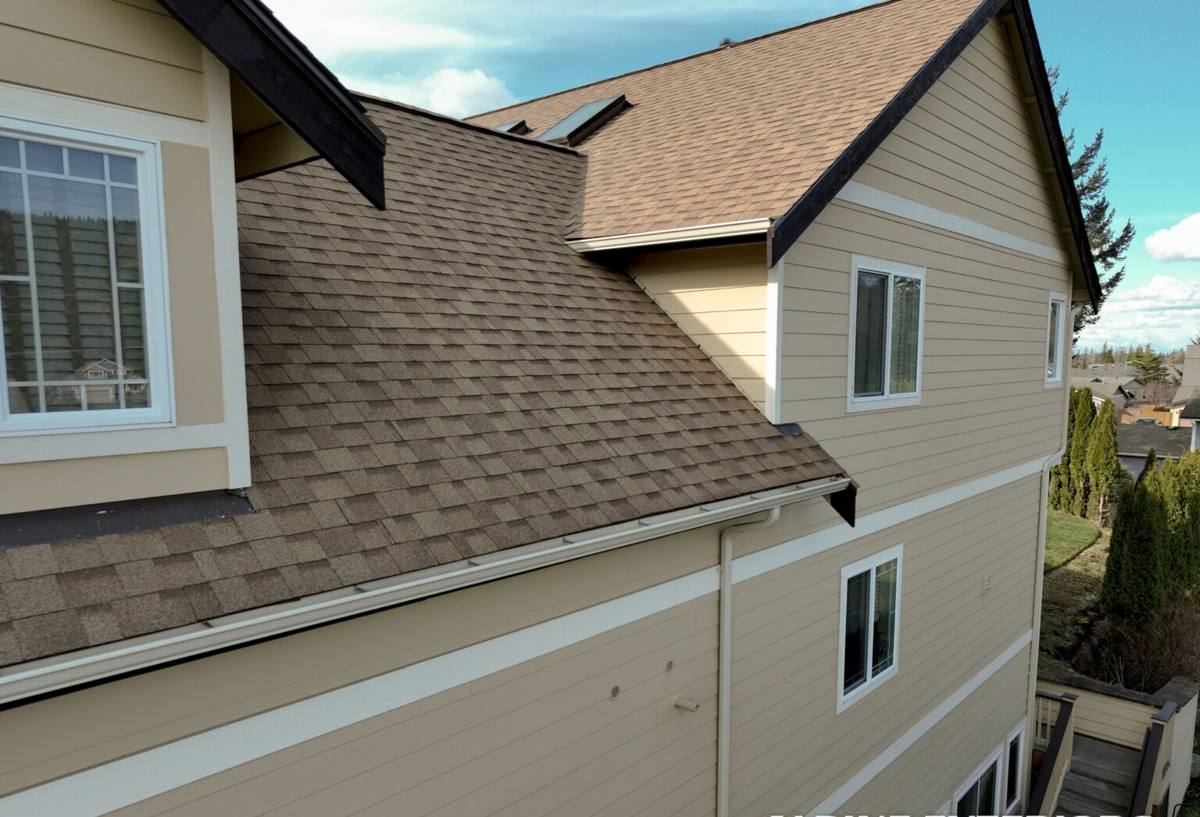
What Correct Window Replacement Actually Involves
A window replacement done right is mostly about what you don't see once the trim goes back on. The window unit itself is a commodity product — the installation is where quality is won or lost, especially in a climate that gives water this many chances to get in.
It Starts With the Opening, Not the Window
Before a new window goes in, the rough opening needs to be checked for rot, soft framing, and old flashing that's already failed. Skipping this step and just dropping a new window into a bad opening is one of the most common shortcuts we see undone a few years later — it looks finished, but the problem was never actually fixed.
Flashing and Water Management
Every window needs a sill pan to catch and direct any water that gets past the frame, plus flashing tape or membrane integrated at the head, jambs, and sill in the right shingle-lap order — top pieces overlapping the ones below, so water is always directed outward and down, never trapped behind the siding. This detail matters everywhere, but it matters more here, where wind-driven rain and long wet stretches give a bad flashing job more opportunities to fail.
Tying Into the Siding and Weather-Resistive Barrier
The window has to integrate with whatever's behind your siding — housewrap or building paper — so water sheds over each layer correctly. If that connection is sloppy, you can have a perfectly good window sitting in an opening that still leaks around it. This is one of the reasons we treat window replacement and siding work as connected trades rather than two separate jobs.
Sealing and Insulating the Gap
The gap between the window frame and the rough opening needs to be insulated (typically low-expansion foam, not just fiberglass batting) and sealed with the right sealant on the exterior — leaving weep holes and drainage paths open so any water that does get in can still get back out.
Signs Your Puget Home's Windows Need Attention
Most window problems in this area show up gradually. Here's what we tell homeowners to actually check, not just glance at:
- Fogging or a milky haze between the panes of a double-pane window — the seal has failed and the gas fill is gone
- Soft or discolored wood trim around the frame, especially on north- or west-facing windows
- Visible gaps, cracked caulk, or peeling paint at the window's edges
- Windows that are noticeably harder to open, close, or lock than they used to be
- A draft you can feel with your hand near the frame on a windy day
- Musty smell or visible mold on interior trim or the wall just below a window
- Condensation on the inside of the glass that wasn't an issue in past winters
- Rising heating bills with no other obvious cause
Any one of these on its own might just mean routine maintenance. Two or three together, especially near the same window, usually means water has already gotten behind the trim.
Choosing Window Materials for This Climate
There's no single "best" window material — there's a best fit for your house, your budget, and how much upkeep you want to do. Here's how the common options actually perform in a wet, salt-exposed, moss-prone climate like Whatcom County's:
| Material | How It Handles This Climate | Maintenance | Typical Trade-Off |
|---|---|---|---|
| Vinyl | Doesn't rot or corrode; handles moisture well | Low — occasional cleaning | Can look less premium; limited color options once installed |
| Fiberglass | Very stable in wet/humid swings, resists warping | Low | Higher upfront cost than vinyl |
| Wood-clad (wood interior, clad exterior) | Good if cladding and flashing are done right; exposed wood is vulnerable | Moderate to high — cladding seams and any exposed wood need monitoring | Best look for some homes, but installation sensitivity is high in wet climates |
| Aluminum | Conducts cold and can condense/corrode near salt air unless well-finished | Moderate | Least common choice we recommend for coastal exposure |
For most Puget homes we lean toward vinyl or fiberglass for straightforward, no-drama performance, and we're upfront that wood-clad windows can look great here but only if every seam and flashing detail is installed correctly — because a wet climate has no patience for shortcuts in that product.
Our Window Replacement Process
- On-site assessment. We look at each window from both sides, check the trim and framing for hidden damage, and note anything the wall behind the siding might be telling us.
- Honest scope and estimate. You get a clear breakdown of what's being replaced, what material we recommend and why, and what it costs — no pressure, no inflated "today only" pricing.
- Opening prep. Old windows come out carefully so we can inspect the rough opening, address any rot or soft framing, and confirm the wall is ready for a new install.
- Flashing and sill pan installation. This is the step that determines whether the window stays dry for the next 20+ years, and we don't skip or shortcut it.
- Window set, leveled, and secured. Properly shimmed and fastened so it operates smoothly and seals evenly.
- Insulation, sealing, and exterior finish. Gap insulated, exterior sealed with weep paths preserved, and trim reinstalled or replaced to match your siding.
- Final walkthrough. We test every window for smooth operation and a tight seal before we call the job done.
What Drives the Cost of Window Replacement
We won't quote a number without seeing your windows, but here's what actually moves the price up or down on most jobs:
| Factor | Why It Matters |
|---|---|
| Number and size of windows | Bigger units and more of them mean more labor and material |
| Material chosen | Vinyl, fiberglass, and wood-clad sit at different price points |
| Condition of the rough opening | Rot or framing repair adds time before the new window can go in |
| Access and height | Second-story or hard-to-reach windows take longer and need more setup |
| Trim and siding tie-in | Matching existing trim or coordinating with siding work adds scope |
| Disposal | Hauling and disposing of old windows and trim is part of a clean job |
As a rough guide, straightforward vinyl replacements tend to sit at the lower end of the range, while larger units, wood-clad options, or jobs that uncover hidden rot climb from there. We'd rather give you a real number after looking at the actual windows than a placeholder that won't hold up.
Why It Matters to Hire a Crew That Already Works in Puget
Window replacement done wrong doesn't fail on day one — it fails two or three winters later, after the wind-driven rain and moss season have had time to find the weak point. A crew that regularly works this specific area already knows which orientations take the worst weather, what kind of rot they tend to find behind older siding, and how to detail flashing so it survives a real Whatcom County wet season, not just a mild one. That's a different level of judgment than a crew installing the same window model in a drier part of the state.
We also know the practical side: what permitting looks like for window replacement in Bellingham and the surrounding county, how to sequence work around our own weather windows, and how to protect a home's interior during a multi-day job when rain is a near-certainty at some point in the schedule.
Best Timing for Window Replacement in Bellingham
Windows can be replaced almost any time of year if the crew knows how to manage the weather, but late spring through early fall gives the most predictable working conditions — drier stretches make it easier to keep an open wall protected and to fully cure sealants. That said, if a window has already failed and is letting water in, we don't recommend waiting for "ideal" weather; a temporarily failing window causes more hidden damage the longer it's left, especially heading into moss season.
Caring for New Windows Year-Round
New windows are close to maintenance-free compared to what many Puget homes are replacing, but a little seasonal attention goes a long way here:
- Rinse salt residue off frames and hardware a couple times a year, especially after storms
- Check exterior caulk lines each fall before the wet season sets in
- Keep gutters and downspouts clear so roof runoff isn't sheeting down past window heads
- Trim back vegetation or moss growth that keeps trim shaded and damp longer than necessary
- Operate locks and hardware periodically in winter so they don't seize up from disuse
If your windows are showing any of the signs above, or you just want a straight answer on what replacement would actually involve and cost for your Puget home, we're happy to take a look. The estimate is free, there's no pressure, and you'll get a clear explanation of what we find — just fill out the form below to get started.