 Bellingham Siding
 Ferndale's Climate Is Hard on Roofs
Ferndale sits close enough to Bellingham Bay and the Strait of Georgia that salt-laden air reaches roofs here more than most homeowners realize. Combine that with Whatcom County's long wet season, driving rain off Pacific storms, and shaded, moisture-holding tree cover in many neighborhoods, and you get a roofing environment that's genuinely tougher than the national average. Roofs here don't usually fail from heat or hail — they fail from years of standing moisture, moss working into seams, and metal components slowly corroding.
A roof replacement done for Ferndale needs to account for all three of those pressures at once, not just swap old shingles for new ones. That's the difference between a roof that looks fine for two years and one that actually holds up through a full Whatcom County winter.
Signs Your Ferndale Roof Needs Replacement, Not Another Repair
Repairs make sense when the damage is isolated. Replacement makes sense when the roofing system as a whole has aged out. Common signs we see on Ferndale homes include:
- Granule loss heavy enough that you can see bare, shiny patches on asphalt shingles
- Moss established at the shingle edges and butting up under tabs, not just sitting on the surface
- Shingles that are curling, cupping, or cracking when you press on them
- Soft or spongy spots underfoot on the roof deck, usually near valleys or chimneys
- Staining or leaks appearing on interior ceilings after heavy rain, especially near where a roof meets a wall or dormer
- A roof already carrying two layers of shingles from a past re-roof
- Roofing that's past 20–25 years old, regardless of how it looks from the ground
If you're only seeing one or two of these and the roof is under 15 years old, a repair or a moss treatment may be the honest answer. We'll tell you that directly rather than pushing a full tear-off you don't need yet.
What a Correct Roof Replacement Actually Involves
Tear-Off and Deck Inspection
Every layer of old roofing comes off down to the deck. This is the point where hidden damage shows up — soft plywood, delaminated sheathing, or rot around old flashing that's been trapping moisture for years. Any of that gets replaced before a single new shingle goes down. Roofing over rotten decking is the single most common shortcut that leads to early failure, and it's invisible once the new roof is on.
Underlayment and Ice-and-Water Protection
Given how much rain Whatcom County sees, we don't treat underlayment as an afterthought. Self-adhered ice-and-water membrane goes at eaves, valleys, and around any roof penetration — the spots where wind-driven rain is most likely to find a way in. The rest of the deck gets a synthetic underlayment, which holds up better than old-style felt if there's any delay between tear-off and dry-in.
Flashing Details
Flashing around chimneys, skylights, and roof-to-wall intersections is where most leaks actually start, not in the field of the roof itself. New flashing, properly stepped and sealed, matters more to long-term performance than the shingle brand you choose.
Ventilation
A roof deck that can't breathe traps moisture underneath, which shortens the life of the decking and the shingles from below. We check intake at the soffits and exhaust at the ridge and correct the balance if the existing setup is inadequate — a common issue on older Ferndale homes that were vented for a different roof design decades ago.
Choosing Roofing Material for a Whatcom County Home
There's no single "right" material — it depends on budget, roof pitch, and how much long-term maintenance a homeowner wants to take on. Here's how the common options actually compare in this climate:
| Material | Typical Lifespan | Moss/Algae Resistance | Relative Cost | Maintenance Notes |
|---|---|---|---|---|
| Standard asphalt (3-tab) | 15–20 years | Lower unless treated | Lowest | Needs periodic moss removal; shows wear faster in shaded, damp areas |
| Architectural (laminate) asphalt | 25–30 years | Better with algae-resistant granules | Moderate | Best balance of cost and durability for most Ferndale homes |
| Metal (standing seam or panel) | 40–50+ years | Very good; sheds moss more easily | Higher upfront | Fasteners and flashing must be corrosion-rated near the coast |
| Cedar shake | 20–30 years with upkeep | Requires active maintenance | Moderate to higher | Beautiful but needs regular treatment in this wet climate; higher moisture sensitivity |
Most Ferndale homeowners land on architectural asphalt with algae-resistant granules — it holds up well against the moss cycle without the upfront cost of metal. We'll walk through what makes sense for your roof's pitch, sun exposure, and budget rather than defaulting to one product for everyone.
Where Roof Meets Siding: Why This Matters More Here
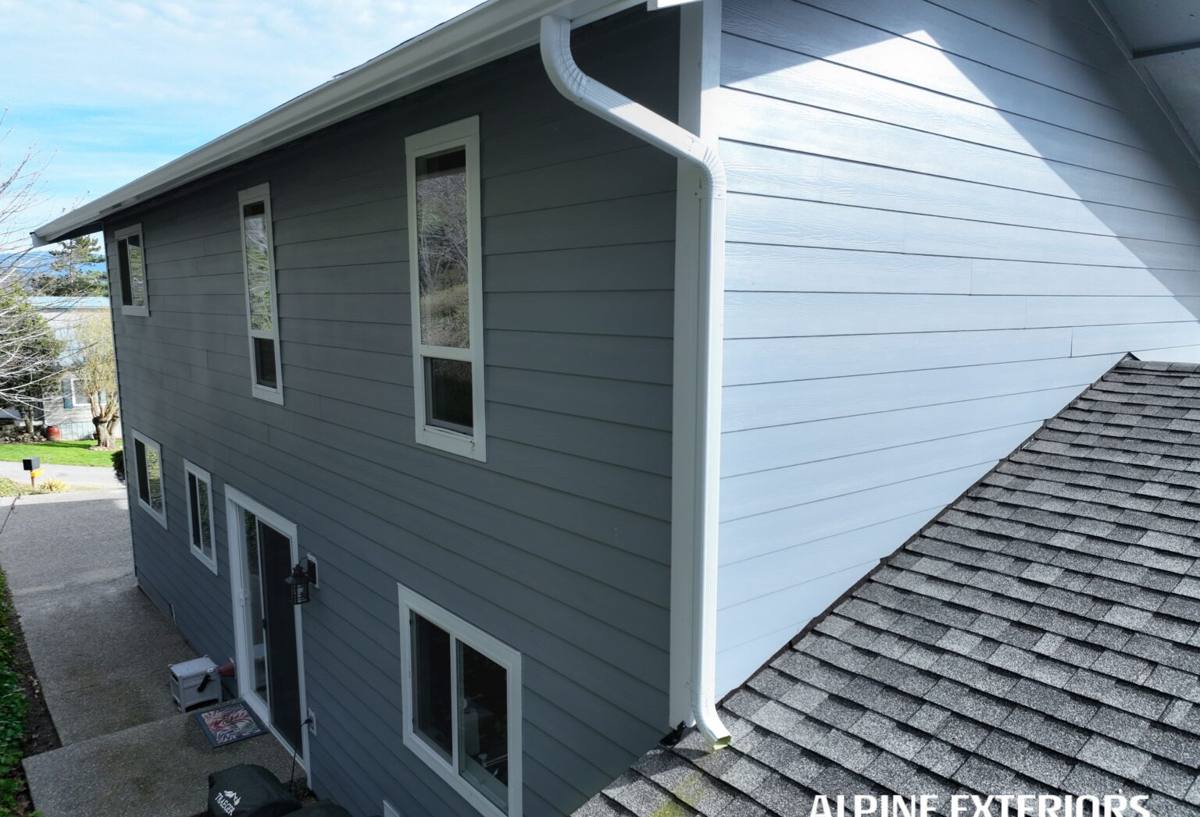
Because we work on both siding and roofing, we pay close attention to the intersection between them — an area that gets overlooked when a roofing crew and a siding crew never talk to each other. Kickout flashing at the base of a roof-to-wall junction is one of the most common missing details on older homes, and its absence is a leading cause of hidden water damage inside exterior walls. When rain runs down a roof valley and hits a wall without a kickout diverting it outward, the water goes behind the siding instead of into the gutter.
If your siding and roof are both due for replacement, doing them together lets us get that transition right the first time — proper flashing, correct overlap, and housewrap integration — instead of patching one system around whatever the other already has in place.
Moss, Algae, and Long-Term Roof Care
Whatcom County's moss season is long, and Ferndale's mix of tree cover and consistent moisture keeps roofs damp for extended stretches, especially on north-facing slopes. A few things make a real difference after a new roof goes on:
- Zinc or copper strips near the ridge let rain carry trace metal down the roof, which slows moss regrowth over time
- Keep gutters clear of needles and debris — clogged gutters hold water against the roof edge and accelerate rot
- Avoid pressure washing shingles; it strips granules and shortens shingle life. Soft washing or manual removal is safer
- Trim back overhanging branches where practical to cut down on shade and debris buildup
None of this eliminates moss entirely in this climate, but it stretches the time between treatments and protects the investment in a new roof.
Our Ferndale Roof Replacement Process
- On-site inspection of the current roof, deck, flashing, and ventilation — not just a look from the driveway
- A written estimate that spells out material options, scope, and a realistic cost range before any work starts
- Scheduling around the weather window, since dry-in timing matters more here than in drier climates
- Tear-off, deck repair as needed, and disposal of old materials
- Installation of underlayment, flashing, and the new roofing system per manufacturer specification
- Final walkthrough with the homeowner and a written warranty on materials and labor
Why a Crew That Already Works Ferndale Matters
A lot of roof replacement problems trace back to a crew that doesn't know the area. Whatcom County and the City of Ferndale each have their own permitting requirements, and knowing them ahead of time avoids delays. Local crews also know which neighborhoods sit in more wind-exposed, open farmland versus more sheltered, tree-covered lots — and that affects fastening patterns, underlayment choices, and how much moss pressure to plan for. A crew that's already done this work in Ferndale isn't guessing at any of it.
There's also the practical side: when a warranty question or a storm-damage concern comes up two years later, a local, established crew is easy to reach and has a record of the exact materials and methods used on your roof.
Questions to Ask Before You Hire
- Are you licensed and bonded to work in Washington State, and can you provide proof?
- Do you carry general liability insurance and workers' compensation coverage?
- Will you inspect and repair the roof deck, not just install over it?
- What underlayment and ice-and-water protection do you use at eaves and valleys?
- Is the manufacturer warranty tied to certified installation, and will you register it?
- Can you provide a written estimate with material specifications, not just a total price?
- How do you handle roof-to-wall flashing where the roof meets siding?
A contractor who answers these clearly and specifically, without hedging, is generally one worth hiring.
If your Ferndale roof is showing its age or you're planning ahead of a siding project, we're happy to take a look and give you a straight answer about what it needs. Use the form below to request a free, no-pressure estimate.