 Bellingham Siding
 Why Sehome Homes Need Siding That Handles More Than Just Rain
Sehome sits close enough to the water and to Bellingham Bay's weather patterns that homes here take on a specific combination of punishment: salt-tinged air moving in off the water, long stretches of driving rain that hits siding at an angle instead of straight down, and a moss season that can run half the year on shaded north- and west-facing walls. None of these problems are dramatic on their own. What they do is compound, quietly, on whatever siding material is on the house. A product that's rated fine for "Pacific Northwest weather" in general isn't automatically rated fine for the specific mix of wind-driven moisture and organic growth that a Sehome lot backing up to trees or sitting on a shaded slope actually deals with.
This page is about one job in one neighborhood: installing James Hardie fiber cement siding correctly on a Sehome home. We don't install anything else, and we'll explain why later on. First, the local facts that actually matter for your walls.
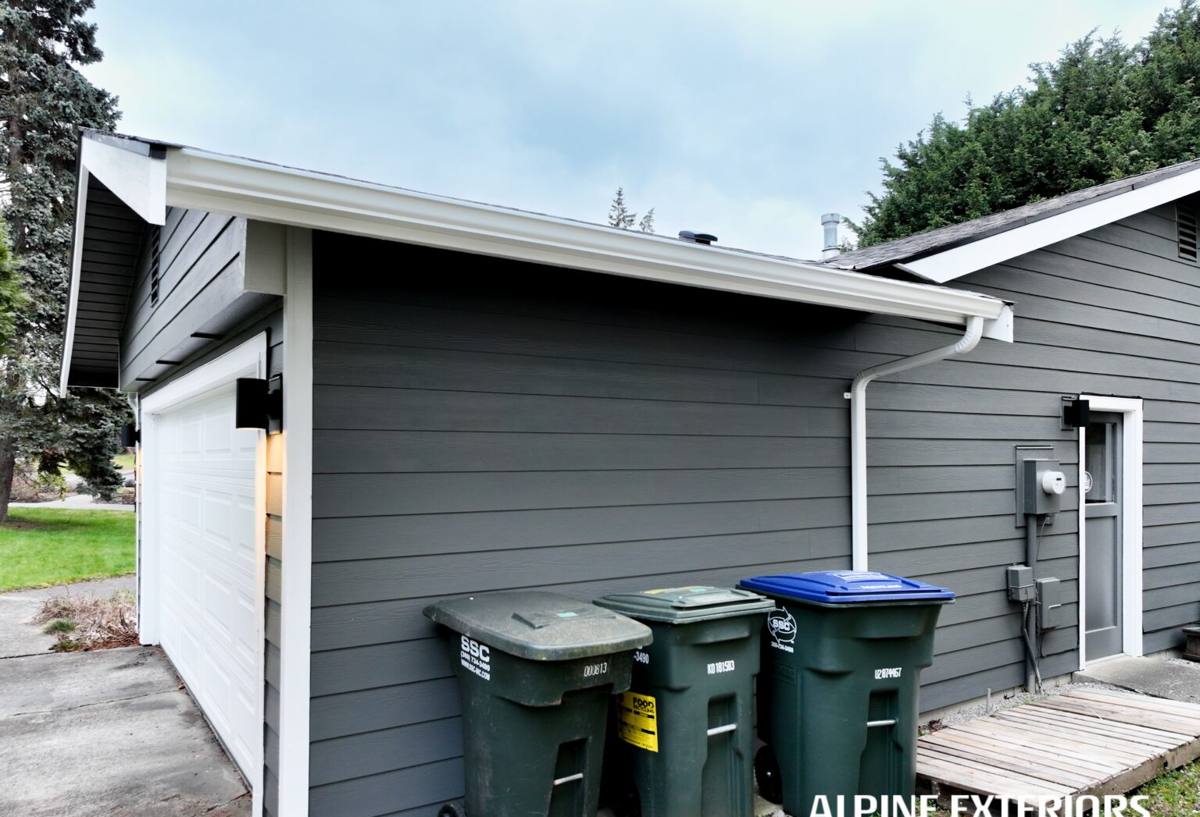
What Whatcom County Climate Does to Siding Over Time
Salt Air and Metal Fasteners
Even a few miles inland from Bellingham Bay, airborne salt accelerates corrosion on anything metal that's exposed or under-protected — fasteners, flashing, trim screws. Siding systems that rely on exposed metal fasteners or thin-gauge trim hardware age faster here than the same product would in a dry inland climate. This is one of the reasons fastener choice and flashing details matter more in Sehome than they would 200 miles east of the Cascades.
Driving Rain and Wind-Driven Moisture
Bellingham's rain doesn't just fall — a good share of it arrives sideways during winter storms off the Strait. That means lap siding, butt joints, and trim-to-siding transitions get tested by wind pressure pushing water into any gap that isn't properly lapped, caulked, or flashed. A siding job that looks fine on a calm day can leak during a January windstorm if the water-management details were rushed.
Moss, Mildew, and Shaded Exposures
Sehome's mix of mature trees and hillside lots means plenty of walls get long stretches without direct sun. Moss and mildew don't just look bad — sustained organic growth holds moisture against the siding surface, which is exactly what accelerates rot in wood-based products and coating failure in painted products. A siding material's real-world lifespan in Sehome depends heavily on how it performs when it stays damp for days at a time, not just how it performs when it gets rained on and then dries out.
What This Means for Material Choice
These three conditions — salt air, wind-driven rain, and extended damp shade — favor a siding material that is dimensionally stable, doesn't feed mold and moss the way organic material can, and holds its factory finish without repainting every few years. That's the case for James Hardie fiber cement, and it's the reason we standardized on it instead of carrying multiple product lines.
| Local Condition | What It Stresses | Why Hardie Fiber Cement Holds Up |
|---|---|---|
| Salt-tinged coastal air | Exposed fasteners, thin trim, coatings | Installed with corrosion-resistant fasteners and factory ColorPlus finish, not field-painted trim |
| Wind-driven rain | Lap joints, butt joints, flashing details | Non-combustible, dimensionally stable board that holds a tight reveal and doesn't cup or warp at joints |
| Extended damp shade / moss | Wood fiber, OSB-based substrates | Cement composition doesn't feed rot the way wood-based siding can when kept damp |
| Freeze-thaw swings | Caulk joints, coating adhesion | Factory-baked finish resists cracking and peeling better than field-applied paint |
What Correct Installation Actually Involves
James Hardie siding performs the way it's rated to perform only when it's installed to the manufacturer's specifications — and those specs exist precisely because moisture management is where siding jobs succeed or fail. A rushed or generic install can undercut a good product just as easily as a bad product undercuts a careful install. On a Sehome home, here's what we're checking at every stage:
- Weather-resistive barrier: a continuous, correctly lapped water-resistive barrier behind the siding, not just whatever housewrap was already on the wall
- Rain screen / drainage gap: proper clearance so any moisture that gets behind the siding can drain and the wall assembly can dry, rather than staying trapped
- Flashing at every penetration: windows, doors, hose bibs, vents, and roof-to-wall transitions — the places wind-driven rain actually finds its way in
- Correct fastener type, spacing, and depth: per Hardie's published fastening schedule for the specific product and exposure
- Proper clearance at grade and roofline: siding held up off decks, patios, and roof surfaces so it isn't sitting in standing water or debris
- Caulking only where Hardie specifies it: over-caulking traps moisture just as badly as under-caulking lets it in
- Factory-cut edges primed and sealed: any field cuts get their exposed edges properly sealed before installation
Skip two or three of these and you can still end up with a wall that looks right for a couple of years before moisture problems show up. That's the gap between "siding installed" and "siding installed correctly."
The James Hardie Product Lines We Use
Hardie makes a few different board profiles and a climate-engineered "HZ" formulation for different regions. For Whatcom County's wet marine climate, we're specifying the HZ5 product line, engineered for cold, wet Pacific Northwest conditions rather than the hot-dry or humid-southeast formulations. Common choices for Sehome homes include:
- HardiePlank lap siding — the standard horizontal look for most Sehome homes, available in several reveal widths and textures
- HardiePanel vertical siding — often used as an accent on gables, dormers, or modern-style facades
- HardieTrim boards — matching corner boards, window trim, and fascia so the whole exterior is a consistent, non-combustible system
- HardieShingle — for homes wanting a shingle-style look without the maintenance burden of actual wood shingles in a damp climate
All of it comes with the ColorPlus factory finish baked on before it ever reaches the house, which matters directly for the coastal-air point above — it's a more durable, consistent finish than a coat of paint applied on-site in Bellingham's damp air.
Our Process for a Sehome Siding Replacement
- On-site assessment: we look at your home's specific exposures — which walls get direct weather, where moss and staining are already showing, and what's happening behind the current siding, not just its surface condition
- Tear-off and substrate check: once old siding is off, we inspect sheathing and framing for hidden moisture damage before anything new goes up — this is often where problems from a previous install surface
- Water-resistive barrier and drainage plane: installed or repaired to current standards, correctly lapped and sealed
- Flashing at all penetrations: windows, doors, and any wall penetrations get proper flashing before siding covers them
- Hardie installation to manufacturer spec: correct fasteners, spacing, clearances, and reveal, following Hardie's published installation guidelines for our climate zone
- Trim and detail work: corners, trim boards, and caulk joints finished to match the ColorPlus system
- Final walkthrough: we go over the finished exterior with you and cover care and maintenance specific to your home's exposure
Why It Matters That Your Crew Already Works Sehome
A siding crew that already knows the neighborhood isn't a marketing line — it changes real decisions on the job. Knowing which streets sit in heavier shade, which lots catch the worst of the wind off the bay, and how a particular block tends to hold moisture on north-facing walls all feed into flashing details, drainage decisions, and product selection before a single board goes up. It also means we're not guessing at permitting and inspection expectations for Bellingham and Whatcom County — we've been through that process on homes near yours.
Why We Only Install James Hardie
We get asked why we don't offer vinyl, LP SmartSide, or other fiber cement alternatives. The honest answer: we standardized on one product so we could get genuinely good at installing it correctly, rather than being average across five product lines. James Hardie's HZ5 formulation is engineered for exactly the conditions Sehome deals with — sustained moisture, salt air, and freeze-thaw cycling — its ColorPlus finish holds up to coastal weather better than field-applied paint, it's non-combustible, and Hardie's transferable warranty gives homeowners real recourse if something goes wrong with the material itself. That's a stronger foundation for a 30-40 year investment than a product where we'd be managing more trade-offs and shorter maintenance cycles.
What to Budget For
| Cost Factor | Why It Moves the Number |
|---|---|
| Tear-off condition | Homes with hidden moisture or rot damage need substrate repair before new siding goes on |
| Home size and wall complexity | More corners, dormers, and trim detail means more labor and material |
| Product mix | Straight lap siding vs. adding shingle accents, vertical panels, or extensive trim work |
| Access and site conditions | Sloped Sehome lots or tight setbacks can affect staging and labor time |
| Color and finish selection | Standard ColorPlus colors vs. premium finish options |
Exact numbers depend on your home's specific condition and size — that's what the on-site estimate is for, and we won't give you a real quote without seeing the walls first.
If you're planning a siding replacement in Sehome and want a straight answer about what your home actually needs, we offer a free, no-pressure estimate — walk us around the house and we'll tell you what we see, no obligation.