 Bellingham Siding
 Siding Installation in Bellingham's York Neighborhood
York is one of Bellingham's established in-city neighborhoods, with a housing stock that spans early-to-mid-20th-century homes alongside newer infill construction. That mix matters when it comes to siding: a lot of York homes are wearing their second or third exterior, and a fair number still have original wood siding, aging vinyl, or a fiber cement job that was installed without the drainage details Whatcom County's climate actually requires. When we install siding in York, we're not just matching a color to a house — we're correcting for whatever the previous installation got wrong and building in the moisture management the neighborhood's older lots and mature landscaping demand.
This page is specifically about siding installation for York, not a general overview of our services. If you're comparing options for a home in this part of Bellingham, the details below are what actually change the outcome.
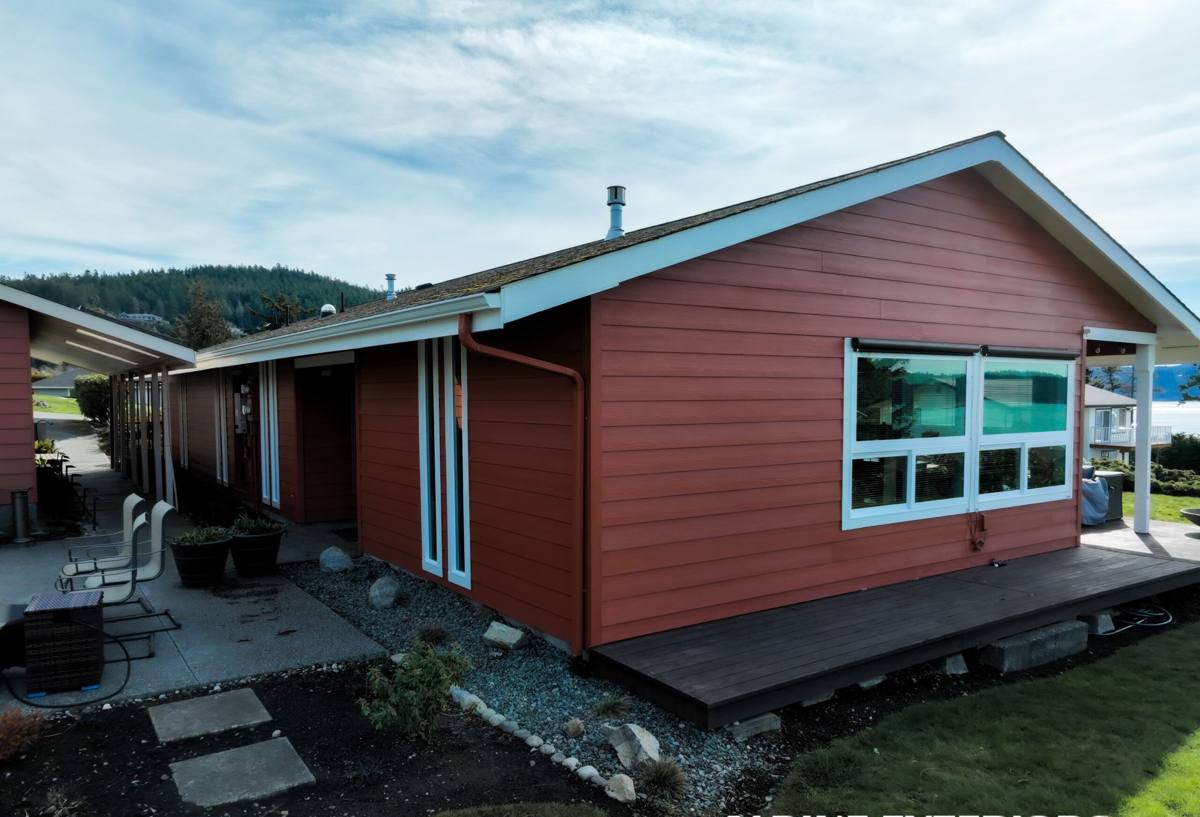
What Whatcom County's Climate Puts Siding Through
Salt Air and Coastal Moisture
Bellingham sits on the water, and even a few miles inland the air carries a steady dose of salt and moisture. Salt-laden air accelerates corrosion on fasteners, flashing, and any metal trim that isn't rated for coastal exposure, and it keeps humidity levels elevated against exterior walls even on days without rain. Siding materials and hardware that aren't specified for this environment tend to show their weaknesses early — pitting on cheap fasteners, chalking finishes, and swelling at cut edges that weren't sealed correctly.
Driving Rain Off Bellingham Bay
Whatcom County doesn't just get a lot of rain — it gets a lot of wind-driven rain, which behaves differently than a straight downpour. Driving rain gets pushed sideways under laps, around trim, and into any gap in the water-resistive barrier that a installer left unsealed. A siding job that looks fine in dry weather can still be letting water behind the cladding every time a storm comes through with wind behind it.
The Long Moss Season
Between the marine moisture and the tree canopy common in older Bellingham neighborhoods, moss and algae have a long growing season here — realistically most of the year outside of a dry summer stretch. Moss holds moisture directly against a siding surface far longer than open air would, which is hard on any substrate that isn't dimensionally stable and hard on any painted finish that isn't formulated to resist biological growth.
What This Means for Homes in York Specifically
York's older lots often have decades of tree growth, which is a nice feature of the neighborhood but a real factor for siding performance. Shaded, north-facing walls dry out slower after rain, hold moss longer, and are the first place we look for early siding failure on any home we assess in this area. Homes with additions or garages built at different times also frequently have mismatched flashing details where the newer section meets the old — a common weak point we check closely during any York installation.
None of this means York homes need something exotic. It means the installation has to be done correctly for a wet, shaded, coastal-influenced site, rather than to a generic dry-climate standard.
What a Correct Siding Installation Actually Involves
Siding is a system, not just a surface material. The cladding itself gets the attention, but the water-resistive barrier, flashing, drainage plane, and fastening pattern underneath it are what actually determine whether a home stays dry for the next 30-plus years.
| Detail | Correct Practice | Common Shortcut |
|---|---|---|
| Weather-resistive barrier | Continuous, properly lapped house wrap with all penetrations flashed and taped | Wrap installed but seams and penetrations left unsealed |
| Drainage gap | Rainscreen or drainage plane behind siding so incidental moisture can drain and the wall can dry | Siding fastened tight to the wrap with no drainage path |
| Flashing at openings | Window, door, and roofline flashing integrated with the water-resistive barrier in correct shingle-lap order | Flashing added but not tied into the barrier, or caulk used in place of flashing |
| Fastening | Manufacturer-specified fastener type, length, and spacing for the exposure and substrate | Whatever fasteners are on hand, driven too deep or too shallow |
| Cut-edge sealing | Field cuts primed or sealed before installation, per manufacturer spec | Cut edges left raw, absorbing moisture from day one |
Every item on the shortcut side of that table is invisible once the siding is up. It only shows up years later, as trapped moisture, rot at the sheathing, or premature paint failure — usually well past the point where it's a simple fix.
Why We Install Only James Hardie Fiber Cement
We standardized on James Hardie fiber cement siding, and we don't install vinyl, LP SmartSide, or other engineered wood or fiber cement alternatives. That's a deliberate call, not a default. Hardie's HZ5 product line is engineered specifically for climates like ours — freeze-thaw cycling, sustained damp, and coastal exposure — and it's a non-combustible material that doesn't rely on a factory or field-applied wood coating to hold up over time.
The ColorPlus factory finish matters as much as the substrate. It's baked on under controlled conditions rather than field-applied, which gives it better adhesion and better resistance to the chalking and fading that plain field-painted siding shows first in a marine climate. Fiber cement also doesn't feed moss and algae growth the way raw wood does, which matters directly given how long the growing season runs here. Hardie backs the product with a strong transferable warranty, which only holds up if the installation itself was done to spec — which is the other half of why we're selective about who we let install it.
Our Process on a York Job
- Site assessment: we look at tree cover, sun exposure per wall, existing moisture damage, and the condition of trim, flashing, and sheathing before quoting anything.
- Tear-off vs. overlay decision: we don't install new siding over rotten sheathing or a failed water-resistive barrier — if we find damage, we tell you before we cover it up, not after.
- Permitting: depending on the scope of the job, exterior work in Bellingham may require a building permit; we handle that as part of the project rather than leaving it to the homeowner.
- Installation sequence: barrier, flashing, drainage plane, then siding — installed to Hardie's fastening and clearance specifications, not shortcuts.
- Final walkthrough: we go over caulking, trim details, and touch-up before calling the job done.
Because we've worked on homes throughout York and the surrounding Bellingham neighborhoods, we already know the patterns — where the shaded walls tend to hold moisture, what older flashing details usually look like, and what a house from this era typically needs behind the siding. That familiarity saves time on the assessment and reduces surprises once we open a wall up.
Cost Factors for Siding Installation in York
| Factor | Why It Moves the Price |
|---|---|
| Home size and wall complexity | More square footage and more corners, gables, and trim details mean more material and labor |
| Existing siding removal | Tear-off and disposal of old wood or vinyl siding adds labor beyond a bare-wall install |
| Hidden moisture or rot repair | Damaged sheathing or framing found once old siding comes off has to be repaired before new siding goes on |
| Trim and color complexity | Custom trim profiles, multiple colors, or accent details take more time than a single-color, single-profile job |
| Site accessibility | Mature trees, tight lot lines, and limited staging space — common on older York lots — can slow crew access and setup |
We give a firm number after the site assessment, not a phone estimate — the factors above vary enough house to house that a real number requires seeing the walls.
Keeping New Siding Performing Through Moss Season
Correctly installed fiber cement siding is low-maintenance, but "low-maintenance" doesn't mean "no maintenance" in a climate like this one. A short annual routine keeps it performing the way it's supposed to:
- Rinse siding annually, especially on shaded or north-facing walls, to clear moss and algae buildup before it takes hold
- Keep gutters clear so overflow isn't running down the siding face during heavy rain
- Trim back branches and shrubs that keep a wall section shaded and damp longer than the rest of the house
- Check and re-caulk joints around trim, windows, and doors every few years as sealant ages
- Walk the exterior after major storms to catch any impact damage or lifted trim early
Why Hiring a Crew That Already Works in York Matters
Siding installation is detail work, and the details that matter in York — shaded walls, older flashing conditions, mixed-era additions, coastal exposure — are specific to this kind of neighborhood, not generic to every job in Whatcom County. A crew that's already done this work here isn't guessing at how the site will behave; they've seen the pattern before and know what to check for. That's the difference between a siding job that looks right on install day and one that's actually built to hold up through another 20 moss seasons.
If you're weighing siding options for a home in York, we're happy to take a look and give you a straight, no-pressure estimate — use the form below to get started.