 Bellingham Siding
 Siding Replacement in Cordata: What This Bellingham Neighborhood Actually Needs
Cordata sits on the north side of Bellingham, close enough to the water and open enough to weather that homes here take a specific combination of punishment: salt-tinged air moving in off the bay, driving rain that doesn't always fall straight down, and a moss season that runs longer than most homeowners realize until they're scraping it off a wall. Siding replacement in this part of Whatcom County isn't a cosmetic project. It's a decision about which material and which installation approach will actually hold up against that combination, year after year, without turning into a maintenance chore.
We do siding replacement work throughout Cordata and the surrounding Bellingham area, and we install one product: James Hardie fiber cement. This page walks through what the local climate does to siding, what a correct replacement job involves, how our process works from first visit to final walkthrough, and why the fact that we already work this specific neighborhood matters more than it might seem.
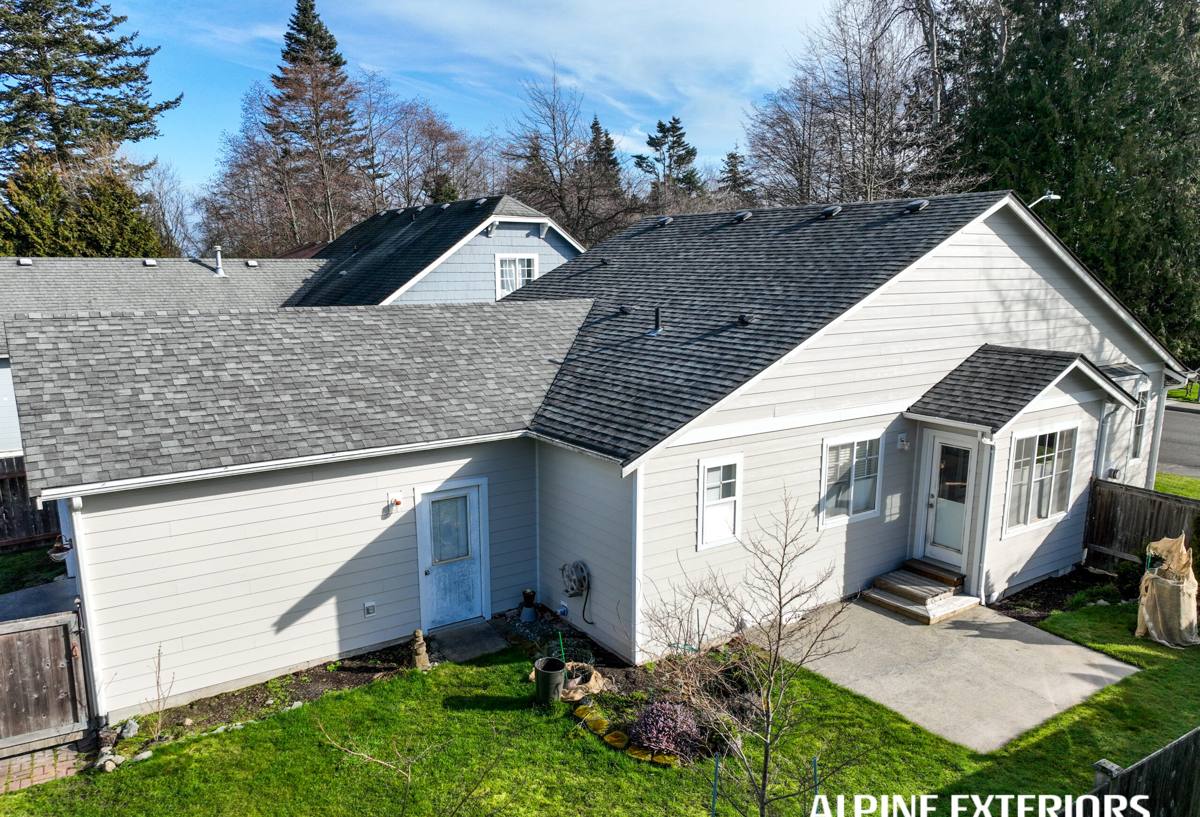
What Cordata's Climate Does to Exterior Siding
Salt Air and Slow Corrosion
Bellingham's proximity to Bellingham Bay means homes across the city, including Cordata, deal with airborne salt in a way that inland Whatcom County properties don't. Salt-laden moisture doesn't just sit on a wall surface — it works into fasteners, trim joints, and any point where a siding system isn't fully sealed. Over years, that slow chemical exposure accelerates corrosion in low-grade fasteners and degrades paint and caulk faster than it would on a home fifty miles inland. Siding that isn't engineered or installed with that exposure in mind tends to show its age early, usually first at the fastener heads and butt joints.
Driving Rain, Not Just Rain
Whatcom County gets a lot of rain, but the more damaging factor for siding is wind-driven rain — moisture pushed sideways into wall assemblies rather than falling straight and running off. Cordata's mix of open residential streets and partial tree cover means wind exposure varies from lot to lot and even from wall to wall on the same house. A north- or west-facing elevation catching prevailing weather off the water can see meaningfully more driving rain than a sheltered south wall on the same property. That's a detail that has to be accounted for in flashing and water management, not just in the siding material itself.
A Long Moss and Mildew Window
Mild temperatures, consistent moisture, and stretches of low sun angle add up to a moss and mildew season in Bellingham that runs longer than most of the country experiences. It's not unusual for shaded or north-facing siding to stay damp for days at a time during the fall and winter months. Materials that absorb moisture readily give moss and mildew something to hold onto; materials that shed water and dry out cleanly don't. This is one of the most visible ways siding choice shows up on a Cordata home within just a few years of installation.
Signs a Cordata Home Needs Siding Replacement, Not Just Repair
Not every siding problem calls for a full tear-off. But there's a point where patching stops being cost-effective and starts becoming a way to delay an inevitable full replacement while water keeps getting into the wall assembly underneath. Here's what we look for during an assessment:
- Soft, spongy, or crumbling siding when pressed, especially near the bottom courses close to grade
- Visible warping, cupping, or buckling across multiple panels or boards, not just one isolated spot
- Paint that won't hold anymore no matter how often it's redone, or finish that's chalking heavily
- Persistent moss or dark staining that returns within a season of cleaning
- Cracked or missing caulk at joints and trim, with visible gaps behind it
- Interior signs — soft drywall, staining, or a musty smell near exterior walls — that point to moisture already inside the wall
- Siding material that's simply reached the end of its practical service life, even if it looks intact from the street
A house showing two or three of these signs at once, especially on the walls that take the most weather, usually has more damage behind the siding than what's visible on the surface. That's the point where a proper tear-off and inspection of the wall sheathing behind it becomes worth doing right, instead of chasing individual repairs indefinitely.
Why We Only Install James Hardie Fiber Cement
We used to offer more than one siding brand. We stopped, and the decision came from a pattern we kept seeing on tear-offs and service calls in exactly this kind of climate — not from a supplier relationship or a marketing angle.
- Non-combustible core: Fiber cement doesn't burn or feed a fire the way wood-based siding products can, which matters for safety and can factor into insurance underwriting.
- Factory-applied ColorPlus finish: The color coat is baked on in a controlled factory process, not brushed on in the field, and it holds up to salt air, UV, and repeated wetting far longer than site-applied paint.
- Climate-engineered HZ product lines: Hardie builds specific formulations for regions with heavy moisture exposure and freeze-thaw cycling, which describes Whatcom County's coastal climate well.
- Dimensional stability: Fiber cement doesn't swell, warp, or cup the way engineered wood or wood-based products can after repeated wet-dry cycles that never fully resolve during a long moss season.
- Strong transferable warranty: Hardie backs its products with a substantial warranty structure, provided the installation follows their published specifications — which is a separate requirement from just using their material.
We don't install LP SmartSide, vinyl siding, Cemplank, Allura, primed spruce, or cedar. Each of those products has a place in the broader market, and plenty of homes elsewhere carry them without issue. But for a Cordata property dealing with salt air, driving rain, and a long wet season, we've made a professional call to install one system we're willing to stand behind completely, rather than offer a lower-cost option that quietly pushes maintenance risk back onto the homeowner five or ten years down the road.
What Correct Siding Replacement Actually Involves
The material is only part of the equation. A Hardie siding job installed loosely or without attention to water management will still develop problems on a coastal, high-moisture site like Cordata, regardless of how good the product is on paper. A correct replacement includes:
Tear-Off and Substrate Inspection
Full removal of the old siding, followed by an inspection of the wall sheathing and framing underneath. This is the step that gets skipped when a contractor just "re-sides over" existing material, and it's often where the real story of a home's moisture history shows up — soft sheathing, old water staining, or evidence of a housewrap that failed years earlier.
Weather-Resistive Barrier and Flashing
A properly lapped weather-resistive barrier, correctly integrated flashing at windows, doors, and every penetration, and attention to how water is directed away from the wall rather than into it. On a home with mixed wind exposure across different elevations, this detailing needs to be consistent everywhere, not just on the walls that are easiest to access.
Correct Fastening and Clearances
Hardie's published installation specifications call for specific fastener types, spacing, and clearance from grade, roof lines, and other transitions. Getting these wrong is one of the most common ways a fiber cement installation underperforms — and it's also one of the reasons Hardie's warranty coverage depends on installation following spec, not just on using genuine Hardie material.
Joint and Trim Detailing
Properly sealed butt joints, correctly installed trim, and attention to any point where two dissimilar materials meet. In salt air, these small connection points are usually where corrosion and water intrusion start first.
Cost Factors for Siding Replacement in Cordata
| Factor | Why It Matters Here |
|---|---|
| Home size and number of stories | More wall area and more difficult access on multi-story homes both add labor time |
| Extent of substrate damage | Rotted sheathing found during tear-off has to be replaced before new siding goes on, which isn't always visible until the old material comes off |
| Number of elevations with heavy wind or moisture exposure | Walls facing prevailing weather off the bay often need more thorough flashing and drainage detailing |
| Trim and architectural detail | Homes with more corners, dormers, or trim transitions take longer to detail correctly than a simple rectangular footprint |
| Product line and profile selected | Hardie offers multiple plank widths, textures, and panel styles at different price points within the same warranty-backed system |
| Access and site conditions | Tight lots, mature landscaping, or limited driveway access can add setup and staging time |
Our Process for a Cordata Siding Replacement
- On-site assessment: We walk the entire exterior, note which elevations show the most wear, and look for early signs of moisture already working into the wall assembly — not just what's visible in the siding itself.
- Written scope and estimate: A clear, itemized scope covering material, tear-off, any substrate repair contingencies, and timeline, before any contract is signed.
- Tear-off and inspection: Old siding comes off, sheathing and framing get inspected, and any damage found gets addressed and documented before new material goes up.
- Weather barrier and flashing installation: Correctly lapped housewrap and flashing at every window, door, and penetration, matched to the exposure of each specific wall.
- Hardie installation to spec: Correct fasteners, spacing, clearances, and joint detailing, following Hardie's published requirements so the manufacturer warranty is actually intact, not just theoretically available.
- Final walkthrough: A review of the finished work with the homeowner, including care and maintenance guidance specific to a coastal Bellingham property.
A Homeowner's Checklist Before Hiring for Siding Replacement
- Ask what siding material they install and why, and get their reasoning, not just a price
- Confirm current Washington contractor licensing and active liability insurance
- Ask specifically how they handle flashing and water management on walls exposed to driving rain
- Request a written, itemized scope before signing anything, including what happens if substrate damage is found during tear-off
- Ask whether their installation follows the manufacturer's published spec closely enough to keep the product warranty valid
- Ask for their approach to job-site cleanup and how long the project is expected to take
Why a Contractor Who Already Works Cordata Matters
Cordata is a specific pocket of Bellingham with its own mix of housing ages, lot orientations, and exposure to weather coming off the bay. A crew that already works this neighborhood regularly has a working sense of which streets and elevations tend to catch the worst of the driving rain, which lots hold onto moss longest into the summer, and how salt air exposure tends to show up on siding and fasteners in this specific area versus a home further inland in the county. That familiarity isn't a substitute for a proper on-site assessment of your particular house, but it does mean fewer surprises and a faster, more accurate read on what a given property actually needs before work starts.
If your Cordata home's siding is showing its age, or you're just trying to get an honest read on whether it's a repair situation or a replacement situation, we're glad to come take a look. Reach out below for a free, no-pressure estimate.