 Bellingham Siding
 Why Silver Beach Decks Take More Punishment Than Most
If you live in Silver Beach, you already know your deck doesn't get an easy ride. The combination of salt-laden air, driving rain off the water, and a moss season that can stretch from fall clear into spring puts more stress on outdoor structures here than in a lot of inland Bellingham neighborhoods. Salt air accelerates corrosion on fasteners and metal hardware. Driving rain doesn't just fall straight down — wind pushes it sideways and up under rail caps, into end grain, and along ledger connections where water isn't supposed to go. And once temperatures drop and the region settles into its long wet stretch, any shaded or low-airflow surface starts growing moss and algae, sometimes within weeks of being cleaned.
None of that is unique to Silver Beach, but it's more pronounced here than in drier, more sheltered parts of Whatcom County. A deck built without that reality in mind — undersized fasteners, no ledger flashing, boards laid tight with no drainage thought — will show it early: soft spots, streaking, green film that keeps coming back no matter how often you scrub it.
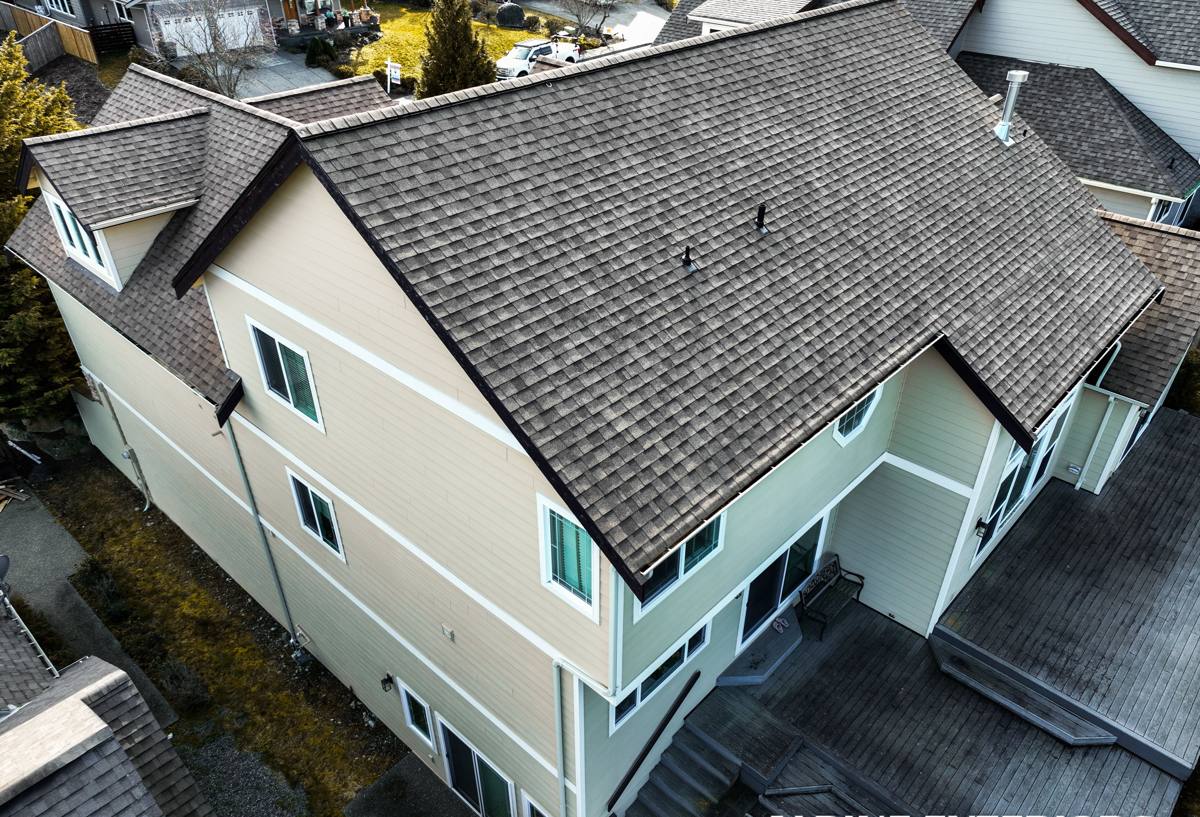
What Composite Decking Actually Solves — and What It Doesn't
Composite decking earns its reputation in climates like this because the board itself doesn't rot, doesn't need annual staining or sealing, and doesn't absorb moisture the way solid wood does. For a Silver Beach deck sitting through months of damp weather, that's a real advantage: the material isn't feeding on the moisture the way wood fiber does, so you're not fighting slow decay underneath a surface that still looks fine on top.
What composite doesn't do is make the rest of the build irrelevant. It won't fix bad drainage, it won't stop moss from growing on top of the board if debris and shade sit there long enough, and it won't compensate for a substructure that was never protected from moisture in the first place. A composite deck built over untreated joists with no airflow underneath can still develop rot in the framing even while the decking on top looks brand new. The board is only as good as everything underneath and around it.
What's Actually Happening Under the Boards
Most callouts we get on composite decks that are "failing" early aren't a problem with the composite at all — they're a substructure or drainage issue that was never addressed. Trapped moisture under a deck with poor airflow, a ledger board that was never flashed correctly where it meets the house, or joists that were never protected from standing water will cause problems regardless of what's fastened on top.
Choosing the Right Composite for a Marine Climate
Capped vs. Uncapped Boards
Capped composite boards have a polymer shell wrapped around a wood-plastic core, which limits how much moisture the board can absorb and helps resist staining and mold growth on the surface. Uncapped composite, or older-generation composite, is more prone to swelling, surface fading, and mold growth in a climate that stays damp as long as ours does. For a property exposed to salt air and extended wet stretches, we generally steer homeowners toward capped boards — the small premium in material cost buys real resistance to the conditions Silver Beach actually deals with.
Board Profile and Fastening
Grooved-edge boards with hidden fastener clips give a clean look with no visible screws, but the grooves and clip channels can also collect fine debris and hold moisture against the board edge if the deck isn't kept clear. In a moss-prone climate that's a maintenance consideration, not a dealbreaker — it just means we plan gap spacing and airflow with that in mind rather than fighting it later.
What a Correct Installation Involves
A composite deck that holds up here starts below the decking, not at it. The details that matter most in this climate:
- Joists protected with joist tape or a comparable barrier so fastener penetrations don't become entry points for moisture
- Correct joist spacing for the specific board — many composite boards need tighter spacing than dimensional lumber decking, especially on diagonal or picture-frame layouts
- Proper flashing where the deck ledger attaches to the house, so wind-driven rain doesn't track behind the siding
- Consistent gapping between boards for drainage and airflow, sized to the manufacturer's spec and adjusted slightly for our wet season rather than a dry-climate default
- Ventilation underneath the deck so trapped humidity has somewhere to go instead of sitting against the framing
- Corrosion-resistant fasteners and hardware throughout, given the salt air this close to the water
Skip any one of these and the deck can still look fine for a season or two before the real problems show up — which is exactly why so many "composite decking failures" trace back to installation shortcuts rather than the material itself.
| Factor | Composite Decking | Wood Decking |
|---|---|---|
| Moisture absorption into the board | Low, especially with capped boards | High — wood fiber absorbs and releases moisture constantly |
| Annual maintenance | Periodic cleaning, no staining or sealing | Cleaning plus regular sealing or staining to hold up |
| Moss and algae resistance on the surface | Better, but not immune — still needs to be kept clear | More prone to holding moisture that feeds growth |
| Upfront material cost | Higher | Lower |
| Typical lifespan in this climate | Long, if the substructure is built correctly | Shorter without diligent yearly upkeep |
| Repair approach | Board replacement, no re-sanding or refinishing needed | Can be sanded and refinished, but rot repair is common |
Our Process for Silver Beach Deck Projects
Because we already work in this neighborhood, our process is built around what actually happens to decks here rather than a generic checklist.
- On-site assessment — we look at sun exposure, prevailing wind and rain direction, existing drainage patterns, and the condition of any existing substructure before recommending anything.
- Material and layout consultation — we walk through capped vs. uncapped options, board colors that hold up to UV and salt exposure, and layout choices that avoid trapping debris in high-moss areas of the yard.
- Permitting — where a permit is required for the scope of work, we handle the paperwork and inspections rather than leaving that on you.
- Removal of the old deck — when we're replacing an existing structure, we also check the ledger connection and framing underneath for hidden rot before building on top of it again.
- Installation to manufacturer spec — spacing, fastening, flashing, and ventilation done to the standard the board manufacturer requires, not shortcuts that void the warranty.
- Final walkthrough — we go over basic care with you before we leave, specific to your site conditions.
Living With a Composite Deck Through Moss Season
Composite decking is genuinely lower-maintenance than wood, but "low-maintenance" doesn't mean "no-maintenance," especially with a moss season as long as ours. A little seasonal attention keeps a composite deck looking and performing the way it should for years.
- Sweep leaves, needles, and other organic debris off the deck regularly through fall — it's what feeds moss and algae growth
- Keep nearby gutters clear so overflow isn't sheeting water directly onto the deck surface
- Wash the deck periodically with a soft brush and a mild cleaner rather than letting buildup sit all winter — a pressure washer on too high a setting can damage the board's cap layer
- Avoid leaving planters, mats, or furniture with poor airflow underneath sitting in the same spot for months at a time
- Check railing connections and fastener points once or twice a year for corrosion, given the salt air this close to the water
- Confirm gaps between boards haven't filled in with debris that blocks drainage
Cost Factors to Plan For
Composite decking costs vary based on a handful of factors specific to your project rather than a flat per-square-foot number. Broadly, expect material tier, substructure condition, and railing choice to move the price more than anything else.
| Cost Factor | How It Affects the Project |
|---|---|
| Board tier (entry-level vs. premium capped composite) | Largest swing in material cost; premium capped boards cost more upfront but hold up better in constant moisture |
| Condition of existing substructure | Rotted or undersized framing needs to be rebuilt before new decking goes on, adding cost but preventing early failure |
| Railing style | Composite, aluminum, and cable rail systems all price differently and have different maintenance needs in salt air |
| Deck size and layout complexity | Diagonal patterns, multiple levels, and built-in features add labor and material |
| Tear-off of an existing deck | Removal and disposal of old decking and framing adds cost but is often necessary to do the job right |
Why a Crew That Already Works Silver Beach Matters
A lot of what makes a deck perform well in Silver Beach isn't in a manufacturer's install manual — it's knowing how this specific stretch of Bellingham behaves. That means understanding how lots near the water tend to drain, which sides of a house typically catch the worst of the wind-driven rain, and how long moss actually takes to establish on a shaded, low-airflow deck here versus a sunnier lot a few miles inland. It also means being familiar with City of Bellingham and Whatcom County permitting requirements so that part of the project doesn't stall your timeline.
A contractor who's built decks throughout this neighborhood isn't guessing at spacing tolerances or flashing details — they've already seen what happens when those details get skipped on a property like yours, and they build to avoid it the first time.
If you're weighing a new composite deck or replacing an aging wood deck in Silver Beach, we're happy to walk the site with you, look at your specific drainage and exposure, and put together a straightforward estimate — no pressure, no upsell. Use the form below to get started.