 Bellingham Siding
 Building New in Silver Beach? The Windows Have to Be Right the First Time
New construction gives you one real shot at getting window installation right. Once siding, trim, and interior finish work close in around a window, fixing a bad flashing job means tearing back into finished walls. That's a different situation than a retrofit or pocket replacement, and it's why we treat new-construction window installs on Silver Beach jobs as their own trade — not a smaller version of a remodel.
Silver Beach sits close enough to the water and open exposure that homes here take a steadier beating from wind-driven rain than houses tucked farther inland in Bellingham. Whatcom County's marine climate means moisture is the constant variable, and a window opening that isn't flashed and sealed correctly during framing will eventually let water in — sometimes not for a year or two, which is worse, because by the time it shows up as a stain or soft spot, the sheathing behind it has already been wet for a while.
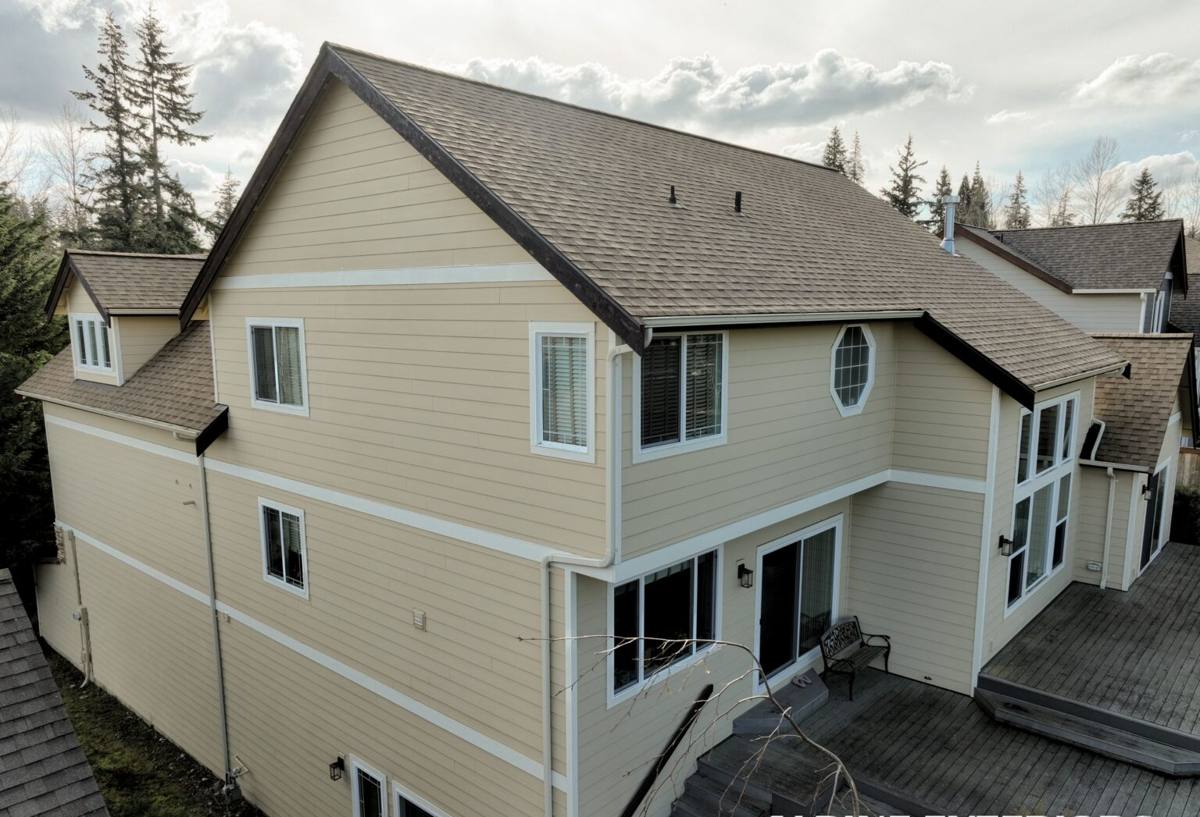
What "New-Construction" Windows Actually Means
New-construction windows are built with a nailing flange (also called a fin) around the perimeter of the frame. That flange gets integrated directly into the water-resistive barrier and flashing system during framing, before siding goes on. This is different from a replacement or "pocket" window, which gets inserted into an existing opening after the fact and relies on the old frame and flashing already being sound.
Because the flange is set into the wall assembly from the start, new construction is the correct — and honestly the only good — time to get the flashing sequence right. There's no working around existing siding or trim. The tradeoff is that there's also no room for shortcuts, because everything gets covered up.
Why Sequence Matters More Than Product Choice
Homeowners often focus on brand and glass package, which matter, but the bigger risk in new construction is installation sequence. A mid-grade window installed with correct flashing will outperform a premium window installed out of order almost every time. Water doesn't care about price point — it follows gaps, and gaps come from skipped steps, not cheap glass.
What Silver Beach's Climate Demands From an Install
A few local conditions shape how we approach window installs in this part of Bellingham:
- Driving rain: Wind off the water pushes rain sideways against west- and south-facing walls, which stresses head flashing and sill pans far more than a calm-climate install would.
- Salt-influenced air: Proximity to the water means hardware, fasteners, and exposed metal components see more corrosion pressure over the life of the window than they would farther inland.
- Long moss and algae season: Whatcom County's damp stretch runs long — moss and green growth take hold anywhere moisture sits, including on window sills, trim, and low-slope areas above openings if drainage isn't built in from day one.
- Condensation potential: Mild temperatures paired with high humidity can produce interior condensation on under-insulated frames or single-pane glazing, which over time contributes to sill rot if it's not managed.
None of this means Silver Beach needs exotic materials. It means the flashing details, hardware selection, and drainage planning need to account for sustained moisture exposure rather than assuming a drier climate's standard install is good enough.
What a Correct Installation Involves
Every new-construction window we set follows the same sequence, regardless of brand:
- Rough opening check: Confirm the opening is square, plumb, and sized correctly before the window ever goes near it.
- Sill pan flashing: A sloped, back-dammed sill pan so any water that does get past the window drains back out — this is the single most important step for long-term durability in a wet climate.
- Jamb and head flashing integration: Flashing tape and materials shingled correctly (bottom-up, like siding) so water is always directed outward and down, never trapped behind the flange.
- WRB tie-in: The house wrap or weather-resistive barrier is cut and integrated with the window flashing so the whole wall assembly drains as one system, not a window sitting inside a separate barrier.
- Fastening per manufacturer spec: Correct fastener type, spacing, and location — this affects both the structural warranty and how the window performs under wind-driven rain.
- Interior and exterior sealant: Backer rod and sealant where specified, without over-sealing in ways that trap moisture instead of letting it drain.
Skipping or rushing any one of these steps is how a brand-new window ends up with a moisture problem inside five years — long before the glass or hardware would normally show wear.
Choosing the Right Window Material for This Climate
Frame material affects how a window handles Whatcom County's damp, salt-tinged air over decades, not just how it looks on day one.
| Material | How It Handles Local Climate | Maintenance | General Cost Range |
|---|---|---|---|
| Vinyl | Good moisture and corrosion resistance; won't rot or rust; performs consistently in wet, mild climates | Low — occasional cleaning | Lower |
| Fiberglass | Excellent dimensional stability and moisture resistance; handles temperature and humidity swings with minimal expansion/contraction | Low | Mid to upper |
| Wood interior / clad exterior | Warm interior appearance; exterior cladding protects the wood from rain exposure if installed and sealed correctly | Moderate — exterior cladding needs sealant/paint attention over time; interior wood needs periodic finishing | Upper |
| Aluminum | Strong but conducts cold and is more prone to condensation on interior surfaces in this climate unless thermally broken | Low, but corrosion protection matters near salt-influenced air | Mid to upper |
We don't push one material as universally "best." Vinyl and fiberglass tend to be the lower-maintenance choices for this climate because they don't depend on an unbroken paint or sealant layer to stay protected from moisture. Wood-clad windows can absolutely work here, but they carry a higher maintenance burden — if the cladding or sealant fails at a joint, the wood underneath is exposed to exactly the kind of sustained damp conditions Silver Beach sees for a good part of the year. That's a tradeoff we'll walk through honestly based on your budget and how much upkeep you want to take on.
Energy Performance and Washington's Energy Code
New construction in Washington State has to meet current state energy code requirements, which set minimum performance standards for window U-factor (how well the window resists heat loss) and, depending on the overall building envelope path your project is using, may factor into whole-house compliance calculations. In a marine climate like Bellingham's — mild temperatures but persistent humidity — glass package selection also affects condensation resistance, not just heating costs.
Low-E coatings and gas-filled (typically argon) sealed units are standard on most new-construction packages now, and they earn their keep here: better thermal performance means warmer interior glass surfaces, which means less condensation forming on the window itself during the wettest months.
Our Process for New-Construction Window Installs
| Step | What Happens |
|---|---|
| 1. Plan review | We review window schedules and rough opening sizes against the actual framing before install day, catching mismatches early. |
| 2. Coordination with the builder | We work directly with your general contractor or framer on timing — windows go in at the right point in the build sequence, not before the opening is ready or after siding crews are waiting on us. |
| 3. Flashing and installation | Full sill pan, jamb, and head flashing sequence as outlined above, on every opening, every time. |
| 4. Documentation | Photos of flashing details before they're covered by siding, so there's a record of what's behind the wall. |
| 5. Final check | Operation, seal, and trim check once siding and exterior finish work are complete. |
A Checklist Before You Hire
Whether you're a homeowner managing your own build or working with a general contractor who's bringing in a window sub, these are worth confirming up front:
- Ask specifically about sill pan flashing — not just "we flash our windows," but the actual method used.
- Confirm who's responsible for WRB integration at the window opening — the framer, the siding crew, or the window installer.
- Get the U-factor and glass package in writing, matched to Washington energy code requirements for your project.
- Ask how corrosion-resistant hardware and fasteners are selected for the exposure level of your specific lot.
- Request photos of flashing details before siding covers them.
- Ask about manufacturer warranty terms and what voids them — installation errors are a common exclusion.
Why Local Experience in Silver Beach Matters
A window install crew that regularly works this part of Bellingham already understands the exposure patterns specific to Silver Beach lots — which elevations take the worst of the driving rain, how much moss and algae pressure to plan for on north-facing trim, and how salt-influenced air factors into hardware selection over a 20- or 30-year window lifespan. That's knowledge that comes from doing the work here repeatedly, not from a general install checklist.
Local experience also means we're familiar with how permitting and inspections run in Whatcom County and the City of Bellingham, so we can coordinate with your builder's schedule instead of becoming the bottleneck. On a new-construction timeline, a window crew that shows up on time, flashes correctly the first time, and documents its work keeps the whole project moving.
Let's Talk About Your Build
If you're framing a new home or addition in Silver Beach and want windows installed correctly the first time, we're happy to walk the plans with you or your builder and put together a straightforward, no-pressure estimate. Use the form below to get started.