 Bellingham Siding
 Window Installation Built for South Hill's Weather, Not Just Its Views
South Hill sits up above downtown Bellingham with some of the best exposure in the city — which is exactly the problem. That elevation and open exposure toward Bellingham Bay means South Hill homes take wind-driven rain and salt-laden air more directly than houses tucked into lower, more sheltered parts of town. Add in the older housing stock common to the neighborhood — craftsman bungalows, foursquares, and early-1900s homes with decades of window replacements layered on top of each other — and you get a neighborhood where window installation is rarely a simple swap. It's a job that has to account for what the house has already been through and what Whatcom County weather is going to keep throwing at it.
This page is specifically about window installation for South Hill homes. Not a general overview of windows, and not a sales pitch for one brand — a straight explanation of what these homes need, what a correct installation looks like, and why hiring a crew that already knows this part of Bellingham makes a real difference.
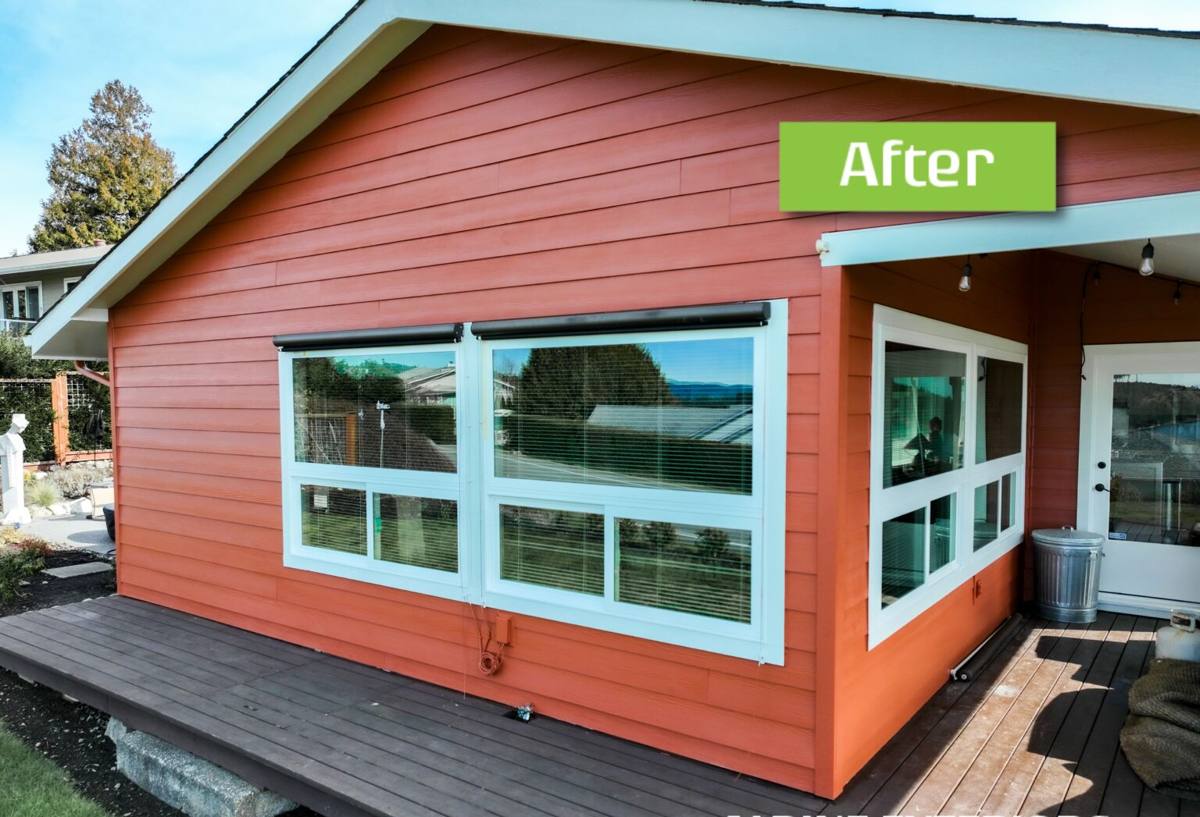
What Bellingham's Climate Actually Does to Windows
Three things wear on windows here more than in drier climates, and South Hill gets a fuller dose of all three because of its position and age of housing:
Salt air
Proximity to the Salish Sea means airborne salt settles on and around exterior building materials year-round. It accelerates corrosion on unprotected metal hardware, fasteners, and older aluminum-frame windows, and it can degrade certain sealants faster than manufacturers' inland test data would suggest.
Driving rain
Bellingham doesn't just get rain — it gets wind-driven rain that hits window assemblies at an angle instead of falling straight down. That means water is pushed sideways against siding and window trim, testing every seam, flange, and sealant joint. A window that would stay dry in a calm rain can leak in a South Hill windstorm if the flashing wasn't done right.
Long moss season
Cool, damp conditions for much of the year create a moss and algae season that runs far longer here than in most of the country. Moss holds moisture against wood trim and sills, and it thrives in the shaded, north-facing exposures common on hillside lots. Left unaddressed, it slowly breaks down paint, caulk, and unprotected wood.
None of this means South Hill homes need exotic solutions. It means the installation details — flashing, sealant selection, drainage paths — matter more here than they would in a milder climate, and cutting corners on those details shows up as a problem years sooner.
Signs a South Hill Home Needs New Windows
Older homes in this neighborhood often have a mix of original windows, 1980s-90s aluminum replacements, and more recent vinyl units — sometimes all in the same house. Here's what tells us a window (or a whole set) is due for replacement rather than repair:
- Visible fogging or moisture between panes of double-glazed units — the seal has failed and cannot be fixed, only replaced
- Soft, spongy, or discolored wood trim around the frame, especially on the side facing prevailing wind and rain
- Persistent moss or dark staining below the sill that keeps returning even after cleaning
- Windows that are difficult to open, don't latch fully, or let in a noticeable draft during windy weather
- Single-pane glass with no storm window, which is common in unrenovated original South Hill homes
- Visible daylight or gaps around the frame when viewed from inside on a bright day
- Corroded or pitted metal hardware, particularly on older aluminum-frame windows
If you're only seeing one or two of these on an otherwise sound window, repair or resealing may be the more honest answer — we'll tell you that rather than push a full replacement you don't need yet.
What a Correct Window Installation Actually Involves
The window unit itself is only part of the job. Most of the water problems we get called to fix in older Bellingham neighborhoods trace back to installation shortcuts, not a bad product. A correct installation includes:
- Removing the old window and inspecting the framing and sheathing underneath for rot before anything new goes in
- Installing flashing tape and pan flashing that directs any water that gets past the window down and out, never trapped inside the wall
- Integrating the new flashing correctly with the existing house wrap or building paper, lapped in the right order so water sheds downward
- Using a sealant rated for exterior exposure and, ideally, one with documented performance in coastal or high-moisture climates
- Shimming and fastening the unit so it's square and plumb — a slightly out-of-square window stresses seals and hardware for the rest of its life
- Insulating the gap between the window frame and rough opening without overpacking it, which can bow the frame
- Finishing interior and exterior trim so it sheds water away from the seams rather than channeling it toward them
Pocket replacement vs. full-frame replacement
Most South Hill jobs come down to one of two approaches, and the right one depends on the condition of what's already there:
| Approach | When it's the right call | Trade-offs |
|---|---|---|
| Pocket (insert) replacement | Existing frame and flashing are still sound and dry | Faster, less disruptive, slightly smaller glass area |
| Full-frame replacement | Rot, failed flashing, or water damage is found at the opening | More labor and cost, but the only real fix when the frame itself has failed |
We won't recommend the cheaper pocket option if we find damage that needs a full-frame fix — that's how water problems get sealed in rather than solved.
Choosing the Right Window for a South Hill Home
Frame material matters more in a salt-air, high-moisture climate than it does inland. Here's how the common options hold up:
| Frame material | How it performs here | Maintenance |
|---|---|---|
| Vinyl | Good moisture and corrosion resistance; the most common practical choice for this climate | Low — occasional cleaning |
| Fiberglass | Excellent dimensional stability and weather resistance; higher upfront cost | Low |
| Wood-clad | Strong appearance, especially on period homes; the clad exterior protects the wood but any breach in the cladding needs prompt attention | Moderate — watch cladding seams |
| Bare aluminum | Prone to corrosion and condensation in salt air and cold snaps; we don't install bare aluminum in coastal exposures as our standard practice | High |
For homes where matching the historic character of the neighborhood matters — many South Hill houses have original trim profiles and proportions worth preserving — wood-clad or vinyl units with custom trim can be built to match without resorting to a material that won't hold up to the exposure.
Our Process for South Hill Window Jobs
- On-site assessment of each window opening, including a look at framing condition, not just a glance at the glass
- Honest recommendation on repair vs. replacement, and pocket vs. full-frame, with reasons explained in plain terms
- Measurement and product selection based on the home's exposure — which sides face prevailing wind and rain matter for sealant and flashing detail
- Removal, framing inspection, and any necessary repair to rot or damaged sheathing before the new unit goes in
- Installation with proper flashing integration, sealing, and insulation
- Interior and exterior trim finish work matched to the home's existing style
- Final check for square operation, smooth latching, and a clean seal all around
Why Local Experience in South Hill Matters
Working on hillside lots and older Bellingham homes teaches you things a generic install crew won't know going in: which exposures on South Hill take the worst of the wind, how older houses in this part of the city were typically framed and flashed by the standards of their era, and how long you actually have between rain systems to keep a window opening open and dry. Whatcom County weather doesn't leave a wide margin for error — a job that sits open too long between removal and sealing can let moisture into framing that then takes months to dry out, if it ever fully does. Crews who already work this neighborhood plan around that instead of learning it the hard way on your house.
After Installation: Keeping Windows Performing in This Climate
New windows still need a little seasonal attention here:
- Rinse moss and algae off sills and lower sashes before it has a chance to hold moisture against the frame
- Check exterior caulk lines once a year, especially after a hard windstorm, and touch up any that have separated
- Keep weep holes on vinyl and fiberglass units clear of debris so water can drain as designed
- Wipe down hardware occasionally if the home is on a more exposed part of the hill, to keep salt residue from accumulating
None of this is heavy maintenance — it's the kind of upkeep that, done once or twice a year, keeps a correctly installed window performing for its full lifespan in this climate.
If you're weighing repair versus replacement, or just want a second opinion on windows that have been bothering you through the last few storm seasons, we're glad to take a look. We offer a free, no-pressure estimate for South Hill homeowners — use the form below to get started.