 Bellingham Siding
 Storm Damage in a Salt Air, High-Moss Climate
Happy Valley sits close enough to Bellingham Bay and the surrounding hills that roofs here deal with a combination most inland homes never see: salt-laden air off the water, long stretches of driving rain, and a moss season that can run eight months out of the year. None of these alone destroys a roof overnight. Together, over years, they wear down fasteners, lift shingle edges, and create the conditions where a single windstorm turns a small weak spot into an active leak.
When we get called out after a storm in this neighborhood, we're rarely looking at simple wind damage in isolation. We're usually looking at wind damage that found a spot the roof was already compromised — moss holding moisture against the deck, a valley that was already collecting debris, or flashing that had already started to corrode. Understanding that combination is the difference between a repair that lasts and one that fails again in the next storm.
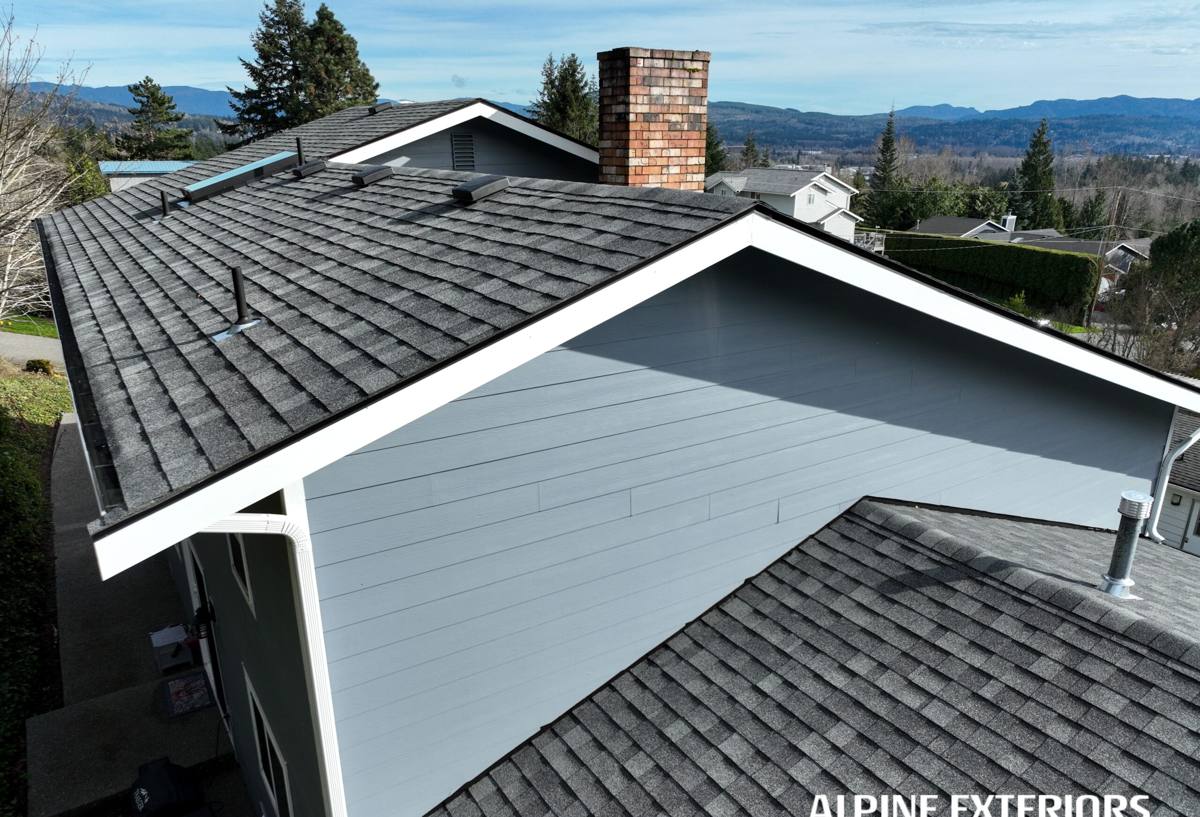
What "Storm Damage Repair" Should Actually Mean
A lot of storm damage work in this region gets treated as a quick patch: a few shingles nailed back down, some roofing cement smeared over a gap, done. That approach can hold for a season, but Whatcom County's weather pattern punishes shortcuts. Correct storm damage repair means identifying the full extent of what the wind and rain exposed, not just the visible symptom.
What a proper repair covers
- Full inspection of the affected roof plane, not just the spot that's leaking or visibly torn
- Checking underlayment condition wherever shingles were lifted or removed
- Inspecting the roof deck itself for soft spots or moisture staining once shingles are pulled back
- Re-securing or replacing flashing around chimneys, vents, and valleys near the damage — these are common failure points in wind events
- Matching replacement shingles as closely as possible in type, weight, and color to the existing roof
- Checking gutters and downspouts near the repair area, since storm debris and wind-driven moss buildup often clog drainage right where damage occurs
Skipping the deck and underlayment check is the most common shortcut we see undone. If a shingle was torn off during a storm, the underlayment beneath it was exposed to rain — sometimes for days before anyone noticed. Replacing the shingle without checking what's underneath just seals moisture into the deck.
Signs a Happy Valley Roof Needs Storm Repair
Some storm damage is obvious — a tarp-worthy hole, shingles in the yard. Most of what we're called for is less dramatic and easy to miss from the ground.
- Granules collecting in gutters or at the base of downspouts after a windstorm
- Shingles that look curled, lifted at the edges, or slightly out of alignment compared to the rest of the roof
- A new water stain on a ceiling or in the attic that appeared after a specific storm event
- Moss buildup that looks disturbed or shifted, which can indicate wind movement underneath it
- Flashing around a chimney or vent pipe that looks bent, separated, or newly rusted at the edges
- Any soft or spongy feel when walking a flat section of roof — a strong sign moisture has reached the deck
If you're not sure whether what you're seeing is storm damage or ordinary wear, that's a reasonable thing to have a second set of eyes look at before it becomes an interior leak.
Our Process for Storm Damage Calls
1. Inspection first, no assumptions
We walk the roof and the attic when access allows, not just the ground-level view. Storm damage often looks worse — or better — from below than it actually is. We want to see the deck, the insulation, and the underlayment condition before recommending anything.
2. Honest scope, in writing
We tell you what we found, what needs to happen now, and what can reasonably wait. If a repair is genuinely a patch job, we say so. If the damage points to a larger problem — widespread moss intrusion, aging flashing throughout, a roof nearing the end of its service life — we'll tell you that too, rather than repeatedly patching a roof that needs a bigger conversation.
3. Repair matched to the rest of the roof
We match materials as closely as we can so a repair doesn't stand out as a visible patch, and so the repaired section performs the same as the surrounding roof under rain and wind load.
4. Cleanup and a final check
Storm repairs generate debris — old shingles, damaged flashing, sometimes moss and organic buildup we clear while we're up there. We clean the site and do a final check of the surrounding roof area before we call the job done.
Repair vs. Replacement: What Actually Drives the Decision
Storm damage is sometimes the moment a homeowner realizes a roof that "seemed fine" is actually near the end of its useful life. The storm didn't cause the underlying problem — it just revealed it. Here's how we think through repair versus replacement.
| Factor | Leans toward repair | Leans toward replacement |
|---|---|---|
| Roof age | Well within expected lifespan for the material | Already near or past typical service life |
| Extent of damage | Isolated to one plane or section | Multiple sections, or damage found on inspection beyond the storm event |
| Deck condition | Solid, dry, no soft spots found | Soft spots, rot, or moisture staining in multiple areas |
| Moss/moisture history | Minimal prior moss buildup or treatment history | Long-term untreated moss with signs of granule loss underneath |
| Cost pattern | One-time, targeted repair cost | Repeated repair calls to the same roof over recent years |
Neither direction is the "default right answer." Plenty of roofs take real storm damage and are perfectly good candidates for a targeted repair. The goal of the inspection is to give you enough information to make that call with your eyes open, not to steer you toward the bigger job by default.
Moss, Moisture, and Why Prevention Matters Here
Whatcom County's damp, mild climate is close to ideal growing conditions for roof moss, and Happy Valley's tree cover and shaded areas can make it worse in specific spots on a roof. Moss itself doesn't just sit on top of shingles — its root structure lifts granules and holds moisture against the roof surface long after the rain stops. That constant dampness is what accelerates the kind of wear that turns an otherwise minor storm event into a real leak.
As part of storm damage repairs, we'll flag moss buildup that's contributing to the problem and talk through reasonable options — physical removal, zinc or copper strip installation, or simply noting it for a future maintenance visit if it's not yet a real risk. We're not going to recommend tearing off a roof over moss that's cosmetic. We are going to tell you plainly when moss has moved from cosmetic to a real moisture problem.
Why Local Experience with This Neighborhood Matters
Happy Valley isn't identical to every other pocket of Bellingham. Tree cover, elevation, and exposure to wind off the bay vary block to block, and those differences show up in how roofs age and how storms damage them. A crew that regularly works this specific area has a working sense of which roof styles and ages are common here, where moss tends to build up fastest, and which flashing details tend to fail first in local wind patterns.
That familiarity doesn't replace an actual inspection — every roof still gets looked at on its own terms. But it does mean fewer surprises, a faster read on what's storm damage versus long-term wear, and a repair plan that accounts for what this specific climate does to a roof over time, not a generic checklist.
Questions to Ask Before Hiring a Storm Damage Repair Crew
- Will you inspect the attic and deck, or only the visible exterior damage?
- Will I get a written scope of what's being repaired and why?
- Do you match materials to my existing roof, or use whatever's on the truck?
- Are you licensed and insured to work in Washington State?
- Will you tell me honestly if this is a repair situation or if replacement makes more sense?
- Do you check gutters, flashing, and moss condition near the repair, not just the damaged spot itself?
A crew that hesitates on the attic/deck question or won't put the scope in writing is worth a second opinion before you commit.
Get a Straight Answer on Your Roof
If a recent storm left you with missing shingles, a new stain on the ceiling, or just a nagging feeling that something's not right up there, it's worth getting it looked at before the next round of Whatcom County rain finds the weak spot. We offer free, no-pressure estimates for Happy Valley homeowners — an honest look at what's actually going on, what it'll take to fix it, and no push toward more work than the roof needs. Use the form below to get started.