 Bellingham Siding
 Why Decks in Sudden Valley Wear Out the Way They Do
Sudden Valley sits in a pocket of Whatcom County shaped by Lake Whatcom and the timber that surrounds it. That combination is beautiful to live with and hard on an exposed deck. Tree canopy keeps large sections of many yards in partial shade most of the day, which means wood and even some composite surfaces stay damp long after a storm has passed. Add the steady parade of Pacific frontal systems that move through Bellingham and the broader Whatcom County area, and you get a deck that rarely gets a full, uninterrupted dry-out between rain events for much of the year.
That slow-drying cycle is what actually damages a deck, more than any single storm. Moisture sits in the wood grain, in fastener holes, and in the gap between boards and joists. Over a few seasons that turns into cupping, soft spots, and the black-green film of algae and moss that homeowners around the lake know well. None of this means a deck is a bad investment in Sudden Valley — it means the build has to account for how slowly things dry here, not just how much it rains.
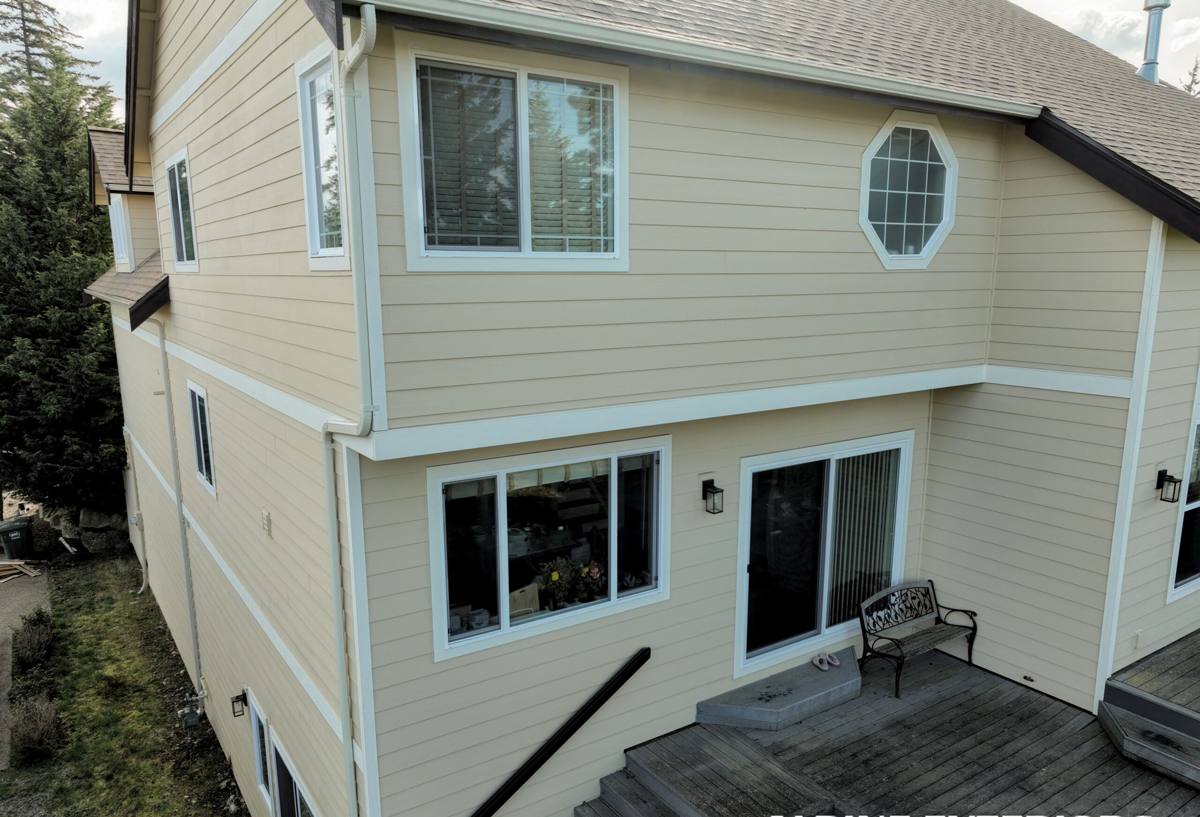
Signs a Deck Needs Replacement, Not Another Repair
We get called out for a lot of "just fix this one board" requests, and sometimes that's genuinely all it takes. Other times, the board is a symptom of something underneath that repair work won't reach. Here's how we tell the difference on site:
- Soft or spongy decking across multiple boards, not just one — usually means moisture has worked into the substrate, not just the surface.
- Rust streaking or loose fasteners at multiple joints, which signals the whole fastening system is failing, not one bad screw.
- Ledger board separation or gaps where the deck meets the house — a structural and moisture-intrusion issue, not cosmetic.
- Wobble in the railing or posts when you push on them, which often points to rotted post bases or undersized footings.
- Persistent moss or algae that returns within weeks of cleaning, suggesting the deck doesn't shed water or dry the way it should.
- Age — most untreated or lightly treated wood decks in this climate are due for a hard look after 15-20 years, sooner in heavily shaded spots.
If what you're seeing is isolated to a board or two on an otherwise sound frame, repair is the honest answer and we'll say so. If several of the items above show up together, replacement is usually the more cost-effective path — patchwork repairs on a failing frame tend to cost more over time than doing the job right once.
What a Correct Deck Replacement Actually Involves
Starting With the Structure, Not the Surface
A deck is only as good as what's under the decking boards. On every replacement we look hard at the ledger connection to the house, the footings, and the joist framing before a single new board goes down. In a lot pattern like Sudden Valley's — sloped sites, tree roots, and soil that stays wet longer than open, sunny lots — footing depth and drainage matter more than they would on a flat, exposed lot in a drier part of the county.
Flashing and Ledger Details
The single most common failure point we find on old decks isn't the decking at all — it's a ledger board that was never properly flashed where it meets the house. Water gets behind the ledger, and by the time it shows up as a stain on the siding, the rot has usually been working for years. Correct flashing at this joint is not optional, and it's one of the details worth asking any contractor about directly.
Joist Spacing and Fasteners
Joist spacing needs to match the decking material you're installing — composite and PVC boards often call for tighter spacing than solid wood to avoid deflection over time, especially with the kind of sustained moisture load this area sees. We use corrosion-resistant, code-rated fasteners and connectors throughout; in a damp, shaded environment, cutting corners on hardware shows up as rust and loosening within a few seasons, not decades.
Guardrails and Stairs
Any deck more than 30 inches off grade needs code-compliant guardrails, and stair stringers need to be sized and supported correctly, not just nailed to the frame. These aren't places to save money — they're the parts of the job that keep people safe and keep you out of trouble at resale.
Choosing a Decking Material for a Shaded, Damp Lot
There's no single "best" decking material — there's the right material for your site, your budget, and how much upkeep you want to take on. In a shaded, moisture-prone setting like much of Sudden Valley, some trade-offs matter more than they would on a drier, sunnier lot.
| Material | How It Handles Shade & Moisture | Maintenance | Typical Lifespan |
|---|---|---|---|
| Pressure-treated wood | Prone to moss and algae in shaded spots; needs airflow underneath to dry properly | Annual cleaning, periodic staining/sealing | 10-20 years |
| Cedar | Naturally rot-resistant but still needs to dry between rains; shade slows that down | Regular cleaning and refinishing to hold color and resist checking | 15-25 years |
| Capped composite | Resists moisture absorption well; some early composite products without a full cap were more prone to mold in constant shade | Occasional washing, no staining or sealing | 25-30+ years |
| PVC decking | Doesn't absorb moisture, holds up well in low-sun areas | Lowest upkeep of the common options | 25-30+ years |
We're honest with clients about this: in the shadiest parts of Sudden Valley lots, we lean toward capped composite or PVC for anyone who's tired of scrubbing moss off a deck every spring. Wood is still a good choice for homeowners who want that look and are willing to keep up with cleaning and refinishing on a set schedule — it's a maintenance commitment, not a flaw in the material.
Our Process, From Estimate to Final Walkthrough
- On-site assessment — we look at the existing structure, drainage, sun exposure, and how the deck ties into the house before recommending anything.
- Honest scope and options — repair vs. full replacement, and a real range of material choices with the trade-offs explained, not just upsold.
- Permitting — we handle the Whatcom County permit process for structural deck work so you don't have to chase paperwork.
- Demolition and disposal — old decking and framing removed and hauled off cleanly.
- Structural rebuild — footings, framing, and ledger flashing done to code, inspected before we cover any of it up.
- Decking, railing, and stairs installed — to the material spec you chose, with attention to fastening and drainage details suited to this climate.
- Final walkthrough — we go over the finished deck with you before calling the job done.
Permits, Setbacks, and Sudden Valley's Setting
Structural deck replacement in Whatcom County generally requires a building permit, and we manage that as part of the job. If your property is part of a homeowners' association or has architectural review requirements — common in planned communities like Sudden Valley — we're used to working within that process and can help you get through it without it derailing your timeline. Lot slope and proximity to the lake or wooded buffers can also affect footing placement and drainage planning, which is another reason a generic, one-size-fits-all deck plan doesn't always work well here.
Protecting Your New Deck After Installation
A well-built deck still needs some seasonal attention in this climate, especially if any part of it sits in shade for much of the day. A little upkeep goes a long way toward hitting the full lifespan of whatever material you choose.
- Sweep leaves and debris off the deck regularly in fall — trapped organic matter holds moisture and feeds moss growth.
- Rinse composite or PVC decking a couple of times a year to prevent algae film from building up in shaded areas.
- Check and re-seal wood decking on the schedule recommended for your specific product — don't wait until it looks obviously weathered.
- Keep gutters and downspouts near the deck clear so runoff isn't dumping extra water onto or under the structure.
- Look underneath the deck once a year for standing water, blocked airflow, or early signs of rot at post bases.
- Trim back overhanging branches where practical to give the deck more light and airflow between rains.
Why Hire a Crew That Already Works in Sudden Valley
A deck built for a sunny, open lot on the other side of Bellingham isn't automatically the right build for a shaded, sloped lot near Lake Whatcom. Footing depth, drainage planning, material choice, and even fastener selection all shift when you're building for a site that stays damp longer and sees heavier moss and algae pressure. A crew that's done this work in Sudden Valley specifically has already seen how these lots behave through a full wet season, not just on the day of the estimate.
There's also a practical side to it — familiarity with the community's permitting expectations and any architectural review steps saves time and avoids surprises partway through the project. That local experience isn't a marketing line; it's the difference between a deck that's designed for the neighborhood it's actually in and one that just happens to be built there.
Get a Free, No-Pressure Estimate
If your deck is showing its age or you're planning a replacement before it becomes a safety issue, we're happy to take a look and give you a straight assessment — no pressure, no upsell. Use the form below to request a free estimate for your Sudden Valley property.