 Bellingham Siding
 Why New Roofs in Sudden Valley Take a Different Kind of Beating
Sudden Valley sits back among the trees along Lake Whatcom, and that setting cuts both ways. The tree cover gives homes shade and privacy, but it also means roofs here rarely get a full day of sun to dry out between storms. Add in the marine air that moves inland off Bellingham Bay and the Puget Sound weather systems that bring driving, wind-blown rain instead of straight-down rain, and you get a roofing environment that's tougher on materials and installation quality than a lot of homeowners realize until something starts leaking.
The combination that matters most for a new roof in this neighborhood is moisture that lingers, wind that drives rain up under poorly sealed edges, and moss that gets a long, cool, shaded season to take hold. None of that is exotic — it's just Whatcom County weather doing what it does year-round — but it means a roof installed with generic, one-size-fits-all methods will show problems here years before it would somewhere drier and sunnier.
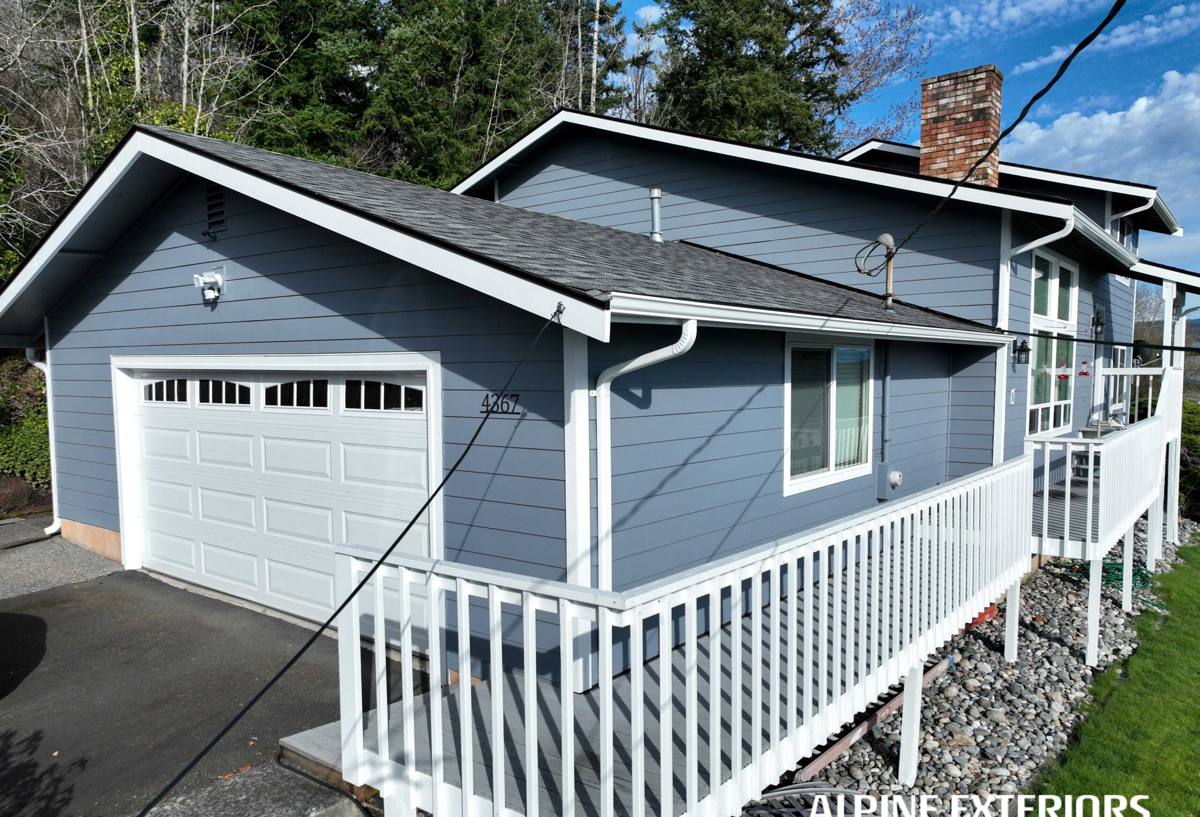
Signs It's Time for a New Roof, Not Another Repair
Repairs make sense when a roof is otherwise sound and the problem is isolated. A full replacement makes sense when the roofing system as a whole is past the point where patching buys you much time. Common signs we see on Sudden Valley homes include:
- Granules collecting in gutters or at downspout outlets, meaning the shingle surface is wearing thin
- Shingles that are cupping, curling at the edges, or visibly brittle
- Moss or dark streaking that keeps coming back within a season or two of cleaning
- Soft spots in the decking, found either from the attic side or when walking the roof
- Daylight visible through the roof deck in the attic, or water staining on rafters
- A roof nearing or past the manufacturer's expected service life for its material and exposure
- Multiple past repairs in different areas rather than one contained problem
If you're only seeing one or two of these, a repair may still be the right call. If you're seeing several at once, or the roof is old enough that repairs are becoming a pattern, a new installation is usually the more honest recommendation — and the one that actually stops the cycle of callbacks.
What a Correct New Roof Installation Actually Involves
A new roof is more than shingles nailed to plywood. The parts you don't see are what determine whether the roof performs in wet, shaded, wind-driven conditions like Sudden Valley's.
Tear-Off and Deck Inspection
We remove the old roofing down to the deck rather than layering over it. That lets us actually see the plywood or OSB underneath, replace any sections that are soft, delaminated, or water-stained, and confirm the deck is properly fastened before anything new goes down. Roofing over a compromised deck just hides the problem under new shingles.
Underlayment and Water-Entry Protection
Underlayment is the roof's backup layer if wind ever drives water past the shingles — which, in this area, it eventually will. We pay particular attention to eaves, valleys, and any low-slope sections, where self-adhered waterproof membrane matters more than it does on a simple, steep, sun-exposed roof.
Flashing at Every Penetration
Chimneys, skylights, plumbing vents, and roof-to-wall transitions are where the majority of leaks actually originate — not the open field of shingles. Flashing has to be installed in the correct order relative to the underlayment and siding, not just caulked in place. Caulk is a maintenance item; correctly layered flashing is a permanent detail.
Attic Ventilation
A shaded, moisture-heavy roof needs a working intake-and-exhaust ventilation system to let the deck and attic dry out between rain events. Poor ventilation traps moisture, which shortens shingle life and feeds the exact moss and algae growth that's already a problem in this kind of tree cover.
Choosing the Right Roofing Material for a Sudden Valley Home
Material choice is a trade-off between upfront cost, appearance, maintenance, and how well it handles standing moisture and shade. Here's how the common options compare for this setting:
| Material | Moisture & Moss Behavior | Typical Lifespan | Maintenance |
|---|---|---|---|
| Standard 3-tab asphalt shingle | More prone to moss and algae staining in shaded areas | 15–20 years | Periodic cleaning recommended |
| Architectural (dimensional) asphalt shingle | Heavier mat resists wind-driven rain better; many lines include algae-resistant granules | 25–30+ years | Low; occasional moss treatment in heavy shade |
| Standing-seam metal | Sheds water and moss extremely well due to smooth, steep-shed surface | 40–50+ years | Very low |
| Cedar shake | Attractive but holds moisture longest of these options; needs consistent upkeep in shaded, damp settings | 20–30 years with maintenance | High — regular treatment and inspection |
We don't push one product on every job. For a heavily shaded Sudden Valley lot, we're usually steering homeowners toward an architectural shingle with algae-resistant granules or a metal roof, simply because both hold up better with less upkeep in low-sun, high-moisture conditions. Cedar can still be the right call if it matches the home and the owner is committed to the maintenance — we'll walk through that honestly rather than talk anyone out of a look they want.
What Drives the Cost of a New Roof Here
Every roof is priced on its own specifics, but the same handful of factors move the number up or down on most Sudden Valley jobs:
| Factor | Why It Matters |
|---|---|
| Roof size and number of planes | More square footage and more complex geometry (dormers, multiple roof lines) means more material and labor |
| Pitch and access | Steeper roofs and homes with limited driveway or crane access take longer and require more safety setup |
| Deck condition | Rot or soft decking found during tear-off adds material and labor to replace it properly |
| Material choice | Standard asphalt, architectural shingle, and metal carry different material costs and install labor |
| Ventilation and flashing upgrades | Bringing older ventilation or flashing details up to current standards adds scope but pays off in longevity |
| Tree cover and cleanup | Heavily wooded lots sometimes need extra debris removal or limb trimming for safe work access |
We give a written, itemized estimate before any work starts, so you know exactly what you're paying for and why — not a lump number with no explanation behind it.
Our Installation Process, Start to Finish
The process is straightforward, but we don't skip steps to move faster:
- On-site inspection and measurement, including attic access to check ventilation and any existing moisture damage
- Written estimate covering material, labor, deck contingency, and disposal
- Material order and a scheduled start date, with weather windows built in for Whatcom County's rain patterns
- Tear-off, deck inspection, and any necessary deck repair
- Underlayment, flashing, and ventilation installation
- Roofing material installation to manufacturer specification
- Full site cleanup, including magnetic sweep for stray nails
- Final walkthrough with the homeowner before we consider the job done
What that means for you as the homeowner:
- You get a clear scope of work in writing before anything is torn off
- You're told immediately if deck damage is found, with photos, before repair work proceeds
- Your property is protected and cleaned up daily, not just at the very end
- You get a final walkthrough, not just an invoice
Moss, Shade, and Standing Debris: The Sudden Valley Factor
The tree cover that makes Sudden Valley appealing is the same tree cover that shortens roof life if it isn't accounted for. Needles and leaf litter collect in valleys and against chimneys, holding moisture against the shingles longer than an open roof would experience. That moisture, combined with shade that limits drying time, is exactly what moss needs to establish. Once moss takes hold, its root structure lifts shingle edges and creates a path for water to get underneath — which is how a moss problem eventually becomes a leak problem.
A correctly installed new roof won't be immune to moss forever, but it starts from a much better position: proper ventilation to reduce trapped moisture, a shingle product suited to shaded, damp conditions, and clean flashing details that don't give debris a place to build up. Combined with keeping overhanging limbs trimmed back and gutters clear, that's the realistic, ongoing approach to keeping moss from becoming a recurring issue.
Why a Crew That Already Works Sudden Valley Matters
Roofing crews who mostly work drier, more open areas of Whatcom County sometimes underestimate what shaded, lake-adjacent properties need — lighter ventilation, standard underlayment, no real plan for tree debris. A crew that already works in and around Sudden Valley knows to spec ventilation and underlayment for the shade and moisture this area actually gets, not the regional average. That's not a marketing distinction — it shows up in how long the roof performs before moss, trapped moisture, or wind-driven leaks become a problem again.
It also matters for the practical side of the job: knowing the access constraints of wooded lots, planning around Whatcom County's rain windows realistically instead of optimistically, and understanding what permitting and inspection typically look like for this area. None of that is complicated, but it's the difference between a roof that's installed correctly the first time and one that needs early attention because the details were generic.
If your Sudden Valley roof is showing its age or you just want an honest read on where it stands, we're happy to take a look. Use the form below to request a free, no-pressure estimate — we'll walk the roof, tell you what we actually find, and give you a straightforward, written recommendation either way.