 Bellingham Siding
 Siding Replacement for Sudden Valley Homes
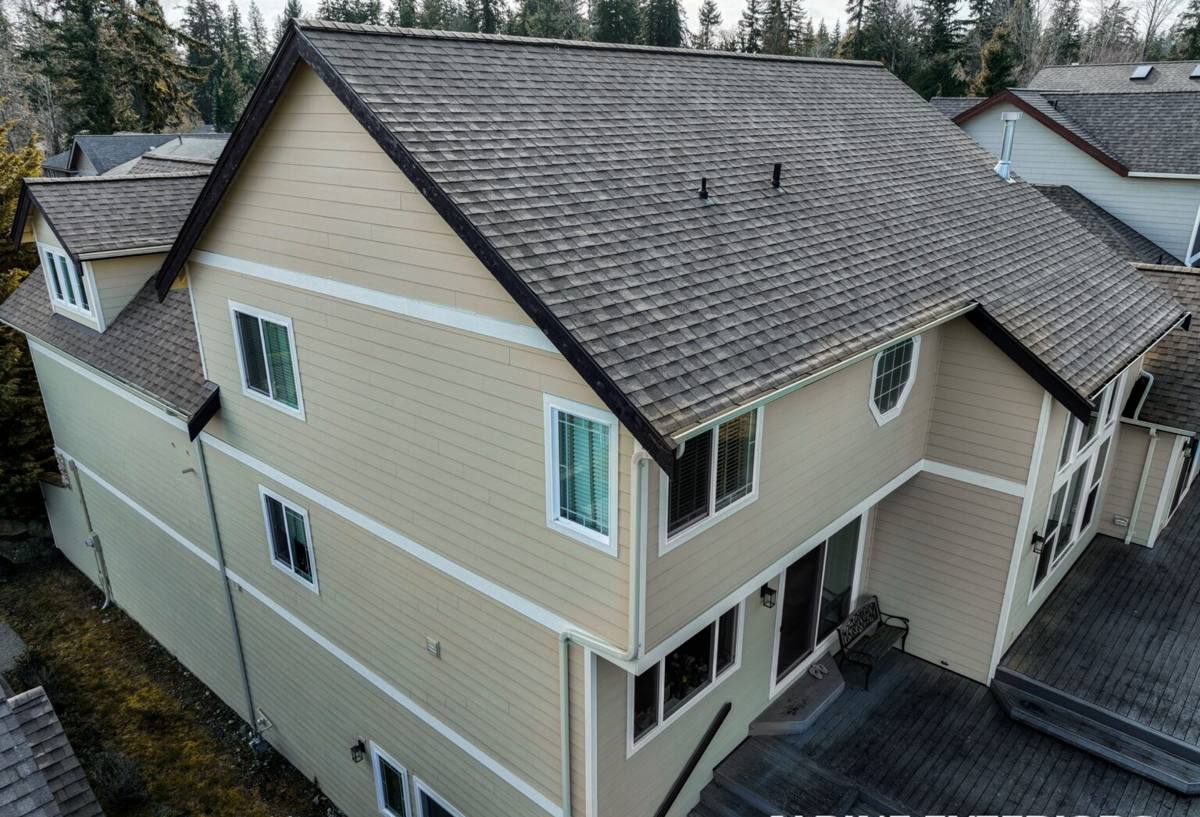
Sudden Valley sits apart from the rest of Bellingham in a way that matters for siding: it's a wooded, lake-adjacent community with heavier tree cover, more shaded wall exposure, and slower-drying siding runs than you'll find on an open lot in town. Homes here often sit under mature fir and cedar canopy, close to Lake Whatcom, with north- and east-facing walls that rarely see direct sun for more than a few hours a day. That combination changes how siding ages, and it changes what "correct installation" needs to account for. A replacement job done right in Sudden Valley isn't identical to one done on a treeless lot in Barkley or Fairhaven — the product has to be right, and so does the detailing.
What Whatcom County's Climate Does to Siding
Bellingham and the surrounding county sit in a marine climate zone: salt-tinged air off the bay, long stretches of driving rain from fall through spring, and enough overcast, humid weather to keep exterior surfaces damp for days at a time. Add a long moss and algae season — moisture that lingers on shaded siding, roof lines, and fence tops well into what other regions would call summer — and you get a climate that's genuinely hard on cladding that isn't built for sustained wet exposure.
Sudden Valley adds its own layer on top of that regional pattern. Heavier tree cover means more standing moisture on siding surfaces after a storm, more organic debris collecting in laps and trim joints, and less UV exposure to dry things back out between rain events. On homes near the lake, that shaded, humid microclimate is often more aggressive on siding than what a house a few miles into town experiences, even though they're in the same county and the same general weather pattern.
What This Looks Like on a Wall
- Moss and algae staining that returns within a season or two of cleaning, especially on north-facing and tree-shaded elevations
- Paint or finish that fails first on the lowest courses and around window trim, where water sits longest
- Soft spots, delamination, or visible swelling at butt joints and lower wall sections on wood-based products
- Caulk lines that crack and open gaps faster than the manufacturer's expected service life
- Trim and fascia rot at inside corners and roof-to-wall intersections, where runoff concentrates
Signs Your Sudden Valley Home Needs Siding Replacement
Not every stained or aging wall needs a full tear-off. But there's a point where patching and repainting stops making sense and full replacement becomes the more honest recommendation. Use this as a rough gauge before you call anyone:
- Siding feels soft, spongy, or crumbles at the edges when pressed — especially near the ground or under downspouts
- Moss or algae comes back within a few months of cleaning, even on treated or previously painted surfaces
- Visible warping, cupping, or buckling panels, particularly on shaded elevations
- Paint failure that keeps recurring on the same sections despite repainting
- Interior signs — musty smell, soft drywall, or staining on an exterior wall — that suggest moisture is getting past the siding entirely
- Siding is original to a home built more than 20–25 years ago and has never been fully replaced
Why We Only Install James Hardie Fiber Cement
We don't install vinyl, LP SmartSide, cedar, or primed spruce, and in a climate like Whatcom County's — especially in a shaded, moisture-heavy setting like Sudden Valley — that's a deliberate call, not a sales preference. Each of those products has real strengths. Vinyl is inexpensive and low-maintenance in the right setting. LP SmartSide and cedar have a warmer, more traditional look that some homeowners genuinely prefer. But all of them share a vulnerability that matters here: they depend on paint film, caulk integrity, or engineered wood coatings staying intact to keep moisture out, and in a climate that keeps siding wet for extended stretches, that maintenance burden compounds fast.
James Hardie fiber cement is cement, sand, and cellulose fiber — it doesn't rot, it isn't a food source for moss and algae the way wood-based products are, and it's not combustible. Hardie's ColorPlus factory finish is baked on under controlled conditions rather than field-applied, which matters in a market where good painting weather is limited for a good chunk of the year. And Hardie engineers specific product lines — its HZ5 formulation — for cold, wet, freeze-prone climates like ours, which is a meaningfully different design target than a siding product built for a dry, southern market.
How the Options Compare
| Factor | Vinyl | LP SmartSide / Cedar | James Hardie Fiber Cement |
|---|---|---|---|
| Moisture resistance | Won't rot, but seams and edges can trap water behind panels | Vulnerable to rot and swelling if coating fails | Cement-based, does not rot or absorb water like wood |
| Moss/algae resistance | Surface growth possible, doesn't feed on the material | Wood fiber is an organic food source | Non-organic surface, less hospitable to growth |
| Finish durability | Color molded in, can fade and chalk | Field-applied paint needs regular recoating | Factory-baked ColorPlus finish, longer repaint cycle |
| Fire performance | Combustible | Combustible | Non-combustible |
| Typical lifespan when correctly installed | 20–30 years | 15–25 years, coating-dependent | 30–50+ years |
What a Correct Siding Replacement Actually Involves
The siding panel itself is only part of the job. In a wet, shaded environment, the water-management details behind and around the siding matter as much as the product on the wall — this is where most premature siding failures actually start.
- Full tear-off and sheathing inspection — removing old siding to check for hidden rot, soft sheathing, or prior water intrusion before anything new goes up
- Weather-resistive barrier — a properly lapped and sealed WRB behind the siding, giving the wall a second line of defense
- Flashing at every penetration — windows, doors, hose bibs, light fixtures, and roof-to-wall transitions, where the majority of leaks actually originate
- Correct clearances — siding held up off decks, patios, and grade per manufacturer spec, so splashback and standing moisture don't sit against the bottom course
- James Hardie-specified fastening and joint treatment — proper nailing pattern, joint gaps, and caulking per Hardie's installation guidelines, which affects both appearance and warranty coverage
- Trim and transition detailing — inside corners, outside corners, and roof intersections built to shed water rather than collect it
Skipping any of these doesn't show up on day one. It shows up in year three or four, as staining, soft trim, or the exact rot patterns that bring a lot of Whatcom County homeowners to us in the first place.
Our Process on Sudden Valley Jobs
- On-site assessment — we walk the exterior, check shaded and lake-facing elevations closely, and look for existing moisture damage before quoting anything
- Written scope and estimate — clear line items for tear-off, sheathing repair (if needed), WRB, flashing, and Hardie installation, with product line and color spec'd out
- Material staging — Hardie panels and trim delivered and staged for the site, accounting for the access constraints common in a wooded, hillside community
- Tear-off and sheathing repair — old siding removed, sheathing inspected, and any rot addressed before we close the wall back up
- Barrier and flashing installation — the part of the job that determines how the house performs in five and ten years, not just how it looks in month one
- Hardie installation to manufacturer spec — correct fastening, joint gaps, and trim work, elevation by elevation
- Final walkthrough — we review the finished work with you before calling the job done
What Affects Cost
We don't publish fixed pricing because every home is different, but these are the factors that actually move a Sudden Valley estimate up or down:
| Factor | Why It Matters |
|---|---|
| Extent of hidden sheathing damage | Rot found during tear-off adds repair scope beyond the siding itself |
| Home size and wall complexity | More corners, gables, and trim detail means more labor per square foot |
| Access and site conditions | Tree cover, slope, and driveway access affect staging and scaffolding time |
| Siding profile chosen | Lap width, shingle-style panels, and trim upgrades vary in material and labor cost |
| Number of penetrations and transitions | Windows, vents, and roof intersections each require flashing work |
Why a Crew That Already Works Sudden Valley Matters
Sudden Valley isn't a typical in-town job site. Narrow, tree-lined access roads, sloped lots, and homeowner association requirements around exterior changes are all things a crew unfamiliar with the community has to figure out on the fly — usually at your expense in time or hassle. A crew that's already worked in the neighborhood knows how to stage material efficiently on a wooded lot, understands the added moisture and moss pressure the tree canopy creates, and isn't guessing at how the local microclimate should change the water-management detailing versus a job in a more exposed part of Bellingham.
That familiarity doesn't replace doing the job to spec — every Hardie installation still has to meet the same flashing, clearance, and fastening standards regardless of neighborhood. But it does mean fewer surprises, a faster start, and a crew that isn't learning the site's quirks on your dime.
If your Sudden Valley home is showing signs of aging siding, or you're planning ahead for a replacement, we're happy to walk the exterior with you and give you a straight, no-pressure assessment. Fill out the form below for a free estimate.