 Bellingham Siding
 Siding Installation Built for Sunnyland's Weather, Not Just Its Look
Sunnyland sits close enough to Bellingham Bay and the surrounding waterways that homes here take a different kind of beating than siding fifty miles inland. Salt-laden air moves through the neighborhood on the wind off the bay, driving rain comes in sideways during the fall and winter storm cycles, and the shaded, tree-lined streets that make Sunnyland a pleasant place to live also mean siding stays damp longer and grows moss faster than it would on an open lot. A siding installation here isn't just a cosmetic upgrade — it's the single biggest factor in whether a home's exterior holds up over the next twenty years or starts showing problems in five.
We install James Hardie fiber cement siding exclusively, and we've done enough work in and around Bellingham to know what Sunnyland's microclimate actually does to a wall assembly. This page walks through what that means for your home, what a correct installation looks like, and how our process works from first look to final walk-through.
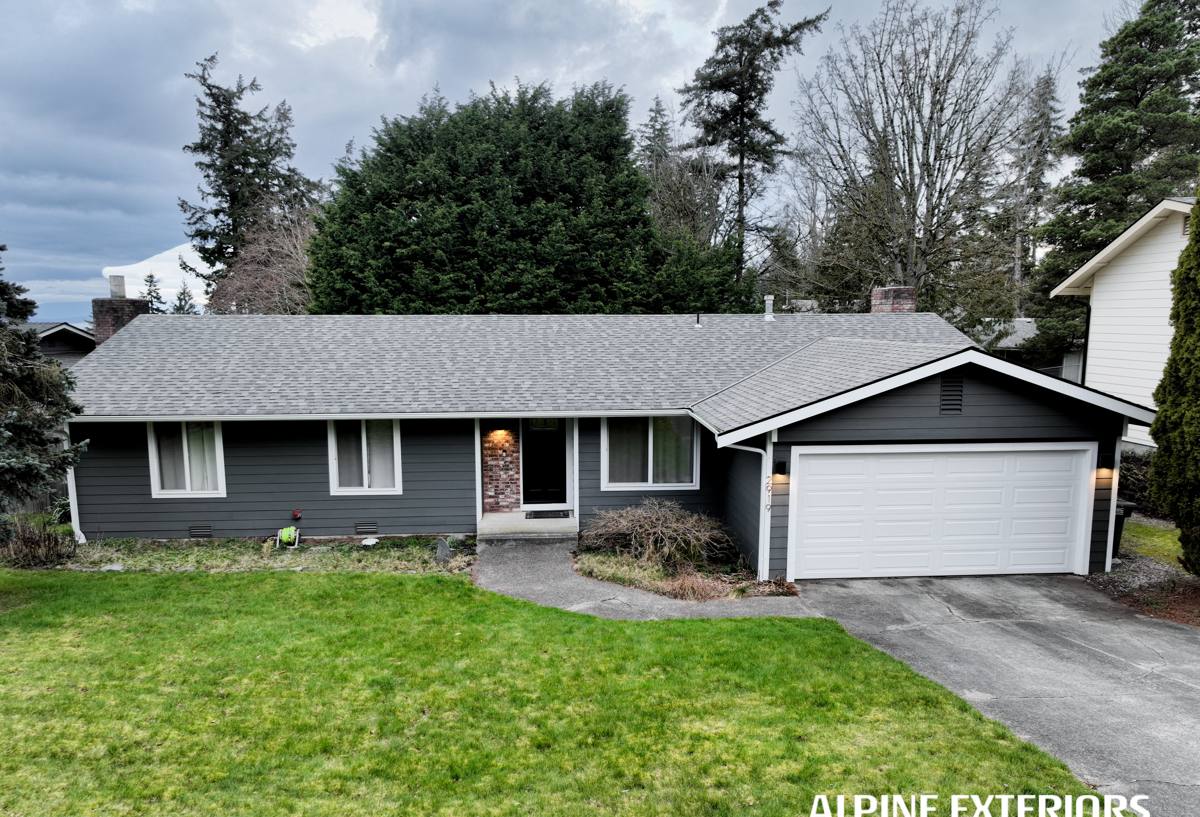
What Whatcom County's Climate Does to Siding Over Time
Bellingham's marine climate is mild compared to most of the country, but "mild" doesn't mean easy on a house. Three things work against siding here specifically:
- Salt air: Even a few miles from the bay, airborne salt accelerates corrosion of fasteners, flashing, and any metal trim that isn't rated for coastal exposure.
- Driving rain: Whatcom County's storms frequently push rain horizontally against west- and southwest-facing walls, forcing water into any gap, seam, or improperly lapped joint.
- Extended moss season: Shade, humidity, and mild temperatures mean moss and algae have a long growing window — often nine months of the year in shaded pockets like Sunnyland's mature-tree streets.
None of these on their own destroys a house. What actually causes damage is siding and installation details that weren't built to handle all three at once, for years, without maintenance.
Why Sunnyland's Tree Cover Matters More Than People Expect
Homes on more open Bellingham lots get sun exposure that dries siding out between rain events. Sunnyland's tree canopy is one of the neighborhood's best features, but it also means some walls — especially north- and east-facing ones — stay damp for days after a storm. That's exactly the condition where moisture-sensitive siding materials swell, delaminate, or start hosting moss growth at the bottom courses and behind trim. It's also why the choice of siding material matters more here than it would in a drier, sunnier part of the state.
What "Correct" Siding Installation Actually Involves
A siding job can look identical from the street and perform completely differently depending on what's happening behind the panels. The materials matter, but installation quality is what actually determines whether water gets in.
Weather-Resistive Barrier and Flashing
Every wall gets a continuous weather-resistive barrier before a single piece of siding goes up. Windows, doors, and any wall penetration get properly integrated flashing so water sheds outward instead of finding a path behind the cladding. This is the part of the job nobody sees once it's finished — and it's the part that determines whether the house stays dry for the next few decades.
Fastening and Clearances
James Hardie siding has specific fastening patterns and minimum clearances from grade, roof lines, and other surfaces. Skipping these details doesn't show up as a problem on day one — it shows up as trapped moisture, paint failure, or rot at the bottom of the wall two or three years later, which is exactly the kind of slow damage that's expensive to catch early and expensive to fix late.
Joints, Laps, and Caulking
Butt joints and laps have to be installed to the manufacturer's spec, not just "close enough." In a climate with driving rain, a joint that's slightly under-lapped or under-sealed is a direct water entry point, and it will find that gap during exactly the kind of sideways storm Whatcom County gets several times a winter.
Why We Only Install James Hardie Fiber Cement
We don't install vinyl, LP SmartSide, or other fiber cement alternatives, and that's a deliberate standard, not a limitation in what we're capable of doing. Here's the honest reasoning:
| Factor | Why It Matters in Sunnyland's Climate |
|---|---|
| Moisture behavior | Fiber cement doesn't swell or delaminate from prolonged dampness the way wood-based composite products can under Sunnyland's extended shaded, wet conditions. |
| Non-combustible material | James Hardie panels are non-combustible, which matters for insurance and long-term risk regardless of region. |
| Factory finish (ColorPlus) | A factory-applied, baked-on finish resists fading and holds up to UV and moisture better than field-applied paint, reducing repaint cycles. |
| Climate-engineered product lines | Hardie's HZ5 product line is engineered for the Pacific Northwest's freeze-thaw and moisture cycle specifically, not a generic national spec. |
| Warranty structure | A strong, transferable warranty backed by installation to manufacturer spec — which protects the investment if you sell the home. |
We're not going to tell you every alternative product is bad — vinyl is inexpensive and low-maintenance in the right application, and engineered wood siding has real fans. But we've made a professional decision to install one material because we can stand behind the installation and the long-term performance in this specific climate, and that's the promise we want to be able to make to every Sunnyland homeowner we work for.
Our Process, Start to Finish
- On-site assessment: We walk the exterior, check for existing moisture damage, note problem areas (shaded walls, low clearances, old flashing), and measure.
- Written estimate: A clear scope of work and cost breakdown — no vague allowances, no surprise add-ons hidden in fine print.
- Prep and tear-off: Removal of existing siding, inspection of sheathing for hidden rot or moisture damage before anything new goes up.
- Weather barrier and flashing installation: The part that actually keeps water out, done to manufacturer spec.
- Hardie panel installation: Fastening, lapping, and clearances installed per James Hardie's published specifications.
- Trim, caulking, and paint touch-up: Finished details that protect joints and give the home a clean final appearance.
- Final walk-through: We go over the finished work with you before calling the job done.
Signs Your Sunnyland Home May Need New Siding Sooner Than You Think
- Persistent moss or dark streaking on north- or east-facing walls that comes back within weeks of cleaning
- Soft spots, bubbling, or visible warping anywhere on the siding surface
- Paint that's peeling or cracking rather than just fading evenly
- Gaps opening up at seams, corners, or trim boards
- Rising energy bills that coincide with drafts near exterior walls
- Visible rot or staining at the bottom courses near grade
Any one of these on its own might just need a repair. Several at once, especially on an older home, usually means the underlying moisture barrier has failed and it's time to talk about full replacement before the sheathing underneath is compromised.
What Drives the Cost of a Siding Installation
| Factor | Why It Affects Price |
|---|---|
| Home size and wall complexity | More square footage and more corners, gables, and dormers mean more material and labor time. |
| Existing damage | Rotted sheathing found during tear-off has to be repaired before new siding goes on — this is discovered mid-project, not always predictable up front. |
| Siding profile and trim detail | Lap width, shingle-style panels, and trim complexity all affect material and labor cost. |
| Access and site conditions | Tree-lined lots and tight setbacks, common in Sunnyland, can add time for scaffolding and material staging. |
| Color and finish | Factory ColorPlus finishes versus field-painted options affect both cost and long-term maintenance. |
We give honest, itemized estimates rather than a single ballpark number, because the real cost drivers on any given house — especially what's hiding behind the existing siding — aren't fully known until we're on-site.
Why a Crew That Already Works Sunnyland Matters
Siding installation isn't a one-size-fits-all trade. A crew that's worked other Bellingham neighborhoods already knows how Whatcom County's rain patterns hit different wall orientations, understands what moss and moisture damage actually looks like at various stages, and has already worked through the practical realities of tree-covered lots and older Sunnyland-era home construction. That local experience shows up in the small decisions — where extra flashing attention goes, which walls need the most careful joint work — that a crew unfamiliar with this specific stretch of the county might miss on a first pass.
It also means accountability. A local crew is here next year and the year after, not a name that disappears once the invoice is paid.
Get a Straight Answer for Your Home
If your Sunnyland home's siding is showing its age, or you're planning ahead before winter's rain sets in, we're happy to take a look and give you an honest read on what it needs — no pressure, no inflated scope. Use the form below to request a free estimate.