 Bellingham Siding
 Windows in Edgemoor Take a Different Kind of Beating
Edgemoor sits close to Bellingham Bay, and that proximity to open water shapes everything about how windows perform here. Homes just a few blocks inland from the water still catch salt-laden air, wind-driven rain, and the kind of persistent moisture that Whatcom County is known for. A window installation that would hold up fine in a drier, more sheltered part of the county can fail years early on a bluff-side or waterview home in Edgemoor.
This isn't about scare tactics. It's about matching the installation — the flashing details, the sealant choices, the hardware — to the actual exposure a house faces. That's the whole point of a local crew: we're not guessing at what Bellingham weather does to windows, we're replacing windows that already show the damage.
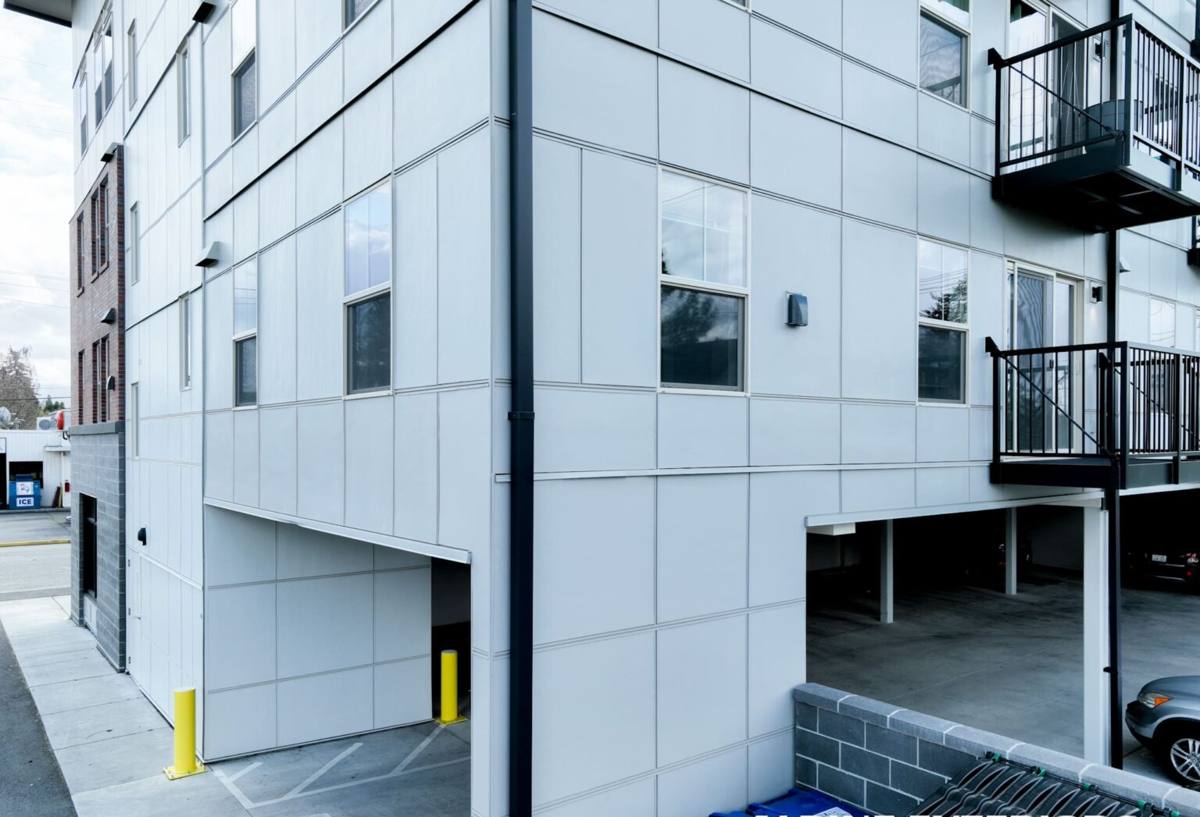
What Salt Air, Rain, and Moss Season Actually Do to a Window
Salt Air and Hardware Corrosion
Salt in the air settles on everything, including window hardware. Over years, it accelerates corrosion on lower-grade locks, hinges, and cranks, and it can pit aluminum components faster than manufacturers' standard warranty language accounts for. Homes closer to the shoreline see this show up first — stiff cranks, pitted screens, latches that no longer seat cleanly.
Wind-Driven Rain and Water Intrusion
Bellingham's rain rarely falls straight down. Storms off the Sound push rain sideways into west- and south-facing walls, which means the flashing and sealant details around a window matter more here than in a landlocked climate. A window that's caulked well but flashed poorly can look fine for a season or two before water finds its way behind the trim and into the wall assembly.
Moss Season and Sustained Moisture
The long stretch of damp, low-sun months every fall through spring keeps humidity high around window openings, especially on shaded north sides of a house or under tree cover, which is common in Edgemoor's more wooded lots. That sustained moisture is what feeds moss and mildew on siding and trim, and it's also what finds any gap in a window's weather seal and keeps it wet instead of letting it dry out between storms.
Signs an Edgemoor Home Is Due for Window Replacement
Not every window problem means full replacement, but these are the signs worth having a professional actually look at rather than just re-caulking:
- Fogging or a visible haze between glass panes (seal failure in the insulated glass unit)
- Soft or discolored wood at the sill or lower corners of the frame
- Cranks, locks, or latches that have seized, corroded, or no longer close tight
- Drafts you can feel at the frame edge even when the window is latched
- Condensation forming on the inside of the glass regularly, not just on the coldest mornings
- Visible daylight or gaps between the frame and the wall from outside
- Paint or finish peeling specifically around the window opening and nowhere else on the wall
What a Correct Window Installation Actually Involves
Windows fail less often because the window itself is bad and more often because the installation around it was rushed. In a wind- and rain-exposed area like Edgemoor, a few details matter more than they would elsewhere:
Sill Pan Flashing
A sloped, sealed sill pan under the window opening gives any water that does get past the exterior a way out instead of a place to pool. This is one of the most commonly skipped steps in budget installations, and it's the one that causes the most rot down the line.
Integrated Flashing Sequence
Flashing tape and building paper need to be layered in the correct shingle-style order — each layer overlapping the one below it — so water sheds outward at every point, including the top and sides of the opening, not just the sill.
Backer Rod and Sealant, Not Just Caulk
A bead of caulk over a gap that's too wide will crack and fail. The gap needs to be sized correctly and backed before sealant goes in, so the seal flexes with the building instead of splitting.
Insulation Without Overcompression
Packing the gap between frame and rough opening too tightly with foam can actually bow the frame and cause the window to bind or leak. It needs to be filled, not force-fit.
Choosing Materials for Edgemoor's Exposure
There's no single "best" window material — it depends on how exposed the specific wall is and how much upkeep the homeowner wants to take on. Here's how the common options hold up against salt air and sustained moisture specifically:
| Material | Salt Air / Corrosion | Moisture Behavior | Upkeep |
|---|---|---|---|
| Vinyl | Does not corrode; hardware is the weak point | Doesn't absorb moisture or rot | Low — occasional cleaning |
| Fiberglass | Very resistant, dimensionally stable in temperature swings | Excellent; won't swell or rot | Low |
| Wood-clad | Cladding protects exterior, but any breach exposes wood beneath | Vulnerable if seals fail; needs monitoring | Higher — periodic inspection of seals |
| Aluminum-clad | Can pit or corrode over time near salt air without upgraded hardware | Good if properly sealed | Moderate |
For homes directly exposed to bay winds, we generally steer clients toward vinyl or fiberglass for the exterior-facing walls, not because wood-clad windows are a bad product, but because the maintenance burden of monitoring seals on a salt-exposed wall is a real ongoing cost most homeowners underestimate. Where appearance calls for a wood interior, a wood-interior/fiberglass or vinyl-exterior combination gets the look without putting exposed wood on the weather side.
Our Installation Process
- On-site assessment — we look at each opening individually, including its wind exposure, existing flashing condition, and any sill or framing damage already present.
- Accurate measurement and ordering — every opening is measured on-site rather than assumed from a floor plan, since older Edgemoor homes often have settled or slightly out-of-square openings.
- Removal and opening inspection — once the old window is out, we check the rough opening and sheathing for hidden rot or moisture damage before anything new goes in.
- Repair as needed — any soft framing or damaged sheathing gets addressed before the new window is set, not covered over.
- Sill pan and flashing installation — sloped sill pan first, then flashing layered in the correct sequence around the full opening.
- Window setting and shimming — the unit is leveled, plumbed, and shimmed so it operates smoothly without stressing the frame.
- Insulation and sealing — low-expansion foam and backer rod plus sealant, sized correctly rather than overpacked.
- Interior and exterior trim — finished to match the home, with attention to keeping trim details watertight rather than just decorative.
- Final check — operation, seal, and weatherproofing confirmed before we consider the job done.
Why a Crew That Already Works Edgemoor Matters
Edgemoor isn't a generic Bellingham subdivision — it's a mix of older homes and waterview lots where wind exposure, tree cover, and proximity to the bay vary block by block. A crew that's already worked in the neighborhood has a feel for which walls take the worst of the weather, which older homes tend to have outdated flashing behind the trim, and what kind of window performs best given the specific exposure of a bluff lot versus a more sheltered inland block within the same neighborhood.
That familiarity also matters for permitting and code compliance in Whatcom County and the City of Bellingham, and for working respectfully around established landscaping and mature trees that are common on older Edgemoor lots. It's less about any single trick and more about not having to relearn the neighborhood's quirks on the homeowner's dime.
After Installation: What Keeps New Windows Performing
A correct installation does most of the work, but a little seasonal attention extends the life of any window in this climate:
- Rinse salt residue and debris from frames and tracks a couple of times a year, more often on bay-facing walls
- Check exterior sealant lines annually for cracking, especially after the wettest winter months
- Keep gutters and downspouts clear so roof runoff isn't sheeting down over window heads
- Operate locks and cranks periodically even on windows you don't open often, so hardware doesn't seize
- Watch for moss or dark staining forming directly above or beside a window, which can signal water tracking down from a roof or trim issue rather than the window itself
Get a Straight Answer on Your Windows
If you're not sure whether your Edgemoor home needs full window replacement or just some targeted repair work, that's exactly the kind of question worth asking before spending money either way. We're happy to take a look, tell you honestly what we see, and give you a free, no-pressure estimate using the form below.