 Bellingham Siding
 Why South Hill Windows Wear Differently
South Hill sits up above much of Bellingham, which sounds like an advantage until you think about what that elevation actually does to a house. Homes up here catch more direct wind off the bay, more driving rain in a west storm, and more shade from mature trees that never quite let siding or window trim dry out between systems. That combination of exposure and shade is exactly what accelerates window failure — not one dramatic event, but years of moisture cycling in and out of wood trim, vinyl frames, and old glazing.
A lot of the housing stock on South Hill is older, with plenty of homes built well before double-pane glass and modern flashing details were standard. Original wood windows, early-generation vinyl replacements from the 80s and 90s, and mismatched repair jobs are all common. Each of those has a different failure pattern, and each needs a different plan — which is part of why a generic, one-size-fits-all replacement quote often misses what a South Hill home actually needs.
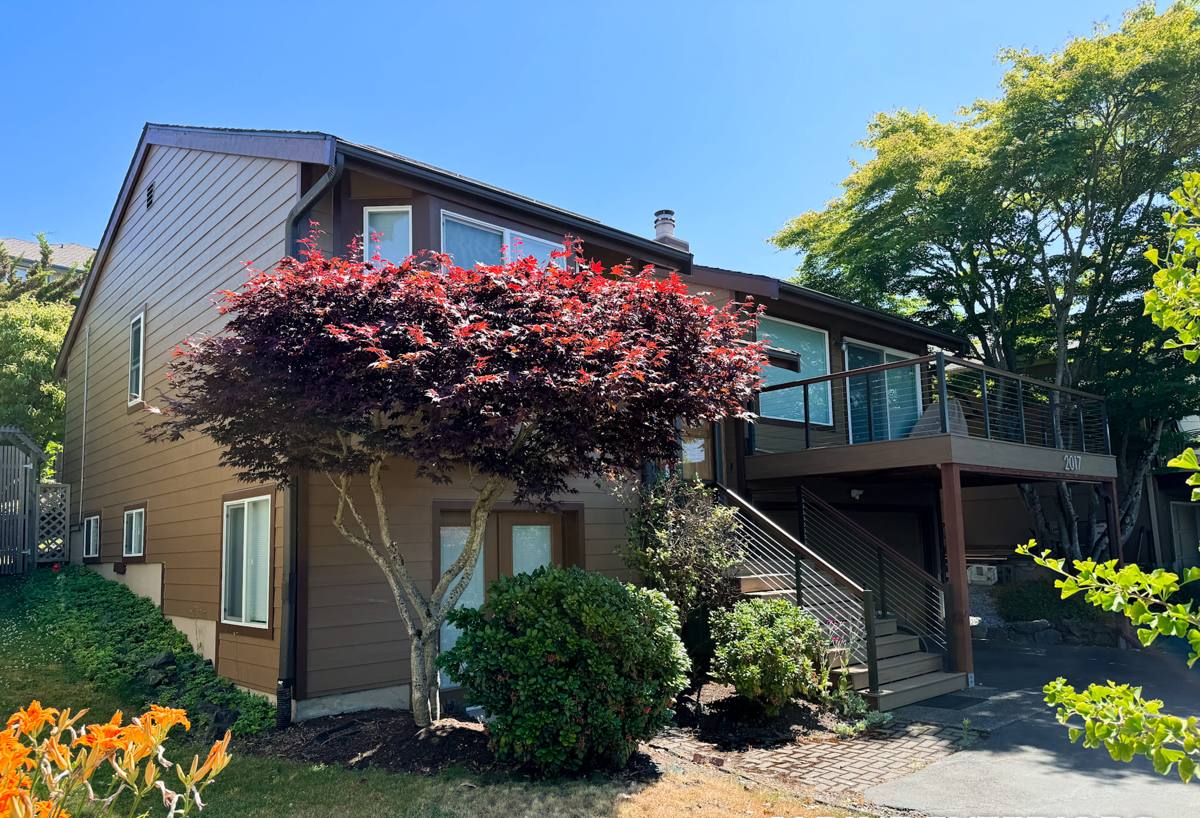
What Whatcom County's Climate Does to a Window Over Time
Bellingham's marine climate is mild, but it is relentless. Salt-tinged air off Bellingham Bay slowly attacks unprotected metal hardware and fasteners. Driving rain, especially in fall and winter storms, tests every seal and flashing detail a window has. And the long moss season — realistically eight or nine months of the year here — means anything shaded or north-facing stays damp longer than it should, which is bad news for wood sills and any trim that was caulked instead of properly flashed.
None of this means windows fail overnight. It means small installation shortcuts — a missing sill pan, caulk used in place of flashing tape, a frame that was never leveled — show up as real problems five, ten, or fifteen years later: soft wood, fogged glass, drafts, or paint that won't stop peeling no matter how many times it's redone.
Common Signs It's Time
- Fogging or a visible haze between panes (failed seal on double-pane glass)
- Wood trim or sills that feel soft, spongy, or show dark staining
- Windows that are difficult to open, close, or lock — often a sign the frame has shifted
- Noticeable drafts or cold spots near the window even when it's fully closed
- Condensation forming on the inside of the glass regularly through fall and winter
- Visible moss or algae growth on the sill or surrounding trim
- Rising heating bills with no other obvious cause
What a Correct Window Replacement Actually Involves
Swapping the sash for a new one and calling it done is how a lot of window problems start over again in a few years. A proper replacement on a home exposed the way South Hill homes are needs to address the whole opening, not just the glass.
The Details That Matter
Before a new window goes in, the old one comes out and the opening gets inspected — sill, jambs, and header — for any rot or water damage that's been hiding behind the trim. Any damaged framing gets repaired before anything new is installed; putting a new window into a compromised opening just hides the problem for a while.
From there, a correct install uses a sill pan to direct any water that gets past the window back outside instead of into the wall, proper flashing tape integrated with the house wrap (not caulk as a substitute), and shims and fasteners set so the frame is square and doesn't bind or bow. The window is sealed on the interior and exterior with the right materials for each — house wrap and flashing on the outside, low-expansion foam and backer rod on the inside — so the assembly manages moisture the way it's designed to, rather than trapping it.
Choosing the Right Window for This Climate
There isn't one "best" window material for every home — it depends on exposure, budget, and how much upkeep you want to take on. Here's how the common options actually compare for a house dealing with Bellingham's rain and shade:
| Frame Material | Moisture Performance | Maintenance | Typical Lifespan |
|---|---|---|---|
| Vinyl | Good — won't rot, handles damp shade well | Low — occasional cleaning | 20–30 years |
| Fiberglass | Excellent — very stable in wet/dry cycling | Low | 30–40+ years |
| Wood (clad exterior) | Good if maintained; exterior clad protects the wood | Moderate — interior wood still needs attention | 20–30+ years |
| All-wood, unclad | Poor in shaded, damp locations without diligent upkeep | High — regular painting/sealing required | Varies widely with maintenance |
On heavily shaded or west-facing walls — common on South Hill lots with mature tree cover — we generally steer homeowners toward vinyl, fiberglass, or clad-wood options rather than unclad wood, simply because those materials tolerate the extended damp periods here with far less upkeep. That's a maintenance and moisture-behavior call, not a judgment on any particular brand.
Single-Hung, Double-Hung, Casement, or Sliding?
Window style matters almost as much as material for how well a window sheds Bellingham's weather.
- Casement windows seal by compressing against the frame when cranked shut, which generally gives them the tightest seal against driving rain and wind — a real advantage on exposed South Hill walls.
- Double-hung windows are a familiar, classic look for older South Hill homes and tilt in for cleaning, but rely on compression seals along a track, which can wear faster in constant wet weather than a casement seal.
- Sliding windows are simple and cost-effective but share the same track-seal consideration as double-hungs.
The right call usually comes down to matching the home's existing style and the specific wall's exposure, not picking one style for the whole house by default.
How Our Process Works
We keep the process straightforward, start to finish:
- On-site assessment — we look at each window individually, not just the whole house at a glance, since exposure and condition often vary wall to wall.
- Honest recommendation — we'll tell you which windows genuinely need replacing now, which can wait, and which material and style make sense for that specific opening.
- Written estimate — clear pricing, no vague allowances.
- Removal and opening inspection — old windows come out, framing gets checked and repaired as needed before anything new goes in.
- Installation — sill pan, flashing, insulation, and interior/exterior sealing done to spec, not shortcuts.
- Walkthrough and cleanup — we test operation on every window and clear the site before we leave.
What Affects the Cost
Every home is different, but these are the main factors that move a window replacement estimate up or down:
| Factor | Why It Matters |
|---|---|
| Frame material and glass package | Fiberglass and upgraded low-E/argon glass cost more upfront than standard vinyl |
| Number of windows and access | Second-story or hard-to-access openings take more time and equipment |
| Framing repair needed | Rot or water damage found behind old trim adds material and labor |
| Window size and shape | Custom or oversized openings cost more than standard sizes |
| Trim and finish work | Matching existing exterior trim on an older home can add scope |
We don't quote a per-window "starting at" number without seeing the actual openings — too many of the cost drivers above are specific to your house.
A Checklist Before You Hire Anyone
Whether you call us or someone else, these are worth confirming before you sign a contract:
- Is the contractor licensed and insured to work in Washington State?
- Will they inspect and repair damaged framing, or just install over it?
- Does the written estimate specify frame material, glass package, and flashing method — not just "new windows"?
- Who handles the manufacturer's warranty if a window has an issue years from now?
- Do they have recent, verifiable experience working on homes in your specific neighborhood or condition class?
- Is cleanup and disposal of old windows included in the price?
Why Local Experience on South Hill Actually Matters
A crew that's already worked on South Hill homes knows what to expect before they pull the first window: which walls tend to hold moisture longest under the tree canopy, which older homes have non-standard rough openings, and how much extra care a west-facing, storm-exposed wall needs compared to a sheltered one. That's not something you learn from a general contracting background — it's specific to this hill, this weather pattern, and this housing stock.
It also means fewer surprises during the job. We're not guessing at how Bellingham's rain and shade interact with a given wall assembly — we've seen it, repeatedly, on homes just like yours.
If your windows are drafty, fogged, hard to operate, or just original to a home that's due, we're happy to take a look and give you a straight answer — no pressure, no upsell. Use the form below to request a free estimate.