 Bellingham Siding
 Deck Repair for York-Area Homes in Bellingham
The York neighborhood sits in one of the wetter corners of an already wet county. Between Bellingham Bay's salt air, the driving rain that comes off Puget Sound through fall and winter, and a moss season that can run eight months or longer, outdoor decks here take a beating that decks in drier climates never see. We repair decks throughout York and the surrounding Bellingham area, and the damage we find is almost always tied to the same handful of causes: trapped moisture, corroded fasteners, and moss or algae that homeowners assumed was cosmetic until it wasn't.
This page covers what actually goes wrong with decks in this climate, what a correct repair looks like, and how we approach the job when we come out to a York property.
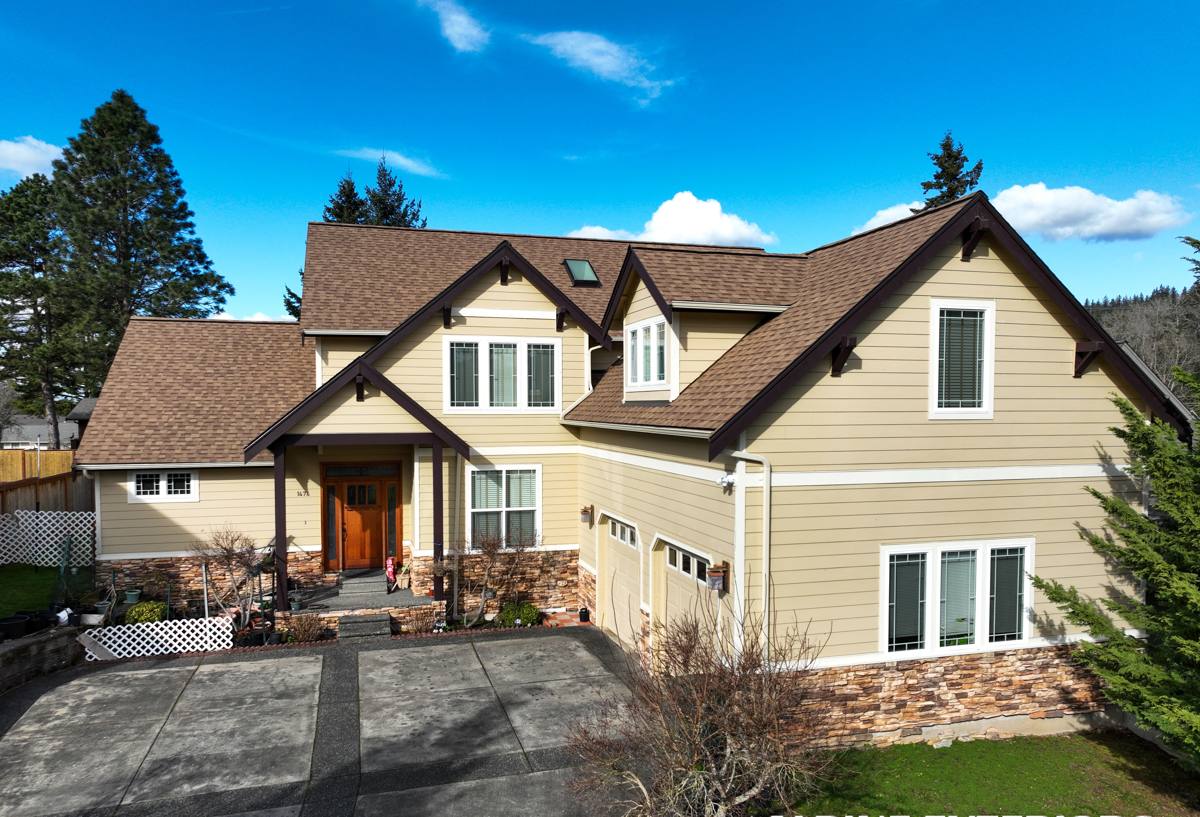
Why Decks Fail Faster in This Climate
Driving Rain and Trapped Moisture
Whatcom County rain rarely falls straight down — wind off the Sound drives it sideways into ledger boards, under railings, and into any gap where flashing was skipped or installed wrong. Once water gets behind a ledger board or under decking that's laid too tight, it has nowhere to go. Wood stays damp for days after a storm instead of drying out, and that's when rot sets in, usually starting at the point where the deck attaches to the house.
Salt Air and Fastener Corrosion
Being close to the bay means airborne salt settles on everything, including the screws, nails, and joist hangers holding a deck together. Fasteners that aren't rated for coastal exposure corrode from the inside out — a deck board can look fine while the screw underneath it has rusted to almost nothing. We see this most often on older decks built before coastal-grade hardware was standard practice.
Moss and Algae Buildup
A long moss season doesn't just make decking look neglected — moss and algae hold moisture against the wood surface, and on stairs or ramps they turn into a genuine slip hazard. Left alone through a few wet seasons, moss growth accelerates surface decay on wood decking and can stain and degrade composite boards faster than the manufacturer's finish is built to handle.
Signs Your Deck Needs Repair
- Soft, spongy, or springy spots when you walk across the decking
- Rust streaks bleeding out around screw heads or nail heads
- Gaps opening up between the ledger board and the house, or visible daylight there
- Railings or posts that wiggle more than they used to
- Persistent moss or dark staining that comes back within weeks of cleaning
- Stair stringers that flex or feel uneven underfoot
- Visible rot, splitting, or crumbling wood at ground contact points or around footings
Any one of these on its own might be a minor fix. Several together usually mean water has been getting in for a while, and it's worth a full inspection rather than patching the symptom you can see.
What a Correct Repair Actually Involves
A lot of deck "repairs" amount to swapping out obviously rotten boards and calling it done. That fixes what's visible but leaves the underlying moisture problem in place, so the same spot rots again in a season or two. A repair done right starts with figuring out why that section failed, not just replacing it.
Ledger Board and Flashing
Since the ledger board connection is the most common failure point in this climate, we check the flashing behind it whenever we're already opening up that area. Proper flashing directs water away from the house framing instead of letting it wick in behind the deck — if it's missing, cut short, or installed backward, we correct it as part of the repair rather than just replacing the board and leaving the same setup in place.
Structural Connections
Joist hangers, post bases, and the bolts or lag screws holding structural members together get inspected for corrosion and proper load-bearing contact, not just visually eyeballed. A hanger that's rusted through can look intact until it's under load. Where original hardware was standard steel rather than coastal-rated, we typically upgrade it during the repair rather than reinstalling the same grade that failed.
Fasteners and Hardware
We use fasteners rated for exterior and coastal exposure — stainless steel or high-grade coated screws designed to resist the kind of corrosion that salt air causes. It costs a little more up front than standard deck screws, but it's the difference between a repair that holds for years and one that starts bleeding rust again in a couple of seasons.
Drainage and Airflow
Wherever we can, we address the underlying drainage and ventilation issue — proper board spacing, clearing blocked airflow underneath the deck, correcting grade or drainage near footings — so water has somewhere to go and the wood actually gets a chance to dry between storms.
Repair vs. Replace: How We Help You Decide
Not every deck problem calls for a full rebuild, and not every deck is worth saving. Here's generally how we think through it:
| Factor | Leans Toward Repair | Leans Toward Replacement |
|---|---|---|
| Extent of rot | Isolated to a few boards or one ledger section | Widespread through joists, beams, or multiple framing members |
| Structural framing | Solid; only surface decking or railings affected | Joists, posts, or ledger framing compromised |
| Age of deck | Under 10-15 years, built with treated lumber | Older deck nearing the end of typical service life |
| Fastener condition | Localized corrosion, hardware still sound elsewhere | Corrosion widespread across hangers and connectors |
| Code compliance | Railings, stairs, and spacing already meet current standards | Guardrail height, baluster spacing, or footings out of code |
Costs for deck repair scale with what's found once we open things up — a straightforward board swap and hardware upgrade is a modest job, while a repair that uncovers ledger rot or compromised framing runs higher because it involves structural work, not just cosmetic fixes. We give you a real number after inspection, not a phone-quote guess.
Materials: What We Use and Why
| Material | Pros | Trade-offs in This Climate |
|---|---|---|
| Pressure-treated lumber | Affordable, easy to source-match for repairs, widely used locally | Needs periodic sealing/staining to shed water and resist moss |
| Cedar | Naturally rot-resistant, common look on older York-area decks | Softer wood, needs regular maintenance to hold up to constant damp |
| Composite decking | Low maintenance, doesn't rot, resists moss staining better than bare wood | Structural framing underneath still needs wood — and still needs the same moisture protection |
| Stainless/coated fasteners | Resists salt-air corrosion far longer than standard steel | Higher material cost, but far cheaper than repairing corrosion damage twice |
When a repair involves replacing decking boards, we'll always talk through whether it makes sense to match the existing material or upgrade a section to composite — especially on stair treads and other high-moisture spots where moss and slip risk are worst.
Our Repair Process
- Inspection — We check the full deck, not just the spot you called about: ledger connection, framing underneath, fastener condition, and railing/stair safety.
- Diagnosis — We identify the actual cause of the damage (flashing failure, missing ventilation, corroded hardware, moss buildup) so the repair addresses the source, not just the symptom.
- Written scope — You get a clear explanation of what's failing, what we recommend, and a real cost range before any work starts.
- Repair — We remove and replace only what's actually compromised, upgrade hardware and flashing where it's due for it, and rebuild affected sections to current safety standards.
- Walkthrough — We show you what we found and what we did, including anything worth keeping an eye on going forward.
Maintenance That Actually Extends Deck Life Here
- Sweep debris and standing leaves off the deck regularly through fall — trapped organic matter holds moisture and feeds moss
- Clean moss and algae off boards and stairs at least once a season, especially before winter
- Reseal or restain wood decking on the schedule the finish product calls for — don't stretch it because the deck "still looks fine"
- Check railings and stair connections for looseness once a year
- Keep gutters and downspouts near the deck clear so runoff isn't dumping extra water onto or under it
- Have the ledger board and under-deck area glanced at every couple of years, since that's the spot least visible and most likely to fail first
Why a Crew That Already Works York Matters
Deck repair in this part of Whatcom County isn't quite the same trade as deck repair somewhere dry. A contractor who mostly works inland or in a milder climate can miss the flashing detail that matters here, or spec standard hardware where coastal-rated fasteners are the right call. We work on decks throughout Bellingham and the York area regularly, so we already know which failure points show up most, what materials hold up against salt air and driving rain, and how to size a repair so it doesn't need doing again in three years. That local pattern-recognition is worth more than a lower bid from a crew that's guessing at the climate.
Get a Straight Answer About Your Deck
If your deck has soft spots, rust stains, persistent moss, or just feels less solid than it used to, it's worth having someone look before it gets worse or someone gets hurt on it. We offer free, no-pressure estimates for deck repair in York and throughout Bellingham — fill out the form below and we'll take a look and tell you straight what it needs.