 Bellingham Siding
 Why Windows Wear Out Faster in York
Homes in the York neighborhood sit close enough to Bellingham Bay that salt-laden air is a constant, low-grade stress on anything metal, painted, or sealed — window hardware, weep holes, and factory finishes included. Add Whatcom County's pattern of long, driving rain events off the Sound and a moss season that can run from late fall well into spring, and you've got three separate forces working against a window at once: corrosion, water intrusion, and organic growth that traps moisture against the frame and sill. None of that is unique to York, but the combination is more persistent here than in drier parts of the state, which is why window failures we see in this part of Bellingham tend to show up first at the seals, the weep system, and the bottom corners of the frame — not in the glass itself.
Energy-efficient windows aren't just about a lower heating bill, though that matters. In a climate this wet, "efficient" and "well-sealed against the weather" are the same conversation. A window that leaks air also tends to be a window that's letting moisture find its way into the wall cavity, and that's a much more expensive problem than a higher utility bill.
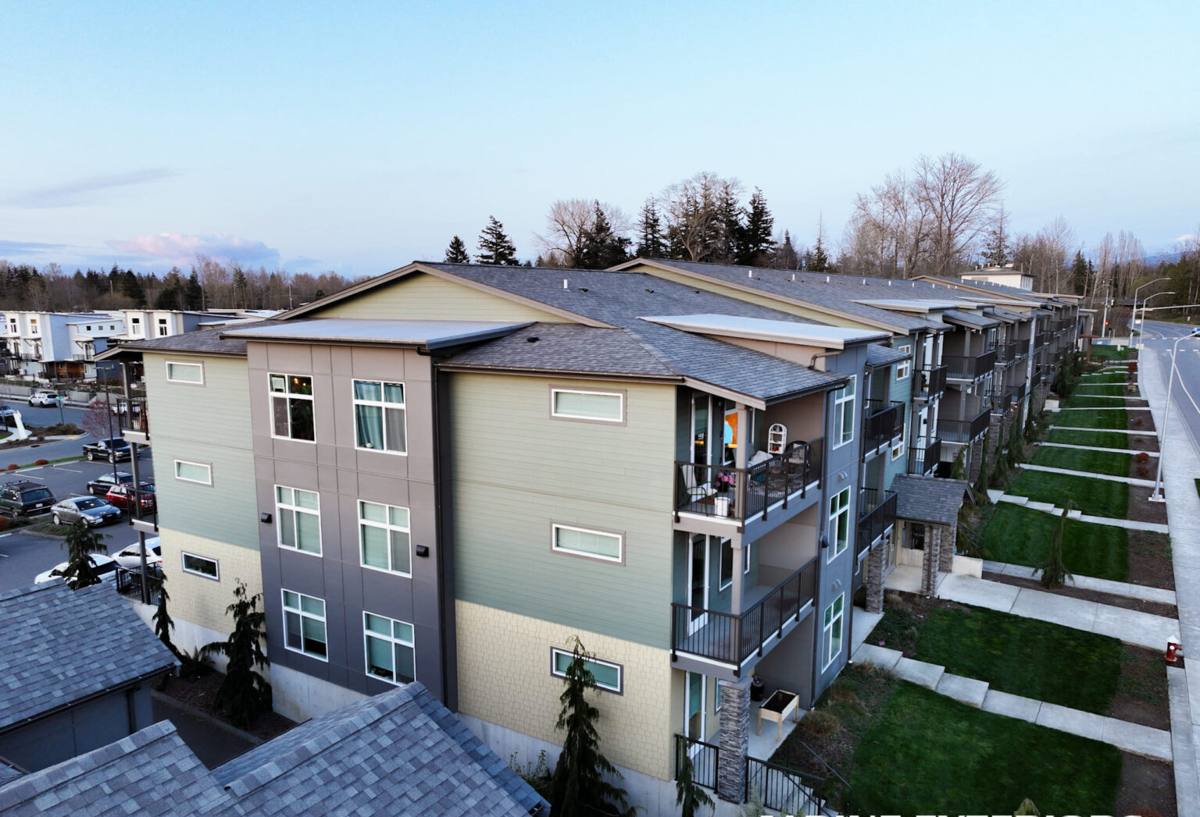
What Efficiency Actually Means on a Window Label
Every legitimate window sold in the U.S. carries an NFRC (National Fenestration Rating Council) label with a handful of numbers that matter far more than marketing language like "energy-efficient" on its own. Here's what to actually read:
- U-Factor — how well the window resists heat loss. Lower is better; for our climate zone you want a number that reflects a genuinely insulated frame and glass package, not just double panes.
- SHGC (Solar Heat Gain Coefficient) — how much solar heat passes through. In the Pacific Northwest this is less critical than in sunbelt climates, but it still affects comfort on the west- and south-facing sides of a house.
- Air Leakage — measured in cubic feet per minute per square foot of frame. This number is the one most directly tied to drafts and to moisture getting pulled into wall assemblies during wind-driven rain.
- Condensation Resistance — an optional rating, but a useful one in a humid coastal climate where interior condensation on cold glass is a common complaint.
ENERGY STAR certification for our region falls under the Northern climate zone, which sets stricter U-factor requirements than the national default. That's the baseline we work from for York installs, not a starting point we upsell from.
Signs Your Current Windows Are Costing You
Most homeowners don't call about windows because of a utility bill — they call because something felt or looked wrong. The common early signs we hear about in this neighborhood:
- A noticeable draft near the sash even when the window is latched
- Fog or a permanent haze between the panes of a double-pane unit — the seal has failed and the argon or air gap is gone
- Paint or trim that stays damp longer than the rest of the house after a storm
- Moss or dark streaking building up on the sill or exterior trim faster than elsewhere on the house
- Hardware (locks, cranks, hinges) that's stiff, pitted, or corroded ahead of its age
- A cold spot you can feel radiating off the glass or frame in winter, separate from any draft
Any one of these alone isn't an emergency. Two or three together, especially on the weather-facing side of a York home, usually means the window assembly has started letting water and air past the original seal — and that it's cheaper to replace now than to keep patching.
Frame Materials: How They Actually Hold Up Here
Every frame material has trade-offs, and in a salt-air, high-rainfall climate those trade-offs shift compared to what you'd read in a national buying guide. This is how we weigh them for a York installation:
| Material | Coastal/Moisture Performance | Maintenance | Where It Fits |
|---|---|---|---|
| Vinyl (fiberglass-reinforced) | Doesn't corrode; welded corners resist water intrusion well | Low — occasional cleaning | Most York homes; best value-to-durability ratio |
| Fiberglass | Excellent — stable in wet/dry cycling, won't rot or pit | Low | Higher-exposure walls facing the water or prevailing storms |
| Wood-clad | Good if the cladding seams and sill flashing are done right; vulnerable if not | Higher — cladding seams and interior wood need periodic checks | Homes prioritizing an interior wood look |
| Aluminum | Prone to corrosion and thermal transfer in salt air unless thermally broken and properly coated | Moderate to high | We use it selectively, and only with a thermal break |
We don't push one material on every job. What we won't do is install a bare aluminum frame with no thermal break this close to the bay, or a wood-clad unit without confirming the cladding and flashing detail is right — those are the two choices most likely to cause callbacks in a climate like this.
Our Installation Process
1. On-Site Assessment
We look at the existing frame condition, the sheathing and framing around it once the old unit is out (not just what's visible from outside), and how water has historically moved around that opening. In York specifically, we pay close attention to west- and south-facing openings and any wall that catches wind-driven rain directly, since those take the most cumulative exposure.
2. Flashing and Moisture Barrier Detail
This is the step that matters most in a climate like Whatcom County's, and it's also the step that's easiest for a rushed crew to shortcut. A correct install means:
- Sill pan flashing that sheds any water that gets past the window to the exterior, not into the wall cavity
- Housewrap or weather-resistive barrier integrated with the flashing in proper shingle-lap order — each layer overlapping the one below it
- Corner and head flashing sealed with compatible tape or sealant, not just caulk alone
- Weep holes left clear and functional, not sealed over by mistake
We treat this as non-negotiable. A premium window installed over bad flashing will still leak; a mid-range window installed correctly usually won't.
3. Air Sealing and Insulation
The gap between the new frame and the rough opening gets sealed with low-expansion foam or backer rod and sealant — enough to stop air movement without bowing the frame out of square, which affects how well the sash operates for years afterward.
4. Final Check and Cleanup
Every window gets operated, latched, and checked for square before we consider the job done, and the site is cleaned of old materials and debris.
Sizing the Job to Your House
Not every York home needs a full-house window replacement at once. A phased approach — starting with the worst-performing or most exposed elevation — is a legitimate way to manage cost, as long as the phasing plan accounts for consistent flashing and trim detail so the finished look and performance match once the whole house is done. We'll tell you honestly if a phased plan makes sense for your house or if mixing old and new windows on the same wall is going to look or perform worse than waiting and doing it together.
What Affects Cost
| Factor | Why It Matters |
|---|---|
| Frame material chosen | Vinyl, fiberglass, and wood-clad carry different material costs and labor requirements |
| Number of openings and sizes | Larger or custom-sized units cost more than standard sizes |
| Condition of the rough opening | Rot or damaged sheathing found during removal adds repair scope |
| Full-frame vs. insert replacement | Full-frame replaces flashing and moisture barrier too; inserts reuse the existing frame and are faster but don't correct existing flashing problems |
| Glazing package | Double vs. triple pane, and any upgraded Low-E or gas-fill options, change both cost and performance |
We'll walk your specific house and give you real numbers rather than a generic per-window estimate that doesn't account for your framing condition or exposure.
Maintenance That Extends the Life of a New Window Here
A well-installed, efficient window still needs some upkeep in this climate to perform for its full service life:
- Rinse salt residue and grime off frames and glass a few times a year, especially on wind-exposed elevations
- Clear moss and debris from sills and tracks before it holds moisture against the frame through the winter
- Check weep holes each fall to make sure they're not blocked by debris or paint
- Lubricate hardware annually to prevent the pitting and stiffness that salt air accelerates
- Re-caulk exterior trim joints if you notice separation — small gaps here become water problems fast
Why a Crew That Already Works in York Matters
A contractor who's worked this neighborhood knows which elevations of a York house take the worst of the weather, has already worked through how local siding and trim details interact with window flashing, and isn't guessing at how moss and moisture behave on this side of Bellingham through a wet Whatcom County winter. That local pattern recognition is what keeps a window install from becoming a callback a year or two later when the first hard storm finds a shortcut.
If you're weighing whether your windows need replacing or just some maintenance, we're happy to take a look and give you a straight answer either way. Reach out for a free, no-pressure estimate — there's a form below to get started.