 Bellingham Siding
 Composite Decking Built for South Hill's Particular Climate Squeeze
South Hill sits up above downtown Bellingham with mature tree cover, older housing stock, and views out toward Bellingham Bay that come with a tradeoff: a lot of shade, a lot of moisture, and decks that spend much of the year damp instead of drying out between rains. That combination is harder on a deck than open, sun-exposed lots elsewhere in Whatcom County. We build and replace decks across this neighborhood, and composite decking is what we recommend for most South Hill homes specifically because of how this particular hillside, tree-shaded setting behaves.
This page is about composite decking for South Hill homes specifically, not composite decking in general. The elevation, tree canopy, and older lot layouts up here create a different set of problems than a flat, open yard would, and the right installation accounts for that from the ledger board down to the fastener choice.
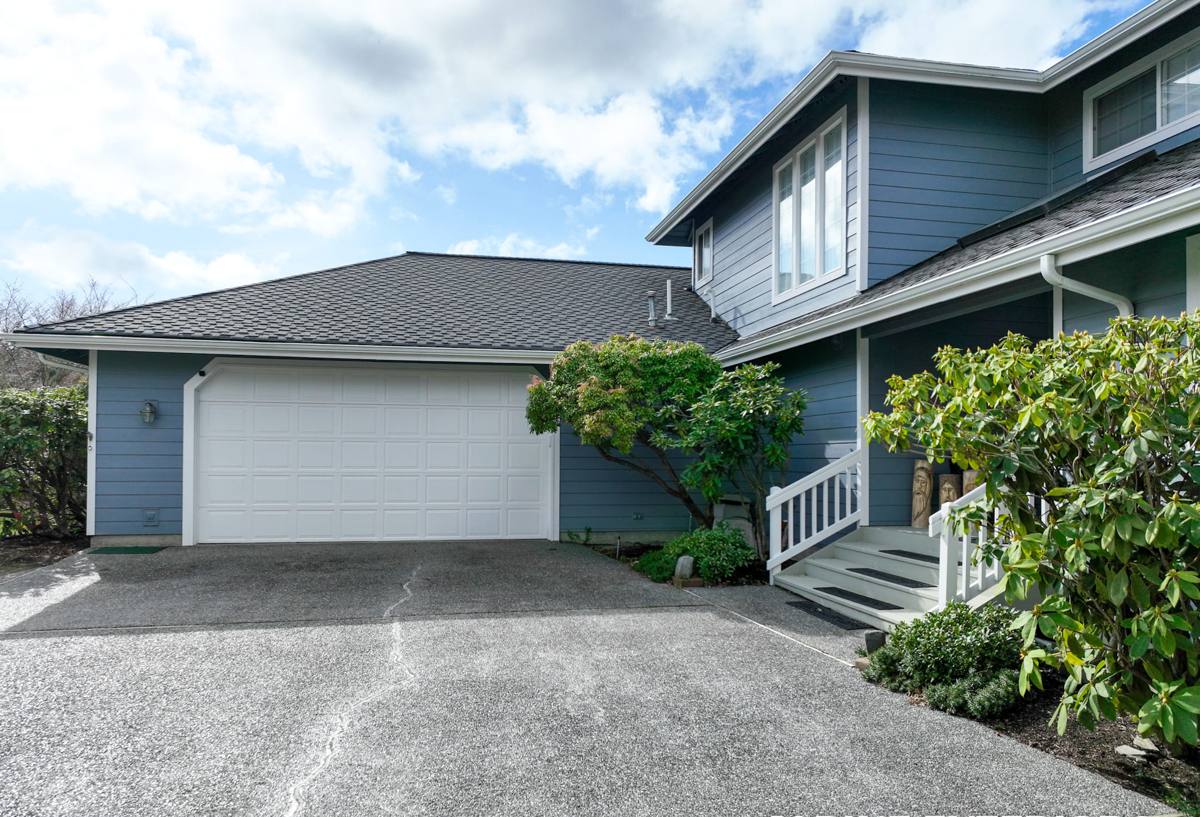
What Bellingham's Climate Does to a Deck on South Hill
Shade and Slow Drying
Bellingham's marine climate already means long stretches of damp weather, but South Hill's tree cover adds another layer to it. A deck under or near mature trees loses direct sun for much of the day, and without sun exposure, moisture that would evaporate off an open deck in a few hours can sit on boards, in fastener holes, and against the substructure for days. That's the setup that grows moss and mildew fastest, and it's why we see so much surface staining and slick, slippery decking on shaded lots up here.
Driving Rain and Wind Off the Bay
Elevation doesn't shelter a deck from Bellingham's wind-driven rain the way people sometimes assume it will. Rain pushed sideways off the Salish Sea still finds ledger connections, stair stringers, and any gap where water can work its way behind boards or into end grain. On a hillside lot, that water also has to go somewhere once it hits the deck, and drainage below the surface matters as much as what's visible on top.
Older Substructures
A lot of South Hill housing predates modern deck-building codes, and decks attached to these homes were often built or rebuilt without today's flashing and ledger standards. Salt air and sustained moisture accelerate corrosion on old fasteners and connectors, and we regularly find substructure issues that aren't visible until the decking boards come off. Any honest composite deck quote for a South Hill home has to account for what's underneath, not just what color boards go on top.
Why Composite Over Wood for This Neighborhood
Wood decking isn't a bad product everywhere, but in a shaded, damp, salt-influenced setting like South Hill, it puts a maintenance burden on the homeowner that tends to slip. Cedar and pressure-treated lumber both need regular sealing or staining to keep moisture out, and once that schedule slips even one season, moisture gets into the wood grain and the clock starts on rot, splitting, and fastener staining. On a shaded lot that stays damp longer than most, that clock runs faster than it would on an open, sunny site.
Composite decking with a capped or fully encapsulated shell doesn't rely on a homeowner's maintenance schedule to keep water out. The material doesn't absorb moisture into a fibrous grain the way wood does, so it holds up better against the exact conditions South Hill throws at it: prolonged dampness, shade-driven moss growth, and salt-tinged air. It's not maintenance-free — nothing outdoors in this climate is — but the maintenance it needs is periodic cleaning, not annual sealing against water intrusion.
What Composite Trades Off
Composite decking costs more upfront than pressure-treated lumber, and it's less forgiving of installation shortcuts. Composite boards need tighter joist spacing than wood in most manufacturer specs, hidden fastener systems have to be installed correctly to avoid squeaking or board movement, and ventilation below the deck matters more with composite because trapped moisture under a low-clearance composite deck can still cause substructure problems even though the boards themselves resist rot. We treat those installation details as non-negotiable, not optional upgrades.
What a Correct Composite Deck Installation Involves
| Component | Why It Matters on South Hill |
|---|---|
| Ledger board flashing | The single most common source of hidden water damage on older hillside homes; correct flashing keeps wind-driven rain from tracking behind the house wrap |
| Joist spacing | Composite typically requires closer joist spacing than wood (per manufacturer spec) to prevent long-term sagging between boards |
| Hidden fastener systems | Keeps water off exposed fastener heads and gives a cleaner surface that doesn't trap moss growth around screw holes |
| Substructure ventilation | Shaded, damp lots need airflow underneath to keep framing and blocking from staying wet for days at a time |
| Corrosion-resistant hardware | Salt-tinged marine air accelerates corrosion on standard fasteners and joist hangers faster than an inland climate would |
| Stair and railing connections | High-load points that take the most water exposure and the most physical wear; a common failure point on older rebuilds |
Our Process for a South Hill Composite Deck
- On-site assessment: We look at the existing structure (if there is one), the ledger connection, tree cover and shade pattern, and drainage before quoting anything.
- Substructure evaluation: On older South Hill homes, we check ledger attachment, framing condition, and existing flashing, since these are the parts a new composite deck surface will sit on top of for the next couple decades.
- Product selection: We walk through composite board options with the homeowner based on the specific shade and moisture exposure of that lot, not a one-size answer for every yard.
- Installation to manufacturer spec: Joist spacing, hidden fasteners, ventilation, and flashing details are installed to the manufacturer's requirements, which also protects the product warranty.
- Final walk-through: We go over the finished deck with the homeowner, including what routine cleaning looks like and what to watch for in future years.
Cost Factors Homeowners Should Understand
| Factor | Pressure-Treated Wood | Composite Decking |
|---|---|---|
| Upfront material cost | Lower | Higher |
| Ongoing maintenance | Annual sealing/staining recommended | Periodic cleaning, no sealing required |
| Moisture behavior in shade | Absorbs moisture into grain; slower to dry | Sheds surface moisture; doesn't absorb into the board itself |
| Long-term appearance | Grays, splits, or needs refinishing over time | Holds color longer with capped/encapsulated products |
| Typical warranty structure | Limited or none on the lumber itself | Manufacturer warranties often run 25 years or more on capped composite, contingent on correct installation |
The real cost comparison isn't just the sticker price on materials. It's the cost of the maintenance a homeowner will actually keep up with over ten or fifteen years, plus the cost of a substructure repair if the ledger or framing wasn't handled correctly the first time. We try to lay that out plainly rather than just quoting the cheapest number.
Maintaining a Composite Deck on a Shaded South Hill Lot
- Sweep off leaves, needles, and organic debris regularly, especially in fall — trapped debris holds moisture against the board surface longer than the board would otherwise stay wet.
- Rinse or lightly scrub boards a couple times a year to prevent surface moss and algae film from establishing, particularly on the shaded side of the deck.
- Keep gutters and downspouts near the deck clear so runoff isn't dumping extra water onto or under the deck surface.
- Check railing and stair connections annually for movement, since these joints see the most stress and the most water exposure.
- Trim back overhanging branches where practical to let more air and light reach the deck surface, even a modest amount helps drying time.
- Have the substructure looked at every few years, especially on older homes, since the framing underneath won't show problems on the surface until they're advanced.
Why Hiring a Crew That Already Works South Hill Matters
South Hill's older homes, hillside lots, and tree-heavy yards create access and structural conditions that a crew unfamiliar with the neighborhood can misjudge. Steep or narrow lot access changes how material gets staged and how a substructure repair gets sequenced. Older ledger connections common to this part of Bellingham need a trained eye to evaluate rather than a generic assumption that "it's probably fine." A crew that's already worked a handful of decks in this neighborhood has a feel for what these houses tend to be hiding underneath, and that shows up in fewer surprises mid-project and fewer callbacks after.
We're a Whatcom County crew, and South Hill is part of our regular working area, not a one-off job we drove out for. That matters when something under an old deck needs a real judgment call instead of a guess.
Questions Worth Asking Before You Hire
- Will you inspect the existing ledger board and framing before quoting, or just quote off a photo?
- What joist spacing will you use for composite decking, and does it match the manufacturer's spec?
- Are you using a hidden fastener system, and is it rated for the specific composite product you're installing?
- How do you handle ledger flashing on an older house with existing siding or house wrap?
- What does the manufacturer warranty actually require from the installation to stay valid?
If you're considering a new or replacement deck on South Hill, we're glad to come take a look and give you a straight answer on what your home needs, no pressure and no obligation. Fill out the form below to set up a free estimate.