 Bellingham Siding
 Windows Built for the Edgemoor Bluff, Not a Generic Catalog Size
Edgemoor sits close enough to Bellingham Bay that the weather here isn't quite the same as it is a few miles inland. Homes along the bluff and in the wooded pockets around it take on salt-laden air, wind-driven rain off the water, and long stretches of shade under mature evergreens that keep everything damp longer than it should be. Windows that were fine when they were installed twenty or thirty years ago are often the first thing to show it — swollen sashes, foggy glass, sills gone soft, or a draft that shows up every time the wind comes off the water.
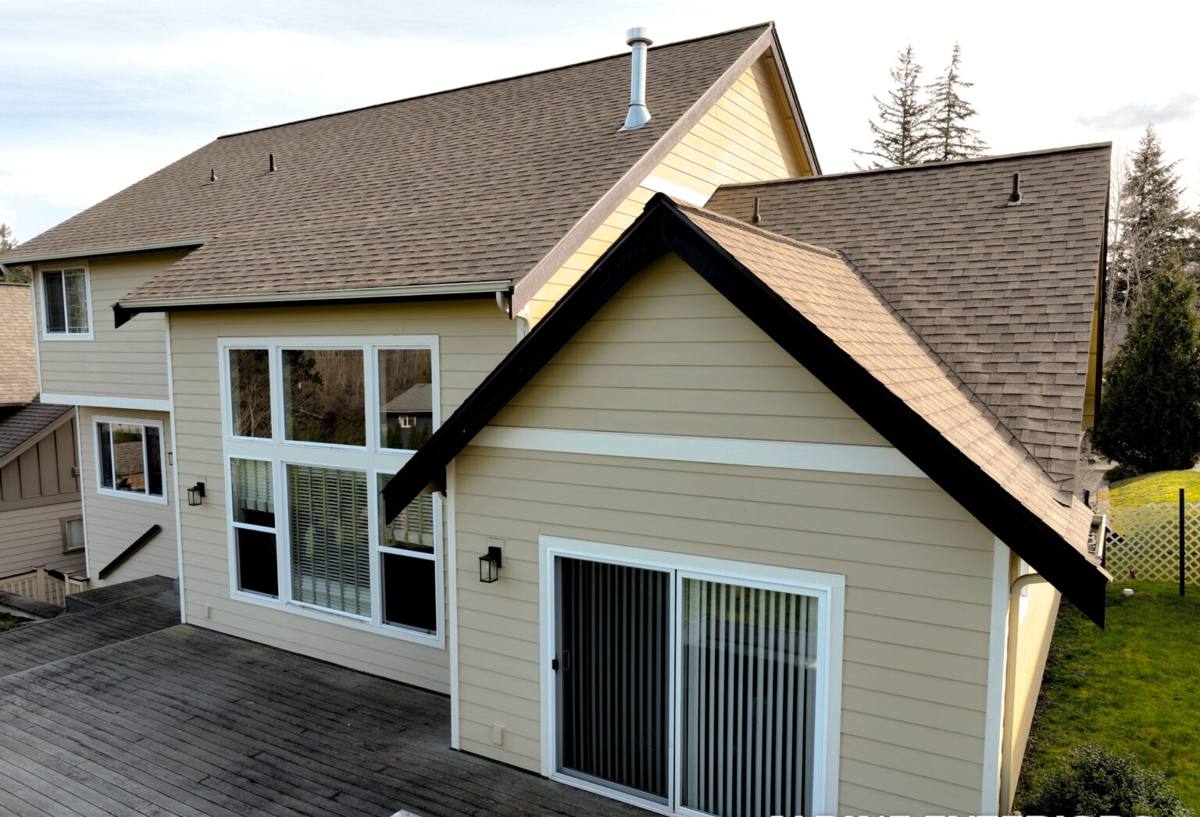
"Custom" in this context doesn't just mean an oversized picture window or an odd-shaped opening over a stairwell, though we do plenty of that. It means fitting the right window to the specific conditions of an Edgemoor lot: which direction it faces, how much salt exposure it gets, how much sun and airflow reach it through the trees, and what the existing framing and siding are actually doing structurally before a new window goes in. Get that wrong and you've got a beautiful window that fails in five years. Get it right and it should outlast most of what's currently in the house.
What the Local Climate Actually Does to a Window
Whatcom County's marine climate is mild, which lulls people into thinking windows don't take much abuse here. They do — just slowly, in ways that are easy to miss until the damage is already inside the wall.
Salt Air and Metal Fatigue
Homes closer to the bay deal with airborne salt that accelerates corrosion on hardware — hinges, locks, balance mechanisms, and screen frames in particular. Cheaper mill-finish aluminum and unprotected steel components corrode faster here than they would inland. It's usually the hardware that fails first, long before the glass or frame gives out.
Driving Rain
Storms coming off the water don't just fall straight down — they push rain sideways into window openings, which puts real stress on flashing and sealant details that a calmer climate would never test. A window that's watertight in a light drizzle can still leak in a sideways gale if the flashing wasn't lapped correctly.
Moss and Shade
The tree cover that makes Edgemoor attractive also means a lot of windows sit in shade for a good part of the day. Combined with our long wet season, that's ideal conditions for moss and algae to colonize wood sills, exterior trim, and even vinyl cladding that doesn't drain well. Once moss gets a foothold in a sill joint, it holds moisture against the wood or frame material year-round.
How to Tell a Window Is Actually Failing (Not Just Old)
Not every older window needs replacing, and we'll tell you that honestly during an estimate. But a few signs consistently mean the window has crossed from "dated" into "actively failing":
- Fogging or a visible film between panes of double glazing — the seal has failed and the gas fill is gone
- Sashes that stick, drop, or won't stay open on their own
- Soft or spongy wood at the sill or lower corners of the frame
- Visible moss or dark staining building up in the sill track or bottom corners
- A draft you can feel with your hand near the frame on a windy day
- Condensation forming on the interior glass regularly, especially in cooler months
- Paint or finish peeling specifically around the window opening and nowhere else nearby
If you're only seeing cosmetic wear — faded finish, minor hardware stiffness — that's often a repair or refinish job, not a full replacement. We'd rather tell you that up front than sell you windows you don't need yet.
Matching Materials to an Edgemoor Home
There's no single "best" window material — there's a best fit for the specific exposure and the look of the house. Here's how the common options actually perform under our conditions:
| Material | Salt Air / Coastal Exposure | Moisture Behavior | Maintenance |
|---|---|---|---|
| Vinyl | Good — won't corrode | Handles moisture well; check weep holes stay clear | Low; occasional cleaning |
| Fiberglass | Very good — highly stable, resists warping | Excellent; minimal expansion/contraction | Low |
| Wood-clad (exterior clad, wood interior) | Good on the clad side; interior wood needs protection from indoor humidity | Strong if detailed correctly; vulnerable if flashing fails | Moderate; interior finish upkeep |
| Solid wood (no cladding) | Requires regular upkeep in this climate | Prone to moisture damage without diligent maintenance | High; repainting/sealing cycle |
| Aluminum (uncoated or mill finish) | Poor — corrodes faster near the bay | Prone to condensation without thermal breaks | Moderate to high |
For most Edgemoor homes we lean toward fiberglass or a good-quality vinyl for the bulk of window openings, with clad-wood reserved for homes where the interior wood look matters architecturally and the owner is comfortable with the added upkeep. We don't install uncoated aluminum or unprotected solid wood in direct salt exposure as a matter of our own standard — not because the material can't be made to work anywhere, but because the maintenance burden and failure risk in this specific setting isn't worth it to us or to you.
Where Installation Quality Actually Matters More Than the Window Itself
A premium window installed with sloppy flashing will leak. A mid-grade window installed correctly will often outperform it. This is the part of the job that doesn't show up in a brochure but determines whether you're dealing with a rot problem behind your siding in eight years.
Flashing Sequence
Water management has to be layered correctly — sill pan first, then side flashing lapped over it, then the water-resistive barrier lapped over the top flashing, in that order, every time. In a driving-rain climate like ours, any gap in that sequence eventually finds its way to the framing.
Sill Pans
A sloped sill pan under the window gives any water that gets past the sash somewhere to go besides straight down into the framing. This is inexpensive to do right and expensive to fix later if it's skipped.
Sealant Placement
Sealant belongs at specific joints, not smeared everywhere as a catch-all. Over-sealing can actually trap moisture inside a wall assembly instead of letting it drain and dry, which causes exactly the rot problem the sealant was supposed to prevent.
Working With Older Framing
Edgemoor has a real mix of home ages, and older rough openings are rarely square or exactly to modern spec. Custom work means shimming, leveling, and sometimes rebuilding a section of the opening rather than forcing a stock window into a space that doesn't quite fit — which is where a lot of leaks and drafts originate on older homes.
Our Process, Start to Finish
- On-site assessment. We look at each window opening individually — framing condition, current flashing (where visible), exposure direction, and any moss or moisture already present.
- Honest scoping. We tell you which windows need full replacement, which could be repaired, and which are fine as-is. We're not paid more for finding problems that aren't there.
- Material and style selection. We walk through frame material, glazing options, and grille/style choices that fit the house's existing character rather than fighting it.
- Written estimate. Clear scope, materials, and price before any work starts — no surprise change orders for things we could have caught up front.
- Removal and opening prep. Old windows come out carefully, and we inspect the framing underneath before anything new goes in — this is where hidden moisture damage, if any, actually gets found.
- Flashing and sill pan installation. Done in the correct sequence every time, regardless of whether it's visible in the finished product.
- Window installation and air-sealing. Set, shimmed, leveled, and insulated around the frame — not just caulked at the trim.
- Exterior and interior finish work. Trim, casing, and sealant detail matched to the home.
- Final walkthrough. We operate every window with you before we consider the job done.
Energy Performance and Condensation in a Marine Climate
Bellingham's mild but consistently humid climate makes condensation resistance and a solid U-factor more relevant than raw solar heat gain numbers you'd care more about somewhere hotter and drier. Double or triple glazing with a warm-edge spacer helps keep interior glass surfaces from sweating during our cooler, damp months, which in turn reduces the moisture load on window sills and surrounding trim — one more thing working against the moss and rot issues already common in shaded Edgemoor lots. We'll talk through glazing packages relative to each window's actual exposure rather than applying one spec to the whole house, since a north-facing window under tree cover and a south-facing bay window have different real-world demands.
Permits and Working Within an Established Neighborhood
Window replacement in the City of Bellingham typically falls under standard building permit requirements, and specifics can depend on the scope of work and whether the opening size is changing. If your property has any additional review layers — shoreline setback considerations for bluff-adjacent lots, or an HOA with exterior appearance guidelines, which some pockets of Edgemoor have — we factor that into scheduling and design choices from the start rather than after the fact. We handle the permit process as part of the job so you're not chasing it down yourself.
Why It's Worth Hiring a Crew That Already Works This Neighborhood
None of this is exotic work, but it's work that punishes shortcuts more here than it would in a drier, calmer climate inland. A crew that's done window replacements up and down the Edgemoor bluff already knows which exposures need extra flashing attention, which older homes tend to have out-of-square openings, and how aggressively moss and shade affect sill longevity on tree-covered lots. That familiarity shows up as fewer surprises during the job and a window system that's actually built for the specific conditions of your property, not a generic install applied the same way regardless of where the house sits.
If you're weighing whether your current windows need attention or you're ready to move forward with replacement, we're happy to come take a look and give you a straight, no-pressure estimate — use the form below to get started.