 Bellingham Siding
 Windows Built for Bellingham's Marine Climate
Sunnyland sits close enough to Bellingham Bay that salt-tinged air, wind-driven rain, and long stretches of gray, damp weather are just part of owning a home here. None of that is dramatic on its own, but it adds up year after year. Window frames, seals, and glazing take a slow beating from moisture cycling in and out, and from the kind of sideways rain that finds any gap a builder-grade window wasn't sealed to handle. Whatcom County's climate isn't harsh in the way a hailstorm or a hard freeze is harsh — it's harsh in the way that patient, constant dampness is harsh, which is exactly the kind of wear that shows up as rot, fogged glass, and swollen sashes five, ten, fifteen years down the road.
Custom windows done right for this neighborhood aren't about chasing a trend or a look. They're about picking materials and installation details that hold up to the specific conditions Sunnyland homes actually face, then installing them so water has nowhere to go but back outside.
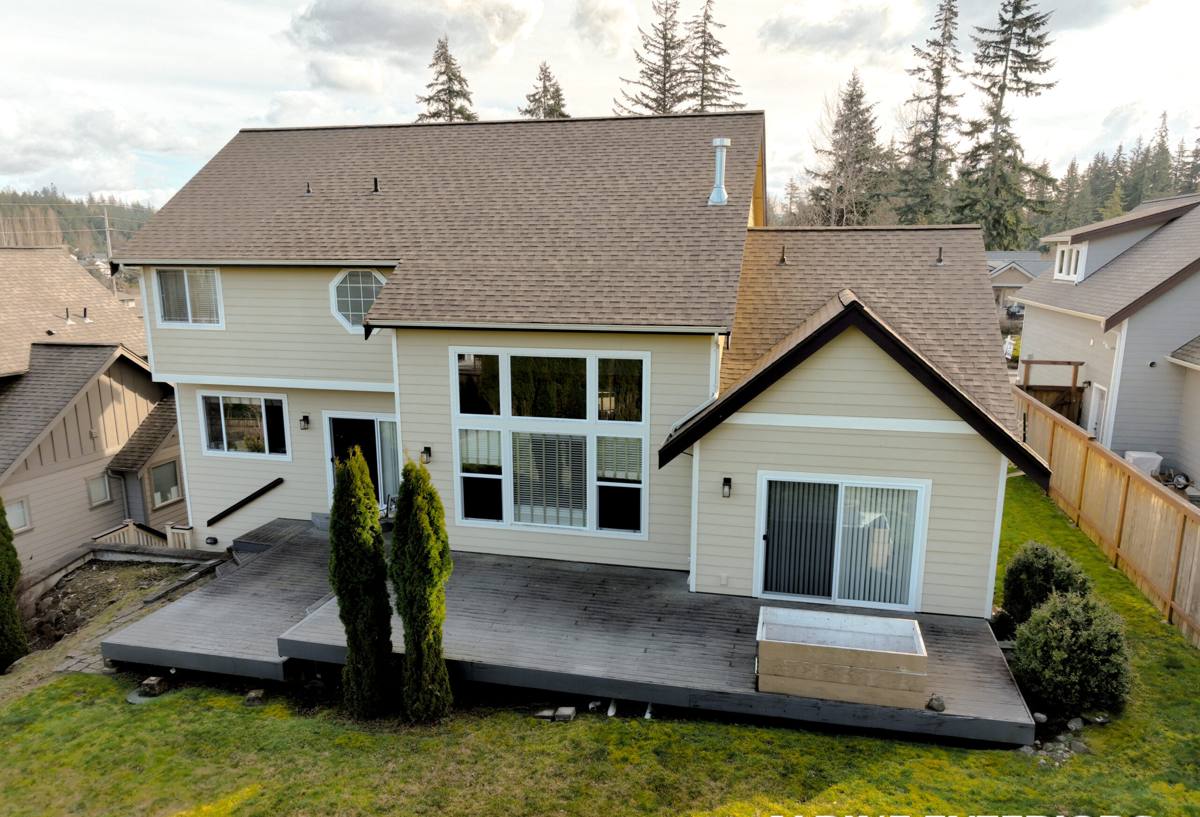
Why Sunnyland Homes Have Their Own Window Challenges
Sunnyland is a mixed, established residential neighborhood — a lot of the housing stock includes older single-family homes with original or aging window openings that were built to different standards than what's available today. That matters more than most homeowners expect. An older opening may have settled slightly, may have wood framing that's absorbed decades of moisture, or may not match the rough opening sizes that off-the-shelf replacement windows are built to. That's where "custom" stops being a marketing word and starts being a practical necessity: the window has to be built to fit the opening that's actually there, not the other way around.
We also see a fair amount of siding and trim work tied to window replacement in this area, since moisture problems around an old window frequently extend into the wall assembly around it. A window quote that doesn't account for what's happening behind the trim isn't a complete quote.
What Moss Season Does to a Window Opening
Moss doesn't just grow on roofs. In shaded parts of a yard, or on the north and west-facing sides of a house, it creeps onto sills, trim, and even into gaps around older frames. Once moss and the moisture it holds get established against wood trim, that trim stays wet far longer after every rain than exposed, sun-dried wood would. Over a moss season or two, that's enough to start softening paint and priming trim for rot — a slow process that's easy to miss until a window won't close flush anymore.
What "Custom" Actually Means for Window Replacement
"Custom windows" gets used loosely in this trade, so it's worth being specific about what it means on a Sunnyland job:
- Exact-fit sizing — measured to the real opening, not a standard stock size, especially important in older homes where openings are rarely perfectly square anymore.
- Frame material matched to exposure — a window on a rain-exposed west wall doesn't need the same spec as one tucked under a deep eave.
- Glazing package chosen for the room — a bedroom that gets brutal afternoon sun needs different glass performance than a shaded north-facing hallway window.
- Trim and casing that match the house — so the replacement doesn't look like an obvious retrofit from the street or from inside.
Custom doesn't have to mean expensive across the board. It means the window and the installation are specified for that exact opening and that exact wall's exposure, instead of installing whatever's fastest to order.
Frame Material Comparison
There's no single "best" frame material for every house — it depends on exposure, budget, and how the rest of the home is finished. Here's how the common options actually compare for a marine climate like ours:
| Frame Material | Moisture Behavior | Maintenance | Typical Lifespan |
|---|---|---|---|
| Vinyl | Won't rot; can flex slightly in temperature swings | Low — occasional cleaning | 20–30 years |
| Fiberglass | Very stable, resists moisture and expansion well | Low | 30-plus years |
| Wood-clad | Good if the cladding and seals stay intact; core wood is vulnerable if water gets behind cladding | Moderate to high — watch cladding seams | 20–25 years with upkeep |
| Aluminum | Durable but conducts cold and can condensate more in our damp winters | Low | 25-plus years |
For most Sunnyland homes taking direct weather on one or more sides, we lean toward vinyl or fiberglass for straightforward, low-maintenance performance. Wood-clad can still be the right call on a home where matching original trim details matters more than minimizing upkeep — that's a conversation, not a default.
What a Correct Installation Involves
The window itself is maybe half the job. The other half — the part that determines whether it's still performing well in fifteen years — is how it's installed.
Before the New Window Goes In
- Old window and any damaged trim removed carefully to expose the full opening.
- Framing and sill checked for soft wood, staining, or existing rot — not just glanced at.
- Any compromised framing repaired or replaced before anything new is installed over it.
Sealing and Flashing
- Proper flashing at the sill and head so water is directed out and away from the wall cavity, not trapped behind the new window.
- Weather-resistant barrier integrated correctly with the flashing, not just caulked over gaps.
- Insulation around the frame that fills the gap without over-compressing, which can distort the frame and cause air leaks.
Finishing
- Exterior caulking and trim sealed with products rated for constant damp exposure, not just general-purpose caulk.
- Interior trim reinstalled or replaced to match the home.
- Operation checked — smooth open/close, tight seal, no binding.
Skip the flashing step, or rush the sealing, and a brand-new window can leak within a couple of rainy seasons — sometimes worse than the old one, because the failure is hidden behind new trim.
Our Process From Estimate to Final Walkthrough
- Free on-site estimate. We look at each opening individually — condition of the framing, exposure, and what's driving the need for replacement (drafts, fogged glass, visible rot, or just an update).
- Honest scope and pricing. If we find moisture damage behind a trim board during the estimate, we tell you before it becomes a surprise mid-project.
- Material selection. We walk through frame and glazing options based on that wall's actual exposure, not a one-size answer.
- Installation. Removal, framing check and repair as needed, flashing, insulation, and finish trim — done in the order that keeps water out.
- Final walkthrough. We check operation on every window and go over care basics before we consider the job done.
Signs Your Windows Need a Closer Look
Not every window issue means full replacement, but these are worth a professional look, especially in an older Sunnyland home:
- Fogging or moisture between panes of double-glazed glass — the seal has failed.
- Visible soft or discolored wood on the sill or lower frame.
- Drafts you can feel with the window fully closed and latched.
- Windows that stick, won't latch fully, or have gotten harder to open over the years.
- Paint that keeps bubbling or peeling on the frame despite repainting.
- Moss or persistent green staining building up on the sill or trim.
- Noticeably higher heating bills with no other obvious cause.
Why a Crew That Already Works Sunnyland Matters
A crew that's worked this neighborhood knows the general age and construction of the housing stock, has a feel for which walls take the worst weather, and isn't guessing at how local moisture and moss patterns affect an install. That familiarity shows up in small but real ways — knowing to check certain framing details more closely on an older home, or specifying trim and sealants that hold up to what this specific stretch of Whatcom County throws at a house year-round. It also means someone local to call if a question comes up after the work is done, rather than chasing down a crew that was only in the area for one job.
Keeping New Windows Performing Long-Term
A correctly installed custom window shouldn't need much from you, but a little seasonal attention goes a long way in this climate:
- Clear moss and debris off sills before it has a chance to sit wet against the trim.
- Check exterior caulk lines once a year, particularly after a hard winter, and touch up any cracking.
- Wipe down tracks and hardware occasionally so vinyl and fiberglass frames keep operating smoothly.
- Keep gutters and downspouts clear nearby, since overflow is a common source of water landing right where you don't want it — against the window trim.
If you're weighing whether it's time to replace windows on a Sunnyland home, or you just want a straight answer about what's causing drafts or fogged glass, we're happy to take a look. The estimate is free, there's no pressure, and you'll get a clear picture of what your home actually needs — use the form below to get started.