 Bellingham Siding
 Why Birch Bay Decks Wear Out Differently Than Decks Inland
Birch Bay sits right on the water, and that changes what a deck goes through year after year compared to a deck a few miles inland in Bellingham proper. Salt-laden air corrodes fasteners, hinges, and any exposed metal faster than fresh-air exposure does. Wind-driven rain off the bay doesn't fall straight down — it gets pushed sideways into ledger boards, stair stringers, and railing posts, finding gaps that a calmer climate would never expose. And the long, wet Whatcom County shoulder seasons mean moss and algae get a head start on any horizontal surface that doesn't drain and dry quickly.
None of that means a deck can't last in Birch Bay. It means the deck has to be built for those specific conditions, not just built to a generic code minimum. A deck that would perform fine in a drier part of the state can fail early here — usually at the connections, not the decking itself.
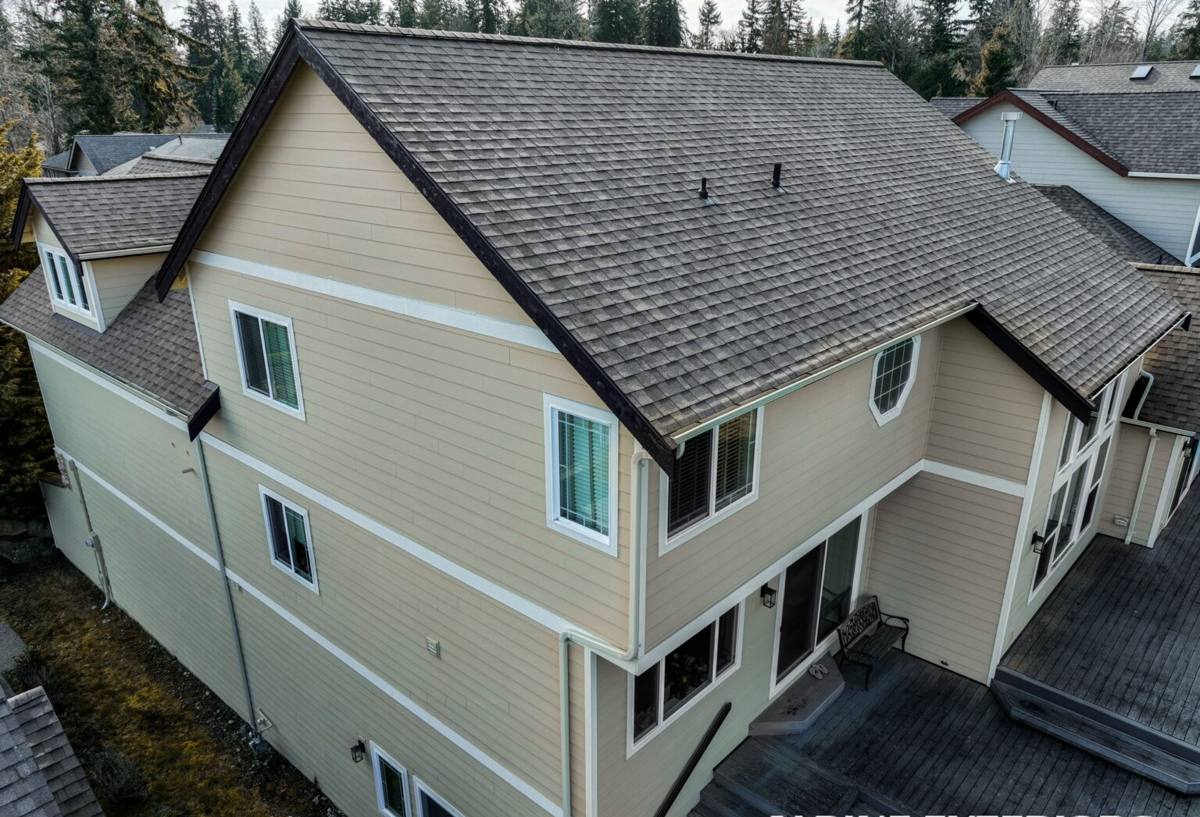
Signs a Birch Bay Deck Has Reached the End of Its Life
Homeowners often ask whether a deck needs full replacement or just repair. A few boards, a wobbly rail, or a soft spot here and there can sometimes be fixed. But once the damage reaches certain points, patching becomes a short-term fix on a structure that's already compromised underneath.
- Soft, spongy, or spring-loaded decking when you walk across it, especially near the house
- Rust streaking or crumbling around joist hangers and fastener heads
- The ledger board (where the deck attaches to the house) shows staining, gaps, or soft wood
- Posts or footings that have shifted, rocked, or sunk
- Persistent green or black growth on decking that comes back within weeks of cleaning
- Railings that flex noticeably when leaned on
- Visible daylight or separation where the deck meets the house siding
Any one of these can sometimes be a spot repair. Several of them together, especially anything involving the ledger or footings, usually means the structure has aged out and a full replacement is the honest recommendation.
What a Correct Deck Replacement Actually Involves
Structural Framing and Ledger Attachment
The ledger board is the single most important connection on most decks — it's what ties the deck to the house, and it's also the part that takes the worst of the wind-driven rain in a place like Birch Bay. A correct install uses proper flashing behind and over the ledger so water sheds away from the house framing instead of soaking into it, plus structural fasteners rated for the load, not just nails. This is also where a deck attached without adequate flashing tends to cause hidden rot in the house's own rim joist, which is a much more expensive problem than the deck itself.
Footings and Posts
Footings need to be sized and set below frost depth and on stable soil, which can vary block to block along the coast depending on how sandy or saturated the ground is. Posts should sit on standoff hardware that keeps the wood end grain off standing water, since end grain is where rot starts fastest.
Fasteners and Hardware
This is where salt air does the most damage if it's overlooked. Standard fasteners and connectors corrode faster in a coastal environment, so hardware rated for salt or coastal exposure — stainless steel or heavy-duty coated connectors — belongs on any deck built to actually last near Birch Bay's shoreline, not just on paper.
Railings and Guards
Railings take direct wind load off the water and need to be secured to the framing, not just screwed to the decking surface. Baluster spacing and railing height also need to meet current code, which is worth checking even on a like-for-like replacement since requirements have tightened over the years.
Choosing a Decking Material for a Coastal, Moss-Prone Climate
There's no single "best" decking material — there's a best material for a given homeowner's budget, maintenance appetite, and how close the deck sits to salt spray. Here's how the common options actually perform in Birch Bay's conditions.
| Material | Coastal & Moisture Performance | Maintenance | Typical Lifespan |
|---|---|---|---|
| Pressure-treated wood | Decent if sealed regularly; end cuts and fastener holes are vulnerable points for moisture entry | Annual cleaning, periodic re-sealing or staining | 10–15 years with upkeep |
| Cedar | Naturally moisture- and insect-resistant, but still needs finish protection against algae and graying | Regular cleaning, occasional refinishing | 15–20 years with upkeep |
| Composite decking | Resists moss and moisture well; won't rot, but can still get slick with algae film if not cleaned | Periodic washing, no staining or sealing needed | 25–30 years, manufacturer-dependent |
| PVC/capped polymer | Best moisture resistance of the group; fully sheds water and resists staining | Occasional washing only | 25–30+ years |
We don't push one material on every homeowner. A wood deck with the right sealing schedule can be the right call for a budget-conscious replacement, while a composite or PVC deck makes more sense for homeowners who want to spend less time maintaining a surface that sits a stone's throw from the bay. The trade-off with low-maintenance materials is mainly upfront cost, and with wood it's the ongoing time commitment — we'll walk through both honestly before you decide.
Our Deck Replacement Process
- On-site assessment. We look at the existing deck's framing, ledger, footings, and any rot or hardware corrosion before quoting anything, so the estimate reflects what's actually there.
- Scope and material walkthrough. We talk through decking material, railing style, and any structural repairs needed to the house connection, with straightforward pricing for each option.
- Permitting, if required. Whatcom County has permit thresholds based on deck height and attachment; we handle figuring out what applies rather than leaving it on the homeowner.
- Demolition and disposal. The old deck comes out, including hardware and any compromised ledger material, and debris is hauled off site.
- Framing and structural work. New footings, posts, joists, and ledger flashing go in to current code, sized for the deck's actual use — furniture, hot tub, gatherings, whatever the homeowner has planned.
- Decking, railings, and stairs. The chosen surface material and railing system go on, with attention to drainage gaps and fastener placement so water keeps moving instead of pooling.
- Final walkthrough. We check the deck with the homeowner before calling it finished, not just leave a punch list unresolved.
What Drives Deck Replacement Cost
Every deck is different, so we won't put a fake number on a page — but these are the factors that actually move the price up or down, and it's worth understanding them before you get a quote from anyone.
| Factor | Why It Matters |
|---|---|
| Deck size and shape | Square footage and the number of angles or level changes both add labor and material |
| Decking material | Composite and PVC cost more upfront than pressure-treated wood but need far less long-term maintenance |
| Height and stairs | A raised deck needs taller posts, more bracing, and often a stair system, all of which add cost |
| Railing style | Cable, glass, and composite railings cost more than standard wood or metal balusters |
| Old deck removal | Demo and disposal of the existing structure is part of most replacement quotes |
| Ledger and structural repair | If the house-side connection or rim joist has hidden rot, that repair adds to the scope |
| Permit requirements | Permitted work adds inspection steps and fees but protects the homeowner long-term |
Keeping a New Deck Ahead of the Moss and Salt
A well-built deck still needs some seasonal attention in this climate. A little maintenance goes a lot further than waiting until a problem shows up.
- Sweep leaves and debris off the deck regularly, especially in fall, so damp organic material doesn't sit against the boards
- Rinse off salt spray and grime a few times a year if the deck faces the water directly
- Check railing posts and stair connections annually for looseness or corrosion at the hardware
- Clean any moss or algae film promptly, before it gets a foothold and becomes slippery or stains the surface
- Keep gutters and downspouts near the deck clear so runoff isn't dumping extra water onto or under it
- For wood decks, plan on re-sealing or staining on the schedule the product calls for, not just when it looks faded
Why It Matters That We Already Work in Birch Bay
A crew that mostly builds decks in drier, inland conditions can still do fine work, but they're often learning the coastal lessons on your project instead of bringing them in already. Working regularly in Birch Bay and the wider Bellingham area means we already know which hardware holds up against salt exposure, how the local moss season behaves, and what Whatcom County's permitting process actually requires for deck work — so there are fewer surprises mid-project and fewer callbacks after.
It also means we're not a stranger if something needs a look a year or two down the road. Local reputation is earned by decks that are still solid the fifth winter, not just the first.
Get a Straightforward Estimate
If your deck is showing its age, feels unstable, or you're just planning ahead before the next wet season sets in, we're happy to take a look and give you an honest read on repair versus replacement. Use the form below to request a free, no-pressure estimate for your Birch Bay property.