 Bellingham Siding
 Why Windows Take a Beating in Happy Valley
Happy Valley sits close enough to Bellingham Bay that salt-laden air is a constant, even if you can't always smell it. Combine that with the wind-driven rain that comes off the Sound through fall and winter, and you've got a neighborhood where window hardware, seals, and frame finishes work harder than they would twenty or thirty miles inland. Add the tree cover that makes so many Happy Valley streets and yards shady and green, and you also get long stretches of damp, low-light conditions that are perfect for moss and mildew to take hold on sills and exterior trim.
None of that is a reason to panic about your windows. It's a reason to be specific about what "energy-efficient" needs to mean here, rather than just going with whatever a big-box catalog calls efficient somewhere else in the country.
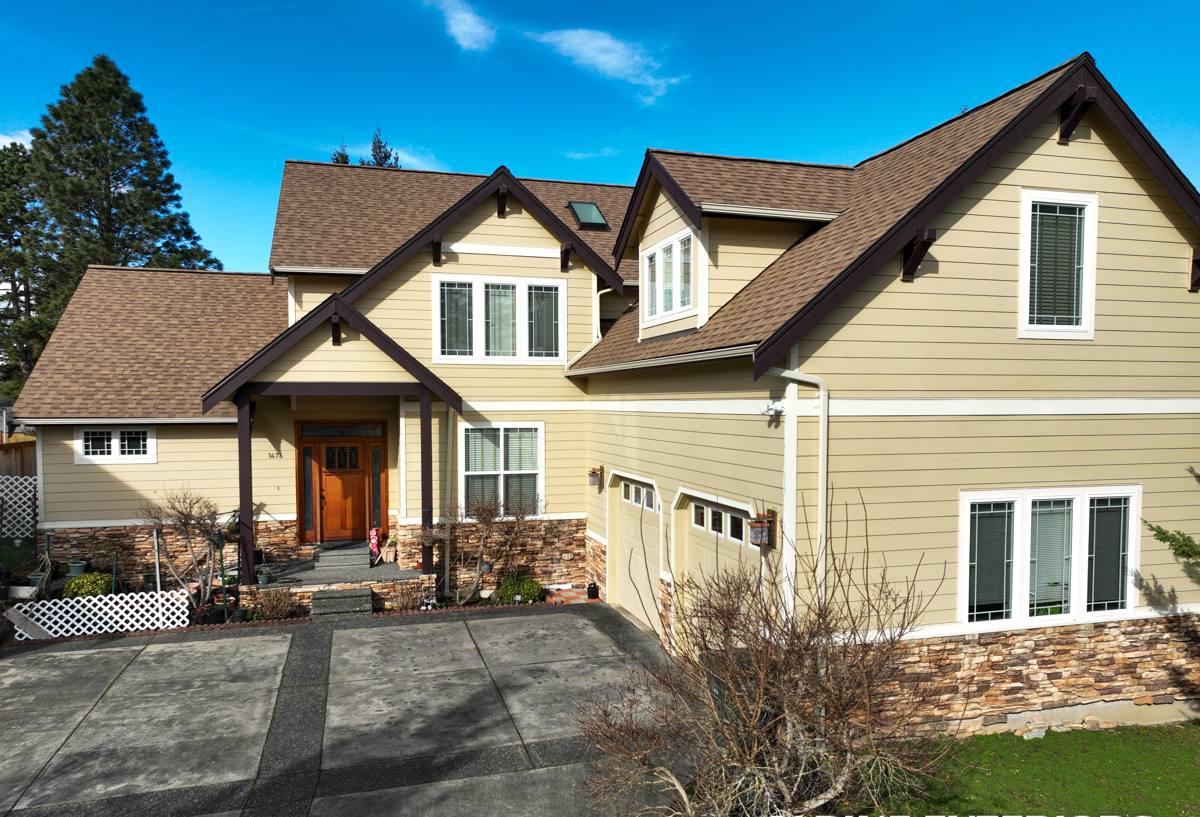
What Energy-Efficient Actually Means in This Climate
In a marine climate like Whatcom County's, the biggest energy losses in most older homes aren't dramatic — they're steady. Single-pane or early-generation dual-pane windows let heat bleed out all winter, let cold radiate off the glass into the room (that's why you feel a chill sitting near an old window even with the heat on), and let moist outside air work into gaps around the frame. Over years, that moisture is what causes the fogging, soft wood, and stuck sashes we see constantly on service calls in this area.
A genuinely efficient window for Happy Valley needs to do three things well:
- Keep conditioned air in and outside moisture out, even during weeks of sustained rain
- Resist wind-driven water intrusion at the frame and sill, not just at the glass
- Hold up to salt air without pitting hardware, chalking finishes, or corroding fasteners
A window can have great glass specs on paper and still fail here if the installation doesn't address water management. We treat the flashing and sealing details as seriously as the glass package — more on that below.
Signs It's Time to Look at Replacement
Most homeowners don't wake up and decide to replace windows out of nowhere — something tips them off. In Happy Valley, these are the tells we hear about most:
- Fogging or a hazy film between the panes (the seal has failed and the gas fill is gone)
- Visible condensation on the inside of the glass on cold mornings, even with normal ventilation
- A noticeable draft when you hold your hand near the frame on a windy day
- Sashes that stick, won't stay up, or are painted shut
- Soft, discolored, or spongy wood at the sill or bottom corners of the frame
- Rising heating bills that don't match any other change in the house
- Visible moss or dark streaking on exterior trim around the window opening
Any one of these on its own might just mean a tune-up or re-caulk. Several together, especially on windows over 20 years old, usually mean the assembly itself has reached the end of its useful life.
Frame Materials: What Actually Holds Up Here
We get asked constantly which frame material is "best." The honest answer is that it depends on your house, your budget, and how much upkeep you want to sign up for — but here's how the common options actually perform in a wet, salt-influenced climate like this one.
| Frame Material | Moisture Behavior | Maintenance | Typical Fit |
|---|---|---|---|
| Vinyl | Won't rot or corrode; performs consistently in damp conditions | Low — occasional cleaning | Most Happy Valley homes, best value-to-performance |
| Fiberglass | Excellent stability, minimal expansion/contraction with weather swings | Low | Homes wanting a long-term, low-movement frame; higher upfront cost |
| Wood (clad exterior) | Good if the exterior cladding is intact; interior wood look | Higher — cladding seams and interior finish need monitoring | Homes prioritizing a wood interior appearance |
| Aluminum | Conducts cold and can corrode faster in salt air without proper coatings | Moderate to high near the water | We generally steer clients away from bare aluminum this close to the Bay |
We don't push one material on every job. What we won't do is put an under-protected aluminum frame on a home exposed to salt air and driving rain without a clear conversation about the trade-offs — that's a maintenance headache we'd rather you avoid than sell you into.
Glass Packages: U-Factor and Solar Heat Gain Explained Simply
Two numbers matter most on any efficient window quote:
- U-factor — how well the window resists heat loss. Lower is better. This is the number that matters most for winter heating bills in this climate.
- SHGC (Solar Heat Gain Coefficient) — how much solar heat passes through the glass. In a mostly overcast, tree-shaded climate like Happy Valley's, we don't chase ultra-low SHGC the way a contractor in a sunny, hot climate would — you actually want to keep some solar gain on south- and west-facing rooms to offset heating costs.
Double-pane, low-E glass with argon fill is the practical baseline we recommend for most Happy Valley homes — it balances cost against real-world performance in our weather. Triple-pane is worth discussing for north-facing rooms, homes near busier roads (added sound dampening), or homeowners specifically chasing the lowest possible heating bills, but it's a bigger investment and not always the right call for every room in the house.
Our Installation Process
The glass and frame only account for part of a window's real-world performance. Installation quality — especially water management — is what determines whether that performance holds up through a Whatcom County winter. Our process on Happy Valley jobs:
- Assessment: We check the existing rough opening, sheathing, and framing for hidden moisture damage before quoting a firm price — this is common enough in older homes here that we don't skip it.
- Removal: Old windows and any compromised trim or sill material come out carefully to avoid damaging surrounding siding.
- Flashing and weatherproofing: Proper flashing tape and sill pans are installed to direct any water that gets behind the cladding back out, not into the wall cavity. This step matters more here than in drier climates — it's the single biggest factor in whether a window stays watertight through years of driving rain.
- Setting and shimming: The new window is set plumb, level, and square, then shimmed and fastened per manufacturer spec — a crooked install stresses seals and shortens their life.
- Sealing: Interior and exterior sealant is applied at all the right points — not everywhere, which can actually trap moisture instead of releasing it.
- Trim and finish: Interior and exterior trim is finished to match your home, and the work area is cleaned up.
What Drives the Cost
Every home and project is different, but these are the factors that most affect what a Happy Valley window job actually costs:
| Factor | Why It Matters |
|---|---|
| Number and size of windows | Straightforward — more openings and larger glass area increase material and labor |
| Frame material | Vinyl is generally the most budget-friendly; fiberglass and clad wood cost more upfront |
| Glass package | Standard low-E double-pane vs. triple-pane changes the per-window price meaningfully |
| Hidden damage | Rot or moisture damage found at the rough opening adds repair work before the new window can go in |
| Access and site conditions | Second-story windows, tight side yards, or landscaping close to the house can add time |
| Trim and finish scope | Matching existing interior trim or upgrading exterior trim adds to the total |
We give straightforward, itemized quotes rather than a single vague number, so you can see exactly what you're paying for and where you have room to adjust the scope if needed.
Why It Matters to Hire a Crew That Already Works This Neighborhood
Happy Valley's mix of home ages, tree cover, and proximity to the Bay means the right window approach for one house isn't always right for the one next door. A crew that regularly works this part of Bellingham has already seen how the local moisture and salt exposure plays out over years — which details of an install actually matter here versus which ones are just marketing on a spec sheet. That local pattern recognition is what keeps a window performing well in year eight, not just on install day.
It also means faster, more accurate quoting. We're not guessing at how Whatcom County's building department handles window replacement permits or what moisture issues tend to show up behind siding on homes of a certain age in this area — we already know, because we've done the work here.
Keeping New Windows Performing Through Moss Season
Even a well-installed, high-quality window benefits from a little seasonal attention in a climate like this:
- Clear debris and moss from sills and drainage weep holes before the heavy fall rains hit
- Rinse salt residue off exterior frames and glass periodically if you're on the western or bay-facing side of your property
- Check exterior caulking annually — UV and constant moisture cycling break it down faster here than in drier regions
- Operate every sash a few times a year, even the ones you rarely open, so hardware doesn't seize up
None of this is heavy maintenance — it's the kind of five-minute-per-window check that adds years to a window's service life in this climate.
If your Happy Valley home has drafty, foggy, or hard-to-operate windows, we're happy to take a look and give you a straightforward, no-pressure estimate — including an honest read on whether you need full replacement or just targeted repairs. Use the form below to get started.