 Bellingham Siding
 Board & Batten Siding in Ferndale
Board and batten has become one of the most requested looks for homes in Ferndale — the vertical lines read as clean and modern on newer builds, and they sit naturally alongside the barns, farmhouses, and craftsman homes scattered through Whatcom County. But the look is only half the job. Ferndale sits close enough to the coast that homes take on salt-laden air, and the same marine weather pattern that waters Whatcom County's dairy land also means long stretches of driving rain and a moss season that can run most of the year on shaded, north-facing walls. Vertical board and batten has more seams and more exposed batten edges than lap siding, so how it's built and installed determines whether it holds up here or becomes a five-year maintenance headache.
This page covers what board and batten needs to survive Ferndale's climate, what correct installation actually involves, and why we install it in exactly one material system.
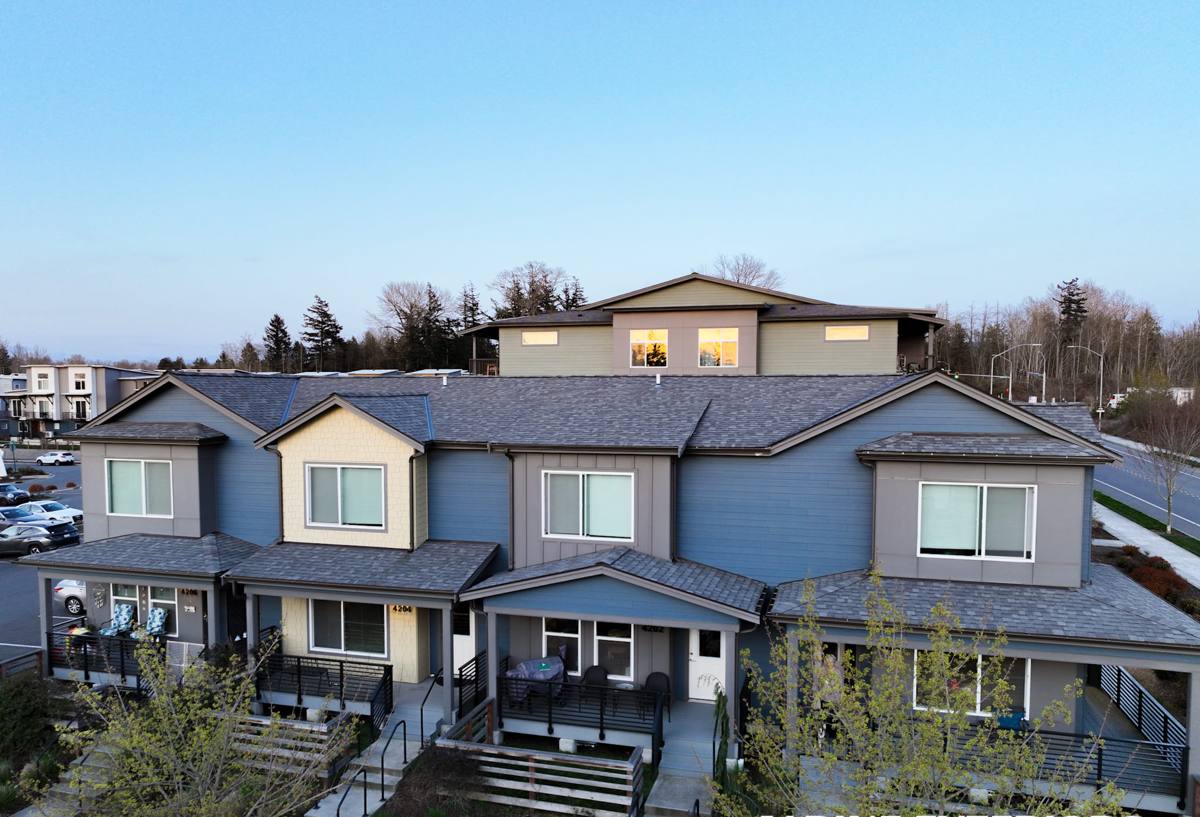
What Ferndale's Climate Does to Vertical Siding
Board and batten's vertical battens create more butt joints and more places for water to find a way behind the cladding than a horizontal lap profile does. In a climate this wet, that detail matters more than the style choice itself.
Salt Air
Homes closer to Bellingham Bay and the Strait of Georgia pick up airborne salt that accelerates corrosion on fasteners, flashing, and any metal trim. Cheap or under-spec'd nails and staples corrode faster near the coast, and a rusting fastener head is one of the most common early failure points we see on board and batten walls in this area.
Driving Rain
Whatcom County doesn't get the sheer rainfall totals of some Pacific Northwest spots, but wind-driven rain off the water pushes moisture sideways into vertical seams and batten edges. Any board and batten system without a real drainage plane behind it will eventually let water track down behind the boards and sit against the sheathing.
Moss and Sustained Dampness
North- and west-facing walls under tree cover stay damp for days at a time through fall and winter. Moss and algae take hold fastest on porous, absorbent siding materials and on any spot where water isn't shedding cleanly off the battens. Left alone, sustained dampness under moss growth is what eventually rots wood-based products and delaminates weaker composites.
Why We Only Install James Hardie Board & Batten
We get asked to bid board and batten in LP SmartSide, in vinyl panel systems, and occasionally in primed spruce or cedar board and batten. We don't install any of them, and we'd rather explain why than dodge the question.
LP SmartSide is an engineered wood product — it has a real fan base and performs reasonably well in drier climates. But it's still wood at its core, sealed with a resin-treated surface, and any cut edge, nail hole, or seam that isn't perfectly sealed becomes a path for moisture to reach the wood substrate. In a climate with Ferndale's sustained dampness and moss exposure, that's a maintenance burden we don't want to hand a homeowner. Vinyl board and batten is affordable and low-maintenance in one sense, but it's a thin plastic panel that expands and contracts with temperature, can crack in impacts, and simply can't deliver the crisp, deep shadow lines that make board and batten look good in the first place. Painted wood — cedar or spruce — looks great the day it goes up and then starts a repainting and caulking cycle almost immediately in this weather.
James Hardie fiber cement is non-combustible, doesn't absorb water the way wood-based products do, and holds its shape and paint line for decades when installed correctly. It's also factory-finished with ColorPlus technology, so the color is baked on rather than field-painted, which matters a lot on a profile with this many exposed batten edges. That combination — moisture resistance, dimensional stability, and a finish that doesn't need repainting every few years — is why it's the only board and batten system we put on a Ferndale home.
What a Correct Board & Batten Job Involves
Board and batten fails less often because of the material and more often because of how it's put on the wall. The visible battens are the easy part; the water management behind them is where jobs succeed or fail.
- Weather-resistive barrier: A continuous, properly lapped water-resistive barrier behind the siding, with all penetrations sealed.
- Drainage plane: A rainscreen gap or furring strips behind the panel and battens so any water that does get past the surface can drain and the wall can dry out rather than trap moisture.
- Flashing at every horizontal break: Window heads, doors, roof-to-wall intersections, and any horizontal trim need metal flashing, not just caulk, to shed water forward and away from the sheathing.
- Correct fastener spec: Corrosion-resistant, hot-dip galvanized or stainless fasteners driven per Hardie's fastening schedule — undersized or wrong-material fasteners are a leading cause of streaking and early failure near the coast.
- Batten spacing and fastening: Battens fastened into structural framing wherever possible, with consistent spacing that lines up with panel joints and window/door trim.
- Sealed panel joints: Manufacturer-approved sealant at joints, with enough clearance for the material to move seasonally without cracking the seal.
Skip any one of these and the finished wall can look identical to a correctly built one for the first year or two — the difference shows up later, in the form of moisture staining, soft spots, or paint failure at the seams.
Comparing Board & Batten Material Options
| Material | Moisture Behavior in Wet Climates | Finish | Typical Lifespan |
|---|---|---|---|
| James Hardie fiber cement | Doesn't absorb and swell like wood; holds shape when installed with proper drainage | Factory ColorPlus finish, does not require repainting on the standard schedule | Multi-decade with a strong transferable warranty |
| LP SmartSide (engineered wood) | Resin-treated but wood-based; vulnerable at cut edges, seams, and fastener holes | Factory-primed or pre-finished; still wood underneath | Shorter than fiber cement in sustained-damp climates |
| Vinyl board and batten panel | Doesn't absorb water but traps moisture behind it if installed tight; expands/contracts with temperature | Color molded through, fades over time, cannot be repainted easily | Moderate; prone to cracking and warping |
| Painted cedar or primed spruce | Natural wood; absorbs moisture readily, especially at cut battens and end grain | Field-painted, needs recoating and recaulking on a recurring cycle | Shortest without aggressive, ongoing maintenance |
Our Process on a Ferndale Board & Batten Job
Assessment and Measure
We walk the exterior, check the current wall assembly, look at drainage and grading around the foundation, and identify any areas with existing moss, staining, or soft siding that point to trapped moisture.
Tear-Off and Sheathing Check
Old siding comes off and we inspect the sheathing underneath. Any rot, soft spots, or water damage gets addressed before anything new goes up — covering a wet wall with new siding just hides the problem.
Water-Resistive Barrier and Drainage Plane
We install a continuous weather barrier and furring or rainscreen system so the wall can drain and dry, which matters more here than in drier parts of the state.
Flashing, Trim, and Panel Installation
Flashing goes in at every window, door, and horizontal transition first, then the Hardie panels and battens go up per the manufacturer's fastening and spacing specs.
Final Inspection
We walk the finished job checking seams, fastener lines, caulk joints, and flashing details before calling it done.
Signs Your Ferndale Home's Siding Needs Attention
- Persistent moss or algae growth that returns within weeks of cleaning, especially on shaded walls
- Soft or spongy spots when you press on the siding, particularly near the bottom edge or around windows
- Paint that's peeling, bubbling, or chalking faster than expected
- Visible gaps, warping, or cupping at board and batten seams
- Rust streaks running down from fastener heads or trim
- Rising energy bills that suggest the wall assembly isn't insulating or sealing the way it should
Why a Crew That Already Works Ferndale Matters
Board and batten in a coastal-influenced climate isn't a "read the install manual and go" job. A crew that's worked walls throughout Whatcom County knows which sides of a Ferndale home take the worst wind-driven rain, where moss builds up fastest, and how much drainage detail to build in on a shaded, damp elevation versus a sun-exposed one. That local pattern recognition is what keeps a board and batten wall performing for decades instead of needing rework in year six. It also means we're not learning the local permitting and inspection process on your job — we already know it.
Caring for Board & Batten After Installation
James Hardie board and batten is low-maintenance, not no-maintenance. A yearly rinse to keep moss and organic buildup from taking hold, especially on shaded walls, keeps the finish looking right. Keep an eye on caulked joints and touch up if you ever see separation, and keep gutters and downspouts clear so water isn't sheeting down the wall face. Beyond that, there's no repainting cycle to manage — the factory finish is built to hold up on its own.
If you're weighing board and batten for a home in Ferndale or elsewhere in Whatcom County, we're happy to walk the property, look at your current siding and wall condition, and put together a straightforward, no-pressure estimate. Use the form below to get started.