 Bellingham Siding
 Why Ferndale's Climate Puts Extra Demands on a Roof
Ferndale sits close enough to the water that salt-laden air is a daily fact of life, not an occasional nuisance. Add Whatcom County's long stretch of driving rain and the moss season that follows it, and a roof here works harder than the same roof would twenty miles inland. Metal roofing can handle all of it — but only when the system, the fasteners, and the installation details are matched to this specific combination of moisture and salt exposure. A roof that's correct for a dry inland climate is not automatically correct for Ferndale.
This page covers what that actually means in practice: material choice, installation details, what our process looks like, and what ongoing care a metal roof needs once it's on your home.
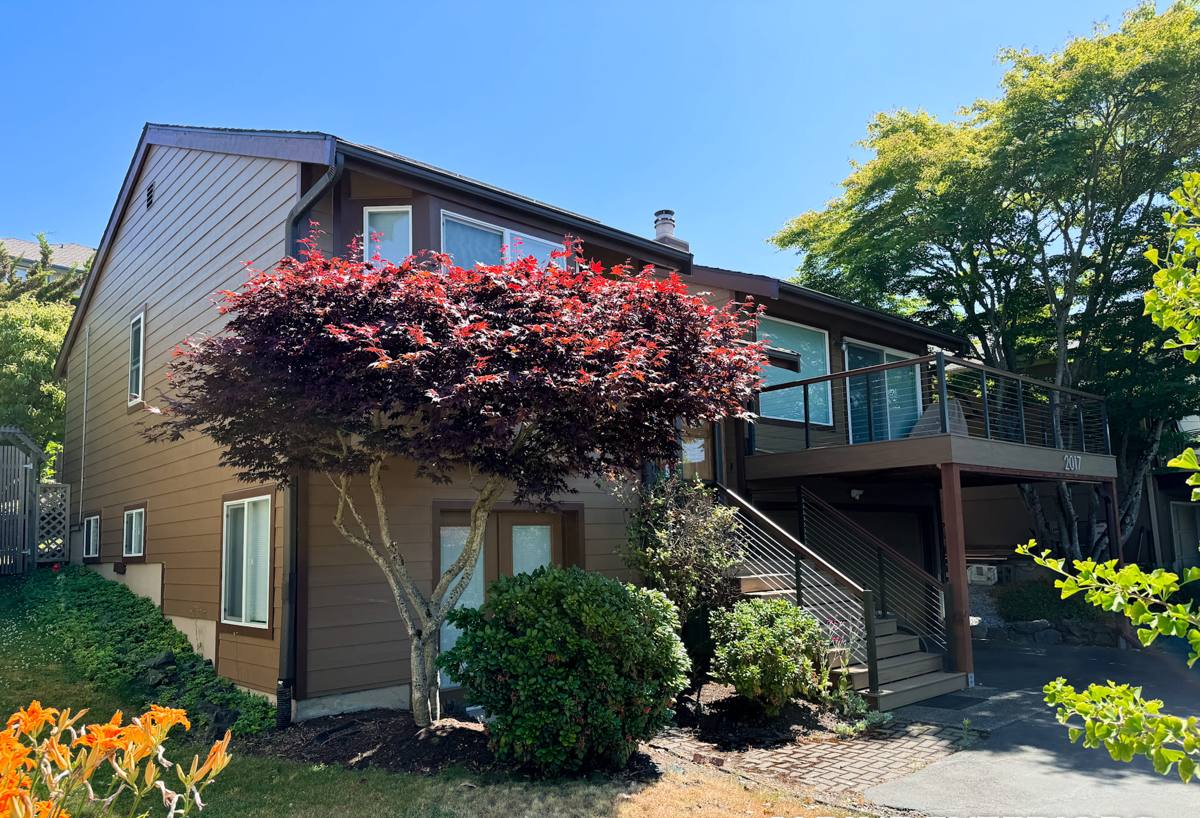
What Salt Air and Moss Season Do to a Roof Over Time
Salt air accelerates corrosion on any metal that isn't properly coated or isn't naturally resistant to it. On a roof, that shows up first at cut edges, fastener heads, and any spot where the protective coating has been scratched or worn thin. It's slow, and it's easy to ignore for years — until it isn't.
Moss is the other half of the equation. Whatcom County's damp, mild winters are ideal moss-growing conditions, and moss doesn't need much of a foothold — a north-facing slope, a shaded valley, or a spot where debris collects is enough. On asphalt shingles, moss lifts the mat and holds moisture against it. On a properly installed metal roof, moss has almost nothing to grip, which is one of the real advantages of the material in this climate — but only if the panels, seams, and underlayment are installed tight enough that moss and organic debris can't work their way into a seam or fastener penetration.
Driving rain adds a third factor: wind-blown rain doesn't fall straight down, it gets pushed sideways and upward under laps, around penetrations, and into any gap that a calmer climate's roofing standards would consider "good enough." Ferndale's exposure means laps, flashing, and underlayment all need to be sized and installed for wind-driven moisture, not just gravity drainage.
What a Correct Metal Roof Installation Actually Involves
Underlayment and Moisture Barriers
Metal panels are the visible layer, but the underlayment is what actually keeps a home dry if wind-driven rain gets past a seam or a fastener works loose over time. In a coastal-exposure climate like Ferndale's, we use a synthetic or self-adhered underlayment rated for the panel system and the roof's pitch, with extra attention at eaves, valleys, and any low-slope transition where water sits longer before it drains.
Fastening and Panel Systems
Metal roofing comes in two broad fastening approaches, and the difference matters a lot in this climate. Exposed-fastener panels are fastened directly through the face of the panel with gasketed screws; concealed-fastener (standing seam) panels are clipped and locked together with no fasteners penetrating the panel face at all. Exposed fasteners are a lower-cost option, but every one of those screw penetrations is a maintenance point that has to be checked and eventually re-sealed as gaskets age — a real consideration when salt air is accelerating that wear. Standing seam has no field penetrations to fail, which is a meaningful advantage for a house exposed to salt air and driving rain, though it costs more up front.
Flashing, Valleys, and Penetrations
Most roof leaks don't happen in the open field of the roof — they happen at transitions: valleys, chimneys, vent pipes, skylights, and wall intersections. Metal flashing at these points has to be formed to shed water correctly and lapped in the right order (upper pieces over lower ones, always) so wind-driven rain can't work its way underneath. This is also where corrosion-compatible metals matter — mixing incompatible metals at a flashing detail can set up galvanic corrosion that eats through the thinner piece over time, which is a bigger risk near salt air than it is inland.
Choosing the Right Metal Roofing System for Ferndale
There isn't one "best" metal roof for every home — the right choice depends on budget, roof pitch, and how much of the house is exposed to weather off the water. Here's how the common options compare for a coastal Whatcom County property:
| System | Corrosion Resistance | Moss/Debris Resistance | Relative Cost | Best Fit |
|---|---|---|---|---|
| Standing seam (steel or aluminum) | Excellent when properly coated | Excellent — smooth, no exposed fasteners | Higher | Full re-roofs, higher salt exposure, long-term ownership |
| Exposed-fastener steel panels | Good, but fasteners are a maintenance point | Good | Moderate | Outbuildings, budget-conscious re-roofs |
| Stone-coated steel | Good under the coating layer | Moderate — textured surface can trap debris | Moderate-Higher | Homes wanting a shingle or tile look |
| Aluminum panels | Excellent — naturally corrosion-resistant | Excellent | Higher | Properties with the heaviest salt exposure |
Aluminum is worth calling out specifically for homes closest to the water: it doesn't rust the way steel can if a coating is ever compromised, which takes one variable off the table in a salt-air environment. Steel with a quality factory coating still performs well and costs less — the right call depends on how close to the shoreline the home sits and how long you plan to own it.
Panel Gauge and Coating
Thicker gauge steel resists denting from hail and debris better and holds its shape longer. Coating quality matters as much as gauge for corrosion resistance — a well-coated, properly finished panel will outperform a thicker but poorly coated one in salt air. We'll walk through gauge and coating options relevant to your roof during the estimate rather than pushing a single spec on every home.
Our Process for a Ferndale Metal Roof
- On-site assessment. We look at your existing roof deck, ventilation, pitch, and exposure — including how much direct salt air and shade the roof gets — before recommending a system.
- Written estimate. You get a clear scope: panel system, underlayment, flashing details, and what's included, in plain language.
- Deck and underlayment prep. Any soft or damaged decking gets replaced before anything else goes down — panels installed over a bad deck will fail regardless of how good the metal is.
- Panel and flashing installation. Installed to the manufacturer's specifications for our climate, with extra attention at valleys, penetrations, and eaves.
- Final walkthrough. We review the finished roof with you and explain what maintenance, if any, it needs going forward.
What a Metal Roof Costs in Ferndale — and What Drives the Price
Metal roofing costs more up front than asphalt shingles, and the range depends on several factors specific to your roof, not just square footage:
| Cost Factor | Why It Matters |
|---|---|
| Panel system chosen | Standing seam runs higher than exposed-fastener panels due to labor and material |
| Roof complexity | Valleys, dormers, and multiple pitches add flashing work and labor time |
| Tear-off vs. overlay | Removing old roofing adds cost but lets us inspect and repair the deck underneath |
| Underlayment spec | Higher-grade, self-adhered underlayment at eaves and valleys costs more but matters in driving rain |
| Material — steel vs. aluminum | Aluminum's corrosion resistance in salt air comes at a price premium over coated steel |
We give a firm, itemized number during the estimate — not a rough guess — so you know exactly what you're paying for before any work starts.
Maintenance: What Actually Needs Attention
One of the honest advantages of metal roofing in this climate is how little maintenance it needs compared to shingles — but "little" isn't "none." A short seasonal checklist covers what actually matters:
- Clear leaves, needles, and debris from valleys and around penetrations, especially after fall storms
- Check for moss or algae starting on shaded slopes and remove it before it establishes
- Look at exposed fasteners (if your system uses them) for signs of a failing gasket or rust streaking
- Confirm gutters and downspouts are clear so water isn't backing up under the eave edge
- After any major windstorm, do a visual check for lifted or dented panels
None of this requires climbing on the roof yourself — a visual check from the ground or a ladder at the eave is usually enough to catch problems early.
Why Hiring a Crew That Already Works Ferndale Matters
Metal roofing installation isn't forgiving of shortcuts, and a crew that only occasionally works this close to the water can miss details that matter here specifically — the right fastener and flashing metals to avoid galvanic corrosion, underlayment specs sized for wind-driven rain rather than just gravity drainage, and panel systems that actually shed moss instead of collecting it. A crew that regularly works Ferndale and the surrounding Whatcom County coastline has already made the adjustments that a climate like this requires, and knows what local permitting and inspection expects before the first panel goes down.
We're not guessing at what a coastal Washington roof needs — it's the same climate we build for on every job in the area, from Bellingham out through Ferndale and the rest of Whatcom County.
Get a Straight Answer for Your Roof
If you're weighing a metal roof for a Ferndale home, we'll take a look at your existing roof, talk through the system that makes sense for your exposure and budget, and give you a clear, no-pressure estimate — no upsell, no guesswork. Use the form below to get started.