 Bellingham Siding
 Building Decks That Actually Hold Up in Lynden
Lynden sits in northern Whatcom County, a farming and residential community not far from the Canadian border, where the weather is defined less by any single storm and more by how long everything stays damp. Moisture-laden air moves in off the Sound and the Strait and settles across the county for days at a time, and Lynden's mix of open farmland and mature tree cover means decks here deal with driving rain, long stretches of overcast humidity, and a moss season that can run from October well into spring. A deck built without that reality in mind will look fine for a year or two and then start showing problems — cupped boards, soft spots near the house, slick green film on the walking surface — well before it should.
A custom deck built for Lynden isn't just about picking a nice board color. It's about the parts nobody sees once the project is done: how the deck ties into the house, how water is kept moving instead of pooling, and how the structure breathes so it isn't sitting wet against itself all winter.
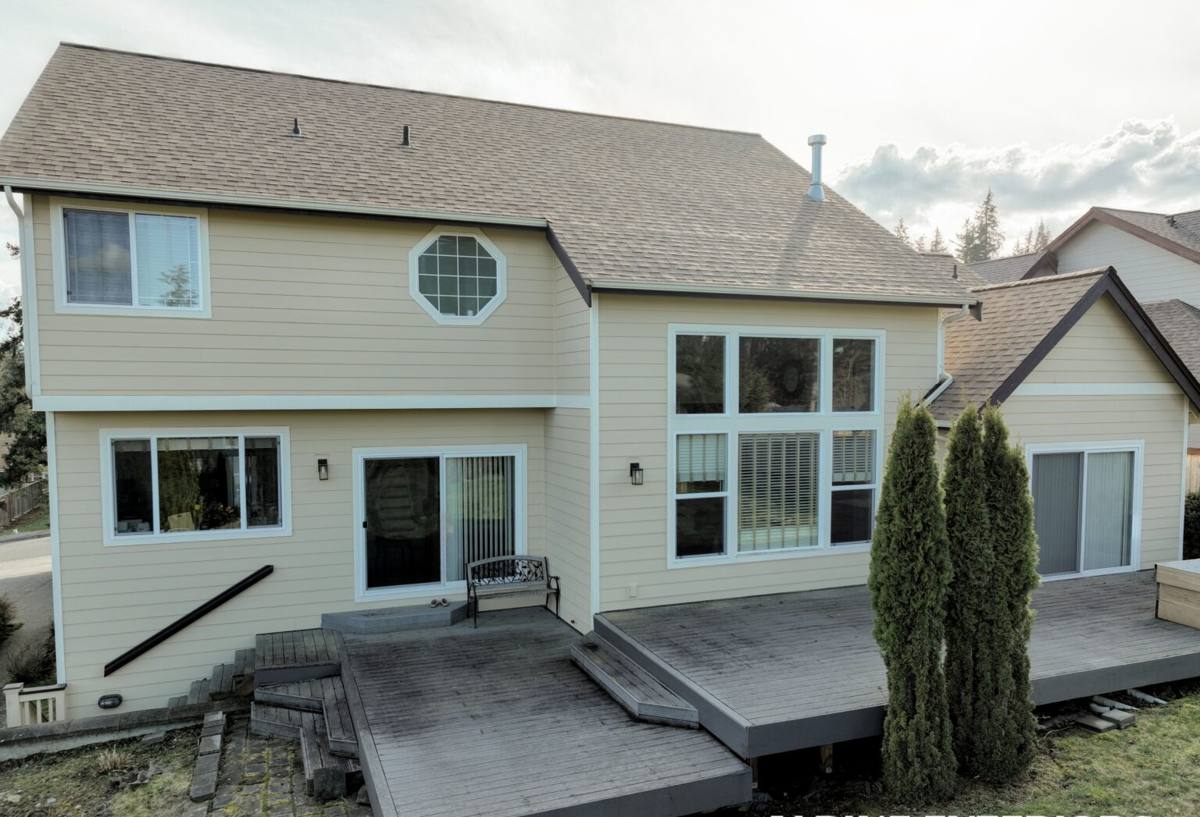
What a Correct Deck Build Has to Account For Here
Every deck we build in this area is designed around a few climate realities that are specific to the Pacific Northwest, not generic to "outdoor construction":
- Sustained moisture, not just rainfall totals — boards and framing spend more time damp than dry for much of the year, so materials and gaps have to be chosen for slow drying, not just occasional wetting.
- Moss and algae growth — shaded areas, north-facing decks, and spots under trees stay wet long enough for organic growth to take hold on the deck surface and framing if airflow and drainage aren't planned for.
- Ledger board vulnerability — where the deck attaches to the house is the single most common failure point on decks in this climate, because water intrusion there is hidden until real rot has set in.
- Freeze-thaw cycling — Whatcom County gets enough cold snaps that footings need to be set to the correct frost depth, not just "deep enough."
- Wind and structural loading — open lots around Lynden can see stronger gusts than a sheltered in-town lot, which matters for railing and guard post attachment.
Where Most Deck Problems Actually Start
In our experience, deck failures almost never start with the decking boards themselves — they start with water getting somewhere it shouldn't and staying there. That's the ledger connection to the house, under-deck framing with no airflow, post bases sitting in standing water, or fasteners that were never rated for exterior, wet-wood contact in the first place. A correct build treats those hidden details as the actual scope of the job, with the visible decking as the last step, not the main event.
Choosing the Right Decking Material for a Lynden Property
There's no single "best" decking material — the right choice depends on how much upkeep a homeowner wants to do, how shaded the site is, and what look fits the house. We walk every Lynden customer through the honest trade-offs rather than pushing one product line.
| Material | Moisture / Moss Behavior | Maintenance | Typical Lifespan |
|---|---|---|---|
| Pressure-treated fir/pine | Absorbs moisture readily; needs good airflow underneath to avoid staying wet | Periodic cleaning and re-staining/sealing | 15–25 years with upkeep |
| Cedar | Naturally moisture- and insect-resistant; still needs sealing to resist graying and moss in shaded spots | Regular cleaning, occasional oil/sealer | 20–30 years with upkeep |
| Tropical hardwood (e.g., ipe) | Very dense, sheds water well; can still grow surface algae in shaded, low-airflow spots | Low, but periodic cleaning and oiling for color retention | 25+ years |
| Composite decking | Doesn't rot, but can develop surface film in constant shade if not cleaned; drainage below still matters | Low — mostly washing, no staining | 25–30+ years |
Composite decking has come a long way, and for a shaded Lynden yard where staining every couple years isn't appealing, it's often the practical choice. But composite isn't maintenance-free in this climate — the underside and gaps still need to be able to drain and dry, or moisture gets trapped against the framing below even if the boards themselves don't rot. Wood decks, done right, remain a strong option for homeowners who want a natural look and are willing to keep up a simple cleaning and sealing schedule. We'll give you our honest read on which fits your specific site rather than defaulting to whatever is easiest to install.
Framing, Fasteners, and Ledger Flashing — the Details That Determine Lifespan
The Ledger Connection
Where the deck attaches to the house needs proper flashing that directs water away from the rim joist and wall sheathing, not just a bead of caulk behind the ledger board. This is the single detail most responsible for decks failing early in wet climates, because the damage happens behind the ledger where nobody sees it until siding or trim starts to show rot.
Joist Spacing and Ventilation
Tighter joist spacing than the minimum code allows reduces board flex and helps with long-term flatness, especially under composite decking, which can be less forgiving of wide spans than solid wood. Just as important is leaving enough clearance and airflow underneath the deck so the framing can actually dry out between rain events instead of staying damp against the ground or foundation.
Fasteners and Hardware
All structural hardware — joist hangers, post bases, ledger bolts — should be rated for exterior, ground-contact-adjacent use, typically stainless steel or a coating rated for modern pressure-treated lumber's chemical makeup. Mixing incompatible metals causes accelerated corrosion, which is a quiet failure point that shows up years later as loose connections.
Board Spacing and Drainage Slope
Correct gapping between boards, along with a slight slope away from the house, keeps water moving off the surface instead of sitting in low spots — those low spots are exactly where moss and algae take hold first.
Permits, Codes, and Site Considerations in Whatcom County
Most custom deck projects attached to a home, or built above a certain height, require a permit through the local building department, with inspections at the footing and framing stages. Footing depth has to meet the frost line requirement for this region, and guard/railing height and baluster spacing follow residential code — these aren't optional details, and skipping them is how homeowners end up with a deck that can't be signed off or insured properly. We handle the permit process and inspections as part of the job so it isn't something the homeowner has to manage on their own.
Lot layout matters too. Many Lynden properties are larger and more open than in-town lots, which can mean longer spans, taller stairs down to grade, or more exposure to wind — all things we account for at the design stage rather than discovering mid-build.
Our Process From Estimate to Finished Deck
1. On-Site Assessment
We look at the house connection point, grade, drainage, sun/shade exposure, and how the deck will actually be used before recommending a material or layout.
2. Design and Material Selection
We walk through the honest trade-offs between wood and composite options for your specific site, and finalize a layout that fits the house and the way you'll use the space.
3. Permitting
We prepare and submit what's needed for the local permit and schedule the required inspections.
4. Site Prep and Footings
Footings are set to the correct frost depth with attention to drainage around each post location.
5. Framing and Ledger Work
This is where the flashing, hardware, and joist layout details described above get built in correctly the first time.
6. Decking, Railing, and Finish
Boards are installed with proper spacing and slope, railings are set to code, and any staining or sealing is completed before we walk the finished deck with you.
Keeping a Lynden Deck Looking Good Year After Year
A well-built deck still needs a small amount of seasonal attention in this climate, especially where moss and standing moisture are concerned:
- Sweep leaves and debris out of board gaps before fall rains set in — trapped organic matter is what feeds moss growth.
- Rinse or lightly scrub shaded areas of the deck surface once or twice a year to keep algae film from building up.
- Check that under-deck airflow paths (skirting vents, gaps) haven't been blocked by stored items or overgrown landscaping.
- Re-stain or re-oil wood decking on the schedule appropriate to the species — don't wait until it's already graying and absorbing water.
- Walk the deck each spring and check for soft spots near the ledger, loose railing posts, or fastener corrosion.
- Keep gutters and downspouts near the deck clear so runoff isn't dumping directly onto or under the structure.
Why Hiring a Crew That Already Works in Lynden Matters
A deck design that works fine in a drier climate can be the wrong call here, and a crew that hasn't built in Whatcom County's rain and moss conditions may not think to account for it. Knowing how local inspectors expect footing depth and ledger flashing to look, understanding which shaded lot conditions in this area tend to grow moss fastest, and having already worked through Lynden's permit process before means fewer surprises and fewer callbacks. It also means we're not guessing at what actually holds up here — we're building to what we've already seen work and seen fail in this specific climate.
If you're planning a custom deck for your Lynden home, we're happy to walk your property, talk through material options honestly, and put together a clear, no-pressure estimate — just fill out the form below to get started.