 Bellingham Siding
 New-Construction Windows in South Hill: Getting the Envelope Right the First Time
South Hill is one of Bellingham's older, more established neighborhoods, with a mix of infill construction, additions, and full rebuilds tucked among mature trees on sloped lots close to the bay. Any new-construction window project here is really a water-management project first and a window project second. Whatcom County sits under a marine layer that delivers driving rain off the Salish Sea for months at a stretch, salt-laden air that speeds up corrosion on fasteners and hardware, and a long moss-and-mildew season where anything shaded or north-facing stays damp far longer than homeowners expect. Windows installed correctly during new construction, before the siding goes on, are one of the best chances a builder gets to keep water out of a wall assembly for the next 30-plus years. Get the sequencing wrong at this stage and the mistake gets buried behind finish siding, where it can leak silently for years before anyone notices rot, stained drywall, or a soft spot on a sill.
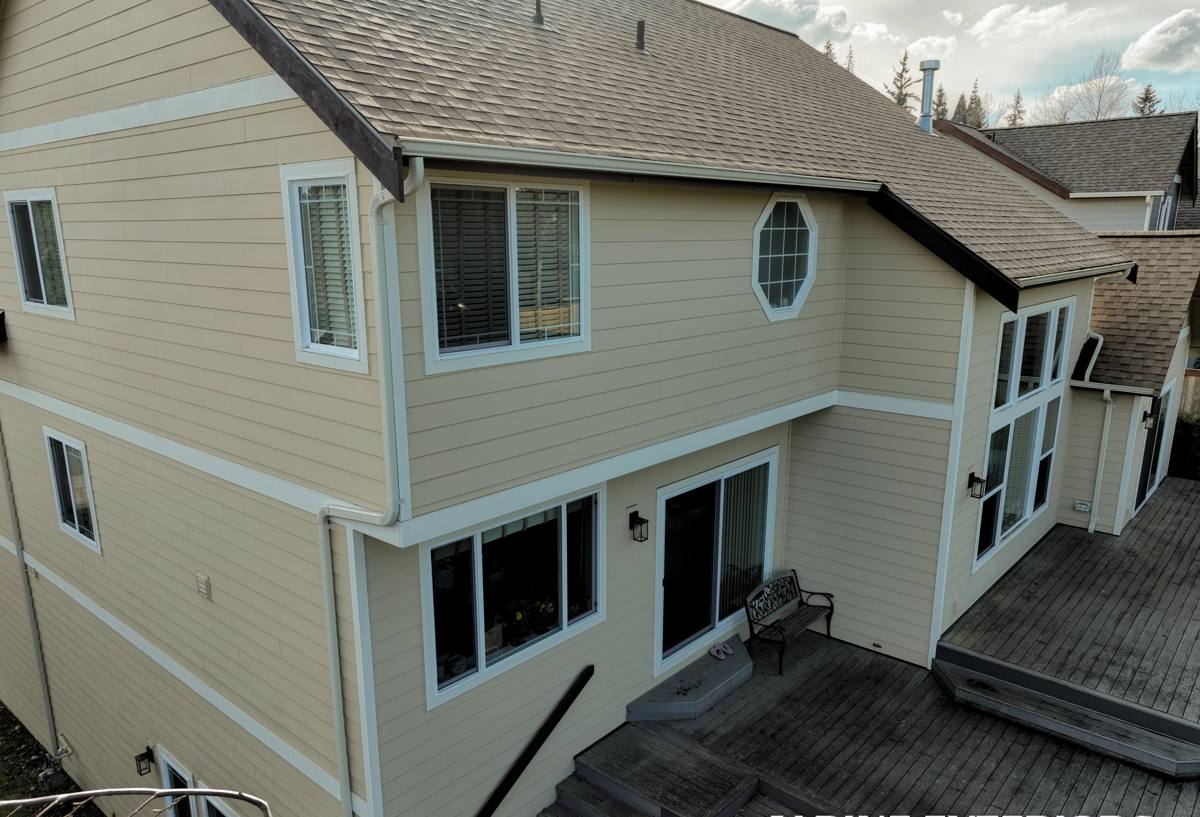
What "New-Construction" Windows Actually Means
New-construction windows are built with a nailing flange (also called a nail fin) around the perimeter of the frame. That flange gets fastened directly to the wall sheathing and integrated into the water-resistive barrier (house wrap or a fluid-applied membrane) before siding goes on. This is different from a retrofit or "pocket" replacement window, which is sized to slide into an existing opening without disturbing the exterior finish. New-construction windows are the right call for:
- New home builds, from the ground up
- Additions and bump-outs where the wall is being framed and sheathed from scratch
- Full re-sides where the siding is coming off anyway and it makes sense to swap windows properly instead of working around old ones
- Garages, ADUs, and shops being built out with real window openings
Because the flange gets tied directly into the drainage plane, a new-construction install gives a contractor full control over flashing sequencing — something you don't get with a pocket replacement dropped into an existing frame.
Why South Hill's Climate Makes the Details Non-Negotiable
Driving rain and wind-driven wetting
Storms off the water don't just fall straight down here — wind pushes rain sideways into wall assemblies, especially on west- and southwest-facing elevations. A window that's flashed with a simple bead of caulk and no sill pan will eventually let water past the flange, and once it's behind the cladding, gravity and wind pressure will find the path of least resistance into the wall cavity.
Salt air and hardware life
Bellingham's proximity to the bay means airborne salt is a real factor on hardware, fasteners, and uncoated metal flashing. We spec corrosion-resistant fasteners and flashing at every window opening rather than standard-grade hardware that's fine 50 miles inland but shortens its life near the water.
Moss, shade, and slow drying
South Hill's tree canopy and north-facing slopes mean some walls barely see direct sun for months. Anywhere moisture gets trapped behind a window flange, it stays wet longer here than it would in a drier, sunnier part of the state. That's exactly why the drainage plane and flashing details matter more than the window brand itself — a great window installed with a poor water path will still cause problems.
What a Correct New-Construction Window Install Involves
The window unit is the easy part. The sequence around it is where jobs succeed or fail:
- Rough opening check. Confirm the opening is square, plumb, and sized correctly before the window ever shows up on site.
- Sill pan flashing. A sloped, back-dammed sill pan under the window directs any water that does get past the frame back outside the wall, not into the framing.
- House wrap integration. The water-resistive barrier is cut and folded so water sheds over the top of the flange and never behind it — this is a shingle-lap principle, sequenced bottom to top.
- Setting the window. Shimmed level and plumb, fastened per the manufacturer's schedule, with the flange fully seated against the sheathing.
- Flashing tape at jambs and head. Sealed over the nailing fin in the correct order — sides first, then head — so every layer overlaps the one below it.
- Head flashing or drip cap. Diverts water running down the wall away from the top of the window rather than letting it pool against the flange.
- Interior and exterior sealant. Backer rod and sealant where called for, without over-sealing joints that are supposed to let a wall dry.
- Final inspection before siding closes it in. This is the last point anyone can visually confirm the flashing is right — once siding goes up, it's hidden for the life of the building.
Sill pans and end dams
A flat sill with no back dam is one of the most common shortcuts we see corrected on other people's framing. Water that gets past the frame under wind pressure needs somewhere to go besides straight down into the sheathing. A proper pan with a back dam and end dams routes that water back out through weep points, not into the wall.
Choosing Windows for a South Hill Build
Frame material and glazing package both matter for a coastal Whatcom County build, but neither substitutes for correct installation. We'll walk through options based on the project's budget, style, and exposure, but here's the general landscape:
| Factor | Vinyl | Fiberglass | Wood/Clad |
|---|---|---|---|
| Upfront cost | Lowest | Mid-range | Highest |
| Moisture tolerance | Good, won't rot | Very good, dimensionally stable | Depends on cladding and maintenance |
| Maintenance | Low | Low | Higher — finish and seals need upkeep |
| Best fit here | Budget-conscious builds, additions | Larger openings, higher-exposure walls | Historic-style South Hill homes wanting a wood look |
For glazing, look for a window rated for the Pacific Northwest's marine climate — a low U-factor for heat retention through our long cool season, and a solar heat gain coefficient tuned for a region that doesn't get intense summer sun. We can walk through specific NFRC ratings for any product line during a walkthrough rather than quoting numbers that vary by size and configuration.
Sequencing With Siding: Why It Matters More Than the Window Itself
A new-construction window installed by one crew and then handed off to a different siding crew is a common failure point. Flashing details get missed in the gap between trades, or the siding crew assumes the window installer handled water management and doesn't double-check it. When we handle both the window installation and the siding on a South Hill project, there's one continuous line of accountability for the drainage plane from the sheathing to the finished wall — no handoff, no assumptions, no gap where a detail falls through the cracks.
Our Process
- Walk the site or plans and confirm rough openings, exposures, and any elevation-specific concerns (south/southwest walls, shaded north walls, roof runoff hitting a wall below)
- Recommend frame material and glazing based on the specific opening, not a one-size answer for the whole house
- Install sill pans, flashing, and house wrap integration to a documented sequence — not a rushed caulk-and-go
- Photograph flashing details before siding closes them in, so there's a record of what's behind the wall
- Coordinate directly with the framer or builder's schedule so windows go in at the right point in the build, not too early or too late
What we won't do
We won't set a window without a sill pan, skip flashing tape to save time, or seal a flange with caulk alone and call it flashed. Those shortcuts hold up fine in dry climates and fail here, and we'd rather explain why a step takes an extra hour than explain a leak in three years.
A Quick Checklist for Homeowners and Builders
Whether you're hiring us or vetting any contractor for a South Hill build, these are reasonable things to ask about before windows go in:
- Will there be a sloped, back-dammed sill pan at every opening?
- What's the flashing sequence — sides before head, shingle-lapped with the house wrap?
- What fastener and flashing materials are being used, given the salt air near the bay?
- Will flashing be photographed or documented before siding covers it?
- Is the same crew handling windows and siding, or is there a handoff between trades?
- What's the warranty structure — manufacturer coverage on the window unit versus installer coverage on workmanship?
Cost Factors to Expect
Pricing on a new-construction window project depends on window count, size, frame material, and how much flashing and prep work each opening needs — a straightforward wall on a new build is a different job than a complex opening on a sloped South Hill lot with tricky access. Rather than quote a broad range that doesn't mean much without seeing the plans or the site, we'll walk the job and give a real number.
If you're framing a new build, planning an addition, or re-siding a South Hill home and want the windows and water management done right the first time, we're glad to take a look and put together a straightforward, no-pressure estimate — just fill out the form below.