 Bellingham Siding
 Roofing in Birchwood: A Different Set of Demands
Birchwood sits inland enough from the water to feel like it's spared the worst of Bellingham Bay's weather, but the reality on most roofs we inspect here says otherwise. Salt-laden air still drifts through the Fraser Valley corridor and settles on exposed metal and shingle surfaces. Driving rain off Puget Sound arrives sideways more often than straight down. And the tree cover that makes Birchwood's older residential streets so shaded also means roofs here spend more months in damp shadow than roofs in more open parts of Whatcom County. Any of those factors alone is manageable. Together, over the 20-30 year life of a roof, they wear materials down faster than most homeowners expect.
A new roof installed in Birchwood isn't the same job as a new roof installed in a dry, sun-exposed subdivision. The underlayment choice, ventilation layout, flashing details, and even the fastener spec all shift when moss, moisture, and wind-driven rain are the baseline conditions instead of the exception.
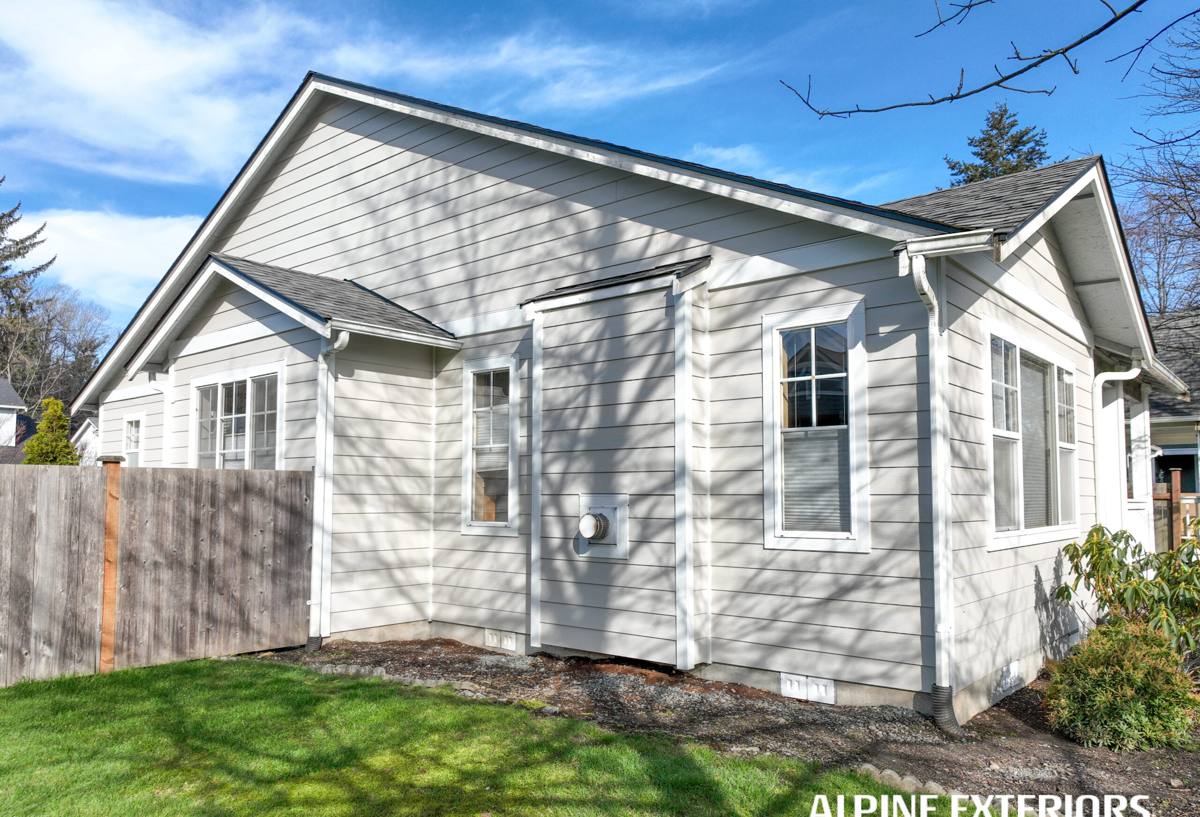
Why Bellingham's Climate Shortens Roof Life When the Install Is Wrong
Moss Isn't Cosmetic — It's Structural Risk
Bellingham's moss season runs long, often from fall through late spring. Moss doesn't just look bad; it holds moisture against the roofing surface, lifts shingle edges as it grows, and works its way under tabs and around fasteners. Once moisture gets trapped under a shingle mat, granule loss speeds up and the underlying deck starts absorbing water it was never meant to see. A roof designed with moss in mind uses materials and detailing that resist this from day one, rather than relying on homeowners to scrub and treat the roof every year.
Driving Rain Finds Gaps, Not Just Surfaces
Straight-down rain is easy for almost any roof to shed. Wind-driven rain off the Sound behaves differently — it pushes water sideways and upward under shingle laps, around vent boots, and along step flashing at chimneys and walls. Installation quality matters more here than material choice alone. A correctly lapped, correctly nailed, correctly flashed roof handles driving rain. A roof installed with shortcuts in those exact spots will leak in the first real storm, sometimes in the first year.
Salt Air's Slow, Quiet Damage
Bellingham isn't a beachfront town, but it's close enough to salt water that airborne salt reaches inland neighborhoods like Birchwood, especially with the prevailing westerly winds. Salt accelerates corrosion on exposed metal — flashing, fasteners, drip edge, and any metal roofing components. Over years, corroded flashing is one of the most common causes of a roof leak that has nothing to do with the shingles themselves.
What Correct Roof Installation Looks Like for This Climate
A roof built for Birchwood's conditions isn't exotic — it's standard roofing science applied without skipping steps. Here's what we treat as non-negotiable on every install:
- Full synthetic or ice-and-water-shield underlayment at eaves, valleys, and penetrations — not just a single layer of felt
- Corrosion-resistant flashing and fasteners rated for coastal-adjacent exposure, not the cheapest stock option
- Step flashing (not just caulk or roof cement) at every wall and chimney intersection
- Balanced intake and exhaust ventilation sized to the actual attic volume, not a single ridge vent added as an afterthought
- Shingle or panel selection matched to algae/moss resistance where the roof sits under tree cover
- Proper nailing pattern and nail placement — high-nailing is a common shortcut that fails in wind-driven rain
- Ice-and-water shield at valleys and low-slope transitions, where standing water and debris collect first
None of this is unusual for a roofer who works Whatcom County regularly. It's unusual for a crew that treats every roof the same regardless of where it sits.
Our Installation Process, Step by Step
1. On-Site Inspection and Honest Assessment
We start by getting on the roof, not just looking at it from the driveway. We check the deck condition, existing ventilation, flashing points, and how the current roof has actually failed — that tells us what to change, not just what to replace. We'll tell you plainly if a repair could realistically extend the roof's life instead of pushing a full replacement you don't need yet.
2. Tear-Off and Deck Inspection
Full tear-off lets us see the deck itself. In a moisture-heavy area like Birchwood, soft or delaminated decking is common around old vent boots, valleys, and chimney flashing even when the shingles above look fine. We replace damaged sheathing before anything new goes down — covering a bad deck with a new roof just hides the problem for a few years.
3. Underlayment and Water Protection
This layer does more work in our climate than in drier regions. We install ice-and-water shield at eaves, valleys, and around every penetration, then synthetic underlayment across the field. This is the layer that protects your home even if wind or debris damages the roofing surface above it.
4. Flashing and Ventilation
We rebuild flashing at every wall, chimney, and skylight rather than reusing old pieces, and we set up intake and exhaust ventilation to actually move air through the attic. Poor ventilation traps moisture, which speeds up moss growth from underneath and can rot decking from the inside — a failure mode most homeowners never see coming.
5. Roofing Material Installation
Whether it's asphalt shingle, metal, or another system, we follow manufacturer nailing and lap specs to the letter, because that's what keeps driving rain out. This is also where warranty coverage actually gets earned — most manufacturer warranties are void if the installation didn't meet spec, regardless of how good the material is.
6. Final Walkthrough and Cleanup
We walk the finished roof with you, cover care and moss-prevention basics specific to a shaded lot like many in Birchwood, and clean the site thoroughly — magnetic sweep for nails included.
Material Options for Birchwood Homes
| Material | Moss/Moisture Resistance | Typical Lifespan Here | Best Fit |
|---|---|---|---|
| Algae-resistant asphalt shingle | Good, with proper ventilation | 20-30 years | Most Birchwood homes, especially under partial tree cover |
| Standard asphalt shingle | Fair — needs more upkeep | 15-20 years locally | Budget-conscious replacements on open, sunnier lots |
| Metal roofing | Excellent — sheds moss and water fast | 40-50+ years | Homeowners planning to stay long-term or wanting minimal maintenance |
| Synthetic/composite shingle | Very good | 30-40 years | Homes wanting a shingle look with less moisture sensitivity |
We'll talk through which of these actually fits your roof's pitch, shade exposure, and budget rather than pushing one product across every job.
What Drives the Cost of a New Roof in This Area
Every estimate is specific to the house, but the factors that move the number the most in Birchwood are consistent:
| Factor | Why It Matters Here |
|---|---|
| Roof pitch and access | Steeper or tree-crowded lots take longer and need more safety setup |
| Deck condition | Moisture-related sheathing replacement is common and adds material/labor |
| Ventilation upgrades | Older Birchwood homes often need added intake or exhaust vents, not just a ridge cap |
| Material choice | Metal and composite cost more upfront but less in long-term maintenance and moss removal |
| Flashing scope | Homes with multiple chimneys, skylights, or wall intersections need more custom flashing work |
| Tree cover removal/trim | Some jobs need branch clearance first for safe access and long-term moss control |
Signs a Birchwood Roof Needs Replacement, Not Just Repair
- Granule loss heavy enough that shingles look bald in patches, especially on south- or west-facing slopes
- Moss established at the ridge or in valleys, not just on the north-facing shaded sections
- Soft spots or noticeable sag when walked, indicating deck damage underneath
- Daylight visible through the attic roof deck or staining on attic sheathing
- Flashing that's visibly rusted, cracked, or separated from the roof plane
- Repeated leaks in the same spot after prior repairs
- Shingles curling, cracking, or missing tabs after wind events
If you're only seeing one or two of these, a repair may still make sense. If several apply at once, a full replacement is usually the more cost-effective path — patchwork repairs on an aging roof in this climate tend to cost more over a few years than doing it right once.
Why Local Experience in Birchwood Matters
A crew that only occasionally works in Whatcom County will spec a roof the same way they would in a dry climate zone — because that's what they know. A crew that works Bellingham and its neighborhoods regularly has already seen what fails here: which flashing details leak in driving rain, which ventilation setups actually keep moss from creeping back, and which materials hold up under salt air and long wet winters versus which ones just look good on paper. That local pattern-recognition shows up in fewer callbacks and a roof that performs the way it's supposed to, year after year, without surprises.
We also know Birchwood's mix of home ages and styles well enough to spot the common trouble points before they become a leak — older homes with under-ventilated attics, additions with tricky roof-to-wall transitions, and lots with heavy tree cover that need moss-resistant materials from the start rather than as an afterthought.
Get a Straight Answer About Your Roof
If your roof is showing its age or you just want an honest read on how much life it has left, we're glad to take a look. We'll give you a clear, no-pressure estimate for a new roof built for Bellingham's climate — no inflated urgency, no guesswork about what your home actually needs. Reach out using the form below to schedule a free estimate.