 Bellingham Siding
 Why Blaine Homes Wear Out Siding Faster
Blaine sits right on Semiahmoo Bay and Drayton Harbor, about as close to the water as a Whatcom County home can get. That location is part of what makes the town beautiful, and it's also exactly why siding here takes a beating that inland Bellingham homes don't see nearly as much. Salt-laden air off the bay works into seams, fasteners, and coatings year-round, not just during storms. Add the driving, wind-blown rain that comes through on winter systems off the Strait of Georgia, and you've got moisture finding its way into any gap a lesser siding job left open.
Then there's moss. Whatcom County's long, wet, mild winters give moss and algae a growing season that stretches most of the year on north-facing and shaded walls. Combined with tree cover common in Blaine's residential lots, siding here stays damp longer after every rain than it would in a drier climate, which is exactly the condition moss and rot both need to take hold.
None of this means siding is doomed in Blaine. It means the margin for error is smaller. A siding system that's borderline adequate in a mild, dry climate can fail years early here if it's the wrong material or installed loosely.
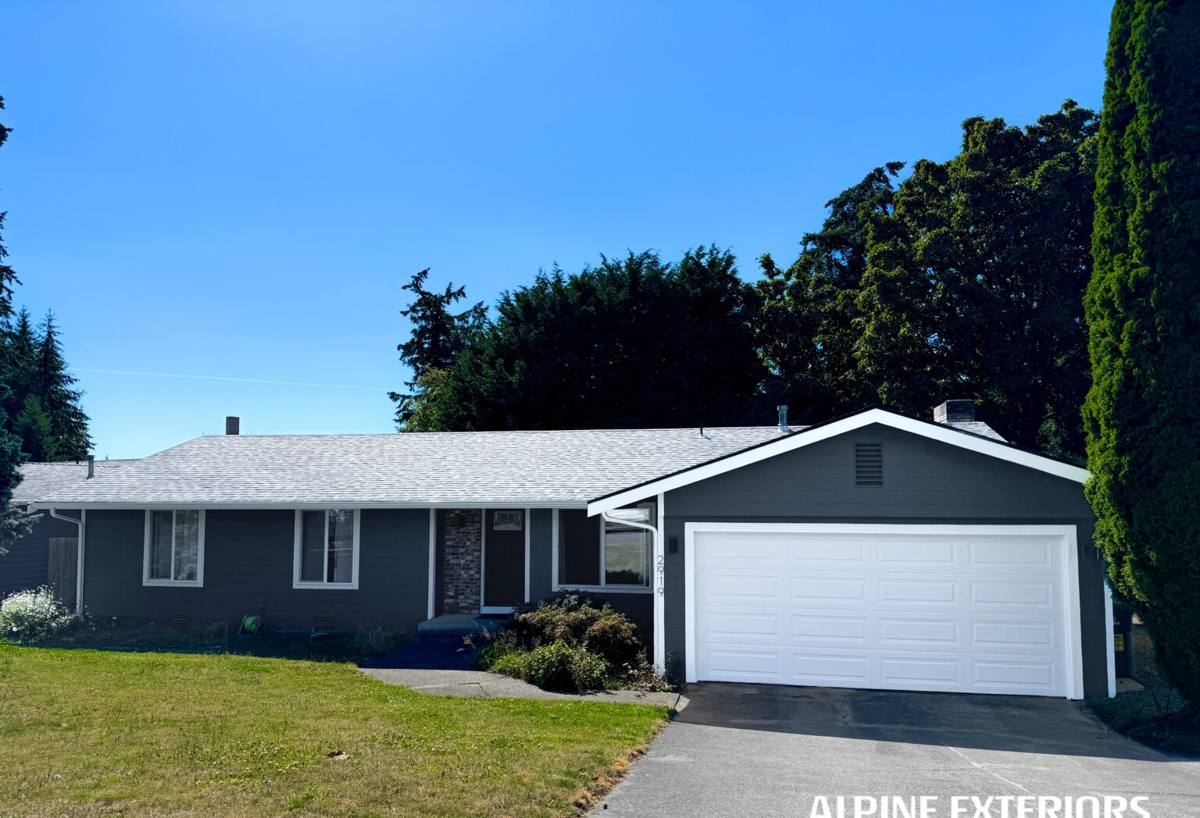
Signs a Blaine Home Needs Siding Replacement, Not Just Repair
Not every siding problem calls for a full replacement, but in a coastal, high-moisture area like Blaine, a few warning signs usually mean the underlying material or water management has already failed rather than just aged cosmetically.
- Soft or spongy spots when you press on the siding, especially near the bottom courses and around window and door trim
- Paint that keeps failing within a year or two of repainting, no matter how good the paint job
- Persistent moss or algae growth that returns within weeks of cleaning, particularly on shaded or north-facing walls
- Visible cracking, cupping, or delamination in older lap siding
- Warping or bubbling around seams, corners, and butt joints where water tends to collect
- A musty smell or visible staining on interior walls that back up to exterior siding
If you're seeing more than one of these, especially on the sides of the house that face the water or stay shaded most of the day, it's worth having someone look at the sheathing underneath before deciding whether repair is even still an option.
What a Correct Siding Replacement Actually Involves
It Starts Underneath the Siding, Not With It
The siding itself is the least important variable in whether a re-side lasts in a place like Blaine. What happens underneath it, at the sheathing, the water-resistive barrier, and the flashing details, determines whether water that inevitably gets past the surface has anywhere to go. A full tear-off lets us actually see the sheathing condition, something you can't evaluate from photos or a drive-by estimate.
What We Check and Correct During Tear-Off
- Sheathing condition at every wall, replacing any soft or delaminated panels before new material goes up
- A continuous, properly lapped weather-resistive barrier, not just patched around the old one
- Flashing at windows, doors, and any roof-to-wall intersections, sequenced so water sheds outward at every layer
- Kick-out flashing where rooflines meet walls, a detail that's frequently missing or wrong on older homes and is a common source of hidden rot
- Proper clearance between the bottom of the siding and grade, decks, and roof surfaces so splash-back and standing moisture don't sit against the material
Skipping any of this and just installing new siding over old problems is how homeowners end up paying for the same repair twice within a decade.
Why We Install Only James Hardie Fiber Cement
We don't install vinyl, LP SmartSide, primed spruce, cedar, or other fiber cement brands. That's a deliberate standard, not a limitation in what we're capable of installing. In a coastal Whatcom County climate specifically, the trade-offs of those alternatives show up faster than they would somewhere drier.
Vinyl expands and contracts with temperature swings and can crack in cold snaps; it also isn't a water barrier itself, it relies entirely on what's behind it, which puts all the pressure on installation quality. Wood and wood-composite products like primed spruce or cedar need consistent maintenance to keep coatings intact, and in a climate where moss and moisture pressure never really let up, that maintenance window gets shorter than most homeowners expect. LP SmartSide is an engineered wood product, which means its long-term performance still depends on keeping the factory coating and edge seals intact against exactly the kind of driving rain and salt air Blaine sees.
James Hardie fiber cement is non-combustible, doesn't rot, and won't swell or delaminate from moisture the way wood-based products can. Its ColorPlus factory finish is baked on and warranted against fading and peeling, which matters in a spot where recoating is more of a chore than most homeowners want to sign up for repeatedly. Hardie also engineers specific product lines (HZ5, for instance) for wetter, colder climate zones like the Pacific Northwest, so the material itself is built for the conditions rather than just tolerating them. Backed by a strong transferable warranty, it's what we're willing to stand behind on homes exposed to Blaine's salt air and rain.
Our Process, Start to Finish
| Step | What Happens |
|---|---|
| Free estimate | On-site walkthrough of your home's siding, trim, and problem areas; honest assessment of whether repair or replacement makes sense |
| Detailed scope | Written proposal covering tear-off, sheathing repair allowance, flashing details, Hardie product line, and color |
| Tear-off and inspection | Old siding removed, sheathing inspected and repaired as needed before anything new goes up |
| Weather barrier and flashing | Continuous water-resistive barrier and flashing installed at every penetration and transition |
| Hardie installation | Fiber cement siding and trim installed to manufacturer specs, including fastener pattern and clearances |
| Final walkthrough | Site cleanup and a walkthrough with you before we consider the job done |
Cost Factors for a Blaine Siding Replacement
Every home is different, so we don't quote pricing without seeing the house, but the same handful of factors drive cost on most Blaine projects.
| Factor | Why It Matters |
|---|---|
| Sheathing condition | Rot or moisture damage found during tear-off adds repair scope that can't be known until the old siding is off |
| Home size and wall complexity | More corners, dormers, and trim detail mean more labor and material waste |
| Siding profile and accessories | Lap width, trim style, and shakes or panel accents affect material cost |
| Access and site conditions | Waterfront lots, steep grades, or limited access can add setup time |
| Existing exterior layers | Homes with multiple layers of old siding take longer to strip down to sheathing |
Why Hiring a Crew That Already Works Blaine Matters
Siding installation is detail work, and the details that matter shift with the climate. A crew that mostly works drier inland areas can still cut a technically clean seam and still get flashing sequencing wrong for a home that takes direct rain off the water, because that's not a mistake that shows up fast inland. Working regularly in Blaine and the rest of Whatcom County means we're used to building in the extra margin this coastline calls for: tighter flashing laps, careful attention to grade clearance, and installation practices that account for salt air on fasteners and trim over the life of the siding, not just at installation.
It also means we're familiar with the kind of homes common around Blaine, from older waterfront properties to newer construction further from the shoreline, and what each tends to need underneath the surface before new siding goes on.
What to Ask Before You Hire Anyone for a Blaine Re-Side
- Will you inspect and repair sheathing as part of the job, or only if I ask?
- What's your flashing and weather-barrier detail at windows, doors, and roof-to-wall transitions?
- Are you installing to the manufacturer's specified fastener pattern and clearances?
- What warranty covers the material, and what covers your installation labor separately?
- Have you worked on homes in Blaine or similar waterfront areas of Whatcom County before?
If a contractor can't answer the flashing and sheathing questions clearly, that's worth taking seriously before you sign anything, since those are the details that determine whether the siding lasts here.
If your Blaine home is showing signs of siding wear, or you're just planning ahead, we're happy to come take a look and give you a straightforward, no-pressure estimate. Use the form below to get started.