 Bellingham Siding
 Windows Built for South Hill's Hillside Climate
South Hill sits up on the slope above downtown Bellingham, which means the houses up there catch weather a little differently than homes down closer to the water or tucked into a valley. You get more direct wind off Bellingham Bay, more driving rain hitting west- and south-facing walls, and — because Whatcom County stays damp and mild for most of the year — a long moss season that never really lets a home's exterior dry out completely. Old single-pane or early double-pane windows in that kind of environment don't just waste energy. They fog, they let moist air condense on the interior glass and sill, and over the years that moisture finds its way into the wood trim and framing around the window opening.
Energy-efficient window replacement in this neighborhood isn't just about the utility bill, though that's real too. It's about closing the gaps and seals that let salt-laden, moisture-heavy air work its way into the wall assembly. A window job done right up here holds up to that; a window job done wrong accelerates the very problems it was supposed to solve.
What South Hill Homes Typically Need
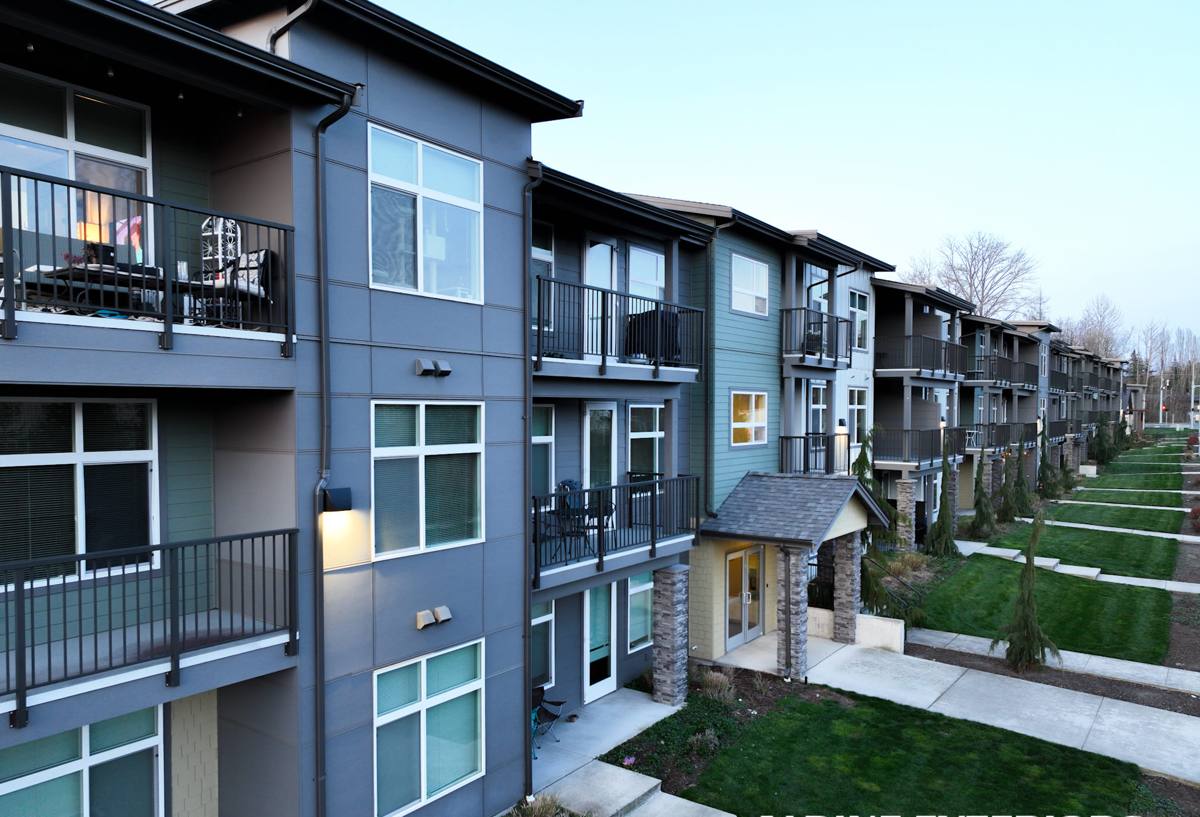
South Hill has a mix of older character homes — many from the early-to-mid 1900s — alongside newer infill construction. That mix matters for window replacement:
Older homes
Original wood-frame windows in older South Hill houses were often solid when built, but decades of Bellingham's wet winters have usually taken a toll on the surrounding trim, sill, and sash. Before we even talk glass and frame options, we check what's happening behind the window — soft wood, past water staining, or trim that's been painted over rot rather than repaired. Replacing the window without addressing that first just seals moisture problems behind a new frame.
Newer or previously replaced homes
Homes with vinyl windows installed in the last couple decades sometimes have a different issue: builder-grade units that were fine when new but were never top-tier for wind and moisture resistance. Seals fail, the glass units fog between the panes, and the low-end frames can warp slightly with years of temperature swings. Here the job is usually straightforward replacement with a better-performing unit, not structural repair.
What driving rain and moss season do to a bad install
- Poor flashing lets wind-driven rain track behind the window instead of shedding off it
- Gaps in the seal around the frame let humid air condense inside the wall cavity, not just on the glass
- Moss and algae growth on nearby siding or trim holds moisture against the wall longer, which stresses any weak point nearby — including a window that wasn't sealed correctly
- UV exposure is lower here than in drier climates, but constant damp cycling (wet, dry, wet) is harder on caulk and sealant joints than heat is
What a Correct Energy-Efficient Window Job Involves
"Energy-efficient" gets used loosely in this industry. The glass package matters, but in a climate like Whatcom County's, the installation details matter just as much — arguably more, since a well-installed mediocre window will outperform a poorly-installed premium one over ten years.
Glass and frame performance
For this climate we're generally looking at double- or triple-pane insulated glass units with a low-E coating tuned for our mix of grey, overcast days and occasional bright summer sun — not the high-solar-gain coatings meant for cold, sunny climates, and not the high-heat-rejection coatings meant for the desert Southwest. Argon or krypton gas fill between panes adds a modest but real insulation boost. Frame material — vinyl, fiberglass, or clad wood — is a separate decision from the glass, and we'll walk through the trade-offs in maintenance and cost for your specific home rather than push one material as the only right answer.
Flashing and water management
This is the part that actually determines whether a window survives Bellingham winters. Proper installation means flashing tape and sill pans that direct any water that does get past the exterior trim back out, not into the wall. It means the rough opening is sealed with the right sequence of materials — house wrap integration, backer rod and sealant where appropriate, not just a bead of caulk around the trim and calling it done.
Air sealing
Low-expansion spray foam or backer rod and sealant around the frame perimeter (never regular high-expansion foam, which can bow a frame out of square) closes the air gaps that cause both energy loss and condensation problems. This is often the single most-skipped step on a rushed installation.
Our Process on South Hill
- On-site assessment. We look at each window individually — some rooms may need full replacement, others might only need attention to trim or flashing. We also check for signs of past moisture intrusion around openings before quoting anything.
- Product selection walkthrough. We go over frame material, glass package, and grille/style options based on your home's age, exposure, and budget — no pressure toward the most expensive option if it's not what the house needs.
- Written estimate. Line-item pricing so you know what you're paying for: product, labor, disposal of old units, and any trim or flashing repair identified in the assessment.
- Installation. Proper removal, opening prep, flashing, air sealing, and finish trim work — done in a sequence that accounts for Bellingham's weather, including scheduling around wet stretches when possible so openings aren't left exposed longer than necessary.
- Final walkthrough. We check operation, seals, and finish work with you before calling the job done.
Cost Factors to Expect
Every home is different, and we'll give you real numbers after seeing your windows in person — but here's what typically moves the price up or down on a South Hill job:
| Factor | Why it affects cost |
|---|---|
| Frame material (vinyl vs. fiberglass vs. clad wood) | Material cost and expected lifespan vary; fiberglass and clad wood generally cost more upfront but hold up differently to our wet climate |
| Number and size of window openings | More straightforward — larger and more openings mean more material and labor |
| Existing trim/sill condition | Rot repair around an opening adds labor before the new window can even go in |
| Access and height | Second-story or hard-to-reach hillside windows take more time and equipment |
| Glass package (double vs. triple pane, coating type) | Higher-performance glass costs more but reduces long-term energy loss |
| Full-frame vs. insert replacement | Insert replacement (into an existing, sound frame) is less invasive and less costly than full-frame tear-out |
Why a Crew That Already Works This Neighborhood Matters
Window replacement done wrong doesn't usually fail immediately — it fails two or three winters later, when water that shouldn't have gotten behind the trim finally shows up as a soft spot or a stain. A crew that already does regular work in South Hill and elsewhere in Bellingham has seen how the local combination of salt air, wind-driven rain, and long damp stretches plays out on real homes here, not in a showroom or a manufacturer's spec sheet. That shows up in small decisions — how flashing gets lapped, which sealant holds up under constant damp-dry cycling, when it makes sense to pause a job rather than install into a wet opening.
It also means less guesswork about permitting, typical framing in older South Hill homes, and what tends to go wrong on houses of a certain age in this specific part of Bellingham.
Signs It's Time to Replace, Not Repair
- Visible fogging or moisture between panes of a double-pane unit — the seal has failed and can't be fixed, only replaced
- Drafts you can feel around a closed window, even after weatherstripping has been checked
- Wood trim or sill that's soft, discolored, or shows peeling paint tied to moisture, not just age
- Windows that are difficult to open, close, or lock — often a sign the frame has shifted or warped
- Noticeably higher heating costs in rooms with older original windows compared to updated rooms
- Visible gaps or daylight around the frame from outside
Maintenance After Installation
New windows still need occasional attention in this climate. Rinse pollen, salt residue, and grime off the glass and frames a couple times a year. Check exterior caulk lines annually, especially after a hard winter, since damp-dry cycling is what breaks sealant down here rather than sun exposure. Keep an eye on nearby moss or algae growth on siding and trim — clearing it back from window edges keeps moisture from sitting against the frame longer than it needs to.
If your South Hill home has windows that fog, draft, or just don't perform the way they should through a Bellingham winter, we're happy to take a look and walk you through honest options — no pressure, no upsell. Fill out the form below for a free estimate.