 Bellingham Siding
 Sudden Valley's Siding Problem Isn't Like Downtown Bellingham's
Sudden Valley sits differently than most Bellingham neighborhoods. Homes here are tucked into tree cover along Lake Whatcom, which means more shade, more standing humidity, and slower drying times after a storm than you'd get on an open lot closer to the water. Add in the driving rain that rolls through Whatcom County most of the year and the salt-tinged marine air that reaches inland from the Sound, and you've got a combination that's hard on exterior materials that aren't built for it.
We install James Hardie fiber cement siding exclusively — not vinyl, not LP SmartSide, not cedar or primed spruce — because Sudden Valley's climate exposes the weak points in those products faster than it does in most inland towns. This page covers what that actually means for a Sudden Valley home: what to watch for, what a correct install looks like, and how our process works.
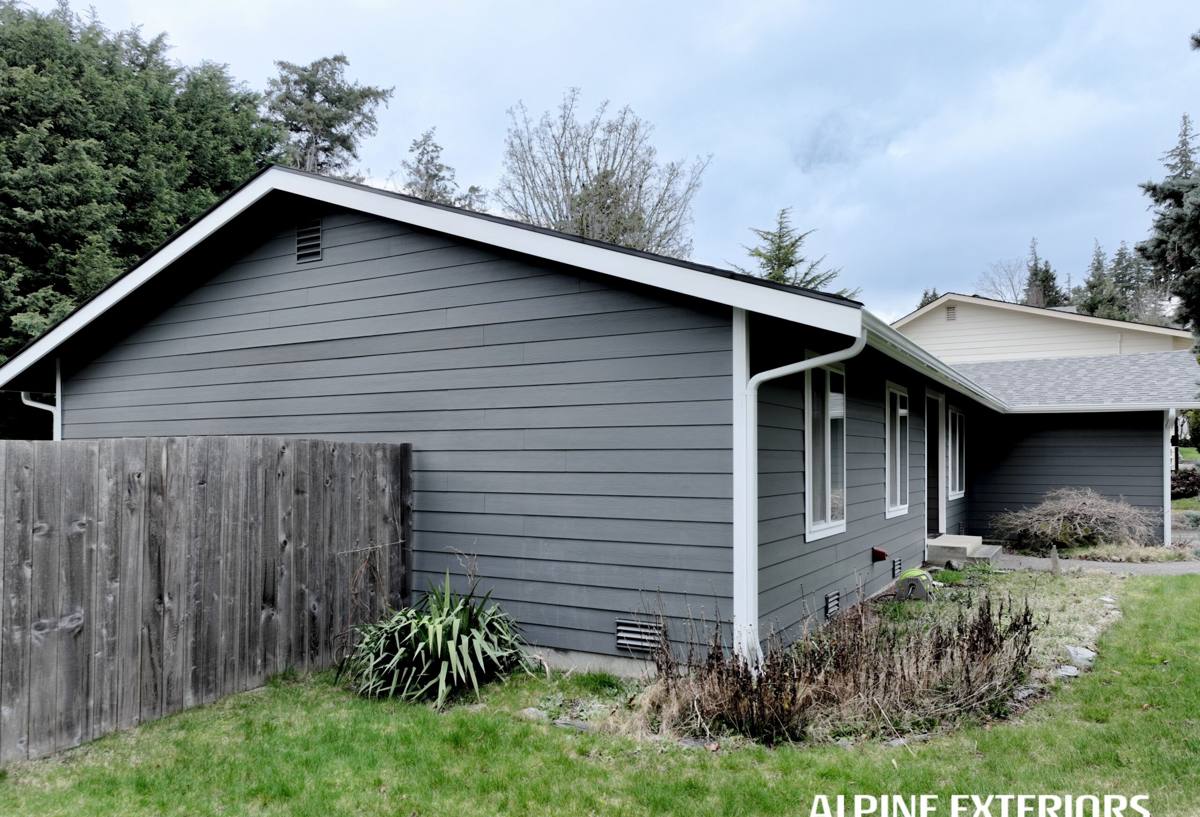
What This Climate Does to a House
Moss and Shade
Tree-covered lots around the lake stay damp longer after rain than open ground does. That extended moisture window is exactly what moss and mildew need to take hold on siding, especially on north-facing walls and anywhere gutters or downspouts dump water close to the wall. Moss doesn't just look bad — it holds moisture against the siding surface, which shortens the life of anything that isn't dimensionally stable or properly sealed.
Driving Rain and Wind
Storms off the Sound don't fall straight down here — wind pushes rain sideways into wall assemblies, which means the quality of flashing, house wrap, and joint sealing matters as much as the siding material itself. A siding product that swells, warps, or wicks water at the seams will fail faster under driving rain than one engineered to shed it.
Marine and Lake-Adjacent Moisture
Whatcom County's marine climate means salt-laden air reaches well inland, and combined with the humidity that collects around Lake Whatcom, exterior materials here deal with more sustained moisture exposure than a similar house fifty miles east of the Cascades. Fasteners, trim, and the siding substrate all need to be chosen with that in mind.
Why We Standardized on James Hardie
James Hardie fiber cement is engineered specifically for climates like this. It's non-combustible, which matters on wooded Sudden Valley lots where wildfire risk has become a real consideration for insurers and homeowners alike. It doesn't rot, and it doesn't provide the organic material that mold and moss feed on the way wood-based products can. Hardie's HZ5 product line is engineered for exactly the wet, temperate conditions the Pacific Northwest sees — different moisture and freeze-thaw performance than the HZ10 line built for hot, dry climates.
The factory-applied ColorPlus finish is also a real advantage here. Field-painted siding — including primed wood products — starts breaking down at the paint layer first, usually at seams and cut edges, and once that finish fails, moisture gets into the substrate underneath. ColorPlus is baked on at the factory under controlled conditions, which gives it better adhesion and UV resistance than anything applied on-site, and it comes backed by its own finish warranty separate from the substrate warranty.
Signs a Sudden Valley Home Needs New Siding
Because of the shade and moisture here, siding problems can develop earlier and less visibly than in drier neighborhoods. Things to check for, especially on north- and west-facing walls:
- Persistent moss or dark streaking that comes back within weeks of cleaning
- Soft spots or a "give" when you press on the siding, especially near the bottom courses
- Visible swelling, bubbling, or delamination at panel seams and butt joints
- Paint that's peeling or chalking heavily, particularly on wood or engineered wood siding
- Gaps opening up at trim boards, corners, or window and door casings
- Musty smell or visible staining on interior walls that back up to exterior siding
- Warping or bowing visible when you sight down a wall from the corner
Any one of these on its own might just need a repair. Several together, especially combined with the home's age, usually means the underlying material has reached the end of what it can handle.
What a Correct Installation Actually Involves
Fiber cement siding performs the way it's rated to only when it's installed to Hardie's published specifications. In a climate that pushes water sideways into walls, the details most homeowners never see are the ones that determine whether siding lasts 30+ years or starts failing in 8.
| Detail | Why it matters here |
|---|---|
| Correct nailing pattern and fastener type | Improper fastening leads to buckling under wind-driven rain and temperature swings |
| Proper clearance from grade, decks, and roof lines | Shaded, damp lots need extra clearance so siding isn't sitting in standing moisture |
| Correctly lapped and sealed house wrap | The weather barrier does the real waterproofing work — siding is the second line of defense |
| Flashed and sealed window and door openings | These are the most common points where driving rain finds its way behind siding |
| Caulked joints using a compatible, paintable sealant | Prevents the seam failures that let moisture start moss and rot cycles |
| Proper starter strip and butt joint spacing | Manufacturer-specified gaps allow expansion without cracking the ColorPlus finish |
Skipping any one of these doesn't show up on day one. It shows up two, five, or ten years later as the exact problems listed above — usually starting on the shaded side of the house first.
Our Process for a Sudden Valley Install
- On-site assessment. We look at your current siding, wall assembly, moisture points, and how sun and shade fall across the house — that shade pattern matters more here than on an open lot.
- Scope and product selection. We walk through HardiePlank lap siding, HardiePanel, and HardieShingle options and colors, and explain what fits the home's exposure and your budget.
- Tear-off and inspection. Removing the old siding lets us check sheathing and framing for hidden moisture damage before anything new goes up — common in shaded, tree-covered lots.
- House wrap and flashing. We correct or replace the weather barrier and flash every window, door, and penetration before a single piece of siding is hung.
- Installation to spec. Fastening, clearances, joint sealing, and finish work follow James Hardie's installation manual, not shortcuts.
- Final walkthrough. We go over the finished work with you and cover basic care specific to your home's exposure.
James Hardie Product Lines for This Setting
| Product | Best fit for Sudden Valley homes |
|---|---|
| HardiePlank Lap Siding | The standard choice for most homes — classic lap look, strong moisture performance |
| HardiePanel Vertical Siding | Good for accent walls, gables, or a more modern look on newer builds |
| HardieShingle | Shingle-style siding for homes wanting a textured, traditional look without wood's maintenance |
| HardieTrim | Matching trim boards that resist the same moss and moisture issues as field siding |
All of these come in ColorPlus factory finishes, so the color and texture you choose is baked in and warranted, not painted on after the fact.
What Drives Cost on a Job Like This
| Factor | Impact |
|---|---|
| Tear-off condition | Rotted sheathing found during tear-off adds repair scope before new siding goes up |
| Access and lot terrain | Sloped, wooded Sudden Valley lots can affect staging and scaffolding time |
| Product line chosen | Lap, panel, and shingle products differ in material and labor cost |
| Trim and detail work | Homes with more corners, windows, and architectural detail take more labor |
| Color and finish | Standard ColorPlus colors versus premium or custom finishes |
We give exact numbers only after seeing the house in person — anyone quoting a firm price sight unseen on a re-side is guessing.
Why It Matters That We Already Work in Sudden Valley
A crew that's worked this neighborhood before knows to expect more moss and moisture on shaded lots, knows how tree cover changes drying time after installation, and knows the access challenges that come with wooded, sloped properties around the lake. That's not something you can substitute with a generic siding crew working from a manual for the first time on a Sudden Valley lot. We also only install one product system, which means every crew member is deeply familiar with Hardie's specifications rather than switching between materials and cutting corners on details that don't transfer between them.
If your siding is showing moss, soft spots, or seam failures, or if you're planning ahead for a home that's due, we're happy to take a look and give you a straight, no-pressure assessment. Reach out for a free estimate — we'll walk the property, explain what we find, and let you know what a correct James Hardie installation would look like for your home.