 Bellingham Siding
 Why Sudden Valley Roofs Wear Differently Than Roofs in Town
Sudden Valley sits up against Lake Whatcom under a heavy tree canopy, and that setting changes how a roof ages. A shingle roof out in open sun on a Bellingham hillside sheds moisture and dries out fast after a storm. A roof tucked under fir and cedar around Sudden Valley doesn't get that luxury — shade holds moisture on the shingles for hours or days longer, and that difference shows up as moss, algae staining, and softer decking years before a comparable roof elsewhere in Whatcom County.
Add in the marine air that moves through the whole county off the Sound and the Strait, plus the driving, sideways rain that Northwest storms bring in fall and winter, and you've got a combination that's harder on fasteners, flashing, and shingle granules than most homeowners realize until they're dealing with a leak. None of this means a roof in Sudden Valley can't last a normal service life — it means the roof has to be built and maintained with this specific environment in mind, not installed the same way you'd install one on a dry, open lot.
Heavy Tree Cover and a Long Moss Season
Moss doesn't just sit on top of shingles and look bad — it works its way under shingle tabs, lifts them slightly, and holds water against the roof deck. In a community with this much overhead canopy, moss season isn't a few weeks in spring; it's most of the year, with the heaviest growth from fall through early summer whenever surfaces stay damp and shaded. A roof that isn't detailed and maintained for that reality will show granule loss and soft spots well before its rated lifespan is up.
Lake Effect Shade and Moisture
Proximity to Lake Whatcom adds its own humidity and slower evaporation on north-facing slopes and anywhere the tree line blocks afternoon sun. Those shaded slopes are almost always where we find the earliest algae staining and the most moss buildup on a Sudden Valley roof, which is exactly why roof design and ventilation matter more here than on a roof with full sun exposure.
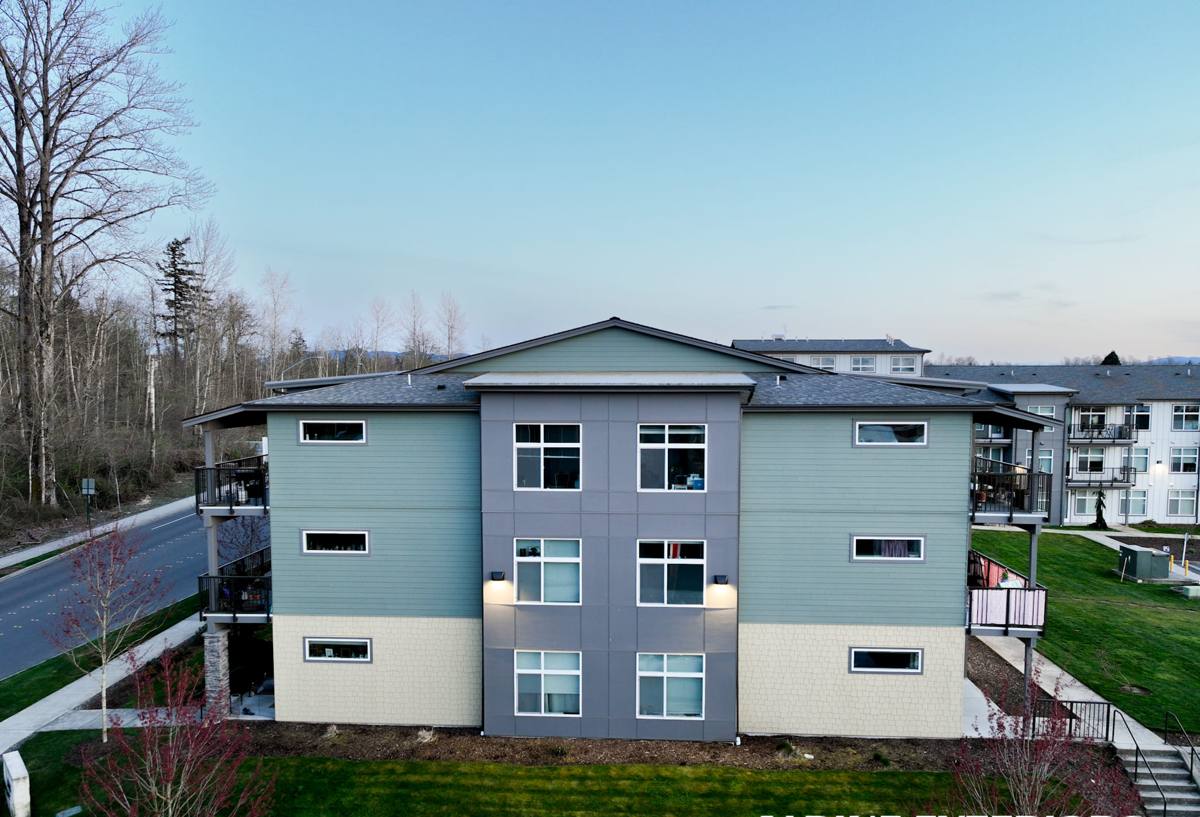
What a Correct Asphalt Shingle Roof Needs Here
A roof built for this neighborhood isn't a different product line — it's the same asphalt shingle system installed with a few details treated as mandatory instead of optional.
Ventilation That Actually Moves Air
Balanced intake and exhaust ventilation lets a shingle roof dry out between rain events instead of sitting damp under the tree canopy. Undersized or blocked ventilation is one of the most common issues we find on older Sudden Valley roofs, and it accelerates both moss growth on top and moisture damage to the deck underneath.
Underlayment and Ice-and-Water Protection at Valleys
Valleys, eaves, and anywhere water concentrates need a self-adhering waterproof underlayment, not just standard felt. With the volume of runoff a heavily wooded lot can channel toward valleys during a hard winter rain, this is the difference between a roof that sheds water and one that eventually backs it up under the shingles.
Algae-Resistant Shingles Where Shade Is Heavy
On slopes with significant tree cover, we generally recommend a shingle line built with algae-resistant granules. It costs a little more up front and it doesn't make moss impossible, but it slows the black streaking and biological growth that shaded roofs in this area are prone to, which keeps the roof looking better and shedding water longer between cleanings.
Flashing Details at Every Penetration
Chimneys, skylights, plumbing vents, and roof-to-wall transitions are where the vast majority of shingle roof leaks actually start — not in the field of the roof itself. Properly stepped and counter-flashed details, redone at replacement rather than reused, matter more in a wet climate than the shingle brand does.
Signs Your Sudden Valley Roof Is Telling You It's Time
Most roofing failures don't happen overnight. They show up as small signals first, and catching them early is usually the difference between a repair and a full replacement.
- Dark streaking or green-black growth spreading across shaded slopes, especially north-facing sections under trees
- Granules collecting in gutters or at the base of downspouts after rain
- Shingles that look cupped, curled at the edges, or visibly out of plane
- Moss thick enough that you can see it lifting shingle tabs from a distance
- Soft or spongy spots underfoot if you have someone walk the roof, or sagging visible from the ground
- Daylight or water staining in the attic near valleys, chimneys, or vent penetrations
- A roof approaching or past 20–25 years old that hasn't had a full tear-off, regardless of appearance
Shingle Options and What They Actually Cost to Own
Every shingle tier can perform well here if it's installed correctly, but they differ in how they hold up to shade, moss, and the wind and rain this area sees each winter.
| Shingle Type | Typical Lifespan | How It Handles Moss/Shade | Best Fit |
|---|---|---|---|
| Standard 3-tab | 15–20 years | No algae resistance; moss and staining show earlier on shaded slopes | Budget-conscious re-roofs on sunnier lots |
| Architectural/dimensional | 25–30 years | Thicker profile sheds water better; algae-resistant versions widely available | Most Sudden Valley homes, especially under partial tree cover |
| Premium algae-resistant lines | 30+ years | Copper- or zinc-infused granules actively resist streaking on heavily shaded roofs | Lots with dense, close overhead canopy or persistent north-slope moss |
| Impact-rated shingles | 25–30 years | Reinforced mat resists damage from falling branches and debris common under trees | Lots with mature trees directly overhanging the roofline |
We'll walk your specific roof, note which slopes get shade and which get sun, and recommend a tier based on what will actually hold up on that roof rather than upselling the most expensive option across the board.
How We Handle a Sudden Valley Re-Roof, Start to Finish
Access, Scheduling, and Site Setup
Sudden Valley is a gated, privately maintained community, and we plan around that from the first call — confirming access, parking for the crew and dumpster, and any community guidelines before a start date is set, so there are no surprises the morning we arrive.
Tear-Off and Deck Inspection
We strip the old roofing down to the deck rather than layering over it. That's the only way to actually see what's underneath — soft plywood, old moisture damage, or undersized ventilation you can't diagnose from a ladder. Any deck repairs are identified and priced before shingles go on, not discovered as a surprise mid-job.
Underlayment, Flashing, and Shingle Installation
Ice-and-water membrane goes down first at valleys, eaves, and penetrations, followed by synthetic underlayment across the field, new flashing at every wall and roof transition, and then the shingles themselves, installed to the manufacturer's nailing pattern and exposure — not a faster pattern that saves the crew time but shortens the roof's life.
Cleanup and Final Walkthrough
We run a magnetic sweep for nails, clear debris and old material completely, and walk the finished roof with you so you know exactly what was done and what your new roof needs going forward.
Why a Crew That Already Works This Neighborhood Matters
A roofer who's worked Sudden Valley before already knows the practical realities that slow other crews down or catch them off guard: gated access and scheduling logistics, driveways and lots with limited staging room under mature trees, and roof lines that are genuinely shadier than a typical open-lot job elsewhere in Bellingham. That familiarity isn't a small convenience — it means fewer delays, more accurate first-visit estimates, and a crew that already knows to plan for moss and moisture instead of treating your roof like a generic replacement.
It also means we've seen how roofs in this specific setting actually fail over time, which shapes real decisions — where we push for algae-resistant shingles versus where standard architectural shingles are perfectly adequate, and which valleys and slopes need extra attention during installation.
Keeping a New Roof Moss-Free for the Long Haul
Even the best-installed roof under heavy tree cover needs some upkeep to hit its full lifespan. A little routine attention goes a long way in this environment:
- Keep gutters and valleys clear of needles and debris so water has a clear path off the roof
- Have moss treated and gently removed before it thickens enough to lift shingle tabs — not scraped aggressively, which can strip granules
- Trim back branches that overhang the roofline to reduce shade, debris, and physical contact damage
- Schedule a roof check after major windstorms, since falling limbs are common on tree-heavy lots
- Have ventilation checked periodically, since blocked vents are often invisible from the ground
What We Stand Behind
We back our installation workmanship directly, and we pair it with the manufacturer's material warranty on the shingles themselves — the length and terms vary by shingle tier, and we'll go over exactly what's covered before you sign anything. We don't believe in vague warranty language; if something we installed fails, we come back and fix it.
If your roof in Sudden Valley is showing moss, staining, or age, or you just want an honest read on how many years it has left, we're glad to come take a look. The estimate is free, there's no pressure to book anything on the spot, and you'll get a straight answer about what your roof actually needs.