 Bellingham Siding
 Barkley's Siding Takes a Specific Kind of Beating
Barkley sits close enough to Bellingham Bay and the surrounding wetlands that homes here deal with a combination most inland Washington towns never see: salt-tinged air, wind-driven rain that comes in sideways off the water, and a moss season that runs longer than most homeowners expect. None of that is dramatic on its own. It's the accumulation, year after year, that wears siding down in ways that aren't always obvious from the curb.
Salt air is corrosive to fasteners and metal trim, even at the distance Barkley sits from open water. Driving rain doesn't just wet a wall — it drives moisture up under laps, around trim, and into any gap that wasn't sealed correctly the first time. And Whatcom County's long wet stretch from fall through spring means anything shaded — a north-facing wall, a spot under an overhang, a section behind landscaping — stays damp long enough for moss and algae to take hold and start working on the surface underneath.
Siding repair in Barkley isn't just about patching what's visible. It's about understanding why that section failed in the first place, so the repair doesn't just buy a season or two before the same spot fails again.
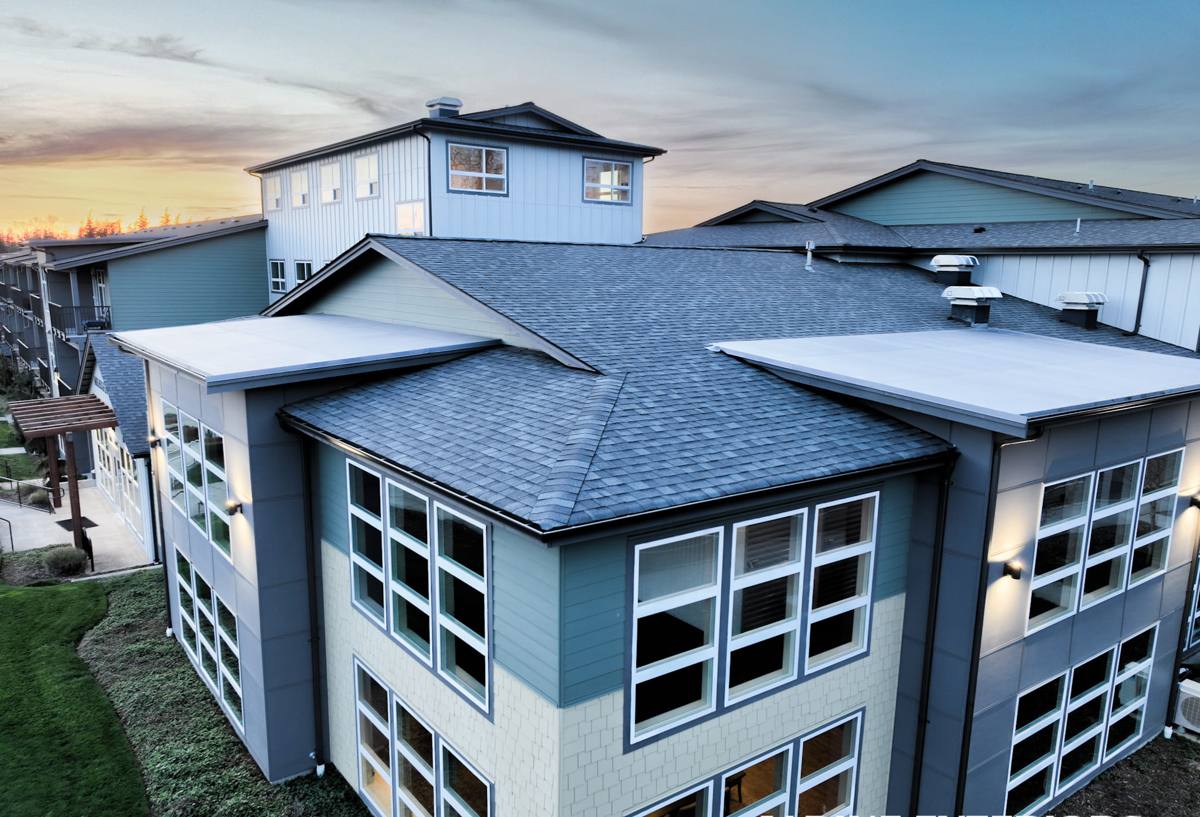
Signs Your Barkley Home Needs Siding Repair
Most siding problems show themselves in small ways long before they become expensive ones. Homeowners who catch these early usually pay for a repair. Homeowners who wait usually pay for water damage, rot repair, and siding replacement together.
- Soft or spongy spots when you press on the siding, especially near the bottom courses or under windows
- Visible cracking, splitting, or buckling panels, particularly after a hard freeze or a run of heavy rain
- Peeling or bubbling paint, which usually means moisture is trapped behind the surface, not just weather wear on top
- Persistent moss or dark streaking that keeps coming back within weeks of being cleaned
- Gaps opening up at seams, corners, or around trim boards that used to sit tight
- Musty smell or visible staining on interior walls that back up to exterior siding
- Nail pops or fasteners backing out, common where cheaper fastening or wrong nail spacing was used originally
If you're only seeing one or two of these in a single, contained area, repair is usually the right call. If you're seeing several of these across multiple walls, that's usually a sign the siding is failing as a system, not in isolated spots — and that changes the conversation toward replacement.
What a Correct Siding Repair Actually Involves
It starts with finding out why, not just where
A repair that only replaces the damaged board and stops there is a temporary fix. Before we touch anything, we're checking what let moisture in: a missing kick-out flashing, caulk that failed at a butt joint, a J-channel that was never properly lapped, siding installed too close to grade or a deck surface. If the entry point isn't corrected, the new material fails on the same schedule as the old.
Then it's about what's underneath
Once siding is off, we're looking at the water-resistive barrier and the sheathing behind it. If either has been compromised — soft sheathing, torn housewrap, missing or degraded flashing tape at seams — that gets addressed before anything new goes back on. Covering damaged sheathing with fresh siding just hides a problem that keeps spreading behind the wall.
Matching materials and finish
Repairs on any siding material run into the same challenge: matching what's already there. Paint fades, factory finishes weather unevenly, and discontinued colors or profiles can make a patch stand out rather than blend in. Part of doing this right is being honest with a homeowner up front about whether a seamless match is realistic, or whether a broader section — sometimes a full wall — needs to be redone to avoid an obvious patch.
How Siding Material Affects the Repair
Not all siding repairs are the same job. What's on the wall determines how it fails, how it's fixed, and how long that fix holds up in Whatcom County's wet, salty climate.
| Siding Material | Common Failure Mode Here | Repair Difficulty | Repair Longevity |
|---|---|---|---|
| Vinyl | Cracking in cold snaps, warping near heat sources, fading | Low — panels snap in/out, but exact color matches are hit or miss | Moderate; brittle vinyl often cracks again nearby |
| Cedar / wood | Rot from trapped moisture, moss growth, paint failure | Moderate to high — often requires carpentry, not just panel swaps | Short to moderate without diligent repainting and maintenance |
| Engineered wood (LP SmartSide type) | Edge swelling where cuts weren't sealed, moisture wicking at seams | Moderate — swollen edges usually mean full board replacement | Moderate; sensitive to the same moisture entry point recurring |
| Fiber cement (James Hardie) | Failed caulk joints, damage from impact, coating wear at cut edges | Moderate — precise cutting and fastening matter, material itself is stable | Long — the board itself doesn't rot, swell, or support moss growth |
This is exactly why we standardized on James Hardie fiber cement for the installation work we do: it's not more comfortable in Bellingham's climate by accident, it's engineered for exactly the conditions Barkley homes face — repeated wetting, salt exposure, and long damp stretches without much drying time.
What we won't do
We repair what's on your home today, whatever the material — that's a service we stand behind regardless of what's on the wall. But when a repair conversation turns into "should we just replace this wall" or "should we replace the whole exterior," we're going to recommend Hardie fiber cement, not vinyl, not LP SmartSide, not primed spruce, not cedar. We've made that call as a company because those alternatives put more of the long-term maintenance burden back on the homeowner — repainting cycles, moisture sensitivity at cut edges, or a shorter practical lifespan in a climate like this one. That's not a knock on every homeowner who has one of those products; it's why we don't install them going forward.
Our Repair Process
- On-site inspection. We look at the damaged area and the surrounding wall, not just the spot you called about — failures rarely stay contained.
- Moisture and sheathing check. Where damage suggests water has been getting in for a while, we check what's behind the siding before quoting the repair.
- Honest scope and price. You get a straight answer on whether this is a contained patch, a wall-section replacement, or something that points toward full re-siding — and why.
- Correct the water path first. Flashing, housewrap, and sealant details get fixed before new siding goes back on, not after.
- Install and finish. Matching material and finish where possible, with fastening and joint details done to spec, not just "close enough."
- Walkthrough. We show you what we found and what we did, so you know the condition of that section of your home going forward.
Why a Crew That Already Works Barkley Matters
Barkley is a planned community with a mix of newer construction and homes that have been through a few decades of Whatcom County weather. A crew that regularly works this neighborhood already has a sense of which orientations take the worst of the wind-driven rain, where moss builds up fastest, and how homes here were typically detailed by the builders who put them up. That's not guesswork you get from a crew that only shows up in the area once or twice a year.
There's also a practical side: local crews know the permitting and inspection expectations for the City of Bellingham and Whatcom County, and if your property falls under any community design guidelines common to planned developments like Barkley, that's worth checking before work starts rather than after materials are ordered.
What to ask before hiring anyone for siding repair
- Will you check what's behind the damaged siding, or just replace what's visible?
- Can you realistically match my existing siding, and if not, what's the honest alternative?
- Do you carry liability insurance and workers' comp coverage, and can you show proof?
- Who fixes the water-resistive barrier or sheathing if it's damaged — is that included or a change order?
- What's your plan if the repair reveals more damage than expected once siding comes off?
What Drives the Cost of a Siding Repair
Every repair is different, but the same handful of factors decide whether a job is a small expense or a bigger one. We won't quote a number without seeing the damage, but here's what actually moves the price:
| Factor | Why It Matters |
|---|---|
| Extent of water damage behind the siding | Sound sheathing is a quick fix; rotted sheathing means carpentry before siding even starts |
| Accessibility | Second-story walls, tight side yards, or areas needing staging cost more in labor |
| Material match availability | Discontinued colors or profiles can mean repainting or a wider repair area |
| Number and location of failure points | One bad joint is a patch; failures spread across a wall is a different scope |
| Trim and flashing involved | Corners, windows, and roof-to-wall intersections take more time to detail correctly |
When Repair Stops Making Sense
There's a point on most homes where repair becomes the more expensive option over time — patching the same wall every couple of years, chasing moss and paint failure, or discovering each repair uncovers more hidden water damage than the last. When we see that pattern in Barkley homes, we'll tell you plainly, because a homeowner paying repeatedly for band-aid repairs isn't a good outcome for anyone. At that point, the conversation moves to replacement, and for that work we install James Hardie fiber cement siding — factory-finished ColorPlus lines built for a wet, coastal climate, backed by a strong transferable warranty, and installed to the manufacturer's specifications rather than shortcuts that undercut the product's performance.
If you're dealing with damaged, deteriorating, or moss-covered siding on a Barkley home, we're happy to take a look and give you a straight, no-pressure assessment of whether repair or replacement is the right call — with a free estimate either way. Fill out the form below to get started.