 Bellingham Siding
 Building Decks for Birchwood's Particular Climate
Birchwood sits close enough to Bellingham Bay and the surrounding waterways that salt-laden air is a real factor in how a deck ages, not just a talking point. Add in Whatcom County's long stretch of driving rain from fall through spring, and the shade thrown by the neighborhood's mature trees, and you've got three separate forces working against an outdoor structure at the same time: corrosion, moisture intrusion, and moss. A deck built to a generic national spec — the kind you'd see in a big-box how-to guide written for a dry climate — will show its age here faster than it should. A deck built with this specific combination of conditions in mind will hold up the way it's supposed to.
This page is about what that actually means in practice: how we frame, fasten, and finish a deck for a Birchwood lot, what corners get cut on lower-quality builds, and how our process works from the first walk-through to the final inspection.
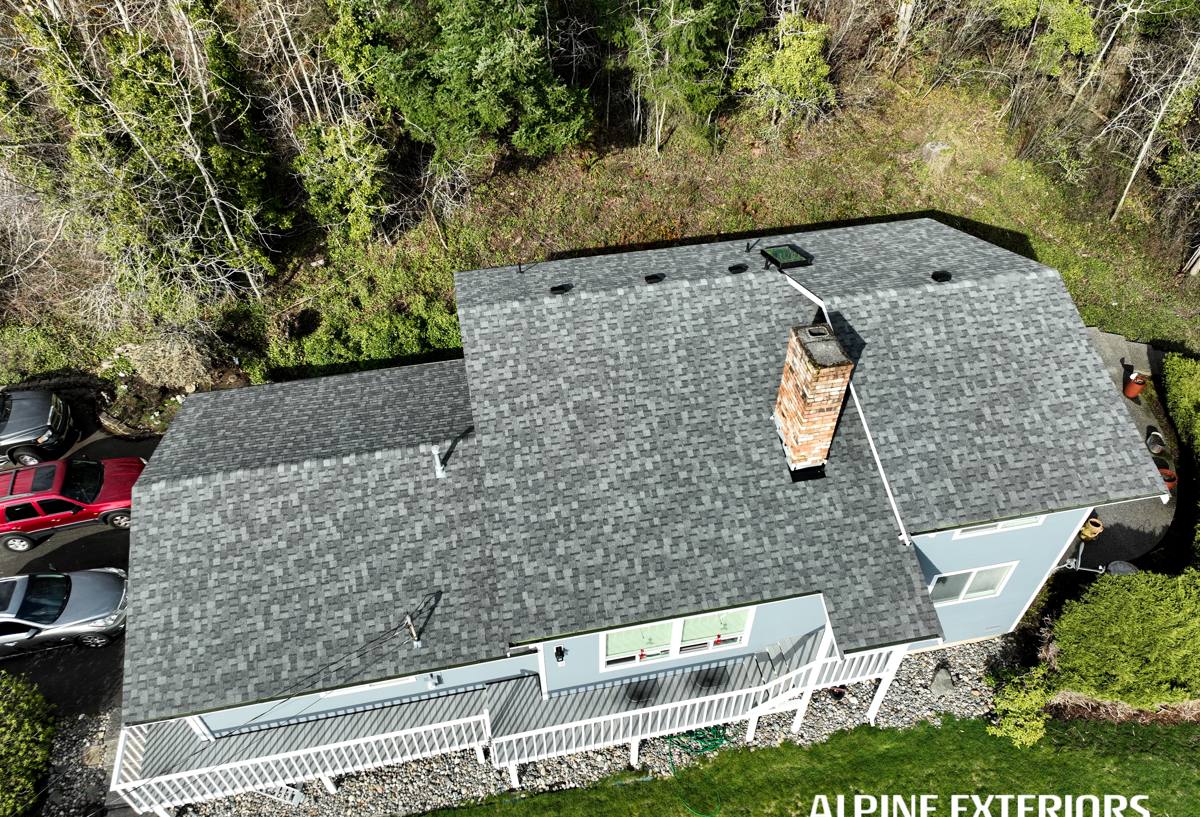
What Local Homes Actually Need From a Deck
Most of the deck problems we get called out to repair in this part of Whatcom County trace back to three root causes, and all three are climate-driven:
- Fastener corrosion — screws, nails, and joist hangers rated for general use start rusting and staining within a few seasons when they're exposed to salt-influenced air and constant damp.
- Trapped moisture — ledger boards, joists, and beam ends that aren't flashed or wrapped properly hold water against the wood, which leads to rot from the inside out, often invisible until the structure is already compromised.
- Moss and algae buildup — shaded decks, or decks with poor airflow underneath, stay damp long enough for moss to take hold on the walking surface and on the substructure, which is both a maintenance headache and a slip hazard.
A correctly built deck addresses all three from the start, not as an afterthought or an upsell.
Framing and Ledger Attachment
The ledger board — where the deck attaches to the house — is the single most common failure point on decks in wet climates. It needs proper flashing that sheds water away from the house wall, a water-resistant barrier between the ledger and the sheathing, and structural fasteners sized and spaced to code, not just "enough to hold it up." We also run joist protection tape over the tops of all framing members. It's a small material cost that prevents the single most common cause of premature joist rot we see on older decks in this area.
Footings for Whatcom County Soil and Frost Conditions
Footing depth and design need to account for local frost depth and drainage characteristics, not a one-size-fits-all number. On sites with poor natural drainage — common on lots with clay-heavy soil or limited slope — we also look at whether the footing area needs supplemental drainage so water doesn't sit against the concrete and the post base year-round.
Decking and Substructure Material Comparison
There's no single "right" decking material for every Birchwood project — it depends on budget, how much upkeep you want to do, and how much shade the deck sits in. Here's how the common options actually compare for this climate, not just on paper:
| Material | Moss/Algae Resistance | Maintenance | Typical Lifespan Here | Relative Cost |
|---|---|---|---|---|
| Pressure-treated wood | Low — needs regular cleaning and sealing | Annual cleaning, re-sealing every 1-2 years | 10-15 years with upkeep | Lowest upfront |
| Cedar | Moderate — natural oils help some, but shaded areas still grow moss | Regular cleaning, periodic oil/stain | 15-20 years with upkeep | Mid-range |
| Capped composite | Higher — solid cap resists moisture absorption | Occasional washing, no sealing | 25-30 years | Higher upfront |
| PVC decking | Highest — no wood fiber for moss to root into | Occasional washing | 30+ years | Highest upfront |
We don't push one material on every homeowner. A cedar deck in full sun with an owner who's willing to clean and oil it every year or two is a perfectly reasonable choice. That same cedar deck under heavy tree cover, with no plan for upkeep, will grow moss on the boards within a season or two and start showing dark staining not long after. If your lot is shaded most of the day, we'll say so up front and talk through whether a capped composite or PVC product is the better trade-off for your situation.
Fasteners and Hardware: Where Cheap Builds Fail First
This is the detail that gets skipped most often on lower-bid deck jobs, and it's the one that matters most in a salt-air environment. Standard electro-galvanized screws and joist hangers will start showing rust streaks on the decking within a year or two near the water, and the corrosion doesn't stop at the surface — it weakens the connection over time.
Our standard for Birchwood projects is hot-dip galvanized or stainless steel structural hardware, and stainless or coated fasteners rated for ground-contact and salt exposure on anything visible or load-bearing. It costs more per box than the hardware-store minimum. It's also the difference between a deck that still looks and performs like new after a decade and one that's showing rust bleed and loose connections within a few years.
Managing Moss, Drainage, and the Long Wet Season
Whatcom County's moss season isn't a two-month event — on shaded lots it can run most of the year. Rather than treating that as something you just have to live with, we build in a few things that reduce how much of a problem it becomes:
- Proper board spacing and slope so water sheds off the surface instead of pooling
- Adequate clearance and airflow underneath the deck so the substructure can actually dry out between storms
- Fastener and framing choices (above) that don't rot or corrode when they stay damp longer than a sunny-lot deck would
- Honest guidance on which decking materials will still need periodic cleaning regardless of what's used, and roughly how often
None of this makes a shaded deck maintenance-free — moss is a fact of life in this climate — but it makes the difference between an annual wash-down and a deck that's rotting from the substructure up.
Permits and Local Code Considerations
Deck projects in and around Bellingham generally require a building permit once you're past a certain size or height off grade, along with guardrail, stair, and setback requirements that vary by lot. We handle the permit application and inspection scheduling as part of the job so you're not tracking down requirements yourself. If your property has specific setback or easement questions, we'll flag those during the site visit rather than assume — every lot in Birchwood is a little different, and getting this wrong after the framing is up is expensive to fix.
Our Process for a Birchwood Deck Project
- Site walk-through — we look at sun/shade exposure, existing drainage patterns, soil conditions, and how the deck will tie into the house before we talk materials.
- Design and material selection — based on your budget and how much upkeep you want to take on, not a default package.
- Permit handling — we prepare and submit what's needed and schedule required inspections.
- Demolition/prep (if replacing an existing deck) — including checking the ledger and rim joist behind it for hidden rot, which is common on older decks in this area.
- Framing and flashing — ledger flashing, joist tape, and corrosion-resistant hardware as standard, not an add-on.
- Decking installation — proper spacing and fastening for the material chosen.
- Final walk-through — we go over basic maintenance for whatever material you chose so there are no surprises in year two or three.
Maintenance Checklist for Whatcom County Decks
Whatever material you choose, a few habits go a long way in this climate:
- Sweep leaves and debris off the deck surface regularly, especially in fall — trapped organic matter is what moss and algae feed on
- Wash the deck surface at least once a year with a deck-safe cleaner, more often in heavily shaded spots
- Check that gaps between boards haven't filled with debris, which blocks proper drainage
- Look underneath periodically for standing water, sagging, or soft/discolored wood near the ledger
- Re-seal or re-stain wood decking on the schedule appropriate to that product — don't wait until it visibly needs it
- Have loose railings or stair connections checked promptly — hardware loosens faster in freeze-thaw and constant-damp conditions
Why a Crew That Already Works Birchwood Matters
A contractor who builds decks all over the region, in dry inland areas and wet coastal neighborhoods alike, doesn't always default to the salt-air and moss-season details that matter here. A crew that already works Birchwood and the surrounding Bellingham neighborhoods knows which lots tend to have drainage issues, which streets get heavier shade year-round, and what hardware actually holds up rather than what a spec sheet claims. That local pattern recognition shows up in fewer callbacks and a deck that's still solid well past the point where a generic build would need major repairs.
If you're planning a new deck or replacing an aging one in Birchwood, we're happy to take a look and walk you through what we'd recommend for your specific lot — no pressure, no obligation. Reach out for a free estimate using the form below.